Thinking about moving to Thailand but not sure where to actually put down roots? You’re not alone. Thailand continues to attract expats, retirees, remote workers, and families thanks to its affordable cost of living, modern healthcare, warm climate, and established international communities. This guide walks through the best places to live in Thailand in 2026, what daily life looks like in each one, typical living costs, and the main long-term visa options to consider once you’ve picked your spot.
Also Read: An Expat Guide to Living in Koh Pha Ngan, Thailand
Quick Answer
The best place to live in Thailand depends on your lifestyle. Bangkok is ideal for careers and city living, Chiang Mai suits digital nomads and retirees looking for affordability, Phuket combines beach life with modern amenities, and Koh Pha Ngan offers a quieter island lifestyle. All four destinations have established expat communities, but visa options, healthcare access, and living costs vary.
Key Takeaways
- Bangkok is best for professionals, families, and international connectivity.
- Chiang Mai offers lower living costs and a strong remote work community.
- Phuket combines beach living with excellent healthcare and international schools.
- Koh Pha Ngan is ideal for those seeking a slower, wellness-focused lifestyle.
- Long-term visas now matter more than ever because Thailand has tightened visa-run rules.
Why So Many Expats Choose Thailand
Thailand has remained one of the world’s most popular destinations for expats for years thanks to its combination of affordability, modern healthcare, reliable internet, warm climate, and established international communities. Whether you’re retiring, working remotely, or relocating for a new career, the country offers a range of lifestyles, from fast-paced cities to quiet islands, without the high living costs found in many Western countries.
How We Chose These Places
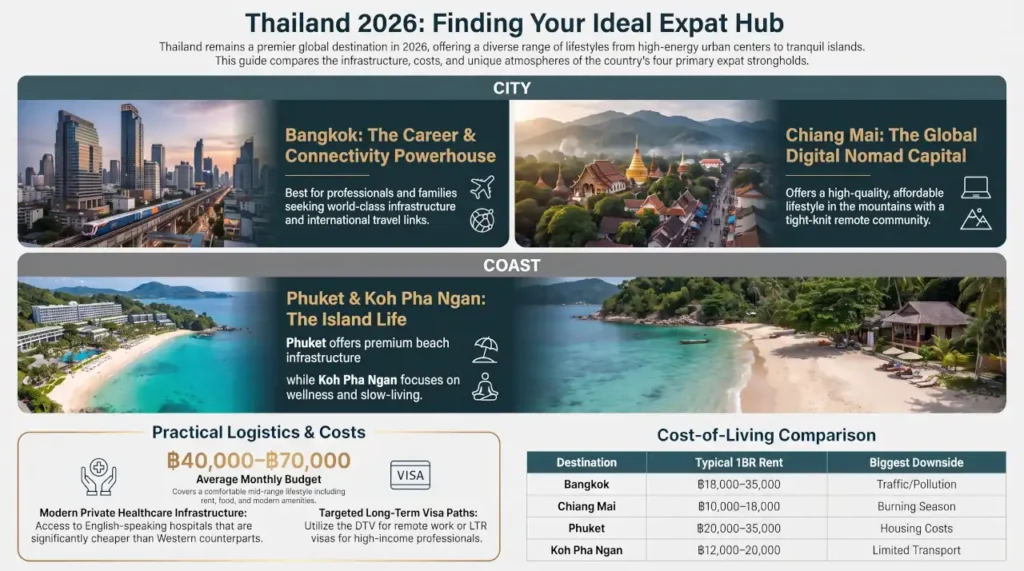
We selected these destinations based on the factors that matter most to people planning a long-term move to Thailand. That includes affordability, healthcare quality, internet reliability, visa practicality, safety, transportation, expat community size, and overall lifestyle. While many other Thai cities are worth considering, these four consistently offer the best balance of day-to-day livability for expats, retirees, remote workers, and families.
Rather than ranking them from best to worst, we’ve highlighted the strengths and trade-offs of each so you can choose the one that best matches your priorities.
| Destination | Best For | Cost | Biggest Downside |
| Bangkok | Professionals, families | $$$ | Traffic and pollution |
| Chiang Mai | Digital nomads, retirees | $$ | Burning season |
| Phuket | Beach lifestyle, families | $$$ | Higher housing costs |
| Koh Pha Ngan | Wellness, slow living | $$ | Limited transport |
Bangkok: Best for Big-City Living
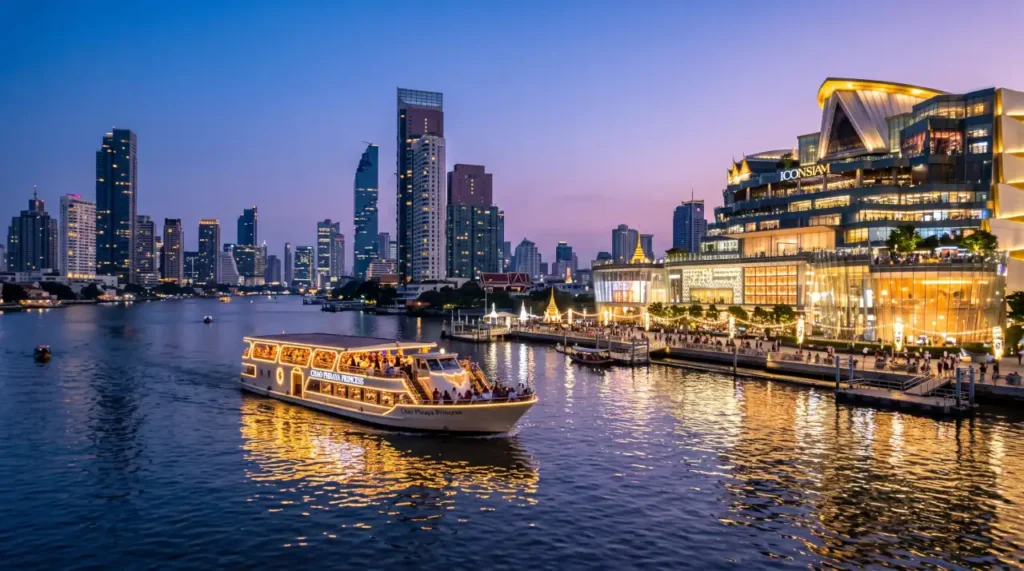
If you want the energy of a real metropolis, Bangkok is where you land. It’s home to more than ten million people, and that scale changes everything about how you live. You get world-class hospitals, international schools, malls that never seem to end, and a food scene that ranges from five-baht street noodles to Michelin-starred tasting menus, sometimes on the same block.
The expat community here is enormous, which makes it one of the easier places in Thailand to settle into without speaking a word of Thai. You’ll find Facebook groups for basically every nationality, run clubs, book clubs, and co-working spaces packed with people in the same boat as you. The BTS Skytrain and MRT subway make getting around manageable, at least compared to the traffic on the streets below, which can be brutal during rush hour.
Bangkok also makes an excellent base for exploring the rest of Southeast Asia. Suvarnabhumi and Don Mueang airports connect to just about everywhere in the region for cheap, so weekend trips to Vietnam or Cambodia are genuinely doable.
The tradeoff is that Bangkok can feel less “Thailand” than smaller towns. It’s noisy, the air quality dips during parts of the year, and the pace is fast. If you moved abroad chasing a slower life, this might not be it. But if you thrive on city buzz, excellent infrastructure, and convenience, Bangkok offers one of the highest qualities of life in Thailand for professionals and families.
If you’re weighing whether Bangkok fits your lifestyle, it’s worth reading more about living in Bangkok before you commit to a lease, since the neighborhood you pick makes a bigger difference here than in almost any other Thai city.
Chiang Mai: Best for Digital Nomads
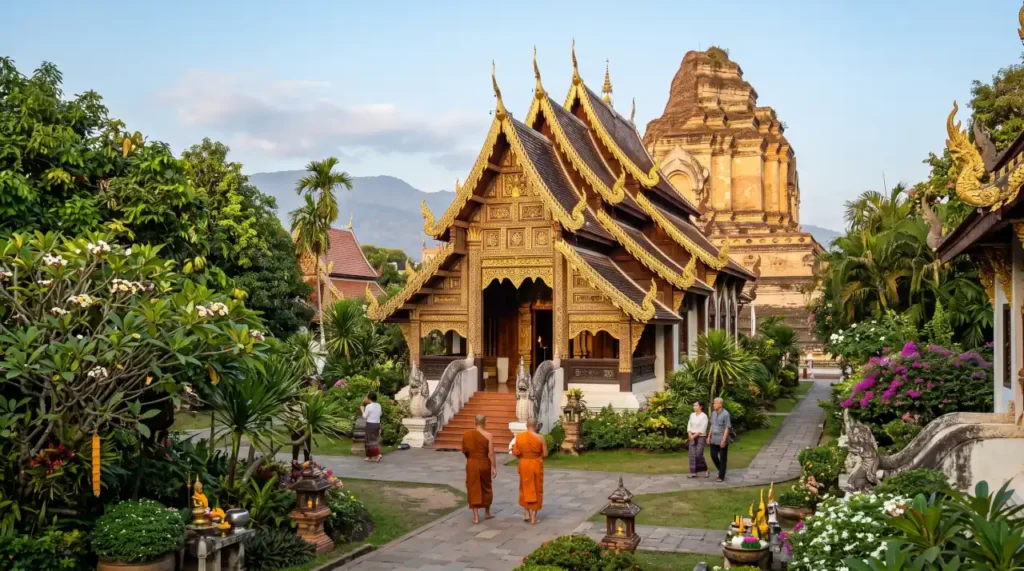
Chiang Mai is often the first city digital nomads think of when considering Thailand, and for good reason. It’s smaller and more walkable than Bangkok, tucked into the mountains of northern Thailand, and it has spent the last decade building one of the most established remote-work communities anywhere in Asia.
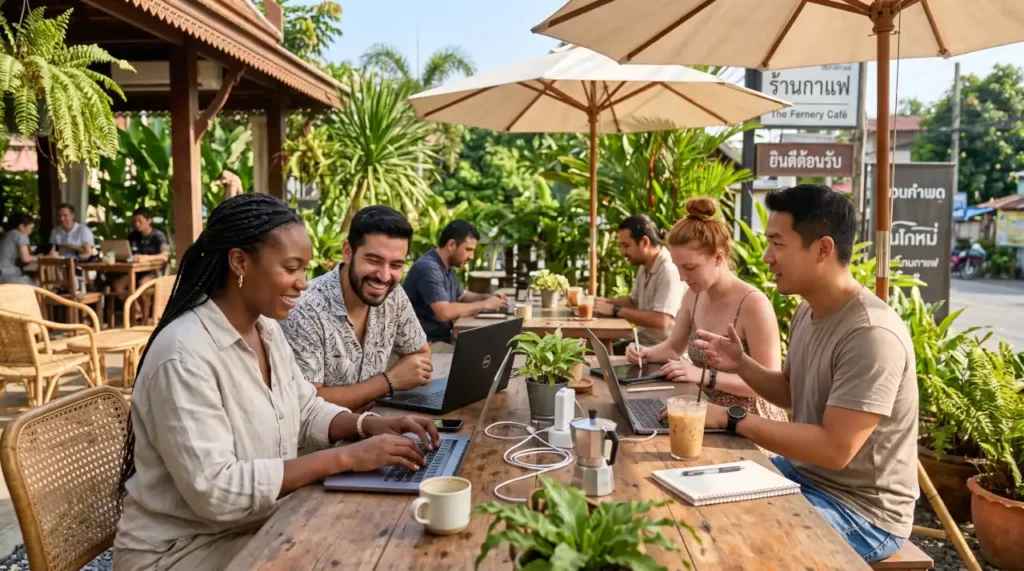
Much like Bali or Medellin, Chiang Mai has become a magnet for location-independent workers, and the infrastructure reflects that. Co-working spaces are everywhere, coffee shops have fast wifi as a baseline expectation, and there’s a constant rotation of meetups, workshops, and language exchanges. Despite all the foreign influence, the old city still feels distinctly Thai, with temples on nearly every corner and a slower rhythm than you’d expect from a place with this many nomads passing through.
The climate is another draw. Chiang Mai sees more temperature variation than the rest of the country, with genuinely cool evenings from November through February, which a lot of expats coming from hot, humid climates appreciate.
The one real downside is burning season, which runs roughly from February through April when farmers in the region burn fields to prepare for planting. Air quality drops sharply during these months, and plenty of long-term residents plan trips elsewhere to avoid it entirely. If you can work around that stretch, or don’t mind investing in a good air purifier, Chiang Mai offers an excellent quality of life for digital nomads, retirees, and anyone prioritizing affordability over big-city convenience.
Curious how it actually feels day to day? There’s a lot more detail in our guide on living in Chiang Mai.
Phuket: Best for Beach Living
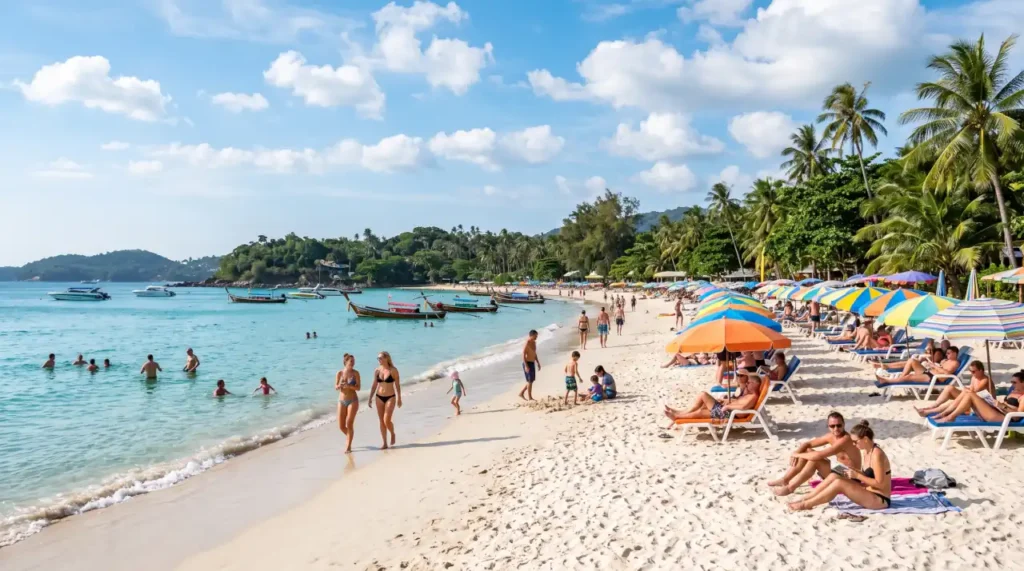
Head south and you’ll hit Phuket, Thailand’s largest island and a place most people only know as a tourist stop. That reputation undersells it. Yes, Patong gets loud and crowded, but Phuket is a big island, and most of it looks nothing like the postcards of neon bars and packed beach chairs.
Areas like Rawai, Bangtao, and Phuket Town offer a completely different pace, with quiet beaches, local markets, and a growing mix of long-term expats, retirees, and families. The lifestyle here leans outdoorsy. Think diving, sailing, muay thai gyms, and beach walks at sunset rather than nightlife. Phuket’s food scene is another highlight, with fresh seafood and a strong Thai-Chinese culinary influence unique to the island.
Phuket also has real infrastructure that a lot of islands lack. There’s an international airport, solid private hospitals, and international schools, which makes it one of the more practical island choices if you’re moving with a family or just want fewer logistical headaches.
If Phuket sounds like your pace, we go much deeper into neighborhoods and logistics in our guide to living in Phuket.
Koh Pha Ngan: Best for a Slower Island Lifestyle

If Phuket still feels too built up, Koh Pha Ngan is worth a serious look. This island is best known internationally for its Full Moon Party, but that’s one night a month, not a reflection of daily life. Outside of Haad Rin, the party beach, the island is genuinely peaceful, with a strong yoga and wellness scene, small local communities, and jungle roads that feel a world away from Bangkok traffic.
There’s no airport on Koh Pha Ngan, so you get there by ferry, usually from Koh Samui or the mainland. That extra step keeps the pace slower and the crowds smaller than you’ll find on more accessible islands. It’s part of a wider stretch of stunning islands in southern Thailand, and honestly, it’s worth visiting a few before deciding which one best fits your lifestyle.
The best areas for long-term living are Sri Thanu, Chaloklum, Baan Tai, and Thongsala. Sri Thanu in particular has become known for its health-focused cafes and yoga studios, drawing a community of wellness-minded expats and long-term travelers.
There’s a lot more to know before you commit, so take a look at our full breakdown of living in Koh Pha Ngan.
What Daily Life and Costs Actually Look Like
Numbers only tell part of the story, but they help set expectations before you land. Across the four cities above, a single person can generally live comfortably on somewhere between 40,000 and 70,000 baht a month, covering rent, food, transportation, and the occasional splurge. That’s roughly 1,100 to 2,000 US dollars, though your exact number depends heavily on which neighborhood you pick and whether you’re eating street food most nights or dining out at Western restaurants.
Street food and local markets keep grocery and eating-out costs low almost everywhere in the country. A plate of pad thai or khao soi from a street vendor might run you 40 to 60 baht, while a meal at a mid-range restaurant catering to tourists and expats runs closer to 200 to 400 baht.
Imported goods, wine, and Western brands cost noticeably more, so your grocery bill climbs fast if you’re not willing to adapt your diet at least a little.
Healthcare
Healthcare is one of the country’s genuine strengths. Private hospitals in Bangkok, Chiang Mai, and Phuket are modern, English-speaking, and significantly cheaper than equivalent care in the US, UK, or most of Western Europe. A lot of expats skip local insurance entirely and pay out of pocket for routine visits, though anyone on a retirement or LTR visa is generally required to carry proper health insurance as part of the visa conditions.
Safety
Thailand is generally considered a safe destination for expats, with low rates of violent crime in most areas covered in this guide. Everyday concerns are more likely to involve road safety, scams targeting tourists, or petty theft than serious crime. Using common sense, avoiding unlicensed transport, and carrying appropriate health insurance go a long way toward making daily life both safe and comfortable.
Scooter and motorcycle accidents are one of the most common risks for both visitors and expats, so wearing appropriate safety gear and ensuring you have valid insurance is strongly recommended.
Transportation
Transportation varies a lot by city. Bangkok has the BTS, MRT, buses, and endless taxis and ride-hailing apps, so you don’t need your own vehicle. Chiang Mai and Phuket lean more toward scooters, which are cheap to rent or buy but come with real safety risks if you’re not used to riding one, especially with Thailand’s traffic patterns. On smaller islands like Koh Pha Ngan, a scooter is close to mandatory since public transportation is minimal.
Internet reliability has improved enormously over the past several years, which is a big part of why Thailand became such a strong base for remote workers in the first place. Fiber connections are common in condos and co-working spaces in all four cities, with speeds that hold up fine for video calls and heavy uploads.
Estimated Monthly Living Costs (Single Person)
| Expense | Bangkok | Chiang Mai | Phuket | Koh Pha Ngan |
| Rent (1BR) | ฿18k–35k | ฿10k–18k | ฿20k–35k | ฿12k–20k |
| Utilities | ฿2k–4k | ฿1.5k–3k | ฿2k–4k | ฿2k–4k |
| Internet | ฿500–800 | ฿500–800 | ฿600–900 | ฿700–900 |
| Groceries | ฿6k–10k | ฿5k–8k | ฿7k–11k | ฿6k–10k |
These figures represent comfortable mid-range lifestyles for a single person and can vary significantly depending on your neighborhood, housing preferences, and spending habits.
Weather and Best Time to Move
Thailand has three main seasons: the cool season (roughly November to February), the hot season (March to May), and the rainy season (June to October). Northern cities like Chiang Mai experience cooler winters but are affected by burning season between February and April, while southern destinations such as Phuket and Koh Pha Ngan experience heavier monsoon rainfall at different times of the year. Visiting your preferred destination during different seasons can help you decide whether the climate suits your lifestyle.
Pros and Cons of Living in Thailand
How to Stay Long-Term in Thailand
Picking a city is the fun part. Figuring out how to legally stay is where things get more complicated, and it’s gotten stricter in recent years. Thailand has cracked down on people cycling through tourist visas indefinitely, so if you want stability, it pays to understand your real options up front.
Important: Thai immigration policies, visa eligibility, financial requirements, and reporting obligations can change. Always confirm the latest requirements with official Thai government sources before making relocation or employment decisions.
Which Visa Is Right for You?
The right visa depends on your age, employment status, income source, and intended length of stay. Some visas also have minimum income, insurance, or financial requirements, so it’s worth reviewing the latest eligibility criteria before applying.
| If you are… | Typical visa option |
| Digital nomad working for overseas clients | Destination Thailand Visa (DTV), if eligible |
| Retiree aged 50+ | Non-Immigrant O-A or O-X Visa |
| Teaching English | Non-Immigrant B Visa with employer sponsorship |
| Working for a Thai company | Non-Immigrant B Visa |
| Studying Thai or another approved course | Education (ED) Visa |
| High-income professional or investor | Long-Term Resident (LTR) Visa |
Teaching English
For a long time, teaching English has been the most common path into Thailand for expats without a remote income. It comes with a proper work visa, so you’re not relying on repeated tourist entries or hoping nobody at the border asks too many questions. Requirements usually include a bachelor’s degree in any field, a clean criminal record, a basic health check, and a TEFL certificate, which most reputable schools expect even though it’s not always legally required. Non-native English speakers can teach too, though schools typically want proof of fluency through a recognized test score.
Bangkok has the most job openings by far, but schools throughout the country, from small provincial towns to islands, regularly hire foreign teachers. If you want to look into this route more closely, we’ve put together a full guide on how to teach English in Thailand, including what schools actually pay and what the hiring process looks like.
Other Visa Options
Teaching isn’t for everyone, and thankfully it’s not the only door into the country anymore. Here’s a rundown of the routes expats use most often:
- Regular Tourist Visa: Many digital nomads still lean on this, especially those who move between Thailand and neighboring countries regularly. It’s the simplest option on paper, but immigration has tightened enforcement on repeated entries, so it’s not a reliable long-term strategy anymore.
- Work Visa/Business Visa: This covers anyone employed by a Thai company or running a registered business in the country. Teaching remains the most common route into this category, but it applies to other industries too, provided you have a legitimate employer sponsoring the paperwork.
- Education Visa in Thailand: This used to be a popular workaround for people who wanted to stay without working, but authorities have cracked down hard on applicants who enroll without actually attending classes. If you’re genuinely interested in studying Thai language, muay thai, or another approved course, it’s still a legitimate and useful option.
Beyond these, Thailand has also rolled out longer-term products aimed specifically at remote workers and higher earners, including a five-year visa for people earning income from foreign employers or clients, and a ten-year residency track for wealthy retirees, investors, and highly skilled professionals, managed through Thailand’s Board of Investment. These come with more paperwork and financial requirements up front, but they cut down dramatically on the visa runs and repeat reporting that used to define expat life in Thailand.
Other Great Places to Live in Southeast Asia
If you’ve narrowed your search to Southeast Asia but aren’t completely set on Thailand, it’s worth comparing a few neighboring destinations before making a final decision. Each offers a different balance of affordability, lifestyle, and visa options.
For a broader look at your options across the continent, check out our full roundup of the best places to live in Asia.
Also Read:
Which Place in Thailand Is Right for You?
Before making a final decision, think about what matters most in your daily life. If career opportunities, international schools, and excellent transport are your priorities, Bangkok is the strongest choice. If you’re looking for affordability and an established remote work community, Chiang Mai is hard to beat. Phuket offers the best balance of beach living and modern infrastructure, while Koh Pha Ngan is ideal for those seeking a quieter, wellness-focused lifestyle.
Families generally find Bangkok and Phuket the easiest places to settle thanks to their schools, healthcare, and range of amenities. Digital nomads and retirees often gravitate toward Chiang Mai or Koh Pha Ngan, depending on whether they prefer city convenience or island living.
If you’re still unsure, consider spending a few weeks in your top two choices before signing a long-term lease. Experiencing daily life firsthand is often the best way to decide where you’ll feel most at home.