
If you have spent any time researching the best place to live in Thailand, Chiang Mai has probably come up more than once. Living in Chiang Mai offers retirees, remote workers, and families a slower pace than Bangkok while still providing modern conveniences. Here is everything you actually need to know before you pack your bags.
Also Read: What Life Is Really Like on a Non-Immigrant ED Visa in Thailand
Quick Answer
Chiang Mai remains one of the best cities in Thailand for expats in 2026 thanks to its affordable cost of living, excellent healthcare, established international community, and slower pace of life. However, anyone planning to move should also consider seasonal air pollution, changing visa rules, and the importance of choosing the right neighborhood before committing long term.
Key Takeaways
- Chiang Mai offers a lower cost of living than Bangkok while maintaining excellent amenities.
- Burning season (February–April) is the city’s biggest downside.
- Choosing the right neighborhood has a major impact on your experience.
- Healthcare is high quality and affordable, especially through private hospitals.
- Visa requirements change regularly, so always verify current rules before moving.
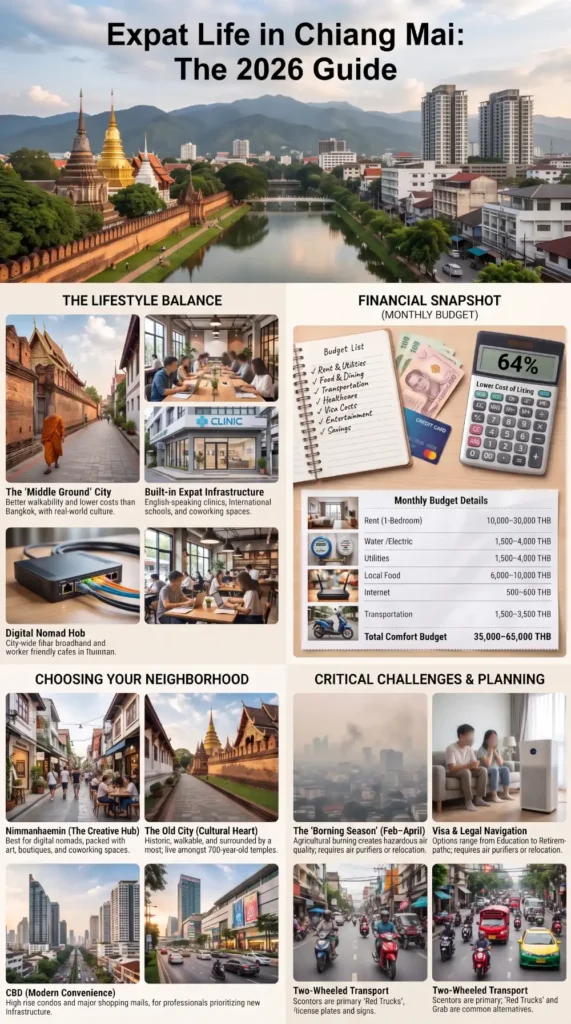
Living in Chiang Mai in 2026 offers expats an affordable lifestyle, modern healthcare, reliable internet, welcoming international communities, and access to mountains and nature. While seasonal air pollution and evolving visa rules require planning, many retirees, remote workers, and families consider Chiang Mai one of the best places to live in Thailand.
Why Move to Chiang Mai?
Chiang Mai sits in a valley surrounded by mountains, and that geography alone changes the pace of life. You are not stuck in traffic for two hours to get across town like you might be in the capital. You are not paying beach-town prices for a studio apartment. Instead, you get a city that moves at a walkable, scooter-friendly speed, wrapped around a 700-year-old moat and hundreds of temples that still function as working parts of daily life rather than museum pieces.

Daily life revolves around neighborhood cafés, bustling local markets, and some of northern Thailand’s best food, making it easy to settle into a comfortable routine.
There is also the community angle. Chiang Mai has one of the largest concentrations of long-term foreign residents in Asia, and that community has built up real infrastructure over the past two decades. Coworking spaces, English-speaking clinics, international schools, and active online expat communities all make settling in easier. Chances are someone has already dealt with the same visa question or housing issue you’re facing and is happy to share their experience. Chances are someone in the local expat community has already solved the same problem and is happy to share their experience.
Compare that to Bangkok, which offers more job opportunities and a bigger international scene but comes with brutal traffic, higher rent, and a pace that some people find exhausting after a while. Or think about Phuket, which trades city amenities for beach life and a heavier reliance on tourism income, which means prices swing with the seasons. Chiang Mai lands somewhere in the middle. It is not an island paradise like Koh Pha Ngan, where life revolves around the beach and the pace is even slower, but it gives you culture, mountains, and a real city infrastructure without the chaos of the capital.
None of this means Chiang Mai is perfect. The burning season from roughly February through April brings genuinely bad air quality, and that is not a minor inconvenience. It is something you need to plan around, whether that means investing in a good air purifier or leaving the city for a few weeks. More on that later, because it is the one drawback that catches new arrivals off guard every single year.
One of the biggest reasons people stay in Chiang Mai is that daily life feels manageable. Morning coffee shops fill with remote workers, evenings revolve around local markets and neighborhood restaurants, and weekends often mean temple visits, mountain drives, or exploring nearby waterfalls. It offers a routine that many expats find easier to sustain than life in larger, more hectic cities.

Visa Info for Living in Thailand
Thailand’s visa system has gone through real changes in the past couple of years, and it keeps evolving, so treat anything you read (including this) as a starting point rather than the final word. Always confirm current requirements with the Thai embassy or a licensed visa agent before you make plans.
Most Western passport holders can enter Thailand without a visa for a set period and then extend that stay at a local immigration office. That works fine for a trial visit, but if you actually want to live in Chiang Mai rather than just visit it, you will want something more permanent.
Keep in mind that having the correct visa does not automatically give you permission to work in Thailand. In many cases, employment also requires a valid work permit, and remote work rules can vary depending on your visa category. Always verify the latest requirements before accepting work or relocating.
- Regular Tourist Visa: Good for a short stay and usually extendable once at an immigration office. This is the entry point most people use before committing to something longer.
- Work Visa/Business Visa (Non-Immigrant B): Requires a Thai employer or your own registered business to sponsor you, along with a proper work permit. This is the route if you plan to work legally for a Thai company.
- Education Visa in Thailand: Lets you stay long-term while enrolled in an accredited course, whether that is a Thai language program, a university degree, or even Muay Thai training at a certified school. It has become one of the more popular routes for people who want flexibility without the income requirements attached to retirement or investor visas.
Beyond these three, there are other long-stay options worth knowing about, including retirement visas for those over 50 with the required funds, marriage visas for those with a Thai spouse, and newer long-term residence categories aimed at remote workers and high earners. Some people also arrive in Chiang Mai specifically to teach English in Thailand, which can open the door to a proper work visa once a school sponsors you.
Although Chiang Mai is one of the world’s best-known hubs for digital nomads, your ability to work remotely while living in Thailand depends on your visa conditions and individual circumstances. If you earn income while living in Thailand, confirm that your visa allows your intended activities and seek professional tax advice if necessary.
If the education route appeals to you, it is worth reading up on the Education Visa in Thailand in more detail, since the requirements around enrollment, renewal, and reporting differ quite a bit from a standard tourist extension.
Whatever path you choose, budget time and patience for the paperwork. Thai immigration offices are not known for moving fast, and Chiang Mai’s office in particular can get crowded during peak renewal periods. Bring copies of everything, arrive early, and expect at least one small surprise along the way.
How to Get Around Chiang Mai
Chiang Mai is small enough that getting around does not require a car, and most expats end up relying on a mix of options depending on the day. A huge number of residents buy or rent a scooter, and honestly, once you get comfortable on two wheels, it becomes the fastest way to move through the city. Just know that Chiang Mai traffic has its own logic, and driving here takes some adjustment even if you have ridden a motorbike before.
International driving permits are recommended if you plan to drive, and wearing a quality helmet is essential. Road accidents involving scooters remain one of the biggest safety risks for expats in Thailand.
If scooters are not your thing, red songthaews (the shared red trucks you will see everywhere) cover most routes around town for a few baht a ride, and Grab works well for door-to-door trips when you would rather not negotiate a fare. Tuk-tuks are around too, mostly for tourists and short hops, and they tend to cost more than a Grab for the same distance.
Walking is genuinely pleasant inside the Old City moat, where distances are short and the streets are lined with cafes and temples. Once you get outside that core area, though, sidewalks become unreliable and the heat makes long walks less appealing, so most people switch to a scooter or Grab for anything beyond fifteen minutes on foot.
For longer trips, Chiang Mai International Airport offers regular flights to Bangkok, Phuket, and other regional hubs, plus bus and van connections if you want to explore more of northern Thailand or head toward other parts of Southeast Asia during a visa run or weekend trip. Domestic flights are inexpensive by international standards, making weekend trips to destinations like Bangkok, Krabi, or the southern islands an easy option for long-term residents.
Internet and Remote Work
Reliable internet is one of Chiang Mai’s biggest advantages for expats. Fibre broadband is widely available in condos and houses across the city, while mobile coverage is excellent through Thailand’s major providers. If you work remotely, ask landlords which internet provider services the building and whether fibre has already been installed before signing a lease.
Coworking spaces are concentrated around Nimmanhaemin and the city centre, making it easy to find fast Wi-Fi, meeting rooms, and networking events. Even many cafés are designed with remote workers in mind, although they can become busy during peak hours.
| Feature | Chiang Mai | Bangkok | Phuket |
| Cost of Living | Lower | Highest | Moderate to High |
| Lifestyle | Relaxed | Fast-paced | Beach-focused |
| Best For | Remote workers, retirees | Professionals | Beach lovers |
| Traffic | Moderate | Heavy | Moderate |
| Air Quality | Poor during burning season | Better overall | Better overall |
| Expat Community | Large | Very large | Large |
Best Neighborhoods to Live in Chiang Mai
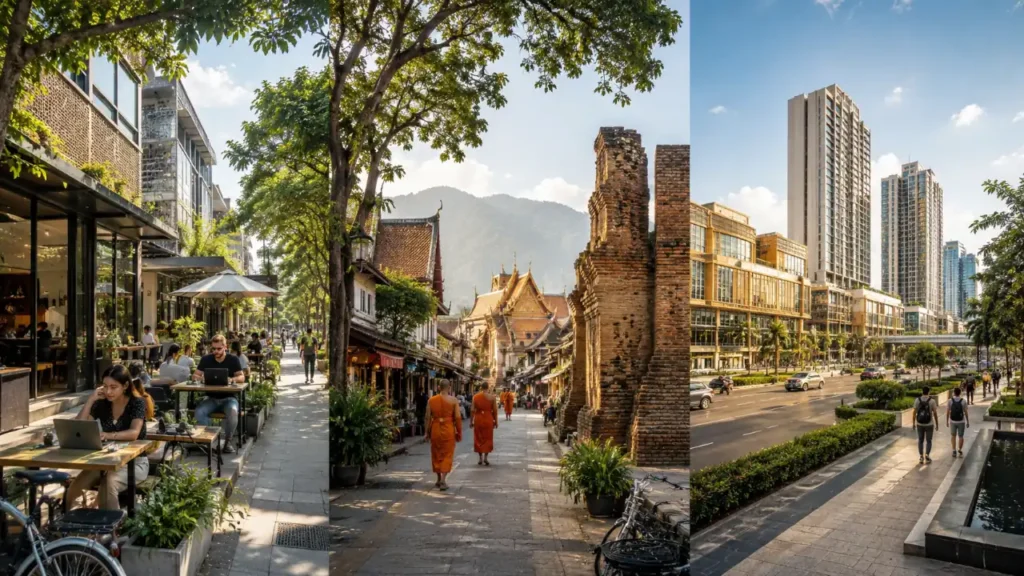
Where you live in Chiang Mai shapes your entire experience, probably more than in most cities this size. The three areas below cover most of what expats consider, each with a different personality and price point.
The Central Business District
This is Chiang Mai’s more modern side, home to shopping malls, office buildings, and a growing number of high-rise condos. It suits people who prioritize convenience over historic charm and do not mind trading old-world atmosphere for reliable infrastructure.
Budget Stay: You can find basic studio units here for a reasonable monthly rate, though they will lack the polish of newer buildings. Expect simple furnishings and a walk-up rather than a pool and gym.
Mid-Tier Stay: A modern one-bedroom condo with a shared pool, gym, and 24-hour security sits comfortably in the mid-tier range, and this is where most working professionals land.
Luxury Stay: High-floor units with skyline views, full amenities, and serviced options are available for those willing to pay a premium, still well below what similar buildings would cost in a major Western city.
Best for: Professionals who prioritize convenience, shopping, and newer condo developments.
The Old City
Surrounded by its historic moat and crumbling brick walls, the Old City is where most first-time visitors fall in love with Chiang Mai. Temples sit on nearly every block, and the whole area is walkable in a way few Thai cities manage.
Budget Stay: Small guesthouses and simple apartments tucked into side streets offer an affordable way to be right in the heart of things, though rooms tend to be compact.
Mid-Tier Stay: Boutique apartments with a bit of character, sometimes in converted traditional buildings, give you charm along with modern comforts like air conditioning and reliable WiFi.
Luxury Stay: A handful of restored teak houses and upscale serviced apartments inside the walls offer a genuinely unique living experience, blending old Lanna architecture with modern interiors.
Best for: Expats who enjoy history, walkability, and being surrounded by Chiang Mai’s cultural landmarks.
Nimmanhaemin
Known simply as Nimman, this is the neighborhood most associated with Chiang Mai’s digital nomad and creative crowd. Coffee shops, coworking spaces, art galleries, and late-night food stalls make it easy to make friends abroad here, since so much of daily life happens in shared, social spaces.
Budget Stay: Smaller studios slightly off the main soi still put you within walking distance of everything, at a more manageable rent than the neighborhood’s newest buildings.
Mid-Tier Stay: Modern condos with a pool, gym, and rooftop space are common here and tend to be the sweet spot for remote workers who want both comfort and community.
Luxury Stay: Premium developments with full amenities and polished interiors sit at the top of the market, popular with longer-term residents who have settled into Chiang Mai for good.
Best for: Digital nomads, freelancers, entrepreneurs, and younger expats looking for cafés and coworking spaces.
Finding Your Home in Chiang Mai
Most people start their housing search through local property websites, online expat communities, property agents, and social media housing groups, but photos rarely tell the whole story. It is worth spending your first week or two in a short-term rental or guesthouse so you can view apartments in person before signing anything longer. What looks bright and spacious in photos can turn out to be dark, noisy, or oddly located once you actually walk the neighborhood.
Deposits are typically one to two months’ rent, and landlords are often open to negotiating better rates for six-month or one-year commitments. It also helps to ask directly about internet speed, water pressure, and how the building handles the burning season air quality issue, since older buildings sometimes lack proper air filtration.
Before signing a lease, check whether utilities are billed separately, confirm who is responsible for maintenance, inspect the air conditioning, and ask whether internet service is included. Taking photos during move-in can also help avoid disputes when your deposit is returned.
Using a Real Estate Agent
A local real estate agent can genuinely save you time, especially if you do not speak Thai or are unfamiliar with the city’s layout. A good agent will filter listings based on your budget and priorities, arrange viewings back to back, and handle the negotiation with the landlord on your behalf. Some agents work on commission from the landlord, which means their service costs you nothing directly, though it is worth confirming that upfront before you start working with one.
Ask other expats for recommendations rather than picking blindly, since the difference between a good agent and a mediocre one shows up fast once you are trying to sort out a lease in a language you may not read fluently.
Opening a Bank Account
Opening a Thai bank account can make everyday life much easier if you plan to stay in Chiang Mai long term. Requirements vary between banks, but most ask for your passport, an eligible visa, proof of address, and, in some cases, a residency certificate or supporting documents from your employer or school.
Not every bank applies the same rules, so if one branch refuses your application, another may accept it with the same paperwork. Having a local bank account makes it easier to pay rent, receive income, avoid international card fees, and set up mobile banking for daily expenses. Some banks may also ask for a Thai phone number when setting up online banking, so purchasing a local SIM card early can simplify the process.
Top Things to Do in Chiang Mai
Beyond the practical side of settling in, Chiang Mai offers enough culture, nature, food, and weekend escapes that many expats never run out of new places to explore. The surrounding mountains, temples, and markets give you a genuinely different weekend every time you go looking.
Visiting Elephant Sanctuaries
Chiang Mai province is home to some of the most respected ethical elephant sanctuaries in Thailand, places that focus on observation and care rather than rides or performances. A day trip to one of these sanctuaries, where you help prepare food, walk alongside the elephants, and sometimes join them for a mud bath, tends to become one of the most memorable experiences new residents have. Look for sanctuaries that prohibit elephant riding, avoid performances, and prioritize rescue, rehabilitation, and natural behavior. Ethical facilities are transparent about animal welfare and visitor interactions.
Shopping Malls
Chiang Mai’s malls are not just for shopping. Places like Central Chiang Mai Airport, MAYA Lifestyle Shopping Center, and Central Festival double as social hubs, with air-conditioned coworking corners, cinemas, food courts, and grocery stores under one roof. During burning season especially, these malls become a genuine escape from outdoor air quality, and plenty of expats treat a mall visit as a legitimate way to spend an afternoon rather than a last resort.
Beyond malls and sanctuaries, the weekend Sunday Walking Street market through the Old City, the Saturday Wualai market, and the many temple complexes like Wat Phra That Doi Suthep sitting above the city are worth building into your first few months here. So is a trip up to Mae Rim for waterfalls and jungle scenery, an easy half day trip from the city center.
If you move to Chiang Mai in April, you’ll also experience Songkran, Thailand’s traditional New Year festival. The city hosts one of the country’s biggest celebrations, with water fights, temple ceremonies, and community events that attract both locals and visitors from around the world.
Later in the year, Chiang Mai also hosts Yi Peng, the famous lantern festival that fills the night sky with thousands of floating lanterns. Accommodation sells out well in advance, so planning ahead is essential if you want to experience it.
Cost of Living in Chiang Mai
Chiang Mai’s reputation for affordability is still deserved in 2026, though the range of what people actually spend is wider than most articles let on. According to cost of living data tracked by Numbeo, Chiang Mai runs roughly 64 percent less expensive than a comparable US city like Seattle when you exclude rent, with rent itself running about 83 percent lower. That gap alone explains why so many people find their money stretches further here than almost anywhere back home.
| Monthly Expense | Typical Cost (THB) |
| Rent | 10,000–20,000 |
| Utilities | 1,500–4,000 |
| Internet | 500–800 |
| Local Food | 6,000–10,000 |
| Transportation | 1,500–3,500 |
| Health Insurance | varies |
Your actual budget will depend largely on where you live, how often you eat Western food, whether you own or rent a scooter, and if you plan to travel around Thailand regularly.
For a single person, a comfortable monthly budget tends to fall somewhere between 35,000 and 65,000 THB, roughly 1,000 to 1,800 USD depending on the exchange rate. That figure usually covers a modern one-bedroom condo, a mix of local and Western dining, transport by scooter or Grab, and basic health insurance. Budget travelers who eat mostly street food, rent a simple studio, and skip the imported groceries can live comfortably on less, sometimes well under 1,000 USD a month.
Families and those who lean heavily on Western restaurants, imported goods, or international schools will naturally spend more, with school fees alone running several thousand dollars a year for a decent international program.
Rent is the single biggest variable. A one-bedroom condo near Nimman typically runs 10,000 to 15,000 THB a month, while the same size unit in Santitham or outside the Old City moat can come in a few thousand baht cheaper. Utilities stay manageable most of the year but climb noticeably during the hot season when air conditioning runs constantly, so do not be surprised if your electricity bill triples between January and April.
Food is where Chiang Mai really shines for anyone willing to eat like a local. A proper bowl of khao soi or a plate of pad thai at a market stall costs a couple of dollars, while a nice dinner out at a Western-style restaurant in Nimman might run 300 to 500 THB per person. Groceries at local markets stay cheap, while imported items at supermarkets like Lotus’s or Rimping carry a noticeable markup.
Healthcare in Chiang Mai
One of the more pleasant surprises for new arrivals is how good healthcare in Chiang Mai actually is. The city has multiple private hospitals with international accreditation, English-speaking doctors, and modern equipment, all at a fraction of what similar care would cost in the US, UK, or Australia. A routine GP visit including medication often costs less than a nice dinner out, and even more involved procedures remain far cheaper than Western equivalents.
That said, most long-term residents still carry health insurance, whether through a Thai provider, an international plan, or a coverage requirement tied to their specific visa. Several visa categories now mandate a minimum level of health coverage, so this is not purely optional for everyone. Public hospitals exist too and offer solid care at even lower prices, though English fluency among staff and wait times can vary more than at the private hospitals expats typically favor. If you have international health insurance, check whether it includes medical evacuation and treatment outside Thailand, especially if you expect to travel frequently around Southeast Asia.
Pharmacies are everywhere and stock a wide range of medications over the counter that would require a prescription elsewhere, which is convenient but also means it is worth doing your own research or talking to a doctor before self-medicating for anything serious.
For emergencies, Thailand’s national emergency number is 191, while ambulance services are available through 1669 in many areas. Keep these numbers saved on your phone after arriving.
Language and Daily Life
You do not need to speak fluent Thai to live comfortably in Chiang Mai, especially in popular expat neighborhoods where English is widely spoken. That said, learning a few basic Thai phrases goes a long way. Simple greetings, polite expressions, and numbers can make everyday interactions easier and are generally appreciated by locals.
What I Wish I Knew Before Moving to Chiang Mai
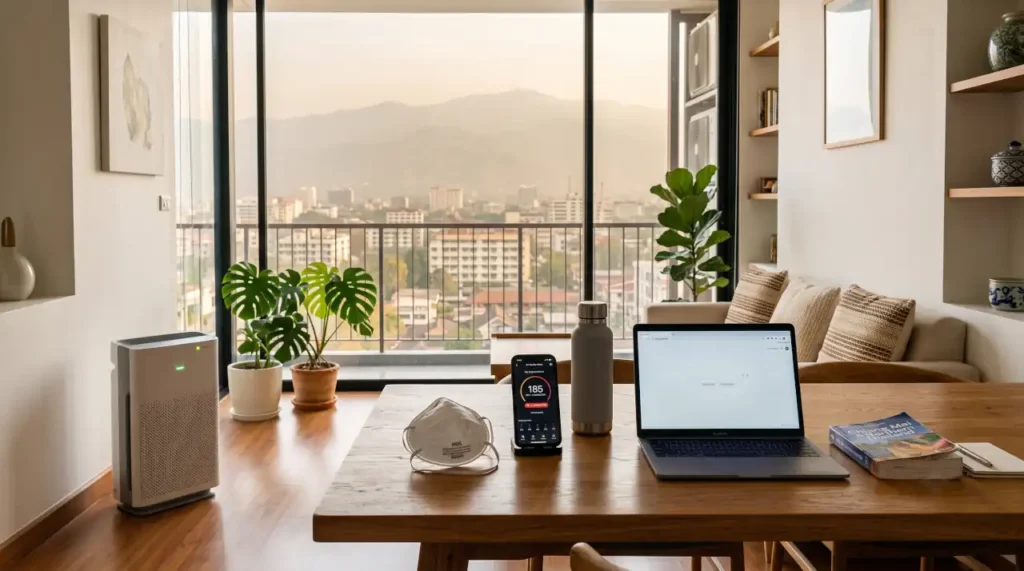
A few things catch almost every new arrival off guard, and it is worth hearing about them before you land rather than after.
The burning season is the big one. From roughly February through April, agricultural burning across the region combined with local conditions pushes air quality to genuinely unhealthy levels, sometimes for weeks at a time. This is not the mild haze some travel blogs describe. It affects daily life, and plenty of long-term residents plan trips out of the city during the worst weeks.
If you are moving here permanently, invest in a HEPA air purifier before burning season begins, monitor daily AQI readings through an air quality app, wear an N95 mask on high pollution days, and avoid prolonged outdoor exercise when air quality reaches unhealthy levels. Many long-term residents also plan short trips to southern Thailand or overseas during the worst weeks of the season.
Visa rules change more often than people expect, and what worked for a friend two years ago might not apply to your situation today. Do not rely on outdated blog posts or secondhand advice from someone who navigated the system years ago. Check directly with a licensed agent or the embassy before making any big decisions.
The expat bubble is real and easy to fall into. Nimman in particular can start to feel like a Western enclave with Thai scenery, and it is worth making an effort to get outside that bubble, learn some basic Thai, and build relationships with local neighbors and shopkeepers rather than only socializing within the expat community.
Finally, distances that look short on a map can take longer than expected once you factor in Chiang Mai’s traffic patterns and the heat. Plan a little extra time for errands, especially during the hottest hours of the day.
Who Might Find Chiang Mai Challenging?
Chiang Mai is not the right fit for everyone. You may want to consider another destination if:
- You need year-round clean air because of respiratory conditions.
- You prefer a fast-paced corporate environment.
- You want reliable public transportation instead of driving or using ride-hailing apps.
- You are looking for beachfront living.
- You dislike hot weather for much of the year.
Is Chiang Mai a Good Place to Live?
If you’re wondering whether Chiang Mai is a good place to live, the answer is yes for most people who value affordability, community, and a slower pace without giving up modern comforts. It hits a rare balance of low cost of living, genuine culture, walkable neighborhoods, and an established expat infrastructure that makes the practical side of relocating far easier than it would be somewhere less traveled.
Also Read: Living in Phuket: The Complete Expat Guide for 2026
It is not the right fit for everyone, though. If you need a fast-paced international business hub, Bangkok will serve you better. If beach life is non-negotiable, look toward Phuket or the islands instead. And if air quality during a few months of the year is a dealbreaker for your health or your patience, that is worth weighing seriously before you commit to a full year lease.
Common Mistakes Expats Make
Conclusion
Chiang Mai earns its reputation as one of the most livable cities in Southeast Asia, not because it is flawless, but because it offers a genuinely workable balance of cost, culture, and community that is hard to find elsewhere. Do your homework on visas, spend time in different neighborhoods before committing to a lease, and go in with realistic expectations about burning season, and you will likely find yourself understanding exactly why so many people who visit end up staying far longer than planned.
If your priorities are affordability, community, excellent food, and a relaxed lifestyle, Chiang Mai remains one of the strongest expat destinations in Southeast Asia. Visit first, explore several neighborhoods, and make decisions based on how you want to live—not just what costs the least.