
Living in Bangkok is exciting, messy, convenient, loud, and surprisingly easy once you get your bearings. Some people arrive for work. Others come because life, family, or love pulled them here.
If your move starts with a relationship, it can help to think about the emotional side first too, which is why our guide to moving abroad for love fits naturally with this conversation. And if you are still deciding whether Bangkok is the right base, it is worth comparing it with the best places to live in Thailand. Bangkok is not a postcard version of Thailand.
Compared with cities such as Chiang Mai, Phuket, or Pattaya, Bangkok generally offers the widest range of employment opportunities, international services, healthcare facilities, and transportation options. The trade-off is higher housing costs, heavier traffic, and a faster pace of life.
It is fast, practical, and full of life. That is exactly why so many expats stay longer than they planned.
This guide is written for people who are seriously considering a move, especially readers coming from the Western world who want the real picture before they pack a single box. We will talk about neighborhoods, apartments, jobs, visa basics, cost of living, and the small details that matter after the honeymoon stage wears off.
Also Read: Explorexp blog
Quick Answer: Living in Bangkok, Thailand
Living in Bangkok in 2026 offers a mix of modern convenience, affordable living compared with many Western cities, excellent healthcare, and vibrant city life. Most expats find Bangkok easiest to navigate when living near BTS or MRT transit lines, securing the correct visa before arrival, and budgeting realistically for housing, transportation, and lifestyle expenses.
Key Takeaways
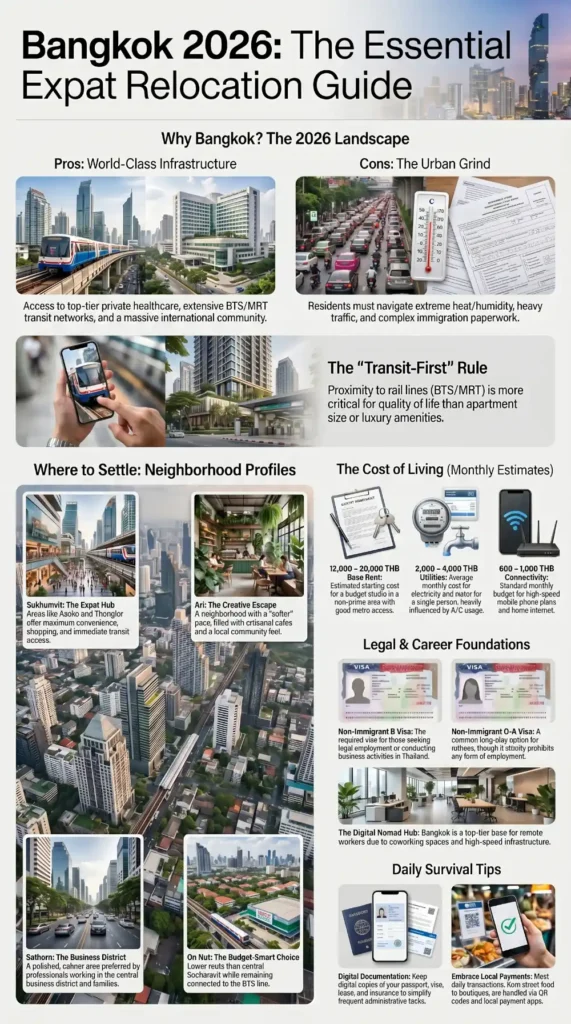
- Sukhumvit, Sathorn, Ari, and On Nut remain among the most popular expat neighborhoods.
- Living near BTS or MRT transit is often more important than apartment size.
- Most foreigners require an employer-sponsored visa and work permit to work legally.
- Bangkok’s healthcare system is one of the strongest in Southeast Asia.
- Housing costs vary dramatically depending on neighborhood and building quality.
- Long-term residents should stay updated on visa and immigration reporting requirements.
Why Do Expats Move to Bangkok?
Many expats choose Bangkok because of:
- Affordable living compared with many Western capitals
- Extensive public transportation networks
- High-quality private healthcare
- Strong international communities
- Diverse food and entertainment options
- Access to regional travel throughout Southeast Asia
- Career opportunities in education, hospitality, consulting, and remote work
Many people researching Bangkok are also evaluating a move to Thailand more broadly. Bangkok is often the first choice because it offers the country’s largest job market, strongest international infrastructure, and widest range of housing options, but it is not the only option. Cities such as Chiang Mai, Phuket, and Pattaya appeal to different lifestyles and budgets, which is why it helps to think about your long-term goals before choosing where to settle.
Best Areas to Live in Bangkok
Bangkok is not one city with one mood. It is several different lifestyles stitched together by highways, rail lines, and side streets that can change character block by block.
Sukhumvit
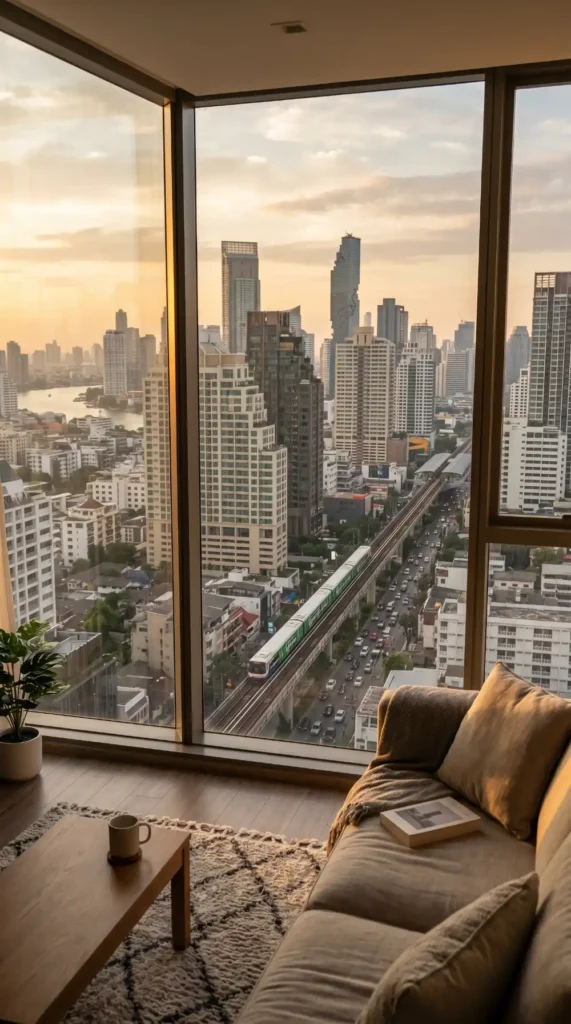
If you want the easiest first landing spot, Sukhumvit is usually the default. Asoke, Phrom Phong, Thonglor, and Ekkamai are popular because they give you quick access to BTS and MRT, plenty of restaurants, and the kind of daily convenience that makes a new country feel less intimidating.
Sathorn
Sathorn is the area many people choose when work matters more than nightlife. It feels more polished and a little calmer than the busiest parts of Sukhumvit. If your office, clients, or school runs sit in the central business district, Sathorn can save you a lot of time and energy.
Families often prioritize different factors than solo expats. Neighborhoods such as Sathorn, Phrom Phong, and certain parts of Sukhumvit are popular because they offer access to international schools, parks, family-friendly housing, and healthcare facilities.
Ari
Ari is a favorite for people who want a softer pace. It has cafés, small creative spaces, good food, and a more neighborhood feel. It is not the wildest part of town, and that is the point.
On Nut and Phra Khanong
On Nut and Phra Khanong are often where smart budget-minded expats start. They are still connected to the BTS, but rents are usually easier to swallow than in the most famous expat zones.
Riverside
Riverside living works best for people who love views, hotel-style surroundings, and a slower feeling at home. It can be beautiful, but it is not always the most practical option for every day life.
Tips to Find an Apartment
Finding an apartment or condo in Bangkok gets much easier when you stop thinking like a tourist and start thinking like a commuter. Your first question should not be whether the building looks fancy. It should be how far it is from the transport you will actually use.
A short walk to BTS or MRT matters more than almost anything else. Many expats discover this lesson only after moving in. An apartment that looks perfect online can feel very different when a daily commute involves sitting in Bangkok traffic for an extra hour each day.
According to the Bangkok Metropolitan Administration’s public transit planning initiatives, areas with direct BTS and MRT access continue to see the strongest residential demand because they significantly reduce commuting times across the city.
Bangkok traffic can be a drain on your mood if your daily route is badly chosen. A place that looks slightly less glamorous but cuts forty minutes off your commute is usually the better deal.
Look closely at the real monthly cost, not just the advertised rent. Some buildings add common area fees, electricity is sometimes billed at a different rate depending on the property, and water, internet, and parking can change the final number more than first-time renters expect.
Try to inspect for natural light, sound, smell, water pressure, and air conditioning strength. These sound like small things. They are not. In Bangkok heat, a weak air conditioner becomes a very big problem very fast.
If you are new to the city, it helps to rent for a shorter period first or choose a condo with a responsive manager. That gives you room to learn the city before locking yourself into the wrong neighborhood.
Finding a Job in Bangkok
The job market in Bangkok is broad, but the path you take depends on what passport you hold, what you do for work, and whether you need visa sponsorship.
Most people who work legally in Thailand do so through an employer that helps with the proper visa and work permit process. The Thai government requires foreign workers to hold the appropriate visa status and work authorization before beginning employment, making sponsorship discussions an important part of the hiring process. If you are already interviewing, ask early about sponsorship instead of waiting until the final round. It saves everyone time.
International schools, hospitality, corporate services, consulting, logistics, digital roles, and teaching remain common entry points for foreigners, but the best fit depends on your background. For many first-time expats, teaching is also the job that opens the door to living in Thailand, even if they later move into a different career. Bangkok is not a city where every foreign job is a dream job, so it pays to be selective.
Remote workers often discover that a role based outside Thailand gives them more flexibility than trying to land a local job immediately. That can be a very good bridge while you figure out long-term options.
Bangkok has also become a popular base for remote professionals. Reliable high-speed internet, coworking spaces, international flight connections, and a large expat community make the city attractive for location-independent workers who are legally eligible to stay in Thailand.
One thing that surprises many remote workers is that enjoying Bangkok and being legally allowed to stay here are two different questions. Before planning a longer stay, it’s worth understanding which visa options actually fit your situation.
The strongest job search strategy is still the old-fashioned one: a clean résumé, a visible online profile, real networking, and direct conversations with people already living in the city.
Things to Do in Bangkok
Bangkok is one of those cities where it is easy to complain about the traffic and still love the city anyway. The reason is simple. There is always something to do.
You can spend a whole morning exploring temples and riverfront areas, then switch gears and have lunch in a modern mall, and then end the day at a night market or rooftop bar. That combination is part of Bangkok’s charm.
The Grand Palace, Wat Pho, and Wat Arun are still worth seeing even if you are not a first-time visitor. They remind you that Bangkok is not just a business city. It has deep history and a strong sense of place.
If you like food, Bangkok will keep you busy for years. Street food, shophouse restaurants, late-night noodles, and polished international dining all exist side by side.
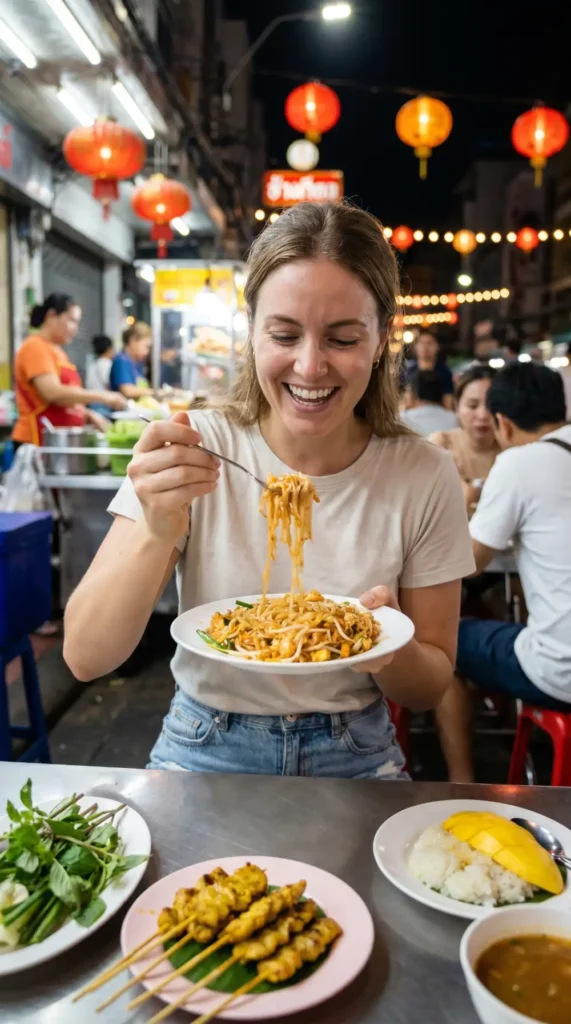
For weekends, there are markets, canal rides, river cruises, gallery spaces, fitness studios, hidden cafés, and a constant stream of new neighborhoods to explore. You will never fully run out of things to do, which is one reason people settle in so quickly.
The “Boring but Important” Legalities to Live in Thailand
This is the part people like to skip. Then they pay for it later. Living in Thailand legally matters, and the rules are not something you should guess your way through.
If you plan to work in Thailand, the official route usually involves a Non-Immigrant B visa and the right work permit process. According to Thailand’s Ministry of Foreign Affairs, the Non-Immigrant B visa is intended for business activities and employment purposes. Initial permissions are generally granted for a limited period and may be extended when eligibility requirements are met.
If you are retired and eligible, the Non-Immigrant O-A route is a common option. Not everyone moves to Thailand for work, though. Some people arrive to study Thai, complete university programs, or spend time learning new skills before deciding what comes next. It is designed for longer stays without work, but the rules are strict and employment is prohibited.
Thailand also requires ongoing immigration compliance after arrival. Long-term residents may be subject to reporting requirements and should monitor current guidance from Thai immigration authorities.
Long-stay visitors and residents must pay attention to reporting rules, and the Thailand Digital Arrival Card is now part of the arrival process. The details matter, especially if you are staying beyond the short tourist window.
The safest move is simple: confirm your visa category, keep copies of everything, and do not rely on what a friend was allowed to do five years ago. Immigration rules change often enough that old advice can be wrong advice.
Quality of Life as an Expat
Quality of life in Bangkok depends less on Bangkok itself and more on the way you build your routine. The city can feel exhausting if you fight it every day. It can feel wonderful if you design your life around convenience.
Expat Community
For many expats, Bangkok provides a balance between career opportunities and overall quality of life. While smaller Thai cities may offer lower living costs, Bangkok generally provides greater access to international services, healthcare, education, and transportation.
Many expats love the food, the healthcare, the international schools, the transport links in central areas, and the sheer amount of choice. Bangkok also has one of the largest expat communities in Southeast Asia. New arrivals can find professional networking groups, language exchanges, hobby clubs, sports leagues, and social communities that make it easier to build friendships and settle into daily life.
Healthcare
Healthcare is frequently cited as one of Bangkok’s strongest advantages for expats. The city is home to internationally accredited private hospitals, many with English-speaking staff and experience treating international patients.
Most expats use private healthcare facilities rather than the public system. Costs are often lower than many Western countries, but health insurance remains strongly recommended, particularly for long-term residents and families. Access to English-speaking doctors is widely available in Bangkok’s leading private hospitals.
Pros and Cons of Living in Bangkok
You can live in a very local way or a very international way, sometimes on the same street.
The harder parts are real too. A common pattern among new arrivals is that the first few months feel exciting, followed by a period of adjustment where the heat, paperwork, and language differences become more noticeable. Most long-term expats eventually develop routines that make daily life much easier.
Another common surprise is that many expats end up spending far less time in Bangkok’s tourist areas than they expected. Daily life usually revolves around local restaurants, neighborhood cafés, grocery stores, fitness centers, and the communities closest to home rather than famous attractions.
Heat, traffic, language barriers, paperwork, and the occasional chaos of city life can wear people down. Bangkok is not a calm mountain town. It is a major capital, and it acts like one. If you enjoy the energy of global cities, it can also be useful to compare how daily life differs between some of the world’s most popular expat capitals.
Still, the city rewards people who stay flexible. Once you know your neighborhood, your favorite cafe, your transport route, and the apps that make daily life easier, Bangkok starts to feel less like a challenge and more like a base.
General Cost of Living in Bangkok
Bangkok can be cheap, comfortable, or expensive depending on how you live. That is the honest answer.
Recent 2026 cost-of-living estimates by Numbeo, show a budget studio in a less prime inner area with good metro access can fall around 12,000 to 20,000 THB a month, while prime one-bedroom apartments are much higher. Actual costs vary significantly depending on neighborhood, housing standards, and lifestyle preferences, so prospective residents should compare multiple sources before budgeting.
Utilities for a single person are often around 2,000 to 4,000 THB, internet commonly lands around 600 to 800 THB, and phone bills often sit near 600 to 1,000 THB.
Food is where many expats still find value. Many newcomers are surprised that imported groceries often become one of their largest lifestyle expenses, while local restaurants remain extremely affordable by comparison. A budget meal can be inexpensive by Western city standards, while imported products, restaurant meals in prime areas, and international habits can push the monthly total upward very quickly.
A comfortable solo lifestyle in Bangkok often lands somewhere around the middle rather than at the absolute low end. People who want a private condo, regular dining out, gym access, and some travel money should plan accordingly.
As a general guideline, many solo expats find they need a mid-range monthly budget that comfortably exceeds basic housing costs if they want regular dining out, entertainment, fitness memberships, and domestic travel.
The biggest money mistake is underestimating rent and transport together. Those two expenses decide whether Bangkok feels affordable or frustrating.
A Few More Things All Expats Should Know Before Moving Here
First, Bangkok is a city of routines. The people who settle well usually have a rhythm: the same grocery store, the same coffee shop, the same route to work, the same backup plan for rainy season.
Second, the weather is part of the lifestyle, not just a backdrop. Heat and humidity shape how you dress, where you walk, when you go out, and how tired you feel at the end of the day. Many newcomers underestimate how much the climate affects daily routines. It is common to plan errands around the hottest hours of the day and to prioritize apartments, offices, and cafés with strong air conditioning.
Third, small administrative tasks are easier when you keep digital copies of everything. Passport, visa, lease, insurance, employment documents, and emergency contacts should all be easy to find.
Fourth, Bangkok gets easier when you stop expecting it to behave like London, Toronto, or New York. It is its own system. Once you accept that, daily life gets smoother.
Fifth, managing money in Bangkok is usually straightforward once you have the appropriate visa status and supporting documentation. Many expats quickly adopt local payment apps and QR code payments, which are widely accepted throughout Bangkok for everything from restaurants to small neighborhood shops.
Finally, build a backup life outside the apartment. Meet people. Join a gym. Try a language class. Many expats who struggle during their first year focus only on work and housing. Those who build friendships, hobbies, and local routines often settle in faster and report a much higher quality of life. Find one or two places where the staff know your face. That is how a big city starts to feel smaller.

Also Read:
Common Mistakes Expats Make When Moving to Bangkok
Final Thoughts
Living in Bangkok can be one of the most rewarding moves you ever make, but it works best when you arrive with realistic expectations. The city is not gentle, but it is generous. If you put in a little time to choose the right area, sort your visa properly, and build a daily routine that fits the city instead of fighting it, Bangkok gives a lot back.
For many expats, the surprise is not that Bangkok is exciting. The surprise is that it becomes home. Every move abroad comes with different trade-offs. If Bangkok isn’t quite what you’re looking for, comparing it with another popular expat destination can sometimes make the decision clearer.