If you have ever thought about swapping your current routine for warm weather, street food, and a job that gives you room to breathe, Thailand makes a lot of sense. Teaching English in Thailand is one of those moves that sounds simple on paper, but the real details matter. The paperwork, the job search, the housing, and the lifestyle all come together fast once you decide to go. This guide walks you through the stuff people usually wish they had known earlier, in plain English.
Also Read: Explorexp blog
Quick Answer
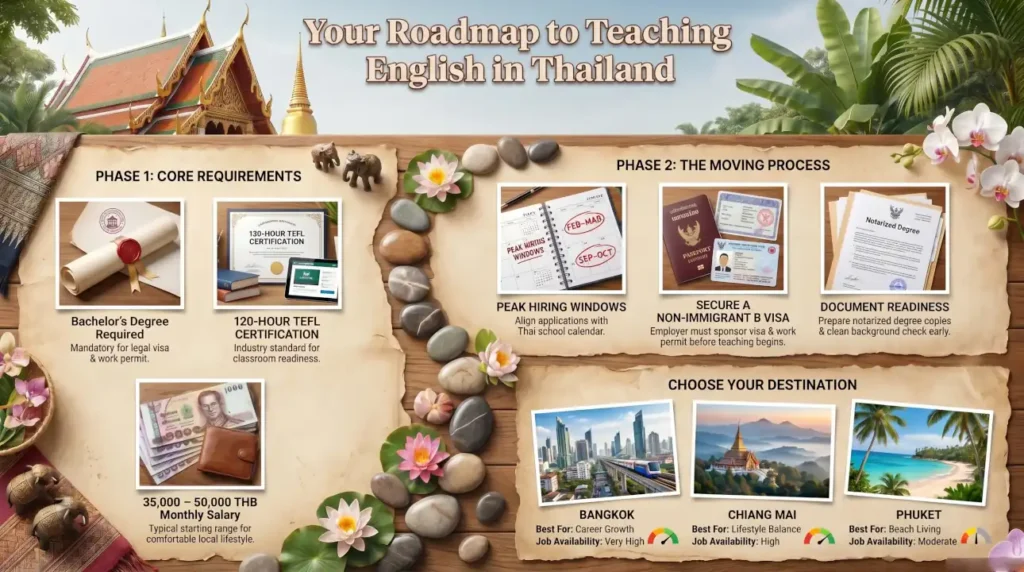
Teaching English in Thailand typically requires a bachelor’s degree, a TEFL certification, and employer-sponsored visa and work permit support. Most first-time teachers work in public schools, private schools, or language centers, with salaries commonly ranging from 35,000–50,000 THB per month depending on location and experience. Thailand remains one of the most popular destinations for new TEFL teachers because of its affordable lifestyle, strong demand for English teachers, and relatively straightforward hiring process.
Key Takeaways
- Most teaching jobs require a bachelor’s degree.
- A 120-hour TEFL certification significantly improves employability.
- Teachers need a Non-Immigrant B visa and work permit before working legally.
- Bangkok offers the largest job market, while Chiang Mai provides a slower lifestyle.
- Peak hiring seasons are usually February–March and September–October.
- Public schools and language centers are often the easiest entry points for new teachers.
Can Foreigners Teach English in Thailand?
Yes. Foreign teachers can legally teach English in Thailand if they meet the school’s hiring requirements and obtain the appropriate visa and work permit. Most schools prefer candidates with a bachelor’s degree and a TEFL certification, while employers typically help coordinate the legal paperwork required to work in the country.
How to Become an English Teacher in Thailand
For most foreign teachers, the process is straightforward:
- Earn a bachelor’s degree.
- Complete a 120-hour TEFL certification.
- Prepare required documents such as your passport, background check, and degree copies.
- Apply for teaching jobs in Thailand.
- Secure employer sponsorship for a Non-Immigrant B visa and work permit.
- Relocate and begin teaching once your paperwork is approved.
While requirements vary slightly by school, this is the route most new English teachers follow when moving to Thailand.
Requirements to Teach in Thailand
The first thing to understand is that the legal route to teaching in Thailand usually starts with a bachelor’s degree. That degree can be in any subject, not just education or English. Most schools also want a 120-hour TEFL certificate, and the visa route for teachers is tied to a Non-Immigrant B visa and a work permit.
The key point is simple: the “official” path is more structured than people sometimes expect, and the degree requirement is part of what makes the visa and work permit process work properly.
You will also usually need the basic supporting documents that employers ask for when they process your paperwork. That normally includes a clean criminal record check, a health check, passport photos, and copies of your degree and TEFL certificate. Some schools are stricter than others, especially in Bangkok and with better-paying positions, so it helps to have your documents ready before you start applying.
Non-native English speakers can also find teaching opportunities in Thailand, although some employers may request proof of English proficiency through qualifications, references, or tests such as TOEIC or IELTS.
In practice, schools often begin reviewing paperwork before they schedule interviews. Teachers who arrive with notarized degree copies, a recent background check, and digital versions of all documents usually move through the hiring process much faster than candidates trying to gather paperwork after receiving an offer.
One thing that catches new teachers off guard is how much the visa and work permit side matters in Thailand. According to the Thailand Board of Investment, foreign nationals must obtain the appropriate authorization before beginning employment. In other words, this is not something to sort out after arrival. It is a core part of the teaching process.
Getting Your TEFL Certification
For Thailand, a 120-hour TEFL course is still the standard people talk about most. It is not just a checkbox. It gives you the classroom basics, makes you more employable, and helps you walk into interviews with a bit more confidence. TEFL.org also notes that a 120-hour TEFL qualification is the minimum many employers expect, alongside the degree requirement for the visa route.
If you are still sorting out the vocabulary and not sure how TEFL compares with TESOL, CELTA, and other teaching qualifications, understanding the differences early can save both money and frustration. Many new teachers spend hours researching certification options before realizing they are comparing completely different credentials. Our guide to teaching English acronyms breaks down the most common terms and explains what they actually mean for teaching abroad.
It saves a lot of confusion before you spend money on the wrong course. The acronym jungle is real, and it is much easier to make a good choice once you know what each term actually means.
A common question among prospective teachers is whether they should get certified before applying or after arriving. In most cases, completing certification first makes the job search easier because schools can immediately verify that you meet one of their key hiring requirements.
Hiring is easier when you can say you are already ready to go. It also removes one of the biggest sources of stress from the move. In Thailand, being prepared matters more than sounding enthusiastic.
What’s Included with TEFLPros?
TEFLPros says its course includes a full 120-hour TEFL certification, free one-year access to its community, lifetime access to course materials, and job assistance. The company also describes its course as flexible, with online modules, live support, and practical teaching tips. That combination is appealing if you want something that feels less like a lonely self-study course and more like a guided launch into teaching abroad.
What stands out is that TEFLPros is not just selling a certificate. It is trying to give you a support system around it. Their FAQ and about pages emphasize community, coaching, and personalized job assistance, which matters a lot if this is your first time moving overseas for work. A lot of people underestimate how useful that extra hand-holding can be when they are making the jump.
When Should I Start the Course?
The best time to start your course is before you are in a rush. Ideally, give yourself enough time to finish the certification, gather your documents, apply for jobs, interview, and handle the visa process without panic. TEFLPros says students have 18 months to complete the course, which gives you breathing room, but you do not want to use all of it if you are trying to move soon.
A practical rule is to start as soon as the decision feels real. If you already know you want to teach in Thailand, starting two to three months before your move is a very workable timeline for most people. That gives you space to finish the course and still apply during hiring windows, especially since some of the best hiring seasons in Thailand tend to cluster around February and March, then again around September and October.
Finding a Job as an English Teacher in Thailand
| School Type | Typical Requirements | Salary Potential |
| Public School | Degree + TEFL | Moderate |
| Private School | Degree + TEFL | Moderate–High |
| International School | Teaching License Often Required | High |
| Language Center | Degree + TEFL | Moderate |
Jobs in Thailand are spread across public schools, private schools, international schools, and language centers. If you are new, public schools and language schools are often the easiest way in. International schools can pay more, but they tend to be more selective and usually expect more experience. That is why many first-time teachers focus on the middle ground first, then move up once they have a year or two under their belt.
The most useful mindset here is to treat job hunting like a process, not a single application. You will usually do better if you apply widely, keep your CV simple, and follow up like a real human being instead of sending one message and waiting for magic. Thailand’s market rewards flexibility.
Demand for qualified English teachers remains strong across many parts of Thailand. Public schools, language centers, and private schools regularly recruit foreign teachers throughout the year, although hiring activity tends to increase around major school start dates.
Before applying, create a simple shortlist that includes:
- Salary offered
- Teaching hours
- Class size
- Visa support
- Work permit support
- Housing assistance
- Location
Comparing opportunities this way makes it easier to avoid accepting a role based only on salary. If you are open on location, school type, and starting date, you usually give yourself a better shot.
It also helps to remember that timing matters. TEFL.org’s Bangkok guide notes that peak hiring seasons are often around February/March and September/October, which lines up with school calendar cycles. That does not mean you cannot get hired outside those months, but it does mean you should not wait until the last minute if you have a flexible window.
Typical Teacher Salaries in Thailand
First-time English teachers in Thailand commonly earn between 35,000 and 50,000 THB per month, though salaries vary by city, school type, qualifications, and experience.
International schools and universities often pay more, while language centers and smaller private schools may offer lower starting salaries. Housing is usually not included, so salary should always be evaluated alongside living costs and commute requirements.
For most new teachers, Thailand offers a comfortable lifestyle rather than a high-savings destination. Teachers whose primary goal is maximizing savings may find stronger opportunities in destinations such as South Korea, China, or some Gulf countries, where compensation packages often include benefits like housing allowances or airfare reimbursement. Which is why evaluating salary alongside living costs is often more important than focusing on headline pay alone.
Job Platforms for English Teachers
If you are looking for the most obvious places to search, Ajarn is one of the best-known Thailand-focused job boards, and it is updated daily. TEFL.org also points teachers toward its own Jobs Centre, and TEFL.com lists a large range of ESL and TEFL roles. For a broader view of available openings, TEAST is another active option that shows current teaching jobs across Thailand.
The smartest way to use these platforms is not to depend on one of them alone. Keep a shortlist, compare job descriptions, and pay attention to details like location, teaching hours, class size, and whether the school actually helps with the visa and work permit paperwork. A job that sounds exciting can become a headache very quickly if the admin side is messy.
Securing Your Work Permit
This is the part people postpone, but they should not. In Thailand, the legal side of working is not optional. The BOI explains that foreigners working in Thailand must obtain a work permit before starting work. For teachers, the visa and work permit process normally runs through the employer, so the school’s willingness and ability to help matters a lot.
In practice, this means you should ask direct questions before accepting a job. Ask who handles the visa paperwork, when the work permit is issued, which documents they need from you, and whether they have experience sponsoring foreign teachers. If the answers are vague, slow, or inconsistent, that is a warning sign. It is better to know early than to find out after you have already committed.
The actual process can vary depending on your school and visa category, but the general rule stays the same: you should not begin work and hope the permit catches up later. That is exactly the kind of mistake that creates avoidable stress. The legal order matters, even if the hiring manager talks casually about it.
While most teachers enter Thailand through employer-sponsored work authorization, some people initially move to the country using other visa options. Understanding how routes such as the Thailand ED Visa differ from employment-based visas can help avoid confusion when planning a long-term move.
Daily Life as an English Teacher in Thailand
Life as an English teacher in Thailand can look very different depending on the school, city, and age group you teach. Daily life in Thailand is one of the biggest reasons people stay longer than they planned. Your mornings might start early, your school day may be structured, and your afternoons can be busy or surprisingly light depending on the school.
Outside work, the rhythm is usually what people fall for first: food stalls, night markets, weekend trips, and the feeling that life is a little less locked in than it was back home. That does not mean everything is easy. It just means the trade-offs often feel worth it.

Making friends is usually easier when you stop waiting for a social circle to appear and start creating opportunities to meet people. Many teachers build friendships through coworkers, language exchanges, sports clubs, volunteer groups, and hobby classes. If you are worried about starting over socially, learning a few practical ways to make friends abroad before you move can make the transition feel much less intimidating.
Thailand can also be a place where your normal routine changes in a good way. You may ride a motorbike instead of driving, eat out more often than you cook, and spend more time outdoors than you used to. The weather is warm, the pace can feel intense in the city, and the small inconveniences become part of the story. Most teachers adjust faster than they expect.
One thing that surprises many first-time teachers is how quickly the classroom becomes the easiest part of the job. The bigger adjustment is often adapting to a different culture, school environment, and pace of life. Teachers who arrive expecting everything to work exactly like it does at home usually experience more frustration than those who stay flexible and curious.

What Are Thai Classrooms Like?
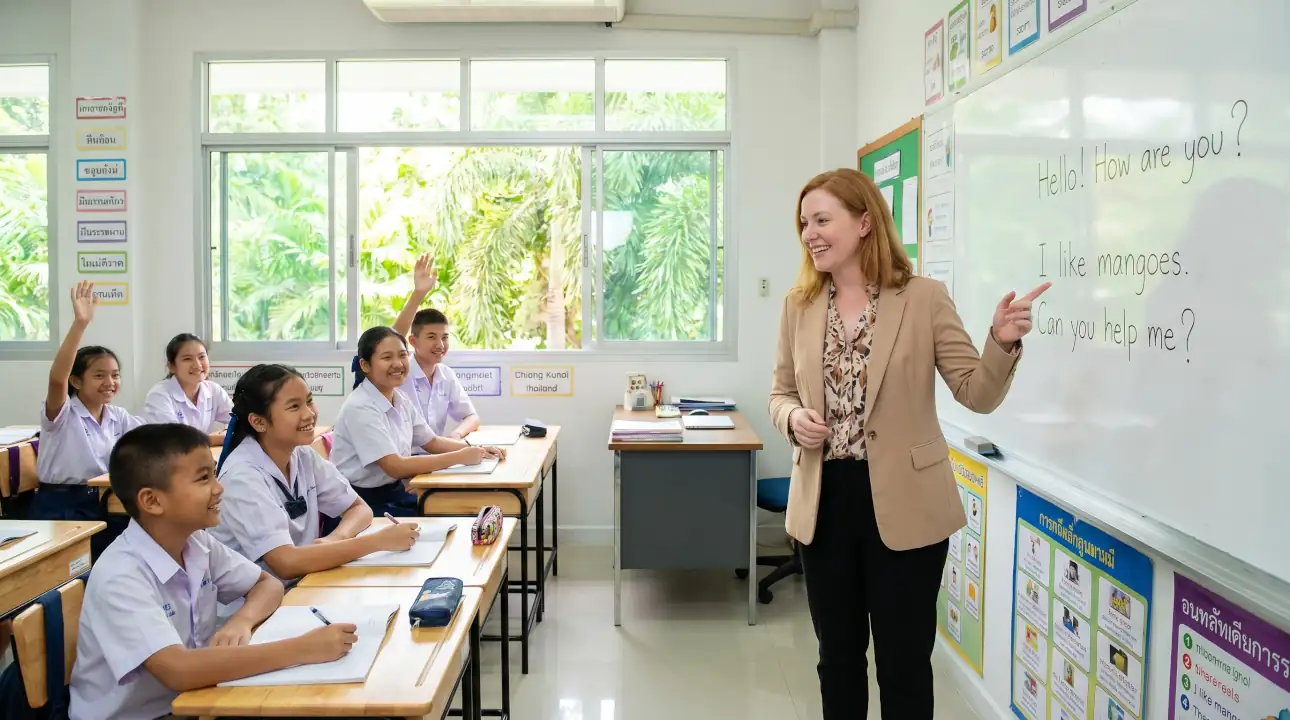
Many first-time teachers are surprised by the size of some classrooms. Public schools may have 30–50 students in a class, while private schools often have smaller groups. Teaching resources and technology can vary significantly between schools, so flexibility matters.
Most teachers find that building rapport with students, adapting lessons to different ability levels, and learning how their school operates becomes easier over time. While every school is different, patience and adaptability tend to matter just as much as teaching ability.
Pros and Cons of Teaching English in Thailand
Best Places to Live in Thailand
| Location | Best For | Cost of Living | Job Availability |
| Bangkok | Career opportunities | Higher | Very High |
| Chiang Mai | Lifestyle balance | Moderate | High |
| Phuket | Beach lifestyle | Moderate-High | Moderate |
| Koh Samui | Island living | Moderate | Moderate |
| Chiang Rai | Affordability | Lower | Lower |
| Koh Pha Ngan | Lifestyle-focused teachers | Moderate | Lower |
There is no single best place to live in Thailand. The right choice depends on the kind of life you want outside the classroom. Bangkok gives you the biggest concentration of jobs and the fullest city experience. If you’re considering the capital, it’s worth understanding the realities of living in Bangkok, including housing costs, transportation, healthcare, and what day-to-day life is actually like for expats.

For teachers whose priority is finding the widest range of opportunities, Bangkok is usually the easiest place to start. The city has the highest concentration of public schools, private schools, language centers, and international schools, making it one of the most popular destinations for people who want to teach English in Bangkok and build experience quickly.
Chiang Mai feels slower and easier to settle into, making it one of the most popular destinations for expats who value affordability, walkability, and a relaxed lifestyle. If you’re considering northern Thailand, it’s worth learning what daily life in Chiang Mai is actually like before deciding where to base yourself.
Phuket and the southern islands suit people who want beach life and do not mind a more seasonal rhythm. If island living is part of your plan, comparing Thailand’s southern islands can help you narrow down which destination best matches your lifestyle. Chiang Rai and Koh Samui are also strong choices if you want a slightly different pace.

TAT’s destination pages make it clear that these places each have their own identity, which is exactly why they work so differently for expats.
- Bangkok – best for job availability, nightlife, and public transportation.
- Chiang Mai – popular among digital nomads and teachers seeking a slower pace.
- Phuket – ideal for beach lovers and resort-style living.
- Koh Samui – combines island life with modern amenities.
- Chiang Rai – quieter and more affordable than Chiang Mai.
- Koh Pha Ngan – attractive for those prioritizing lifestyle and outdoor activities.
They also match the kinds of reader questions people ask right after they search for Thailand teaching jobs.
Housing in Thailand
Housing in Thailand is usually easier to find than people fear, but it still takes some local knowledge. Many teachers rent condos or apartments, and the best choice depends on how much you care about commute, nightlife, gym access, peace and quiet, and whether you want to live alone or with roommates. In places like Bangkok, being near transit can matter more than having a slightly nicer room. In smaller cities, the opposite can be true.
Many schools will offer local housing recommendations, but very few provide accommodation directly, so teachers should expect to arrange their own rental in most cases.
A good way to think about housing is this: do not overbuy your first rental in your head. New arrivals often want a perfect place immediately, but the smartest move is usually a simple first apartment that gives you time to learn the area.
Once you know your commute, your favorite neighborhoods, and your real budget, it becomes much easier to upgrade or move. Most long-term expats eventually discover that choosing the right neighborhood matters more than finding the perfect apartment on day one.
Common Mistakes New Teachers Make
Many first-time teachers run into avoidable problems because they focus on the destination instead of the logistics.
Common mistakes include:
Most of these issues can be avoided by preparing documents early and asking detailed questions before signing a contract.
Will You Try Teaching English in Thailand?
Thailand is one of those countries that can change the direction of your life if you let it. It is not just about a job. It is about a new pace, a new routine, and a new version of yourself that shows up once you stop overthinking the move. That said, the decision should be practical, not romantic. Make sure you understand the degree requirement, the TEFL requirement, the visa process, and the work permit rules before you book anything.
Once those pieces are clear, Thailand becomes much less mysterious. You can compare schools, choose a city that fits your personality, and decide whether you want the energy of Bangkok, the balance of Chiang Mai, or the beach life of the south.
Also Read:
Thailand is a great option, but it is not the right fit for everyone. Some people discover that teaching is the right path, while others realize they would prefer location-independent work and a longer-term stay through options such as the Thailand Digital Nomad Visa.
Some teachers prioritize higher salaries, while others care more about lifestyle, savings potential, or long-term career development. If you are still weighing your options, comparing Thailand with other popular destinations for teaching English abroad can make it much easier to decide which country best matches your career goals, budget, and preferred lifestyle.
Final Thoughts
Teaching English in Thailand is a real opportunity, but it works best for people who like a bit of adventure and do not mind handling practical details. The job can be fun, the country is easy to love, and the lifestyle is often more affordable and interesting than people expect.
Still, the move goes much smoother when you treat it like a proper project instead of a spontaneous escape. Get certified, keep your documents in order, apply widely, and choose a place that fits your day-to-day life, not just your travel fantasies.
For most new TEFL teachers, success in Thailand comes down to preparation rather than experience. If you arrive with the right qualifications, realistic expectations, and a school that supports the visa process, the transition is usually much smoother.
The country offers a strong balance of professional opportunity, affordability, and lifestyle, which is why it remains one of the most popular destinations for teachers starting their international careers.