Mexico can feel completely different depending on when you visit. January is ideal for comfortable city exploration, September brings higher weather risks along some coastlines, and November often offers one of the best balances of price, weather, and culture. Whether you’re planning a vacation, a scouting trip before you Move Abroad, or comparing destinations like Mérida, Guadalajara, Mexico City, and other Central Mexico hotspots, choosing the right season can dramatically improve your experience.
This guide is designed for travelers, digital nomads, and future expats who want to choose the right season for a vacation, extended stay, or relocation scouting trip in Mexico.
Quick Answer
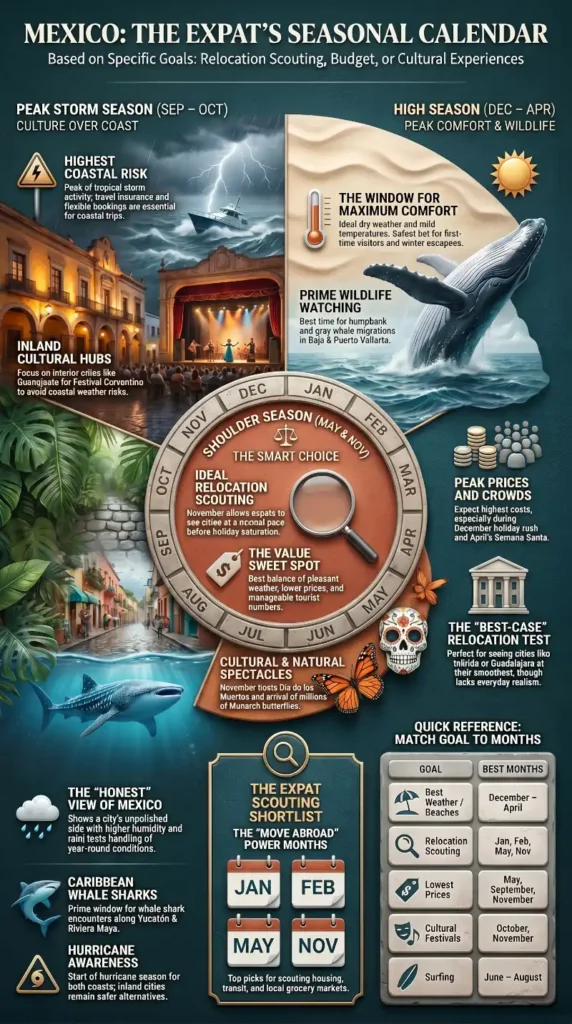
For most travelers, the best time to visit Mexico is between December and April, when much of the country experiences dry weather and comfortable temperatures. However, May and November often provide a better balance of value, smaller crowds, and pleasant conditions, while January, February, May, and November are typically the most useful months for relocation scouting and long-term stay research.
Why The Best Time to Visit Mexico Depends on Your Goal
The best time to visit Mexico is usually between December and April, when much of the country experiences dry weather, comfortable temperatures, and favorable travel conditions. However, travelers focused on lower prices, fewer crowds, or relocation research may find May and November better choices, while summer can offer good value despite occasional rain.
There is no single perfect month for Mexico, because the country is huge and the experience changes from region to region. Beach towns, highland cities, desert areas, and jungle regions do not feel the same at all. That is why a trip that works beautifully for whale watching in Baja California Sur may not be the best choice for someone scouting a life in Mexico City or Guadalajara. Mexico also has a clear hurricane season on both the Atlantic and eastern Pacific sides, which affects coastal travel more than inland travel.
If your main goal is comfort and predictable weather, the dry season is usually the safest bet. If your goal is lower prices and fewer people, the shoulder months can be smarter. And if your goal is relocation research, the best time may be the month that lets you see how a city actually feels when locals are not in holiday mode. That is the real trick. You are not just choosing a month. You are choosing the version of Mexico you want to experience first.
A Quick Guide to Mexico by Month
| Month | Why Visit Mexico |
| January | Comfortable weather, whale watching, and city exploration |
| February | Pleasant temperatures and ideal conditions for first-time visitors |
| March | Warm weather, beach travel, and a lively atmosphere |
| April | Great weather and Semana Santa celebrations |
| May | Better value, fewer crowds, and shoulder-season travel |
| June | Surf season, whale sharks, and lower prices |
| July | Summer adventures and flexible travel opportunities |
| August | Good value and fewer crowds than peak season |
| September | Lower prices but increased hurricane risk on some coasts |
| October | Festival Cervantino and cultural travel opportunities |
| November | Día de los Muertos, monarch butterflies, and excellent shoulder-season conditions |
| December | Holiday celebrations, cooler weather, and festive cities |
If you want more detail, the sections below break down each season, including weather patterns, crowd levels, cultural events, wildlife experiences, and relocation considerations.
Best Time to Visit Mexico During the High Season (December–April)
If someone asks me for the simplest answer to the best time to visit Mexico, I usually say December to April. This is the most popular stretch for a reason. Weather is generally better, especially if you want to escape winter in North America or Europe. It is the season many people picture when they imagine Mexico at its easiest and most welcoming. The tradeoff is simple: more people, higher prices, and the need to book ahead.
This is also the time of year when Mexico feels especially appealing to a future expat. If you are testing out life abroad, the high season lets you experience a city when everything is running smoothly and the weather is friendly. That can be very useful, because it gives you a best-case first impression. Just remember that a destination can feel calmer and cheaper in other months, so this is not automatically the best relocation test if you want realism. It is the best test if you want comfort.
Holiday Travel to Mexico
December through early January is a classic holiday window. People travel for Christmas, New Year, and family time, and that makes flights and stays busier. It is also when many travelers want warmth instead of winter. If you like lively streets, decorated plazas, and a festive mood, this period delivers. But if you are price sensitive, it is not the cheapest time to go.
For relocation-minded travelers, holiday season is useful for a different reason. You can see how locals celebrate, how neighborhoods look when they are active, and whether a city still feels like a place you could live in beyond the vacation glow. That matters in places like Mexico City, Guadalajara, and Mérida, where the day-to-day experience is often more important than the tourist version.
Whale Watching in Mexico
The high season is also one of the best periods for whale watching in parts of Mexico. Mexico’s tourism authorities identify Baja California Sur, including areas around Loreto, as one of the country’s premier whale-watching regions during the winter migration season. Travelers planning wildlife-focused trips generally have the best opportunities between December and April.
Depending on the destination, visitors may have opportunities to spot humpback whales, gray whales, and other migratory species that spend part of the winter season along Mexico’s Pacific coastline.
Puerto Vallarta is another destination that attracts visitors during the winter whale-watching season. Between December and March, wildlife-focused travelers often combine coastal sightseeing with opportunities to observe migrating whales along Mexico’s Pacific coast.
If you are planning a coastal trip around wildlife, this is the kind of detail that can make the whole visit better. You are not just hoping for good weather. You are matching the trip to the season when the experience is actually available. That is smarter travel.
Why Visit Mexico in December
December is a strong month for holiday energy, festive food, and city walking. It is a great time for plazas, markets, museums, and relaxed neighborhood exploring because the weather is usually more comfortable than in the hotter months. It is also a good month if you want to compare neighborhoods without sweating through every block. That makes it one of the better months for relocation research as well as sightseeing.
December is also worth considering if your Mexico trip is part vacation, part reconnaissance. You can sit in cafés, take walking tours, and notice how people use a neighborhood at a normal pace. That is often more valuable than rushing between attractions. For someone thinking about a move, December can be a very practical month to get a first feel for daily life.
Why Visit Mexico in January
January is one of my favorite months for a first-time Mexico trip. The holiday rush has usually settled, the weather is still friendly in many popular areas, and there is enough activity to make the country feel lively without being overwhelming. It is a good month for exploring cities, spending time outdoors, and deciding whether a destination feels like a place you could return to for a longer stay.
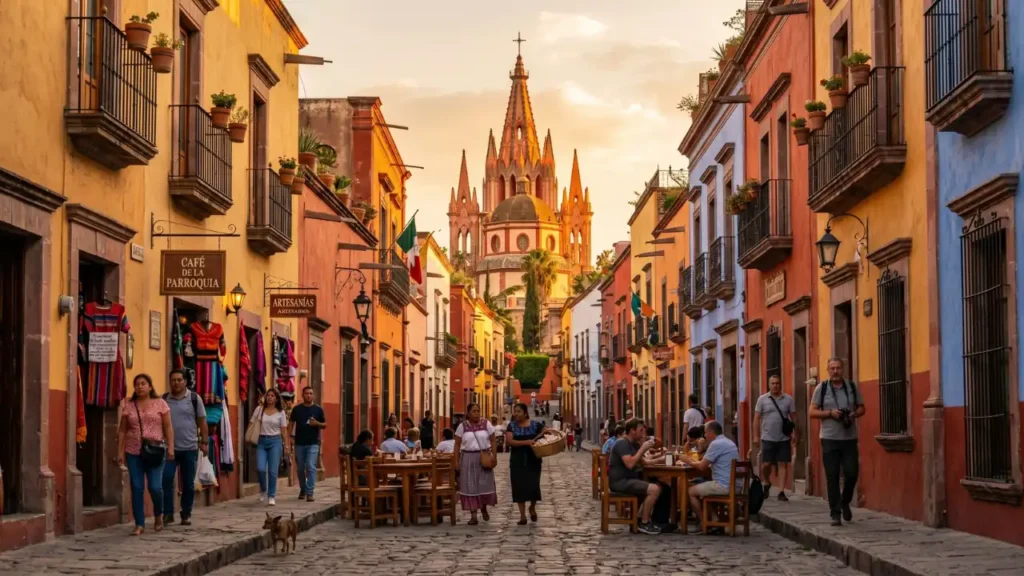
If you are traveling with relocation in mind, January is especially useful for city comparisons. You can look at places like Mérida, Guadalajara, and Mexico City with fresher eyes because you are not dealing with the chaos of peak holiday travel. That makes it easier to focus on housing areas, neighborhood feel, and daily rhythms.
Best Time to Visit Mexico During Summer (June–August)
June through August is often underrated. Travelers sometimes assume summer is a bad time for Mexico, but that is too simple. Yes, some parts of the country see more rain. Yes, it can feel more humid in certain regions. But summer can also mean better prices, lighter crowds, and a different kind of trip that feels less rushed. NOAA’s seasonal climate guidance shows that this period falls inside the active hurricane season for both the Atlantic and eastern Pacific, so coastal travelers do need to plan carefully. Still, for many inland trips, summer is perfectly workable.
This is the season for travelers who are comfortable being flexible. If a short shower passes in the afternoon and the rest of the day is open, that is not a disaster. It is just part of the rhythm. Summer also works well for people who want to spend more time in cities, food neighborhoods, cafés, museums, and markets instead of chasing perfect beach weather every day.
Things To Do in Mexico Between June and August
Summer is a smart time for lower-cost city exploring and slow travel. It can also be a good window for surf-friendly destinations and nature-based trips if you are prepared for changing weather. Mexico’s official tourism material highlights several nature and adventure areas, including Baja California Sur, which makes summer a useful season for travelers who are chasing a more active itinerary instead of a postcard-perfect beach escape.
Summer is also the prime season for whale shark encounters along parts of Mexico’s Caribbean coast. Between June and August, travelers visiting areas across the Yucatán Peninsula, including parts of the Riviera Maya and Caribbean coast, often choose wildlife excursions that focus on these seasonal visitors, making it one of the most distinctive nature experiences available during the summer months.
For relocation scouting, summer is valuable because it shows you a city in a less polished mode. You will see how people really live when the weather is warmer and more variable. That can help you compare what it feels like to live in a place versus what it feels like to vacation there. If you are choosing between cities and want a more honest view, summer can be surprisingly helpful.
Best Time to Visit Mexico During Hurricane Season (September–October)
September and October are the months to approach with the most caution if you are focused on the coast. According to NOAA’s Tropical Cyclone Climatology, the Atlantic hurricane season runs from June 1 through November 30, with peak activity typically occurring around September, while Mexico’s Pacific coast is also affected by seasonal tropical storm activity. NOAA also states that the eastern Pacific season runs from May 15 to November 30, which is important for Mexico’s Pacific side. In simple terms, these months can be beautiful, but they are also the period when weather risk is most worth watching.
That does not mean you should avoid Mexico altogether. It means you should choose your destination more carefully. Inland cities can still be excellent at this time of year, especially if you are focused on culture, food, and neighborhood research rather than beach time. This is often the best strategy for travelers who want fewer crowds and lower prices but do not want to gamble on a storm-prone coastline.
Travel insurance and flexible booking policies are especially valuable during this period, as weather-related disruptions can affect flights, ferries, and coastal accommodations.
Things To Do in Mexico in September and October
If you visit during this period, think indoors, city-centered, and flexible. Museums, food tours, cafés, markets, and cultural walks become especially attractive because they do not depend on perfect weather. For a relocation trip, this can actually be a plus. You will spend more time looking at normal life, which is exactly what matters when you are trying to decide where to live.
October also leads into one of Mexico’s most meaningful cultural moments. October is also when Guanajuato hosts the Festival Cervantino, one of Latin America’s most recognized cultural festivals. The event attracts performers, artists, and visitors from around the world, making it an appealing addition for travelers interested in music, theater, and cultural experiences beyond Mexico’s beach destinations.
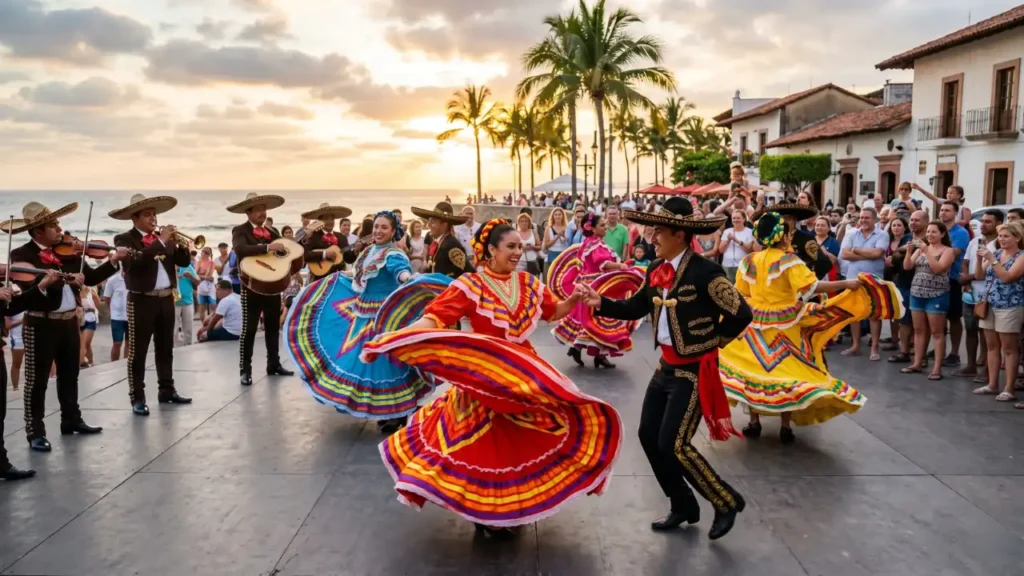
Official Mexico tourism information describes Día de los Muertos as one of the country’s most representative festivities, celebrated on November 1 and 2, with parades, altars, cemetery visits, and other cultural events in many places. If you are interested in culture, this stretch can be one of the most memorable times of year to be in Mexico, especially in destinations that take the celebration seriously.
Best Time to Visit Mexico During the Shoulder Season (May & November)
May and November are the months I would call the smart traveler’s months. They often give you a better balance of weather, crowds, and price than the peak season does. May comes before the heaviest summer-weather stretch in many places, while November arrives after the worst of hurricane season has started to ease in many regions and before the big December holiday rush. NOAA’s hurricane climatology and Mexico’s tourism calendar both point to this as a more practical shoulder window for a lot of travelers.
For people thinking about moving abroad, this can be a very good time to visit. You are less likely to see a destination only at its most touristy, and more likely to get a cleaner sense of what everyday life feels like. Prices can also be more manageable, which matters if your trip is as much a scouting mission as a holiday.
Things To Do in Mexico During May
May is a good month for travelers who want a little breathing room. It is often warm enough for outdoor time, but not yet deep into the more volatile part of hurricane season. That makes it useful for city visits, neighborhood walks, and relaxed planning. If you are comparing possible homes, schools, or work bases, May can give you a clear look without the heavy crowd pressure of peak season.
May is also a pleasant time to visit Oaxaca, where many travelers enjoy comfortable sightseeing conditions before heavier summer rainfall becomes more common. For people interested in food, culture, and walkable city experiences, it can be one of the most enjoyable shoulder-season destinations in Mexico.
It is also a smart time for people who care about value. You can often find a better balance between weather and cost than you would in December or March. That alone makes May a strong candidate for travelers who are not tied to school calendars or holiday timing.
Why Visit Mexico in November
November is one of the best months for a culturally rich Mexico trip. The weather is often easier than in the stormiest months, and it leads directly into the busy holiday period without quite reaching it. Mexico tourism officials highlight Día de los Muertos on November 1 and 2 as a major national celebration, with altars, cemetery visits, and public events that bring a lot of life into the streets. If you want your trip to feel meaningful, November can be hard to beat.
November also marks the beginning of the monarch butterfly migration season. Millions of butterflies arrive in the forested mountain regions west of Mexico City, creating one of North America’s most remarkable wildlife spectacles and giving nature-focused travelers another reason to consider a November visit.
It is also a practical month for relocation exploration. You can see a city when it is active but not at full holiday saturation. That balance is useful if you are trying to decide whether to live in a place rather than merely visit it. The difference matters. A city that feels pleasant for a week may feel very different after a year, so November gives you a better middle ground than peak tourist season.

Which Month Is Best If You Are Considering a Move Abroad?
If your goal is relocation research, I would think about the trip in a different way. One mistake many future expats make is evaluating a city only through tourist experiences. Spend time grocery shopping, using local transportation, walking residential neighborhoods, and working from cafés or coworking spaces. Those ordinary activities often reveal more about daily life than major attractions.
Instead of asking only, “When is the weather best?” ask, “When will I see the city in a way that helps me make a life decision?” For many people, that means visiting in January, February, May, or November. Those months often give you a more balanced look at daily life without the extreme crowd levels of the holidays or the weather risk of peak storm season.
If you are comparing cities, timing can also shape your opinion more than you realize. Pay attention to practical details during your visit. Test public transportation, visit grocery stores, check healthcare options, and spend time in residential neighborhoods outside the main tourist districts. Those experiences often reveal more about long-term livability than sightseeing attractions.
If Mexico City is on your shortlist, spend time exploring multiple districts rather than judging the city from a single neighborhood. The experience can vary dramatically depending on where you stay, which is why comparing Mexico City neighborhoods before a scouting trip can help you narrow down areas that match your budget, lifestyle, and comfort level.
Mexico City may feel most comfortable when the weather is mild and you can walk neighborhoods for hours. Guadalajara may feel easier to explore when you are not rushing to escape rain or heat. Mérida may tell you a lot about your tolerance for warmth, brightness, and slow local rhythms. That is why city guides matter so much when you are thinking about a move abroad.
Best Time to Visit Mexico Based on Your Goal
Final Thoughts
The best time to visit Mexico depends on what you want most from the trip. If you want the easiest overall experience, December to April is usually the safest bet. If you want lower prices and fewer crowds, May and November often make the most sense. If you want a trip that feels more local and less tourist-driven, the summer months can be surprisingly useful. And if you are eyeing the coast in September or October, go in with a weather plan and flexible expectations.
For travelers, that means choosing the right season for your style. For relocation-minded readers, it means using timing as a tool to see how Mexico really works in everyday life. That is the real goal here. A good trip is nice. A useful trip is better. For prospective expats, the ideal travel month is not always the month with the best weather.
The most valuable scouting trip is often the one that shows you how a city functions during ordinary daily life, because that is the experience you would eventually be living rather than visiting. And the best Mexico trip is the one that helps you decide whether this country is just a place you want to visit or a place you might actually want to call home.