🌿 Sangamner – Where Rivers Meet, Cultures Blend, and Heritage Thrives 🕉️ 🌾
🔴 Brief Introduction: Sangamner – Where Traditions Flow with Time
Tucked away in the northern expanse of Ahmednagar District, Sangamner is a treasure trove of heritage, spirituality, and modern growth. Named after the Sangam (confluence) of three rivers—Pravara, Mhalungi, and Adhala—Sangamner has evolved from a traditional settlement into a flourishing urban center with deep-rooted historical and cultural significance.
This town is more than just a geographical entity—it’s a place where legends were shaped, dynasties once ruled, artisans thrived, and today, young entrepreneurs and spiritual seekers alike find purpose. Sangamner’s charm lies in its dual identity. On one hand, you can stroll through centuries-old temples, Mughal-era structures, and bustling weekly markets; on the other, you’ll witness a fast-developing region, with educational institutes, clean roads, and rising infrastructure.
Set amidst the scenic Sahyadri foothills, Sangamner not only enjoys a pleasant climate but also boasts some of the most picturesque drives in the region. Its location makes it a strategic stop for tourists heading towards Shirdi, Nashik, Pune, or Mumbai. Yet, few realise the allure that Sangamner itself holds.
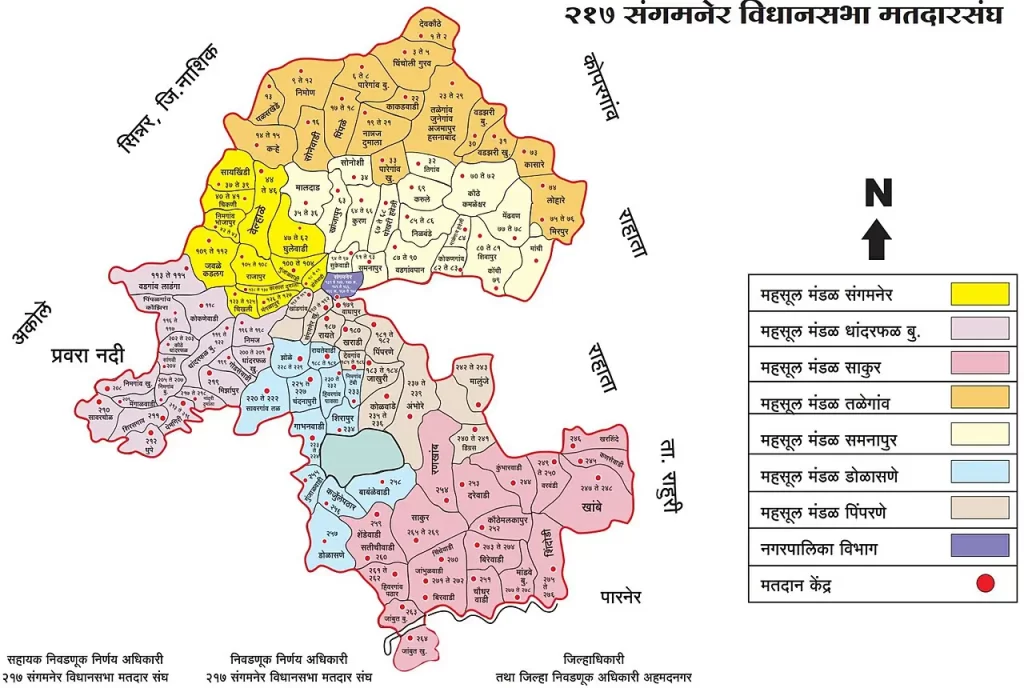
🟢 In this comprehensive travel blog, we’ll take a deep dive into:
📜 The History of Sangamner and its Architectural wonders
🏛️ A look into the local culture, interviews with residents, and lifestyle
🧭 Detailed Travel Tips, Routes, and Transport options
🛕 Spiritual landmarks and Places of Worship
🍛 Local Cuisine, Handicrafts, and Markets worth exploring
🗺️ Nearby Attractions, Weather updates, Travel Itineraries, and more!
Whether you’re a solo traveler, a spiritual seeker, or a cultural enthusiast—Sangamner has something to offer you. So, fasten your seatbelt (or tie your turban), and let’s explore Sangamner—Ahmednagar’s hidden gem.
🟣 Section-by-section Breakdown in Brief
“Sangamner – Where Waters Whisper and History Sings” 🎶 🌊
🏛️ Historical Overview of Sangamner
Sangamner’s history is a tapestry woven with mythological references and concrete historical evidence. The name Sangamner, derived from the Sanskrit word Sangam (confluence), refers to the meeting of three rivers. Historically, this geographical feature made Sangamner a crucial site for trade, agriculture, and religious activities.
It is said that the town saw significant development during the Yadava dynasty, and later under the rule of the Bahmani Sultanate and the Mughals. According to local historians, the Battle of Sangamner (1679) between Chhatrapati Shivaji Maharaj’s forces and the Mughal Empire took place here—marking one of the final battles before Chhatrapati Shivaji’s death.
Several old Temples, stone bridges, and step-wells still echo the past, quietly standing as silent witnesses to centuries of transformation. You can spot Deccan Sultanate-style architecture in some of the older civic structures and temples like Chandika Mata Temple and the historical wada-style houses in the core town area.
🏗️ Architecture & Heritage Sites
➙ Chandika Mata Temple: A centuries-old temple with stone-carved entrances and deep spiritual significance.
➙ Old stone bridge: Built during the colonial era, still in use and revered for its solid engineering.
➙ Traditional Wadas: These traditional Maharashtrian mansions showcase wooden balconies, courtyards, and limestone walls.
➙ Historical step-wells: Used for rainwater harvesting in earlier times, some are still preserved and offer a unique glimpse into water management systems of ancient India.
Interviews with elderly locals reveal how these structures served both practical and spiritual purposes, often being gathering spots for social and cultural events.

🧭 How to Reach Sangamner
🚗 By Road:
✪ From Mumbai: ~190 km via NH 160 (Approx. 4.5 to 5 hours)
✪ From Pune: ~150 km via NH 60 (Approx. 3.5 hours)
✪ From Nashik: ~70 km (Approx. 1.5 to 2 hours)
✪ From Ahmednagar City: ~120 km (Approx. 3 hours)
🚌 By Bus:
✪ MSRTC buses are available from Pune, Nashik, Ahmednagar, and Mumbai.
🚆 By Rail:
✪ Nearest railway stations: Belapur, Akole, and Nashik Road
✪ Ahmednagar station is about 3 hours away with bus and cab connections.
✈️ By Air:
✪ Nearest Airport: Shirdi International Airport (~23 km away)
🗺️ Best Places to Visit in Sangamner
➪ Chandika Devi Temple – Ancient shrine known for religious fairs.
➪ Hanuman Tekadi – A hilltop temple with panoramic town views.
➪ Shree Ram Mandir – Located in the heart of the town, beautifully built.
➪ Sangam of Rivers (Pravara, Mhalungi, Adhala) – Sacred spot for rituals.
➪ Weekly Bazaar – Great place to explore rural shopping and street food.
➪ Local Farms – Visit grape and onion farms in the outskirts for a real agro-tourism experience.
🕰️ Best Time to Visit Sangamner
☁️ Winter (October to February): Ideal for temple visits and sightseeing.
🌧️ Monsoon (July to September): Lush green surroundings but pack rain gear.
☀️ Avoid peak summer (April–June): Due to heat, unless attending specific events or festivals.
🌦️ Detailed Weather Conditions
| Season | Temperature | Notes |
| Summer | 30–42°C | Hot and dry |
| Monsoon | 22–30°C | Moderate to heavy rainfall |
| Winter | 12–25°C | Cool and pleasant |
🛕 Places of Worship
➪ Chandika Mata Mandir
➪ Datta Mandir
➪ Hanuman Mandir on Tekadi
➪ Shree Swami Samarth Temple
➪ Sai Mandir (nearby Shirdi)
These temples are not just religious centres but also play a key role in the town’s cultural celebrations, fairs, and processions.
🛍️ Local Marketplaces
➪ Main Market Chowk
➪ Gulab Galli for textile shopping
➪ Weekly Farmer’s Bazaar (Haat)
➪ Moti Bazar – Famous for traditional jewellery and utensils
🍽️ Local Food & Handicrafts
➪ Missal Pav, Bhakri with Pithla, Zunka, and Bharli Vangi are regional must-tries.
➪ Handicrafts include brass lamps, wooden toys, and handwoven Paithani textiles often sold during local festivals.

👨👩👧👦 Local Lifestyle & Culture
Sangamner’s people are warm, spiritual, and closely tied to agriculture. You’ll find:
➪ Joint families involved in grape farming
➪ Vibrant fairs like Chandika Devi Yatra
➪ Deeply rooted values of hospitality and simplicity
🧳 Things to Do in Sangamner
➪ Visit local farms for agro-tourism
➪ Take a dip at the river confluence
➪ Explore village life with homestay options
➪ Attend a temple festival
➪ Try local street food in evening markets
📍 Nearby Tourist Attractions
✪ Shirdi (23 km): Sai Baba Temple
✪ Bhandardara (85 km): Waterfalls, lakeside camping
✪ Nashik (70 km): Vineyards and ancient temples
✪ Igatpuri (100 km): Hill station and meditation retreats
🧭 Best Route to Reach
✪ Pune → Sangamner (via NH60) is the best for scenic drives
✪ Mumbai → Sangamner (via NH160) if coming from the west
✪ Nashik → Sangamner is quickest for northern travellers
🧠 Demographics, Economy & Notable People
➪ Population: ~75,000+
➪ Languages: Marathi (primary), Hindi, English
➪ Economy: Agriculture (grapes, onions), dairy, textile, and education
➪ Talukas in Ahmednagar: Sangamner, Akole, Shrirampur, Rahuri, Parner, Karjat, etc.
➨ Notable People:
✪ Balasaheb Thorat (MLA and former Minister)
✪ Dr. Shrikant Shinde (Educationalist)
💡 Travel Tips
➪ Carry cash; digital payments not accepted everywhere
➪ Best to rent a local cab or auto for exploring inner areas
➪ Learn basic Marathi phrases—it goes a long way!
➪ Visit during festivals for the best cultural experience
➪ Book accommodations in advance during pilgrimage season (Shirdi)

🔵 Detailed Section-by-section Breakdown
“Explore the Essence of Maharashtra in Sangamner” 🚗 🌾
🌄 Detailed Introduction of Sangamner, Ahmednagar District, Maharashtra, India
Nestled at the confluence of three serene rivers—Pravara, Mhalungi, and Adhala—the charming town of Sangamner in Ahmednagar District, Maharashtra, stands as a testament to the beautiful balance between tradition and progress. With a name derived from the Sanskrit word “Sangam” meaning confluence, Sangamner has, for centuries, served as a spiritual, economic, and cultural hub in the region. Located strategically along National Highway 60 (Pune-Nashik route), this rapidly growing town is one of the most significant urban centres in Northern Ahmednagar.
🏞️ Sangamner’s geographical placement makes it a natural gateway to many religious and tourist destinations such as Shirdi, Nashik, and Bhandardara. However, what truly makes Sangamner unique is its deeply rooted identity in Maharashtrian heritage. The riverbanks, ancient temples, bustling weekly markets, and traditional wada houses exude a charm that echoes the past, while the rise of educational institutions, healthcare centres, and agro-industrial development highlights a promising future.
Historically, Sangamner is believed to have flourished during the rule of the Yadava Dynasty and later saw significant prominence under the Bahmani Sultanate and the Mughal Empire. The town is also etched into the history books due to the Battle of Sangamner (1679)—a fierce encounter between the forces of Chhatrapati Shivaji Maharaj and the Mughals, making it one of the last battles fought by Shivaji before his passing. 🗡️ Today, remnants of this historical legacy still linger in the form of old structures, oral tales passed down generations, and the undying pride of the locals.
The architecture of Sangamner is a delightful fusion of Deccan Sultanate, Maratha, and Colonial influences. You’ll find intricately carved stone temples like the Chandika Mata Mandir, fortified temple compounds, traditional wooden wadas, and old stone bridges built with exceptional masonry skills. Many such structures still serve their original purposes, standing resilient amid the town’s modern makeover. Elderly locals often narrate stories about life during the pre-independence era, adding emotional depth to every pillar and pathway. 🏛️
🛕 Religion and spirituality form the soul of Sangamner. The town has long been revered as a pilgrimage point, with age-old temples such as Datta Mandir, Swami Samarth Temple, and Hanuman Tekadi Mandir attracting thousands of devotees annually. Major religious festivals like Ganesh Chaturthi, Navratri, and Chandika Devi Yatra turn the town into a colourful, devotional carnival—blending divine fervor with cultural extravaganza. Music, folk dances, devotional processions, and traditional attire paint the town in vibrant hues during these celebrations.

Agriculture remains the backbone of Sangamner’s economy 🌾. Situated in the fertile plains near the river confluence, the region thrives on the cultivation of onions, grapes, sugarcane, tomatoes, and millets. Over time, Sangamner has also become a hub for agro-processing, grape exports, dairy products, and rural entrepreneurship. With the rise in agro-tourism, several farm-stays now welcome tourists to experience rural life up-close—offering tractor rides, grape harvesting, and authentic Maharashtrian meals under the open sky. 🌿
The demographics of Sangamner are a rich blend of urban and rural identities. The town has a growing population of over 75,000, but serves as the economic and cultural nerve centre for over 172 villages under Sangamner Taluka. Marathi is the predominant language spoken, though Hindi and English are widely understood, especially in schools and businesses. The town reflects a typical Maratha-Brahmin-Kunbi-Agri social structure, with increasing cosmopolitanism due to migration from neighbouring towns. 🧍♂️ 🧍♀️
🎓 Education is another pillar of Sangamner’s development. Institutions like Amrutvahini College of Engineering, Sangamner College, and local CBSE/ICSE schools attract students from surrounding rural regions, making the town an academic center in North Ahmednagar. This is backed by well-maintained hospitals, government offices, and banking institutions, which serve the local and regional populace with increasing efficiency.
Culturally, Sangamner retains its rustic yet evolving character. Traditional folk music, Lavani dance, and Kirtans still echo in village gatherings and temple courtyards. The local bazaars bustle with life every Monday Haat (weekly market), selling everything from handmade brass utensils, Paithani sarees, to fresh produce and snacks. Sangamner is not just a place—it’s an experience, where the past and future walk hand in hand on the same cobbled streets. 🎭 🛍️
In essence, Sangamner is a microcosm of Maharashtra—with its blend of history, spirituality, agriculture, local traditions, and developmental aspirations. Whether you’re a history buff, spiritual pilgrim, cultural explorer, or simply looking for an offbeat getaway, Sangamner opens its arms with warmth, grace, and a cup of strong chaai. ☕ 🌼

🕰️ Detailed Historical Facts and Events with Timeline – Sangamner, Ahmednagar District, Maharashtra, India
“तीन नद्यांचं संगम… आणि संस्कृतीचं संगमनेर!” 🌊 🙏
Sangamner’s history stretches back over a millennium, with its origins rooted in geography and spiritual significance. The confluence (Sangam) of the Pravara, Mhalungi, and Adhala rivers made it a natural hub for ancient settlements and agricultural communities. Over centuries, this modest town has witnessed dynastic wars, religious transformations, trade growth, and modern development—each chapter adding layers to its rich identity. 📚🌿
📜 10th–13th Century: Early Yadava Rule and Settlements
During the rule of the Yadava Dynasty of Devagiri (circa 850–1310 CE), the area that is now Sangamner started to gain prominence as a trading post and farming settlement. Historical accounts suggest that the fertile land along the river confluence supported agriculture and water management systems. During this period:
➪ Primitive temples were established.
➪ Early irrigation systems like kunds and step-wells were created.
➪ Settlements expanded under local feudatories who paid tributes to the Yadava kings. 🏞️ 🛕
⚔️ 14th–15th Century: Bahmani Sultanate and Regional Upheaval
Following the Yadavas’ downfall, the region came under the influence of the Bahmani Sultanate (1347–1527 CE). Though Sangamner itself was not a central city in the Sultanate, its location made it a key border trade and rest zone. During this era:
➪ Sufi saints passed through the region, promoting syncretic culture.
➪ New architectural styles, including Arched Doorways and Domed Temples, were introduced.
➪ Periodic conflicts occurred between Bahmani rulers and the rising Maratha clans. 🕌 ⚱️
🛡️ 16th Century: Nizamshahi of Ahmednagar and Sangamner’s Rise
With the rise of the Nizam Shahi dynasty of Ahmednagar (1490–1636 CE), Sangamner became a more strategically important outpost. Located en route from Ahmednagar to Nashik, it served as:
➪ A rest stop for military campaigns.
➪ A supply centre for merchants and troops.
➪ A religiously significant town due to nearby temples and river ghats.
Some Nizam-era constructions such as fortified storage areas and caravanserais (inns) were built here, though few remain today. ⚒️ 🏯
🐘 17th Century: Maratha Expansion and the Battle of Sangamner
This century marks a turning point in Sangamner’s historical narrative. The town entered the pages of Maratha History with the Battle of Sangamner in 1679. Key details include:
🔥 Timeline Event: 1679
➪ After a successful raid in Jalna, Chhatrapati Shivaji Maharaj was returning with his army. As they reached Sangamner, Mughal forces, led by Ranmast Khan, launched a surprise attack.
➪ Despite being outnumbered, the Marathas held off the attack for over three days.
➪ The legendary Subhedar Sidhoji Nimbalkar sacrificed his life defending Chhatrapati Shivaji’s forces.
➪ This was one of the last major battles before Chhatrapati Shivaji Maharaj passed away in 1680.
Today, Sangamner’s locals revere this event, and tales of bravery are still passed down in oral traditions and ballads. 🗡️ 🦁
🏰 18th Century: Peshwa Era and Cultural Renaissance
Under the Peshwas of Pune, Sangamner witnessed a cultural resurgence:
➪ Wadas (Mansions) with courtyards and wooden pillars were constructed.
➪ Temples were restored and adorned with stone carvings.
➪ Religious festivals, Jatras, and village fairs began flourishing.
The Chandika Mata Temple, believed to have existed for centuries, was expanded and refurbished during this time. It became a spiritual and social centre. Farmers donated portions of their harvest for temple upkeep and community kitchens. 🎐 📿
🇬🇧 19th Century: British Raj and Socio-economic Changes
With the advent of the British in Western India:
➪ Sangamner became part of the Ahmednagar district under the Bombay Presidency.
➪ Land revenue systems were introduced, affecting small farmers.
➪ A stone bridge was built across one of the rivers, still in use today.
➪ Schools and civil registration offices were established.
Despite colonial pressure, local traditions survived, and Sangamner continued hosting its weekly markets, drawing rural populations from nearby villages. 📜 🏫
🇮🇳 20th Century: Independence and Modern Development
Post-independence, Sangamner started developing into a regional growth hub:
➪ It became the Administrative Headquarters of Sangamner Taluka.
➪ Educational Institutions like Sangamner College and Amrutvahini Polytechnic were established.
➪ The first Civil Hospital and government High Schools were set up in the 1960s–70s.
➪ Sangamner became known for its Grape cultivation and Export, revolutionising the Agricultural Economy. 🍇 📈
🏙️ 21st Century: Sangamner Today – A Blend of Legacy and Progress
Today, Sangamner stands tall as one of the most progressive towns in Northern Maharashtra. With a balanced mix of Urban Infrastructure and Rural roots, it continues to:
➪ Serve as a major transportation hub between Pune, Nashik, and Shirdi.
➪ Offer higher education to students from over 170 nearby villages.
➪ Celebrate cultural events and religious festivals with grandeur.
➪ Maintain architectural relics, especially in the older quarters.
Efforts are ongoing to document Sangamner’s Heritage, preserve Historical Temples, and develop Riverfront areas for tourism. 🌉 🧳
📌 Summary Timeline:
| Time Period | Key Event / Era |
| 10th–13th c | Yadava dynasty rule, early settlements |
| 14th–15th c | Bahmani Sultanate era, Sufi and trade influence |
| 1490–1636 | Nizam Shahi rule, Military and trade relevance |
| 1679 | Battle of Sangamner with Shivaji Maharaj |
| 19th c | British Raj, Civic Infrastructure |
| 20th c | Post-Independence development |
| 21st c | Rapid modernisation and Agro-economic success |
Sangamner’s history is not just in stone or text—it lives in the stories of its people, the chants in its temples, and the memories passed down generations. The town’s journey from a battlefield to a booming agro-industrial and educational centre is a remarkable saga of resilience, pride, and progress. 🧭 🔥

🏛️ Architectural Marvels in Sangamner, Ahmednagar District, Maharashtra, India
“इतिहासाच्या पाऊलखुणा जपणारं संगमनेर” 🕰️ 📜
Sangamner, while often celebrated for its religious and agricultural heritage, is equally rich in Architectural Heritage — a facet of the town that’s frequently overshadowed. The Architectural narrative here spans centuries, reflecting influences from the Yadava Dynasty, Bahmani Sultanate, Maratha Peshwas, Mughal encounters, and even British Colonial Engineering. Each era left behind lasting impressions in stone, wood, and metal, making Sangamner a hidden gem for Architecture and History enthusiasts. 🧱 🕍
🛕 1. Chandika Mata Temple – The Spiritual Heartbeat of Sangamner
Arguably the most significant architectural site in Sangamner is the Chandika Mata Temple, which dates back several centuries. This sacred shrine, located near the town centre, is believed to have been built during the later Yadava or early Maratha period. The temple is revered not just for its deity but also for its intricate black basalt stone carvings, pillared mandapas, and ornate shikhara (spire). The temple’s walls are adorned with mythological reliefs depicting stories from the Devi Mahatmya.
Local architects mention that the temple has undergone several restorations over the years, yet the original core sanctum and stone base remain untouched, preserving its authenticity. During the annual Chandika Devi Yatra, the entire temple complex lights up with rangolis, oil lamps, and colourful canopies, showcasing a beautiful fusion of devotion and design. 🪔 ✨
🕌 2. Mughal-Era Stone Bridge – A Testimony to Pre-Modern Engineering
One of the most underrated yet fascinating structures in Sangamner is the old Mughal-era stone bridge constructed across one of the town’s confluencing rivers. Believed to have been built in the late 17th century, possibly post the Battle of Sangamner, this bridge exemplifies Mughal masonry. Made of locally quarried basalt and lime mortar, the bridge features:
✪ Pointed arches for water flow
✪ Cut-stone railings
✪ Embedded drainage slits to manage overflow during monsoons
Despite its age, the bridge is still in use today, with both foot and two-wheeler traffic passing across it—a testament to the durability and brilliance of its design. Locals often refer to it as the “Pulya Sangamchi” (bridge of the confluence). 🌉 🪵
🏯 3. Traditional Wadas – Echoes of Maratha Architecture
Scattered across Sangamner’s older precincts are numerous Maratha-style Wadas, large courtyard mansions that reflect the lifestyle of zamindars (landowners) and Deshmukhs. These wadas feature:
✪ Wooden carved beams and balconies
✪ Central courtyards (chowks) used for gatherings
✪ Rooms arranged around the courtyard for airflow and privacy
✪ Intricate Jharokhas, wooden latticework, and narrow staircases
Many of these wadas have been either restored or repurposed into schools, clinics, or heritage homes. A notable one near Dattamandir Chowk has preserved its original teak beams, brass door handles, and Peshwa-era wall art. Cultural researchers and tourists often visit these for heritage walks and photography. 🏚️ 📷
🏛️ 4. Stepwells and Kunds – Ancient Water Architecture
An incredible but lesser-known aspect of Sangamner’s heritage is its ancient step-wells (baolis) and kunds (sacred water tanks). Built to harvest and conserve water in the arid Deccan plateau, these structures:
✪ Feature symmetrical staircases leading down to the water level
✪ Are often surrounded by sculpted niches and resting pavilions
✪ Show the use of Deccan basalt, known for its cooling properties
Locals recall that during droughts or summer months, these Baolis were lifelines for entire neighbourhoods. One preserved step-well behind the Chandika Mandir still stores water during monsoons and is used ritually during religious ceremonies. 💧 🏞️

🕋 5. Hanuman Tekadi Temple – A Panoramic Religious Marvel
Perched atop a small hillock, the Hanuman Tekadi Temple offers not only spiritual peace but also a 360-degree panoramic view of Sangamner and its outskirts. The temple structure itself is relatively modest but is notable for:
✪ Curved staircases built with locally sourced stones
✪ A columned Sabhamandap (Assembly hall)
✪ Sculptures of Vanara warriors and mythological beings carved along the stair rails
The temple was renovated in the early 20th century but retains elements of its older stone structure. Early morning and sunset visits here are highly recommended, both for the serenity and the beautiful play of light on architecture. 🌄 🕉️
🕌 6. Colonial Civic Structures – Function Meets Form
Under the British Raj, several civic buildings were constructed in Sangamner, particularly near the main market area and civil hospital zone. While plain and utilitarian in style, these buildings introduced:
✪ High ceilings and gabled roofs
✪ Verandahs with cast iron railings
✪ Use of lime plaster and red bricks
Some of these structures have now been adapted into Municipal offices, Schools, and Post offices, standing as subtle reminders of British-era civic planning in small-town India. 🏤 📮
🧱 7. River Ghats and Ritual Architecture
Another form of architecture unique to Sangamner are its Ghats (Stepped platforms) built along the riverbanks. Used for religious bathing, cremations, and festivals, these ghats often feature:
✪ Stone platforms with carved pillars
✪ Dedicated shrines or lingas along the steps
✪ Chhatris (canopies) for resting during rituals
The confluence ghat where the three rivers meet is a sacred site. Pilgrims gather here during Makar Sankranti and Kartik Purnima, turning the riverbanks into a vibrant spiritual festival. These ghats are living examples of sacred landscape design, combining utility with devotion. 🛶
🧑🎓 8. Modern Public Structures with Vernacular Influence
In recent years, Sangamner has seen the rise of Modern Educational, Healthcare, and Administrative Buildings, but with design elements that honour local traditions. Examples include:
✪ Amrutvahini College buildings, designed with arched corridors and internal courtyards
✪ New Temples that integrate glass mosaics with old shikhara styles
✪ Community halls that use jaali patterns in cement for airflow and aesthetics
This synthesis of the modern and the traditional ensures that Sangamner’s architectural story continues, rooted in the past yet evolving with the future. 🏫 📐
🎯 Final Thoughts
Sangamner’s Architectural legacy is not grand in scale but rich in meaning and local identity. It reflects centuries of cultural continuity, resourcefulness, and adaptation. From temples with mythical carvings to colonial bridges and vernacular wadas, every corner of the town whispers a story. The architecture of Sangamner isn’t frozen in time—it breathes, evolves, and continues to shelter generations while silently narrating its heritage to those who care to look closely. 🏠 📖

🚉 🛣️ ✈️ How to Reach Sangamner, Ahmednagar District, Maharashtra, India – A Granular Guide
“प्रत्येक वाटेत एक गोष्ट – हेच आहे संगमनेर!” 🛣️ 📖
Sangamner, nestled in the Northwestern part of Ahmednagar District in Maharashtra, is a growing urban town known for its confluence of rivers, rich agricultural belt, and rapidly expanding infrastructure. Reaching Sangamner is fairly convenient from major cities in Maharashtra and across India due to its strategic location on the Nashik-Pune highway and proximity to major transport hubs. Here’s a comprehensive, mode-wise guide to help you plan your journey smoothly. 🗺️ 🚗
🛣️ 1. By Road – Smoothest & Most Preferred Way 🚘 🚌
Sangamner is very well-connected by road and lies on the NH-60 (old NH-50), which links Pune to Nashik. This National Highway offers a direct, fast, and scenic route, making it a top choice for travellers.
➪ From Pune (Approx. 160 km, 3.5–4 hours): Travel via NH-60 through Narayangaon and Alephata. The road is wide, well-maintained, and dotted with eateries and fuel stations. 🛣️ 🍽️
➪ From Nashik (Approx. 70 km, 1.5–2 hours): Take NH-60 via Sinnar – a short and easy drive. Ideal for weekend travellers. 🌄
➪ From Mumbai (Approx. 200–220 km, 5–6 hours): Use the Mumbai-Nashik Expressway till Nashik, then NH-60. Another option is via Pune and then up NH-60.
➪ From Aurangabad (Approx. 145 km, 3–3.5 hours): Via Vaijapur–Shirdi route through State Highway SH-10.
🚌 Maharashtra State Road Transport Corporation (MSRTC) runs regular luxury, semi-luxury, and ordinary buses from major cities like Mumbai, Pune, Aurangabad, Nashik, Ahmednagar, and Shirdi to Sangamner. Several private Volvo operators also ply this route from Pune and Mumbai.
🚆 2. By Rail – Nearest Railway Stations and Access Routes 🚂
Sangamner doesn’t have a dedicated railway station yet, but several important railway junctions are located within a 70–100 km radius, allowing flexible access from across India.
➪ Pune Junction (160 km): A major hub connected to Mumbai, Bengaluru, Delhi, Hyderabad, and Kolkata. After arriving, hire a cab or board a direct MSRTC bus to Sangamner.
➪ Nashik Road Railway Station (70 km): One of the closest and best-connected stations. Taxis and buses are easily available from here to Sangamner.
➪ Manmad Junction (100 km): Ideal if you’re coming from Northern India (Delhi, MP, UP, Bihar). It has excellent train connectivity and buses to Sangamner.
➪ Shirdi Railway Station (70 km): If you are visiting Shirdi Sai Baba Temple, you can add Sangamner to your itinerary as a nearby detour.
🧳 Pro tip: For travellers from South India, getting down at Pune or Manmad is recommended. For Western and Northern India, Nashik Road or Shirdi are the ideal entry points.
✈️ 3. By Air – Nearest Airports to Sangamner 🛫 🧳
Though Sangamner doesn’t have its own Airport, it is conveniently located between three major Airports:
➪ Shirdi International Airport (SHI) – 55 km: The nearest and fastest-growing airport with flights from Mumbai, Hyderabad, Bengaluru, and Chennai. A 1-hour drive to Sangamner via SH-10. 🚖
➪ Pune International Airport (PNQ) – 165 km: Ideal for those coming from South India or international destinations. Frequent buses and cabs available.
➪ Aurangabad Airport (IXU) – 145 km: Serves North Indian and Central Indian cities like Delhi, Bhopal, Indore, and Jaipur.
➪ Mumbai Chhatrapati Shivaji Maharaj International Airport (BOM) – 210 km: For international and long-distance travellers. From here, take a direct bus or rent a cab via Nashik or Pune.
🧭 Travel Tip: After landing, hire a cab on app-based platforms like Ola or Uber, or pre-book a private taxi for comfort. Many airports also offer shared cab services to Sangamner.
🧭 4. From Mumbai – Gateway of India to the Gateway of Sangamner 🌇 ➡️ 🏞️
Mumbai, Maharashtra’s capital, offers multiple ways to reach Sangamner:
🚗 By Car: 5–6 hour drive via Mumbai-Nashik Expressway, then NH-60 via Sinnar. Excellent road quality and rest stops.
🚌 By Bus: MSRTC Shivneri or private Volvo buses depart from Dadar, Borivali, or Thane. Comfortable overnight journeys.
🚆 By Train: Take a train to Nashik Road and proceed to Sangamner by taxi or bus.
🎒 Ideal for business travellers, pilgrims, and tourists alike, especially those combining Sangamner with Nashik, Shirdi, or Igatpuri.

🏙️ 5. From Pune – The Most Frequent Route 🚗 🎒
As one of the most common origins for travellers heading to Sangamner:
🛣️ By Road: 3.5–4 hours via Narayangaon. Smooth highway experience with scenic ghats and valleys.
🚌 By MSRTC Shivneri Bus: Direct buses leave Swargate and Shivajinagar bus stands every 30–60 minutes.
🚕 By Private Cab: One of the fastest and most convenient options, ideal for families.
💡 Tip: The route also passes near Ozar and Junnar, home to historic forts and caves, making the journey even more rewarding!
🕌 6. From Shirdi – Ideal for Spiritual and Family Travellers 🙏 🚐
Shirdi, being a major pilgrimage town, sees thousands of devotees weekly. Sangamner is often added to the itinerary for:
✪ Business connections
✪ Short family visits
✪ Excursions to nearby villages or industrial clusters
🚕 Hire a cab or auto from Shirdi Railway Station or bus stand. It’s a 1-hour journey via SH-10, with pleasant countryside views. 🌾
🚉 7. From Northern India – Delhi, MP, UP, Bihar, Rajasthan 🚆 🧭
For travellers from Delhi, Agra, Jaipur, Bhopal, Varanasi, Lucknow, and other northern regions:
🚆 Board a train to Manmad Junction, which is a major rail head on the Central Railway network.
🚌 From Manmad, take a bus or shared taxi to Sangamner (approx. 2.5–3 hours).
✈️ Alternatively, fly to Shirdi or Aurangabad and proceed by road.
💼 This route is commonly used by Traders, Transporters, and Agricultural vendors attending Sangamner’s grain and onion markets.
✨ 8. Local Transport Within Sangamner 🚙 🚶
Once you arrive in Sangamner, getting around is relatively simple:
✪ Auto-rickshaws and shared tempos are available throughout the town.
✪ Private taxis, rental scooters, and bicycle rentals (in pilot zones) are available.
✪ Most hotels offer pickup/drop services from nearby bus stops or key landmarks.
🗺️ Landmarks like Chandika Mata Mandir, Sangam Ghat, Hanuman Tekadi, and Sangamner College are within 10–15 minutes’ reach from the central bus stand.
📝 Final Word: Plan Smart, Travel Easy! ✨
Reaching Sangamner is no longer a logistical hurdle — it’s part of the experience! Whether you’re travelling by Air, Train, or Road, you’ll find convenient and scenic routes leading into this historic town nestled amidst Maharashtra’s rural heartland. From spiritual travellers and weekend wanderers to business professionals and agricultural traders, Sangamner welcomes all with open arms and smooth roads. 🌾 🛕 🛣️

🚗 Best Routes to Reach Sangamner, Ahmednagar District, Maharashtra, India: A Detailed Travel Blueprint
Sangamner, nestled in the heart of Ahmednagar District, Maharashtra, is not only a bustling urban town but also a vital connector between the Western Ghats and Marathwada region. It lies strategically on NH 60 (formerly NH 50) and serves as a key transit point between Mumbai, Nashik, Pune, and Aurangabad. Whether you’re a solo traveler, an adventure seeker, or a family on vacation, understanding the best routes to reach Sangamner can greatly enhance your travel experience. 🧭
🛣️ 1. From Mumbai (Approx. 190 km)
Route via NH 60 (Mumbai → Thane → Kasara → Ghoti → Sinnar → Sangamner)
🕐 Travel Time: ~5 to 6 hours
🚦 Road Condition: Four-lane highway till Ghoti; smooth with scenic mountain drives near Kasara Ghat
🛍️ Pit Stops: Igatpuri (known for Vada Pav, Bhajiyas), Sinnar Phata for quick breaks
📸 Sightseeing Enroute: Vaitarna Dam, Igatpuri Hills, and Ghat sections
This route is the most popular and scenic among travellers from Mumbai due to its well-maintained roads and panoramic views of the Sahyadris. 🚞
🛤️ 2. From Pune (Approx. 150 km)
Route via NH 60 (Pune → Narayangaon → Alephata → Sangamner)
🕐 Travel Time: ~4 hours
🚦 Road Condition: Smooth two-lane to four-lane highway
🛍️ Pit Stops: Narayangaon (perfect for Maharashtrian meals), Alephata (local fruit markets 🍍 🍇)
🌾 View: Vast sugarcane and pomegranate farms with rural Maharashtrian landscapes
This route is preferred by frequent intercity travellers and offers a glimpse into the Agricultural richness of northern Pune district and western Ahmednagar. 🌾
🛤️ 3. From Nashik (Approx. 75 km)
Route via NH 60 (Nashik → Sinnar → Sangamner)
🕐 Travel Time: ~2 to 2.5 hours
🚦 Road Condition: Excellent four-lane highway
🛍️ Pit Stops: Sinnar (also known for ancient temples like Gondeshwar Mandir 🛕)
📷 View: Wine vineyards, Sugarcane fields, and gentle hills
Sangamner acts as a logistical midpoint between Nashik and central Maharashtra. The highway is smooth and dotted with vineyards and grape farms 🍇.
✈️ 4. From Aurangabad (Approx. 125 km)
Route via SH 60 & SH 10 (Aurangabad → Vaijapur → Lasur Station → Sangamner)
🕐 Travel Time: ~3 to 4 hours
🚦 Road Condition: Mixed; some stretches are two-lane rural highways
🛍️ Pit Stops: Lasur and Vaijapur for local snacks and tea stalls ☕
📸 Attractions: Enroute view of small temples and rural Deccan landscapes
Though not the fastest, this route offers an authentic rural Maharashtra experience and connects you to Sangamner’s Eastern Gates.
🚉 5. From Ahmednagar City (Approx. 115 km)
Route via SH 44 (Ahmednagar → Belwandi → Kolhar → Sangamner)
🕐 Travel Time: ~3 hours
🚦 Road Condition: Smooth with minor village patches
🛍️ Pit Stops: Kolhar (famous for guava and sugarcane)
🌾 View: Farmlands, river crossings, and small bridges
This route connects Ahilyanagar’s urban capital directly with Sangamner and is ideal for tourists exploring both the Western and Eastern parts of the district.
🗺️ 6. From Shirdi (Approx. 70 km)
Route via SH 10 (Shirdi → Rahata → Kolhar → Sangamner)
🕐 Travel Time: ~1.5 to 2 hours
🚦 Road Condition: Good, scenic with religious stops
🛕 Spiritual Stops: Rahata, Kolhar – often visited by Pilgrims
🚩 Use Case: Ideal for visitors clubbing Sai Baba temple visit with a detour to Sangamner
This route is perfect for those visiting Sai Baba’s holy shrine at Shirdi and looking to explore the Western Cultural Corridor of Ahmednagar. 🙏
🚄 7. Closest Railhead Access
While Sangamner doesn’t have a railway station, you can reach it via the nearest major railway stations:
📍 Pune (150 km)
📍 Nashik Road (75 km)
📍 Ahmednagar Junction (115 km)
From these stations, private taxis 🚕, MSRTC buses 🚌, or ride-share options like Ola/Uber (from Pune/Nashik) can take you to Sangamner comfortably.
🌐 8. Road Connectivity Highlights
🛣️ Located on NH 60, Sangamner is a well-connected road hub between Mumbai, Pune, and Nashik.
🚕 Frequent buses by MSRTC and private operators make it easy to reach Sangamner from most major cities in Maharashtra.
🚐 Car rentals, shared cabs, and intercity bus services operate daily between cities and Sangamner, making it one of the most accessible towns in western Maharashtra.
🧭 Google Maps and offline GPS apps work efficiently in the region for self-drivers and bikers.
📌 Summary: Choose Based on Your Itinerary
| City | Distance | Route Type | Estimated Time | Ideal For |
| Shirdi | 70 km | SH 10 | 2 hours | Pilgrimage Tourism |
| Nashik | 75 km | NH 60 | 2.5 hours | Business Travellers, Families |
| Ahmednagar | 115 km | SH 44 | 3 hours | Local Explorers and Historians |
| Aurangabad | 125 km | SH routes | 3.5 hours | Cultural and Temple Tourists |
| Pune | 150 km | NH 60 | 4 hours | Quick weekend trip |
| Mumbai | 190 km | NH 60 | 5-6 hours | Scenic drive lovers |

📅 Best Time to Visit Sangamner & 🎉 Cultural Festivals and Traditions
“एकदा या… आणि संगमनेर कधीच विसरू शकणार नाही” 🧳 ✨
Sangamner, nestled in the Northern region of Ahmednagar district, is a town that reflects the true cultural soul of rural Maharashtra. With its moderate climate, agricultural richness, religious landmarks, and vibrant social life, the town offers a year-round attraction to tourists and pilgrims alike. However, the ideal time to visit Sangamner, combined with its festival calendar, can significantly enhance your travel experience. 🌾 ✨
🌤️ 1. Climate Overview: Seasonal Insights
Sangamner experiences a semi-arid tropical climate with three distinct seasons – summer, monsoon, and winter.
☀️ Summer (March to May): Temperatures can soar up to 40°C in peak May, making outdoor exploration difficult during daytime. However, early summer mornings and late evenings are still pleasant.
🌧️ Monsoon (June to September): With the arrival of the southwest monsoon, Sangamner receives moderate to heavy rainfall 🌧️. The countryside turns lush green, offering scenic drives and agritourism opportunities.
☁️ Winter (October to February): This is the best time to visit Sangamner, with temperatures ranging from 10°C to 25°C. Crisp air, foggy mornings, and warm sunshine create the perfect environment for sightseeing and rural exploration. 🧣 ☀️
🏞️ 2. Best Time to Visit Sangamner: October to February
The ideal time for tourism and cultural immersion in Sangamner is between October and February. This season not only offers comfortable weather but also coincides with several major cultural and religious festivals. Tourists can enjoy:
➪ Temple visits without heat stress
➪ Village walks and photography
➪ Local cuisine and fairs
➪ Bullock cart rides and grape farm visits 🍇🐂
For festival lovers, this is also when rural Maharashtra comes alive with traditional celebrations.
🎇 3. Diwali Festival – Festival of Lights (October–November)
One of the grandest celebrations in Sangamner is Diwali (Deepavali) 🪔. Homes are lit with diyas, lanterns, and colourful rangolis, while local markets overflow with sweets, clothes, and earthenware. Highlights include:
➪ Laxmi Puja at home and in temples
➪ Diwali Bazaar in the main market, buzzing with festive shopping
➪ Firecracker displays and social gatherings
➪ Traditional snacks like Chakli, Shankarpali, and Anarse 🍬
The town is at its most vibrant and decorative during this season.
🎉 4. Ganesh Chaturthi – Devotion and Drama (August–September)
Ganesh Chaturthi is celebrated with grandeur in Sangamner. Though not as extravagant as Mumbai or Pune, the spirit and sincerity are deeply moving. 🐘 🙏
➪ Public Ganpati Mandals are erected in every colony and chowk
➪ Cultural programs such as Dhol-Tasha pathaks, Bhajans, and street plays are organised
➪ The Visarjan procession through the town is a massive communal event, ending in nearby rivers & lakes 💦
➪ Families decorate home altars and host neighbours with Faral (homemade festive food)
This festival offers a chance to witness Grassroots Community Bonding and traditional values.
🕉️ 5. Mahashivratri and Temple Fairs (February–March)
Sangamner is home to several Ancient Shiva Temples, and Mahashivratri is observed with deep religious fervour.
➪ The Nagnath Mandir and Kedareshwar Mandir attract hundreds of Pilgrims
➪ Devotees perform Jaagarans (night-long bhajans) and Rudrabhishek Pujas
➪ Temporary Jatras (fairs) are set up around temple premises with food stalls, toy shops, and Ferris wheels 🎡
➪ Traditional folk arts like Gondhal and Bharud are performed live on temple platforms
It’s the perfect time for spiritual travellers and photographers to capture the essence of rural devotion. 📸🛕

🪔 6. Makar Sankranti – Kite Flying and Tilgul (January 14)
This harvest festival is uniquely celebrated in Maharashtra, and Sangamner marks the day with a mix of Agricultural rituals and social customs.
➪ Sky turns colourful with kites of all shapes and colours 🪁
➪ People greet each other with “Tilgul Ghya, God God Bola” (Take this sesame sweet, and speak sweetly) 🤝
➪ Local farmers celebrate the arrival of new harvest, particularly sugarcane and wheat
➪ Traditional Haldi-Kumkum gatherings are organised for women, especially in the newly married community 👰 🌼
This is also a great time to engage with Village life and Rural Cuisine.
🧘♂️ 7. Navratri & Dussehra – Dance, Devotion, and Drama (September–October)
Navratri is observed with Garbha-Dandiya nights and Durga Pujas organised across different societies and temples. Dussehra is celebrated with the:
➪ Burning of Ravan effigies
➪ Theatrical Ram Leelas
➪ Puja of weapons (Ayudha Puja) by local artisans and farmers 🔥 🎭 🛡️
During this period, women dress in traditional Nauvari sarees, while men don kurtas and perform folk dances, creating a kaleidoscope of colours and culture.
🪔 8. Holi and Rangpanchami – Colours of Unity (March)
Holi, known as the festival of colours, is celebrated with immense enthusiasm in Sangamner.
➪ On Holika Dahan eve, bonfires are lit to symbolise the victory of good over evil 🔥
➪ Next morning, people play with gulal (coloured powder) and dance to folk and Bollywood music 💃
➪ Special foods like Puran Poli, Thandai, and Gujiya are prepared 🍽️
Holi celebrations here are joyful but grounded in tradition, reflecting deep social harmony among all communities.
🧵 9. Traditional Arts, Folk Dances & Clothing
Cultural traditions in Sangamner extend beyond festivals:
➪ Folk music like Lavani, Bharud, and Powada are sung during weddings, festivals, and political rallies 🎶
➪ Local artisans craft handmade Paithanis, Kolhapuri Chappals, and Bamboo Products
➪ During festivals, women wear bright Nauvari sarees, men don Pheta (headgear) and Dhoti-Kurta 👘🎽
These cultural expressions are a living heritage of Maharashtra, kept alive through community pride and Intergenerational storytelling.
🛕 10. Weekly Bazaars, Bullock Races & Rural Melas
Besides religious events, Sangamner also hosts:
➪ Weekly Bazaars every Tuesday & Friday where rural communities trade goods
➪ Agricultural Expos, seasonal Bullock cart races, and cattle markets 🐂
➪ Traditional Tamasha performances during harvest melas
These events provide a raw, unfiltered view of Rural Economics, Entertainment, and Ethos.

🏨 Where to Stay in and Near Sangamner: Detailed Guide
Sangamner offers a range of accommodations to suit every traveler—from budget Guesthouses to mid‑range stays and local Dharamshalas. While there are no 5‑star Luxury hotels directly in town, the region offers comfortable mid‑range hotels, agro‑resorts, and modest spiritual lodging options.
🌟 Mid‑Range & Luxury‑Style Hotels
🔘 Hotel Aishwarya Palace – Approx. ₹1,370 /‑ per night
Located opposite the ST stand (Poona‑Nashik Road), this well‑rated property includes an on‑site Restaurant, well‑spaced rooms with Air‑conditioning, and late check‑in flexibility (2 pm). Guests praise its accessible downtown location and clean amenities including Room service.
🔘 Hotel Raj Palace – Approx. ₹945 before taxes
Situated near Raj Circle on Akole Road, this budget‑friendly property offers basic but clean rooms, a small on‑site Restaurant, a kids play area, and a gym. Check‑in is around 1 pm–2 pm, and cancellation is possible till check‑in. Great for family stays or longer visits.
🔘 Hotel Karam – Approx. ₹1,500 /‑ per night
Near the bus stand (Vidhyanagar), this hotel has a Restaurant and Bar, Room service, and convenient late check‑in options around 2 pm. With an average rating of 2.9 on travel sites, it’s decent for visitors needing central access.
🔘 Hotel Sai Leela – Approx. ₹1,099 /‑ per night
Located along the Nagar Road (Vadgaon Pan), it features an in‑house Restaurant, Bar, and Room service. Reviews highlight reasonable cleanliness and a value‑for‑money stay in a slightly quieter part of Sangamner. Check‑in typically from 1 pm.
🔘 Hotel New Tarang – Approx. ₹1,289 /‑ per night
On the outskirts near Loni (Tal Rahata), offers Bonfire Evenings, children’s play area, and an in‑house Restaurant. Check‑in around 2 pm, ideal for families or agro‑tourists seeking peace with access to nearby farms.
These hotels represent the highest tier available locally, offering comfort, food services, and decent facilities within ₹1,000 – ₹1,500 per night.
💸 Budget Hotels & Guesthouses
➨ Sangamner also has lower‑cost stays under ₹1,000 /‑ per night:
Hotel Mayur Express, Hotel Harsh Residency, Malpani Club & Resort, Hotel Panchavati Sangamner appear frequently listed as budget-friendly stays with basic amenities. They typically offer clean rooms, shared bathrooms, minimal food services (simple breakfast or nearby mess), and check‑in from 12 pm–1 pm. Ideal for pilgrims, travellers on a tight budget, or local agricultural visitors.
Hotel Utsav (in Rahata, ~20 km away) available for ₹885–₹991/night. Offers simple room service, shared dining, basic check‑in, good for pilgrims combining a stay with Shirdi visit.
These guesthouses and budget hotels serve travellers looking for basic comfort, low cost, and proximity to the town centre or bus stand.

🏡 Agro‑Resorts & Home-stays Near Sangamner
➨ For travellers seeking a rural getaway or agro‑tourism experience:
Nature Agro Resort, Nisarg Vedh Agro‑Tourism Farm, Hotel Jay Malhar Agro Resort, Rama Farms — located in villages around Sangamner (~10–15 km). These stay options feature cottages, farm‑to‑plate meals, outdoor pools, guided vineyard or orchard tours, and sometimes pet‑friendly stays. Rates vary typically between ₹1,200–₹2,500/night depending on season. Check‑in generally from 2 pm, with breakfast and dinner included.
These provide immersive experiences—ideal for extended stays, nature lovers, or families wanting village life with modern comfort.
🙏 Dharamshalas & Ashram‑Style Lodging
While Sangamner town itself lacks large-scale Dharamshala or temple-run guesthouses, nearby Shirdi (23 km) offers several Dharamshalas and Sai Baba Trust accommodations with extremely affordable pricing (₹200–₹500/night), shared halls, and simple meals.
Locals also sometimes host pilgrims in village Temple Guesthouses, which provide simple beds, communal kitchens, and shared bathing areas. Availability depends on festival season or temple fairs.
🧳 Facilities & Check‑In Summary
| Property | Type | Rate (Approx) | Check‑In Time | Facilities | Food Services |
| Hotel Aishwarya Palace | Mid‑range | ₹ 1,370 | \~2 pm | AC Rooms, Room Service, Restaurant, Bar | In‑house Restaurant |
| Hotel Raj Palace | Mid‑range | ₹ 945 | \~1–2 pm | Gym, Kids Play Area, Clean Rooms | On‑site Basic Restaurant |
| Hotel Karam | Mid‑range | ₹ 1,500 | \~2 pm | Room Service, Restaurant & Bar | On‑site Dining |
| Hotel Sai Leela | Mid‑range | ₹ 1,099 | \~1 pm | Bar, Room Service, Central yet calm location | Restaurant Available |
| Hotel New Tarang | Mid‑range Rural | ₹ 1,289 | \~2 pm | Bonfire Area, Kids Play, Quiet outskirts | In‑house Restaurant |
| Hotel Mayur Express etc. | Budget | ₹700–₹1,000 | \~12–1 pm | Clean Basic Rooms, Shared Bathrooms | Nearby Mess or simple Breakfast |
| Nature Agro Resort | Agro‑Resort/Homestay | ₹1,200–₹2,500 | \~2 pm | Cottages, Pool, Farm Tours, Scenic Vistas | Meals included (Farm Fresh) |
🌟 When to Book and Travel Tips
➪ Peak festival periods (Navratri, Diwali, Ganesh Chaturthi, Sai Utsav) often see full bookings—even in mid‑range stays. Reserve at least 1–2 weeks in advance.
➪ Off-season (May, September, October) offers lower rates and more flexibility—ideal for longer stays or travellers exploring agriculture or heritage trails.
➪ Confirm Meals, Parking, Wi‑Fi, Laundry, and Pickup/drop services at booking stage.
➪ Guests with special needs or late arrival times should check early if hotels like Aishwarya and Karam allow flexible check‑in/out.
✅ Final Recommendation
➪ For comfortable travel with dining and amenities, go with Hotel Aishwarya Palace, Raj Palace, or Karam — each supporting mid‑range comfort with food, room service, and easy access.
➪ If you’re budget conscious or traveling for Pilgrimage or day visits, Hotel Sai Leela, Mayur Express, or local guesthouses deliver basic stays for under ₹1,000.
➪ For a rustic getaway or family retreat, Agro-resorts near Sangamner offer a memorable blend of rural charm and moderate comfort.

🛕 Temples and Places of Worship in Sangamner
“परंपरा, पावित्र्य आणि प्रवाहाचं शहर – संगमनेर” 🛕 🌿
🎯 Shree Dhandai Devi Mandir, Khedgaon
Located about 15 km from Sangamner, this temple is a sacred shrine dedicated to Goddess Dhandai Devi—an incarnation of Goddess Durga. It’s highly revered by locals, especially from the Koli and Maratha communities. The annual fair during Navratri draws thousands of devotees. The temple is perched on a small hill and offers panoramic views of the countryside. 🪔
🎯 Sri Hanuman Mandir, Sangamner City
This ancient Hanuman temple in the heart of the city is a popular site for daily worship. Devotees believe that offering prayers here removes obstacles and brings strength and courage. The temple is particularly busy on Tuesdays and Saturdays. A simple yet spiritually vibrant space. 🙏
🎯 Vitthal-Rukmini Temple, Ashwi Khurd
Just 9 km away from Sangamner, the Vitthal-Rukmini Temple is an excellent example of traditional Warkari faith architecture. It becomes a hub of spiritual activity during Ashadhi Ekadashi, with hundreds of devotees joining the Palkhi processions. 🛐
🛍️ Local Marketplaces and Handicrafts
🎯 Sangamner Main Bazaar
The lifeline of Sangamner’s economy, this bustling market offers everything from fresh produce 🍅 and grains 🌾 to fabrics, bangles, and footwear. It is a great place to experience local life. Market days are typically Mondays and Thursdays when rural sellers from nearby villages gather to trade.
🎯 Sangamner Cotton Textile Outlets
Sangamner has a small but traditional textile cottage industry, known especially for handwoven Cotton sarees, Lungis, and Khadi fabrics. You can find shops around the M.G. Road and Subhash Chowk. These make for excellent, authentic souvenirs. 🧣 🪡
🎯 Chitrakathi Paintings & Woodcraft
Artisans from neighboring villages like Kolhewadi and Devthan bring their folk arts to the Sangamner haat (weekly market). Chitrakathi-style scroll paintings 🖼️ and intricately carved wooden toys make excellent gifts and support local craftspeople.

🌄 Other Must-Visit Tourist Attractions in and near Sangamner
🎯 Pravara River Confluence
The name “Sangamner” itself means “confluence” — and true to it, this is where three rivers—Pravara, Mhalungi, and Adhala—meet. This spot is sacred and offers beautiful riverside views, especially during the monsoon. It’s perfect for photography, picnics, and even spiritual reflection. 📸 🌊
🎯 Talegaon Dhamdhere Fort
Located about 28 km from Sangamner, this historic Maratha-era fort offers a fantastic glimpse into the region’s strategic Military Architecture. The fort is surrounded by dense greenery and is ideal for trekking during the winter months. 🏞️
🎯 Malwadi Hills
Located on the outskirts of Sangamner, these gentle hills are dotted with wildflowers and small temples. A favourite spot for locals to relax, meditate, and exercise. Early morning fog and chirping birds create an almost poetic setting. 🌸 🐦
🎯 Samadhi of Shree Sant Shankar Maharaj
Situated in Kolhewadi village (around 10 km from Sangamner), this is a place of deep spiritual value. Devotees from all over Ahmednagar visit during annual Utsav events. Peaceful, tranquil, and imbued with a divine aura. 🧘
🎉 Cultural Attractions & Events
🎯 Sangamner Yatra Utsav
Held every year in December, the Yatra Utsav celebrates local deities and showcases folk performances, bullock cart races, and local cuisine. It’s one of the most vibrant and lively fairs in the region. A must-experience if you’re in town at the time! 🎪 🎶
🎯 Folk Dances & Lavani Nights
Cultural programs arranged during festive seasons feature Lavani, Bharud, and Koli dances. These performances are usually organised by schools or cultural mandals and offer a glimpse into rural Maharashtrian life. 💃🪘
🌿 Nature Spots and Escapes
🎯 Nandur-Madhmeshwar Bird Sanctuary (Approx. 60 km)
If you’re a bird enthusiast, this spot is worth a half-day trip from Sangamner. Home to migratory birds like flamingos 🦩, storks, and herons, the sanctuary is ideal during winter (November–February). Birdwatchers and photographers will love it.
🎯 Malshej Ghat (Approx. 90 km)
Though a bit far, this scenic mountain pass near Sangamner is perfect for a monsoon drive 🚗. Cascading waterfalls, misty hills, and rare avian species make it a top getaway for nature lovers.
🧭 Heritage Sites Near Sangamner
🎯 Shirdi (Approx. 65 km)
The global pilgrimage destination, Shirdi is home to Sai Baba Mandir, one of India’s most visited temples. Sangamner is often a transit hub for Shirdi Pilgrims, with many choosing to stay in Sangamner for its quieter ambiance. 🌺 🙏
🎯 Ralegan Siddhi (Approx. 85 km)
Famous as the hometown of social activist Anna Hazare, this village represents sustainable development. The water conservation efforts and community-based governance here are inspirational. A guided tour can offer insights into rural transformation.
🏛️ Museums and Education Hubs
🎯 Sangamner College Campus
While not a tourist spot in the traditional sense, Sangamner College is a centre of education and regional pride. The campus is lush with gardens and a pleasant library open to visitors. During certain cultural fest, outsiders are welcome to attend exhibitions and science fairs.
🔚 Conclusion
Sangamner is not just a stopover between Nashik and Pune; it’s a destination in its own right. From divine temples and spiritual retreats to scenic hills and vibrant marketplaces, the city offers a wholesome, culturally rich experience. Whether you’re a history buff, a devotee, a food lover, or an adventurer—Sangamner welcomes all with warmth. 🧭 ✨

🍲 Best Places for Refreshments & Authentic Local Food in Sangamner, Ahmednagar District, Maharashtra, India
“संगमनेर – संस्कृती, चव, आणि साहसाचं गाव” 🍲 🎉 ⛰️
Sangamner, nestled in the heart of the Ahmednagar district of Maharashtra, offers a vibrant blend of authentic Maharashtrian cuisine and local refreshments that cater to every palate. Whether you’re a curious traveler, a dedicated foodie, or a pilgrim passing through, the town’s eateries provide hearty, flavourful meals served with warmth and local hospitality. This guide takes you on a culinary journey through Sangamner’s best Restaurants, Dhabas, Street Food spots, and village kitchens – all with granular detail and insider tips. 🌶️ 🍛
🥘 1. Ambika Mutton Bhakari & Biryani – The Non-Veg Paradise
Ambika Mutton Bhakari is iconic among locals for its delectable Mutton dishes, especially the spicy Mutton Bhakari and fragrant Mutton Biryani. Located near the town centre, this no-frills eatery packs in customers every afternoon and evening, especially on weekends. The food is cooked with traditional Maharashtrian spices, and their Garlic Chutney and Onion salad pair perfectly with the bhakari. The meat is tender, slow-cooked, and flavourful. This place is a must-visit for non-vegetarians looking for a real taste of Sangamner. 🍖🔥
🍛 2. Hotel Saroj Dhaba – Homely Village-Style Meals
Tucked on the outskirts along the highway, Hotel Saroj Dhaba offers rustic, earthy meals such as Pithla-Bhakri, Zunka-Bhakar, and Onion Chutney, made with farm-fresh ingredients. The setting is basic but clean, with Wooden Benches, Aluminum Plates, and an open kitchen where food is cooked on clay stoves. This is the place for those who want to taste the roots of rural Maharashtra. Don’t forget to try their seasonal Kadhi and Chaas (Buttermilk). 🧄 🥬

🫖 3. Celebration Restaurant & Café – Clean, Classy & Family-Friendly
Celebration Restaurant on Akole Bypass is an excellent family-friendly dining spot offering a blend of North Indian and local Maharashtrian food, along with snacks and cold drinks. Their Vegetable Thali, Paneer Masala, and Chicken Handi are crowd favourites. It has indoor A/C seating, friendly staff, and a decent play area for kids, making it popular among local families and traveling tourists alike. ☕ 🍽️
🍕 4. Laziz Pizza & Pokket Café – For Fast Food Cravings
If you’re in the mood for modern fast food with a local twist, Laziz Pizza and Pokket Café have you covered. Both places serve delicious budget Pizzas, Burgers, Fries, Sandwiches, and Milkshakes. You’ll often find young locals hanging out here. Clean interiors and free Wi-Fi make them convenient for remote workers or backpackers needing a break. 📱 🍟
🍲 5. Hotel Prasad – The Vegetarian Delight
Vegetarians will feel right at home at Hotel Prasad, located near the city bus stand. This restaurant serves Authentic Maharashtrian Veg Thalis complete with Chapatis, Rice, 2–3 Subzis, Dal, Chutney, Salad, and Sweet Dish. Known for its quick service and affordable prices, this place fills up fast during lunch hours. Try their Masala Bhindi or Bharli Vangi (stuffed Brinjal) when in season. 🥦 🍛
🌯 6. D’Elite Café – Quiet Corner for a Sip & Snack
D’Elite Café is perfect for a relaxed coffee or tea break. It offers hot and cold beverages, light snacks like Bhel, Grilled Sandwiches, Chocolate Cake, and Cheese Garlic Toast. The café is a small, cozy spot ideal for students, solo travellers, or couples looking for some peace after a long travel day. Their Cold Coffee and Brownie combo is highly recommended. ☕ 🍰
🧆 7. Grapes Fine Dine Restaurant – Elegant & Authentic
A newer addition to Sangamner’s culinary map, Grapes Fine Dine is a more elegant option for sit-down dinners. With a soothing ambiance and polished interiors, it offers both Maharashtrian and Punjabi cuisine, along with refreshing Mocktails. Recommended dishes include Butter Chicken, Veg Kolhapuri, and Tandoori Rotis. Great for families or special occasions. 🍇 ✨
🛣️ 8. Street Food Heaven – Gulmohar Road & MG Road Stalls
Evenings in Sangamner come alive with the aroma of street food stalls at Gulmohar Road and MG Road. These bustling hubs are famous for Misal Pav, Vada Pav, Shev Bhaji, Kanda Bhaji, and Cutting Chai. Everything is served fresh and hot. Most stalls open around 5 PM and stay open till 10 PM. A few popular vendors serve Matka Dahi and Masala Soda too – perfect to cool the spice. 🍢 🌮
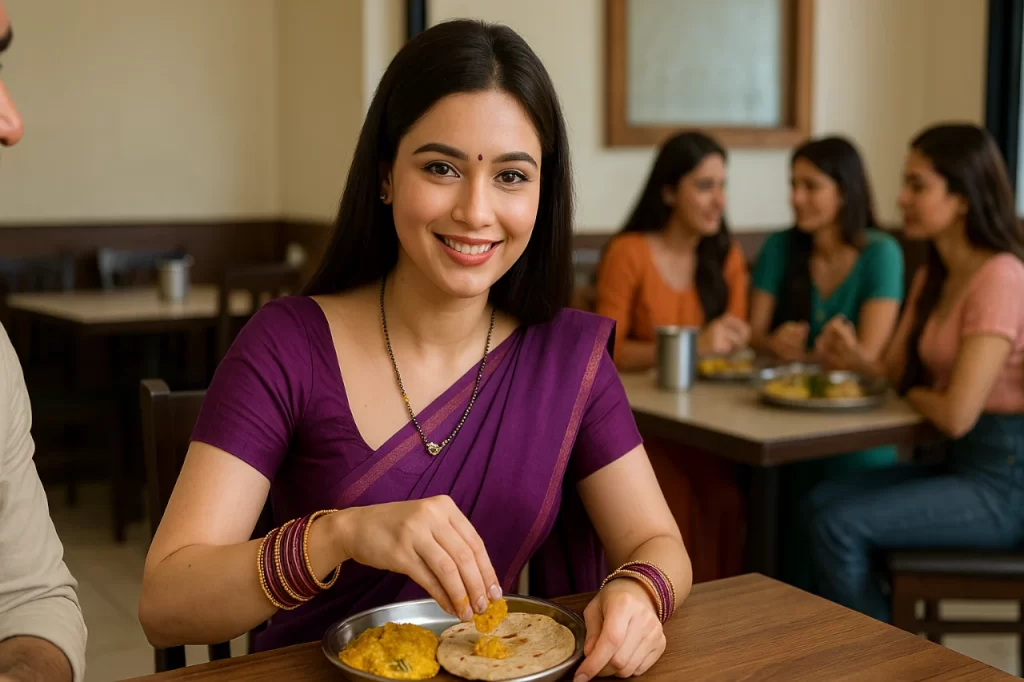
🍬 9. Bansi Maharaj Sweet Shop – Sweets with Tradition
Don’t leave Sangamner without visiting Bansi Maharaj, a legendary sweet shop known for its Puran Poli, Basundi, Shrikhand, and Karanji. During festivals like Diwali and Gudi Padwa, they offer specially crafted boxes of assorted Maharashtrian Mithai that make for perfect gifts or souvenirs. Try their Rose Peda or Kaju Katli with a warm cup of saffron milk. 🍮 🌸
🧊 10. Ice Cream & Matka Kulfi Stalls – Summer Refreshers
During hot afternoons, head to MG Road or areas near the bus stand where Kulfi Carts and Ice Gola vendors offer cool treats. Try Matka Kulfi topped with Falooda, Mango Barfi Ice Cream, or Rose-flavoured Gola. Many are homemade and seasonal, using Fresh Fruits and Condensed Milk. These are local favourites after a spicy meal. 🍧 🍓
🛕 11. Villages Around Sangamner – Farm Kitchens & Seasonal Foods
Nearby villages like Anandgaon, Loni, and Kanoli often have Roadside Stalls or Agri-resorts serving fresh, authentic food prepared on mud stoves. These include Onion Bhakri, Thecha, Baingan Bharta, Raw Mango Chutney, and Chaas. You may even be invited into a villager’s home if you’re lucky—experiencing true rural hospitality. 🚜 🥒
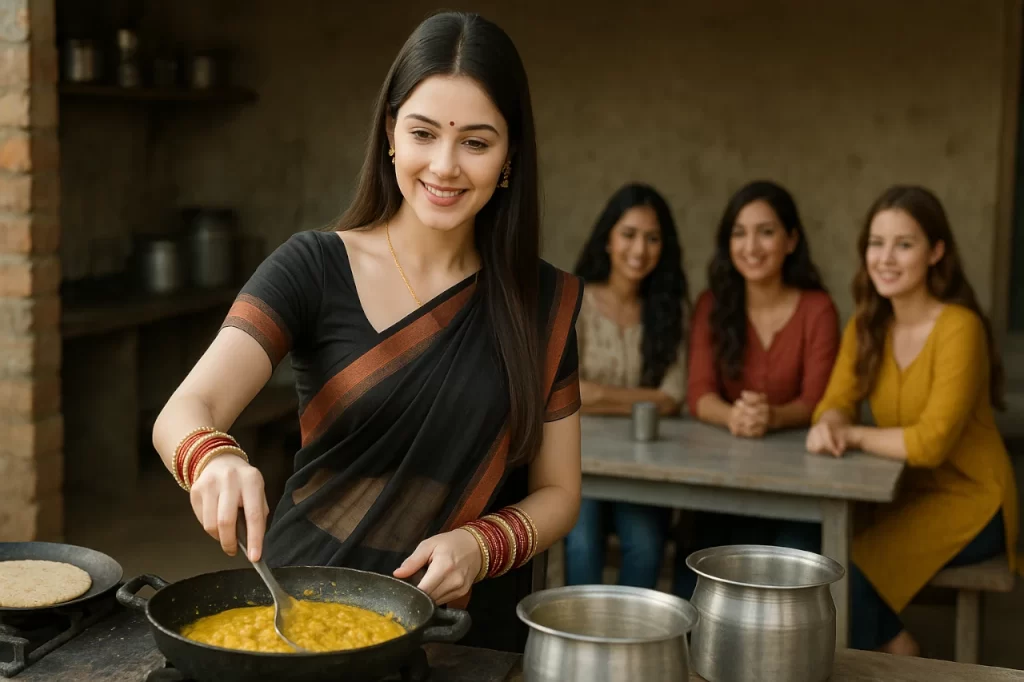
🍴 12. Festival-Specific Foods – A Burst of Culture & Flavour
During Ganeshotsav, Holi, and Navratri, Sangamner’s food scene takes on a festive spirit. Sweet stalls and food vendors sell Puran Poli, Til Laddus, Kharwas, Shengdana Chikki, and even festival-themed Modaks. At Chandika Mata fair, don’t miss local offerings like Aliv Laddus and Sweet Poha Chivda. 🎉 🍘
✅ Tips for Food Lovers
✪ Most street stalls are cash-only – keep change handy.
✪ Ask for less spicy if you’re not used to local heat – especially in Misal and Zunka.
✪ Mornings are best for Poha, Upma, and Chai.
✪ Avoid raw salads from street vendors unless you’re confident about hygiene.
✪ If unsure where to eat, follow the local crowd – it rarely leads you wrong!
🏁 Conclusion: A Culinary Journey Through Sangamner
From spicy street-side Misal Pav to hearty Mutton Bhakris and Sweet, Creamy Shrikhand, Sangamner’s food culture offers a genuine slice of rural Maharashtra. The town may be small, but its flavours are Bold, Hearty, and rooted in tradition. Exploring Sangamner through its food is an experience that goes beyond taste—it’s about Community, Culture, and Connection. So come hungry and leave with your heart (and belly) full! 😋 🙏
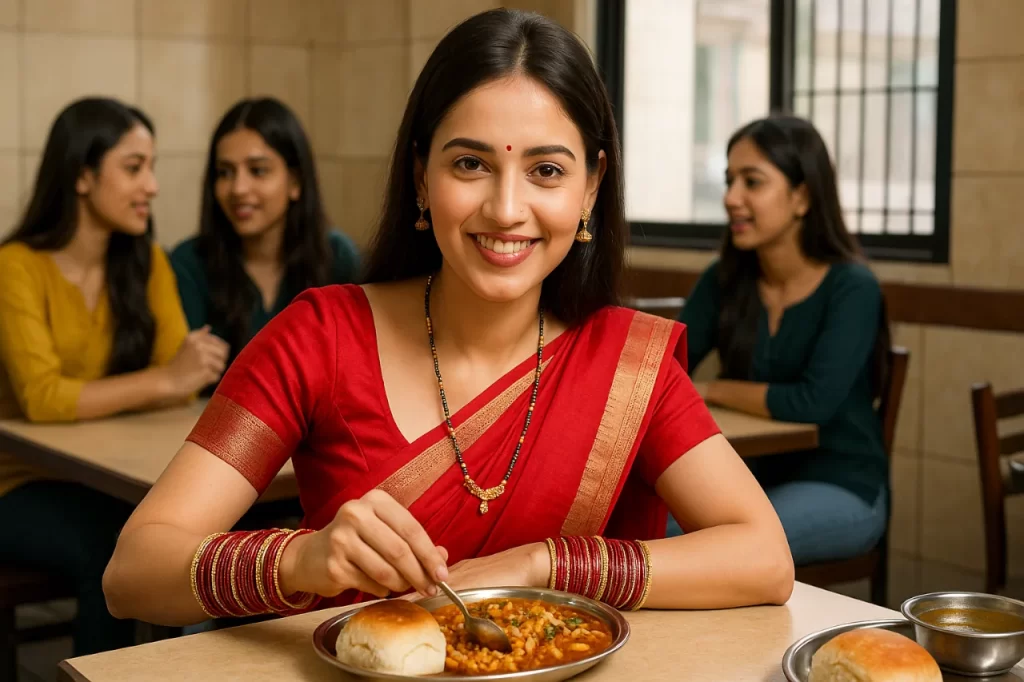
🗺️ Local Food Trail Itinerary & Printable Food Map Guide of Sangamner, Ahmednagar District, Maharashtra, India
Sangamner, the charming town nestled in the north-western corner of the Ahmednagar district, is not just known for its religious significance and scenic surroundings but also for its incredibly rich food culture. From humble village kitchens to bustling highway Dhabas and trendy urban cafés, the town offers a gastronomic experience deeply rooted in tradition, flavoured with modern twists. To help visitors savour Sangamner bite by bite, this Local Food Trail Itinerary & Printable Food Map Guide has been carefully curated to ensure you don’t miss a single must-eat spot. 🍲 🗺️
🧭 Morning (7:00 AM – 10:30 AM): Start with Breakfast at the Bustling MG Road
Kick off your day with a walk down MG Road, where the air is filled with the fragrance of freshly made Poha, Upma, Kanda Bhaji, and Cutting Chai. Local vendors line up their carts and stalls, many of which have been run by the same families for decades. A hot plate of Misal Pav from Deshmukh Misal Corner and a piping cup of ginger tea from Gavran Chaha Tapri will fuel your exploration. Don’t forget to try the Kharwas (Milk Pudding) if you’re lucky to find it fresh that morning! ☕ 🍞
🚶 Mid-Morning Food Walk (10:30 AM – 12:30 PM): Explore the Village Kitchens Around the Bypass
Venture slightly outside the city centre towards the Akole Bypass and into the neighbouring hamlets such as Chandanwadi and Loni. Many Agro-tourism centres and Roadside Kitchens here serve farm-to-plate meals prepared over Mud Stoves. You’ll find elderly women making Jawar or Bajra Bhakri, served with Thecha, Zunka, and Chaas (Buttermilk). These meals are best enjoyed under a thatched roof or banyan tree, with locals who’ll happily share stories over every bite. 🌾 🔥
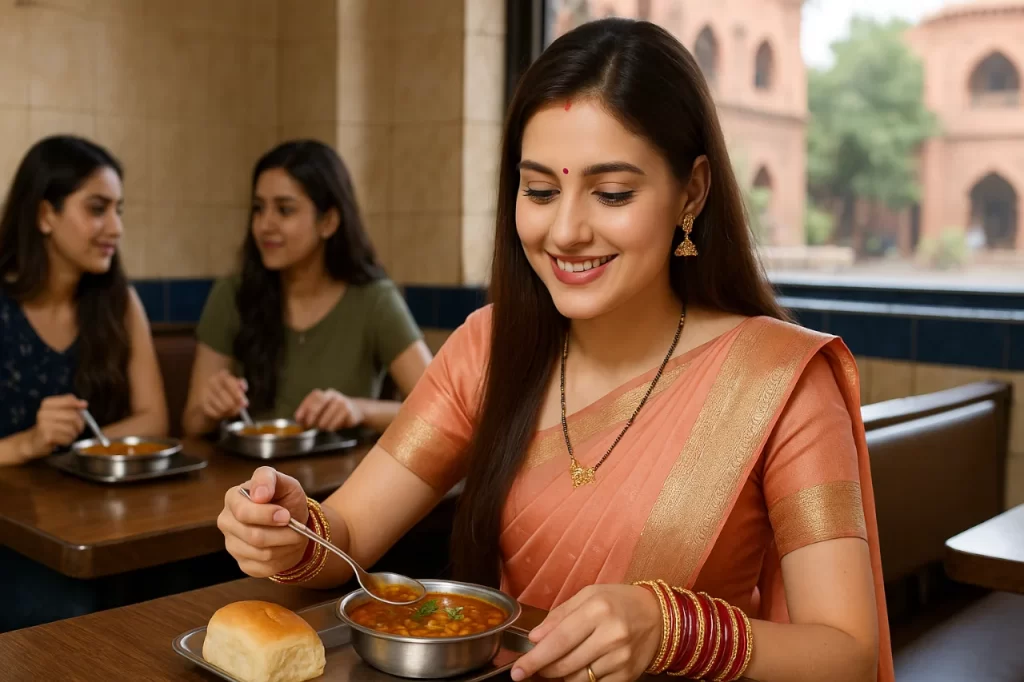
🍽️ Lunch Stop (1:00 PM – 3:00 PM): Dine at Ambika Mutton Bhakari or Hotel Prasad
Your afternoon calls for a hearty sit-down meal. For Non-vegetarians, Ambika Mutton Bhakari near the Sangamner bus stand is the crown jewel. Order their signature Mutton Curry, slow-cooked in a blend of traditional spices, and paired with Jowar Bhakari, Raw Onion Salad, and Garlic Chutney. For vegetarians, Hotel Prasad offers a balanced Maharashtrian Thali complete with seasonal vegetables, Dal, and Soft Chapatis. Add a dollop of Ghee-laced Basundi or Shrikhand for dessert. 🍛🍗
🛍️ Early Evening (4:00 PM – 6:00 PM): Tea Time & Sweet Stops Around the Market Area
As the sun begins to mellow, head to the Main Bazaar and Sangamner Market Yard, where sweet shops like Bansi Maharaj and Ramesh Mithaiwala serve local delights such as Puran Poli, Pedas, Anarse, and Aliv Laddus. Pair your sweets with a glass of Saffron Milk or Masala Doodh from a local dairy vendor nearby. Street-side stalls selling Bhel, Shev Poha, and Chakli also come alive around this time, offering perfect snacks for a walking tour of the town. 🍬 🧁
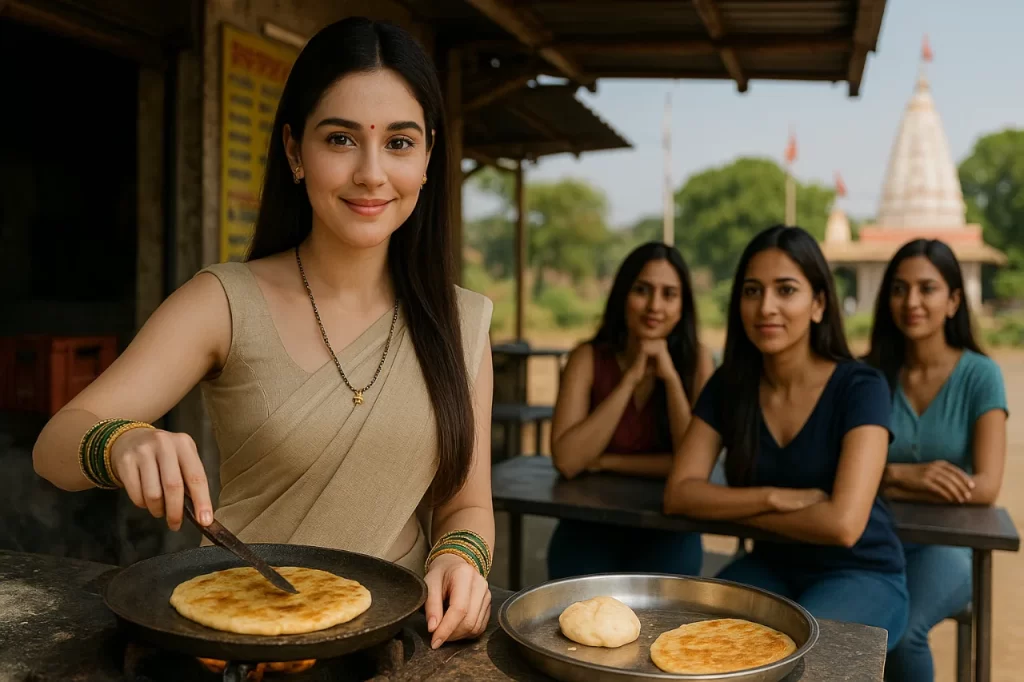
🌆 Dinner & Sunset (6:30 PM – 9:00 PM): Dine at Grapes Fine Dine or Celebration Restaurant
For your dinner stop, consider a relaxed sit-down meal at Grapes Fine Dine Restaurant, known for its tranquil ambiance and well-plated dishes. Their Veg Kolhapuri, Paneer Butter Masala, and Butter Naan make for a sumptuous spread. If you’re dining with family or looking for a cleaner, more versatile option, Celebration Restaurant offers multi-cuisine dishes including Tandoori Platters, Chicken Handi, and Pulao. Request a table on the terrace if available – you’ll get a lovely view of the starry sky over Sangamner. 🌃 🍷
🌙 Late Night Bites (9:00 PM – 10:30 PM): Street Food Stalls & Matka Kulfi Trail
The food trail doesn’t end at dinner! Take a late stroll near Gulmohar Road, where street stalls serve Masala Soda, Vada Pav, and spicy Egg Bhurji Pav. On hot nights, head toward the bus depot area where Kulfi stalls and Ice Gola vendors offer cool relief. The popular Matka Kulfi with Falooda or Mango scoop in clay pots is a divine way to end your food journey for the day. 🍨 🥭
📍 Printable Food Map Guide – Your Gastronomic GPS!
To make your food trail seamless, we’ve designed a Printable Food Map Guide marking:
🥘 Popular Restaurants (Ambika, Prasad, Grapes)
🛣️ Street Food Hubs (MG Road, Gulmohar Road)
🧁 Sweet Shops (Bansi Maharaj, Ramesh Mithaiwala)
🧑🌾 Village Kitchens & Farm Kitchens (Loni, Chandanwadi)
☕ Cafés & Chai Tapris (Pokket Café, Gavran Chaha)
This colour-coded map features timings, food types (veg/non-veg), hygiene ratings (local reviews), and suggested walking circuits. It’s ideal for backpackers, families, food vloggers, and travel photographers alike! 🗺️ 📌
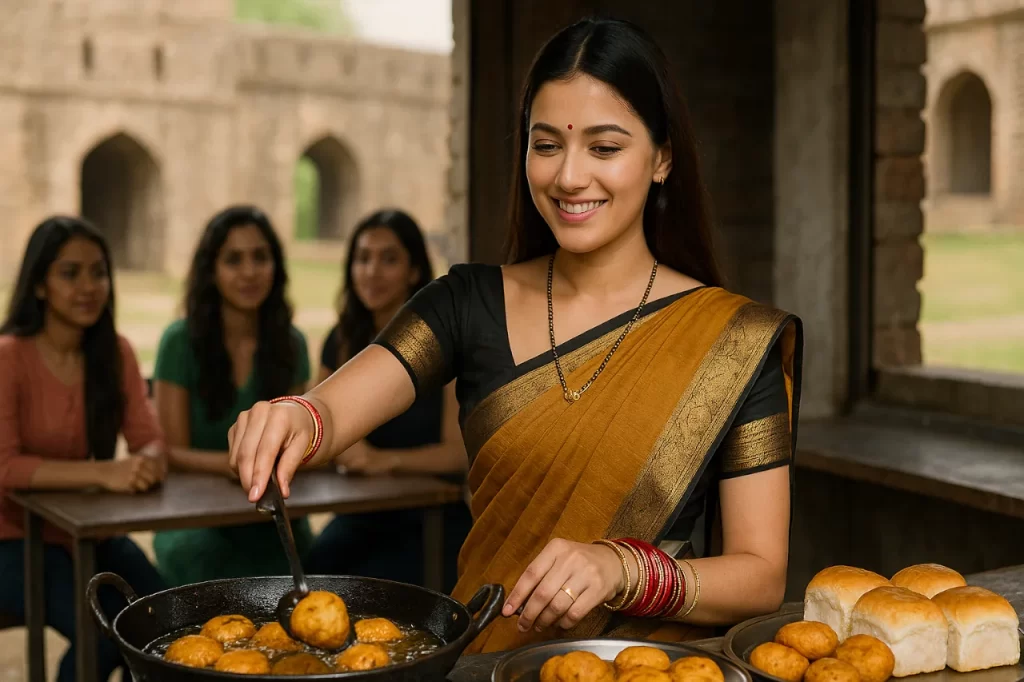
📝 Pro Tips to Maximise Your Food Trail
➪ Carry Cash as many stalls may not accept cards or UPI.
➪ Dress comfortably and carry Wet Wipes and hand Sanitisers.
➪ Ask for less spicy if you’re sensitive to chilies – especially in Zunka, Misal, and Thecha.
➪ Some of the best food in Sangamner comes from unmarked village homes – don’t hesitate to ask locals.
➪ Most shops close early on Sundays – plan accordingly.
➪ For Google Maps Integration, scan the QR code on the printable guide to get real-time directions and distance.
🎉 Conclusion: Taste the Soul of Sangamner
This Local Food Trail Itinerary and Food Map Guide offers more than just meals – it’s an invitation into the Culinary Soul of Sangamner. Every dish, every corner stall, and every village meal tells a story of tradition, resilience, and community. Whether you’re here for a day or a week, Sangamner’s diverse food landscape will leave you with unforgettable flavours and warm memories. So grab your printed map, wear your best smile, and let your appetite lead the way! 😋 🧭

🌤️ Climatic Conditions in Sangamner, Ahmednagar District, Maharashtra, India – A Detailed Overview
Nestled in the North-Western belt of the Ahmednagar district, Sangamner is uniquely positioned on the leeward side of the Western Ghats. This topographical advantage grants the town a semi-arid climate, characterised by significant temperature variations, moderate rainfall, and seasonal winds. These climatic features play a crucial role in shaping the Agricultural cycles, lifestyle, and tourism patterns in and around Sangamner. 🌾🌦️
☀️ Summer (March to Mid-June): Scorching Heat with Dry Winds
Sangamner’s summer season begins in March and lasts till mid-June, with May being the hottest month. During this time, daytime temperatures soar between 38°C to 44°C, and occasionally touch 45°C on peak summer days. The presence of dry easterly winds, known locally as loo, makes the heat even more intense, especially during afternoons. Nights, however, are relatively cooler, with temperatures dropping to around 22–26°C due to Sangamner’s moderate elevation of around 549 meters above sea level. 🥵 🌞
Locals cope with the heat by switching to light cotton clothing, traditional coolants like Chaas (Buttermilk) and Aam Panna, and by avoiding strenuous activities in the afternoons. The town’s open bazaar areas and tea stalls are less active during this period, but evening walks and Mango stalls bring some joy to summer evenings. 🥭
🌧️ Monsoon (Mid-June to September): A Welcome Respite
The monsoon typically hits Sangamner in mid-June, bringing much-needed relief from the scorching heat. The town receives rainfall from the South-West Monsoon winds, but due to its leeward location, the average annual rainfall ranges from 500 mm to 700 mm, which is relatively low compared to coastal Maharashtra. 🌧️ 🌿
The rains, though moderate, are vital for Kharif Crop Cultivation such as Bajra, Tur, Groundnuts, and Soybean. Light to moderate showers are common, with a few days of heavy rain, especially in July. Cloudy skies and earthy fragrances from red soil dominate the landscape, turning Sangamner’s fields and hills into shades of lush green. Visitors during this season can enjoy foggy early mornings, light drizzles, and vibrant rural scenery. 🌫️ 🌾
🍁 Post-Monsoon (October to November): Transition to Mild Weather
After the monsoon recedes in late September, Sangamner experiences a transitional period with clear skies, cool breezes, and moderate temperatures ranging between 20°C and 33°C. This is one of the most pleasant times to visit, as the weather is neither too hot nor too cold. 🌅 🍂
This post-monsoon period is significant for Agricultural Harvesting and Cultural Festivities like Diwali and Navratri. The roads are less muddy, tourism picks up, and locals prepare for the upcoming winter with open-air markets, seasonal delicacies like Puris and Karanji, and night-time temple fairs. 🪔 🎉
❄️ Winter (December to February): Crisp Air and Chilly Mornings
Sangamner’s winter season is marked by cool mornings, pleasant afternoons, and cold nights. Temperatures range from 10°C to 27°C, with January often being the coldest month. In certain years, early mornings in December and January have seen mercury dipping to as low as 7°C, especially in rural pockets. 🧣 ❄️
This is the peak season for tourism, agro-visits, and festivals like Makar Sankranti. Local farmers use this climate to grow Rabi Crops like wheat, onion, and garlic. Winter is also the best time to explore the countryside, temples, and enjoy local winter foods like Aliv Laddus, Tilgul, and Hot Bajra Bhakri with spicy chutneys. ☃️ 🌾

🌬️ Winds and Humidity: Moderate Yet Noticeable Changes
Sangamner doesn’t experience very high humidity due to its inland location, but relative humidity ranges from 30% in summer to around 75–80% in monsoon. Wind speeds increase slightly during the monsoon, with average speeds between 15–25 km/h during rainy months. Cold northeasterly winds during winters can add a noticeable chill in the air, especially during dawn and dusk. 💨 🌫️
🌀 Extreme Weather Events: Rare but Impactful
Sangamner is generally safe from extreme climatic events like cyclones or floods, thanks to its interior geography. However, occasional unseasonal rains, hailstorms in February–March, or drought conditions during poor monsoon years do occur. These events can severely affect agriculture, local businesses, and water supply. As a precaution, farmers often rely on Borewell Irrigation and drip systems during dry spells. 🌪️ 🚱
🌍 Climate’s Impact on Lifestyle & Architecture
The climate of Sangamner has a direct influence on its architecture and urban planning. Homes often have courtyards, thick walls, and sloped roofs to handle both the summer heat and monsoon rains. Markets open early in the morning and late in the evening, avoiding the peak heat of the day. Festivals are planned around cooler months, and food habits adjust with the seasons—light meals in summer and hearty dishes in winter. 🏡 🛕
✅ Best Time to Visit Sangamner
The ideal time to visit Sangamner is between October and February, when the climate is at its most pleasant. Whether you’re a history enthusiast, nature lover, or food explorer, this period offers the perfect balance of weather, festivity, and rural charm. ☀️ ❄️
Monsoon (June to September) can be scenic but may come with travel disruptions on rural roads. Summer (March to mid-June) is best avoided for daytime activities due to extreme heat, though it offers rich local produce like Raw Mangoes, Jamuns, and Jaggery-based treats. 🍃 🍋
📌 Conclusion: Weather That Defines Sangamner’s Identity
Sangamner’s climate is a defining part of its Agricultural Rhythms, Culinary Patterns, and Cultural Identity. With a dry and hot summer, lush monsoon, refreshing post-monsoon, and cool winters, each season brings its own colour and character. Whether you’re planning a pilgrimage, rural retreat, or culinary expedition, understanding Sangamner’s climate will help you pack right, plan smart, and make the most of your experience! 🧳 🌤️

🧬 Sociodemographic Profile of Sangamner, Ahmednagar District, Maharashtra, India 🌍 📊
“तीन नद्यांचं संगम… आणि संस्कृतीचं संगमनेर!” 🌊🙏
Sangamner, a prominent urban and rural settlement in the Ahmednagar District of Maharashtra, presents a vivid tapestry of castes, languages, religions, occupations, and social fabric that is both diverse and culturally enriched. Strategically located on the banks of the Pravara River and serving as a major junction between Nashik, Pune, and Mumbai, Sangamner holds a unique socio-demographic character shaped by history, migration, agriculture, and urban development.
👥 Population Overview & Density
As per the latest available data (2021–2024 projections), Sangamner city and its rural surroundings host a population of over 1.2 lakh (120,000+) people, with a slightly higher number of residents in the urban pocket compared to the rural belt. The area has experienced consistent growth due to better infrastructure, educational institutions, and it’s positioning on key road networks.
✪ Urban Literacy Rate: Approx. 88% 🏫
✪ Rural Literacy Rate: Approx. 78%
✪ Population Density (Urban Core): Nearly 9,500 per sq. km
✪ Gender Ratio: ~927 females per 1000 males
This gradual urbanisation reflects Sangamner’s growing importance as a semi-urban hub for trade, education, and healthcare within western Maharashtra.
🏛️ Caste Demographics: A Mosaic of Communities
Sangamner’s social fabric is stitched together by various caste groups, each playing a specific role in the town’s economic and cultural ecosystem:
➪ Maratha (Kunbi) Community: Forms the majority, traditionally landowners and agriculturists. They are socially and politically influential. 🌾
➪ Dhangar (Shepherd caste): A prominent group found in rural belts. Known for their pastoral lifestyle and traditional wool trade.
➪ Mali: Associated with horticulture and gardening; often run local floriculture businesses.
Brahmins (Deshastha and Chitpavan): A minority but historically known for temple priesthood and education.
➪ Lingayat and Vanjari: Business-savvy communities involved in trade, construction, and logistics. 🛍️🏗️
➪ Scheduled Castes (SC): Inclusive of Matang, Mahar, Chambhar communities, forming around 10–12% of the population. Often involved in artisanal work and government jobs.
➪ Other Backward Classes (OBC): Encompassing numerous groups like Teli, Lohar, Sonar, Shimpi, and others contributing to a variety of occupational roles from tailoring to goldsmithing.
➪ Muslim Communities: Primarily Sunni and a small number of Shia families, living in old Sangamner and engaged in leatherwork, trade, and small-scale industries. 🕌
➪ Jains & Gujaratis: Smaller yet influential communities largely active in commerce and finance sectors.
The caste-based occupational identity is slowly giving way to more fluid job roles, particularly among the youth, but traditional boundaries still shape social customs and events.

🗣️ Languages Spoken in Sangamner
Language in Sangamner reflects a typical multi-lingual setting, though Marathi dominates both spoken and official domains:
➪ Marathi: The primary and most widely spoken language. It’s used in daily communication, administration, education, and local media. 🗣️
➪ Hindi: Commonly understood and used for trade and communication with migrants or tourists from northern India.
➪ Urdu: Predominantly spoken by the Muslim community, especially in old Sangamner areas. 🕌
➪ English: Gaining popularity, especially among students, professionals, and in urban schools and hospitals. 📘
➪ Other dialects: Rural communities often use dialects like Ahirani or Khandeshi Marathi, influenced by neighbouring Nashik and Dhule districts.
The linguistic landscape is enriched by cultural interactions, cinema, education, and media—making Sangamner linguistically versatile and socially cohesive.
🧑🎓 Educational and Occupational Profile
Sangamner boasts a vibrant education sector with institutions like Sangamner College, Amrutvahini Engineering College, and numerous private schools.
➪ Primary Occupations: Agriculture, Dairy, Textile Trading, Retail, Government Jobs.
➪ Emerging Sectors: Education, Construction, Healthcare, Hospitality, and IT-related services. 🏢💻
➪ Women’s Participation: Increasing involvement in Teaching, Banking, Self-help groups, Tailoring, and Entrepreneurship. 👩💼 👗
Youths from all caste and class backgrounds are migrating to Pune, Mumbai, or Nashik for higher education and jobs, gradually altering the socio-economic fabric of the town.
🙏 Religious Composition
Sangamner is predominantly Hindu, but it also houses other religious communities that co-exist peacefully:
➪ Hindus: ~80% of the population, celebrating festivals like Ganesh Chaturthi, Gudi Padwa, Navratri, and Diwali with grandeur. 🕉️
➪ Muslims: ~12% of the population, actively observe Ramzan, Eid, Muharram and contribute significantly to the town’s economy.
➪ Jains, Buddhists, Christians, Sikhs: Together make up the remaining 8%—small in number but culturally active with Temples, Mosques, and Churches spread across the town.
Sangamner is home to numerous Temples, Mosques, and Spiritual Sites—each playing a crucial role in sustaining communal harmony.

🏘️ Urban-Rural Composition & Migration Trends
Though Sangamner has a bustling city core, nearly 60% of its administrative division still remains rural. Several surrounding villages like Jorve, Ashwi, Ghulewadi, and Talegaon contribute daily inflows of people for work, markets, and health facilities.
✪ Urban Core: Focused on Trade, Education, and Services
✪ Rural Fringe: Cantered around Agriculture, Dairies, and weekly Bazaars
➨ Migration Patterns:
✪ Inward: From neighbouring villages for education and healthcare
✪ Outward: Young adults moving to Pune, Mumbai, or overseas for jobs and studies 🌏
This rural-urban interaction is critical in shaping Sangamner’s Market Pulse, Dialect usage, and Employment Dynamics.
🌐 Digital Literacy & Modernisation
Sangamner has seen a rise in Digital Penetration in recent years, especially in urban centres. Smartphones, UPI transactions, and online education are becoming common even in semi-rural households.
➪ Mobile connectivity & Internet access: Widely available in urban zones
➪ Digital Government Services: Birth registration, land records, Aadhar-based e-services
➪ Media Consumption: Youth are increasingly engaging with YouTube, Instagram, and Marathi OTT platforms, influencing both language and lifestyle.
This modernisation is helping bridge socio-economic divides across caste and gender—though digital literacy in remote villages still needs work. 📱 🧠
🧭 Final Thoughts: A Tapestry of Traditions & Transitions
Sangamner’s sociodemographic landscape is a living canvas of Caste Diversity, Multilingual Richness, and occupational evolution. While traditional caste-based roles and linguistic dialects persist, modern education, migration, and digital tools are reshaping identities and aspirations. It is this mix of rooted traditions and progressive transitions that defines the true spirit of Sangamner. 🌱 🌍

🏡 Detailed Local Lifestyle of Sangamner, Ahmednagar District, Maharashtra, India 🌾 🕌 🎭
“संगमनेर – महाराष्ट्राच्या हृदयातलं स्वप्नवत ठिकाण” 💓 🏞️
Nestled amidst the scenic plains and fertile lands of western Maharashtra, Sangamner is more than just a geographical hub—it’s a town alive with tradition, simplicity, self-reliance, and progressive change. The local lifestyle here is deeply connected to Agriculture, Family Systems, Religious Customs, Regional Festivals, and a growing sense of urban aspirations. Whether it’s a farmer tilling his land at sunrise 🌅, a homemaker preparing traditional Bhakri on a Chulha 🍽️, or a college student surfing YouTube reels after class 📱 — life in Sangamner is a balanced fusion of rural ethos and semi-urban energy.
🌾 Agriculture-Rooted Daily Life
For a significant portion of Sangamner’s residents—especially in the rural and semi-rural belts—Agriculture is the backbone of their daily existence. Most families start their day early, heading out to farms where they cultivate crops like Onion, Sugarcane, Wheat, Bajra, Cotton, and Tomato. These activities are often seasonal, so routines shift between planting, harvesting, and marketing cycles.
➪ Work starts as early as 5 AM 🌄, especially during sowing or harvest seasons.
➪ Use of bullock carts 🐂 and tractors 🚜 is common, though mechanisation is gradually spreading.
➪ Water for irrigation is primarily sourced from wells, tube wells, and canals connected to the Pravara River.
Evenings are spent cleaning produce, preparing food, attending local markets, or discussing farming inputs at the Chai Tapri (Tea Stalls) ☕.
🧵 Traditional Clothing & Attire
The locals take pride in ethnic and functional clothing that reflects both culture and climate:
➪ Men typically wear Dhoti or Pyjama with a shirt and a cotton Nehru Topi (Cap). In festive or ceremonial times, they switch to Kurta-Pyjamas or traditional waistcoats.
➪ Women, especially in rural zones, are seen in Nine-yard sarees (Navvari) or cotton sarees draped in a working style that allows mobility. Younger women often wear Punjabi Suits or Salwar-Kameez.
➪ Urban youth have started adopting Western clothing styles — Jeans, T-shirts, and Kurtis — especially in college campuses and marketplaces.
Clothing is often influenced by Religious Practices, Social Status, Climate, and Comfort 🌞 🧣.
🍛 Food Habits & Daily Meals
Food is central to life in Sangamner. The cuisine is simple, spicy, and deeply rooted in Maharashtrian culinary traditions. Most households prepare fresh meals daily using seasonal and locally available ingredients.
➪ Breakfast: Poha, Upma, Thalipeeth, or Bhakri with Chutney.
➪ Lunch & Dinner: Jowar or Bajra Bhakri, Sabzi (like Bharli Vangi or Zunka), Rice, Dal (Varan), and Buttermilk. Pickles and Papads are common side items.
➪ Non-veg Days: Sundays or festivals like Gatari Amavasya bring out Mutton Rassa, Chicken Curry, or Fish in urban homes. 🐔 🐟
➪ Tea Culture: Cutting chai with Khari, Bun-Maska or Bhakri is a daily ritual across age groups ☕.
Cooking is still done over Chulhas (Mud Stoves) in villages, while LPG and induction cooktops dominate urban kitchens. Tiffin culture is also widespread for students and office-goers.
📿 Religious Observance & Daily Rituals
Religion and spirituality are ingrained in the daily lives of Sangamner residents. Almost every home has a Devghar (Prayer corner) where daily Pujas are offered with flowers and incense.
➪ Common morning rituals include lighting the Diya, chanting ‘Om Namah Shivaya’, or singing Aarti.
➪ Weekly visits to local Temples like the Hanuman Mandir, Vitthal-Rukmini Temple, or Shani Mandir are common.
➪ Muslim Residents offer namaz five times a day and actively engage in mosque-based community activities.
➪ Religious calendars influence fasts (Upwas), Temple events, and Feasts.
Everyday life is harmoniously balanced with spiritual grounding, which creates a sense of discipline and community unity 🕯️ 🙏.
👨👩👧 Family Structures & Community Bonds
Sangamner holds on strongly to the joint family system, especially in villages and extended suburbs. However, nuclear families are rising in urban pockets.
➪ Joint families manage Farms, Businesses, and Family expenses collectively. The patriarch or elder woman often holds decision-making authority 👵 👴.
➪ Marriages, festivals, and death ceremonies are community events involving neighbours, caste groups, and extended kin.
➪ Self-help groups (especially for women) have become a strong support network for savings, learning, and business.
The social bonds are so tight-knit that in many villages, one’s surname is often enough for identification.

🛍️ Market Culture & Evening Routines
Markets are a daily and weekly spectacle in Sangamner. The town has fixed areas for vegetables, grains, clothing, electronics, and more.
➪ Wednesday and Sunday Bazaars draw huge crowds from nearby villages.
➪ Street Vendors, Mobile Stalls, and Bullock Carts still sell Vegetables, Sugarcane Juice, and Knick-Knacks in residential areas.
➪ The town also has Multiplexes, Cafes, and Salons that cater to younger generations who seek modern leisure.
Evenings are spent socialising at Chowks, attending Bhajans or visiting Temples, while youth often gather at Cafes, Gymnasiums, or Cricket Grounds. 🛒 🎡 🏏
🚌 Transport, Connectivity & Movement
Sangamner has a well-connected road network and public transport system, contributing to an active lifestyle.
➪ ST Buses and Private Rickshaws are the most used Public Transport.
➪ Many own two-wheelers, cycles, or tractors for daily use. Urban homes also have four-wheelers, especially for long-distance travel.
➪ Foot traffic is high within markets and schools, and walking to nearby shops or temples is part of daily life 🚶♀️ 🚶.
Daily commutes also include agricultural field visits, student travel to coaching classes, or office runs to Nashik, Pune, or Ahmednagar.
📚 Education & Aspirations of the Youth
A significant portion of the youth in Sangamner aspire for Higher Education, Government Jobs, or Careers in Metro Cities.
➪ Popular Fields: Engineering, Medicine, Agriculture, Banking, and Competitive Exams like MPSC/UPSC.
➪ Students attend local Colleges or Coaching Classes, often studying late into the night.
Girls’ Education is rising steadily, supported by Government schemes and growing awareness.
There’s also a rise in youth entrepreneurs and influencers using platforms like Instagram and YouTube to showcase village life, farming hacks, or local fashion. 🎓 💡 📸
🎉 Festivals & Local Celebrations
Life in Sangamner is punctuated with a vibrant cycle of festivals and fairs that bring joy, colour, and a break from routine:
➪ Ganesh Chaturthi and Navratri are celebrated with community pandals and Aartis.
➪ Pola (bull-worshipping festival) is unique to farmers and celebrated with much pomp.
➪ Eid, Diwali, Holi, Makar Sankranti, and Gudi Padwa are equally observed with Sweets, Processions, and New Attire 🎇 🎊.
➪ Cultural programs at Schools, Colleges, and Mandals reflect regional Theatre, Music, and Dance.
During such times, markets are flooded, families reunite, and every street is lit up with festive fervour.
🧭 Conclusion: A Harmonious Rural-Urban Symbiosis
Sangamner’s local lifestyle mirrors a community deeply connected to its cultural identity, natural rhythms, and collective ethos. While the town gracefully steps into a modern era with better roads, internet, and education, its roots remain grounded in tradition, simplicity, and spiritual values.
From sunrise prayers in temple courtyards to children running through sugarcane fields at dusk, every moment in Sangamner’s daily life reflects a slow, meaningful, and soulful existence. 🌅 🧘♂️ 🌾

🌟 Notable People of Sangamner, Ahmednagar District, Maharashtra: Celebrating Regional Icons with Impactful Legacies
Sangamner, a prominent taluka in Ahmednagar District, has been the nurturing ground for many influential personalities whose work spans across politics, social service, education, arts, and business. Their stories reflect the spirit of resilience, intellect, and dedication that defines Sangamner’s cultural and socio-political landscape. Here’s a closer look at the most distinguished sons and daughters of the soil 🌾 🇮🇳.
1️⃣ Balasaheb Thorat – The Political Statesman 🏛️
Shri Balasaheb Thorat is undoubtedly one of the most prominent figures hailing from Sangamner. A senior leader of the Indian National Congress, he has held key portfolios such as Revenue Minister and School Education Minister of Maharashtra. Known for his Calm Demeanor, Grassroot Connection, and clean political image, Thorat has been elected as MLA from Sangamner several times. His role in developing Educational Institutions, Roads, Healthcare centres, and Irrigation schemes across the taluka is highly lauded by the locals 🏫 🛣️ 💧.
Quote from a local shopkeeper: “Balasaheb Thorat is not just a politician here, he is like family to every home in Sangamner”.
2️⃣ Dr. Karmaveer Bhausaheb Thorat – Educational Pioneer 📚
A name often mentioned with reverence in the education sector, Dr. Bhausaheb Thorat laid the foundation of several institutions in Sangamner including the Sangamner College (Now part of Rayat Shikshan Sanstha). His efforts brought quality higher education to rural youth, who earlier had to migrate to cities like Pune or Mumbai. His vision made Sangamner a mini-education hub in the northern region of the district 🎓 🏢.
3️⃣ Nitin Deshmukh – Entrepreneur and Investor 💼 💹
Born in Sangamner, Nitin Deshmukh has made his mark in India’s startup and venture capital ecosystem. With decades of experience in healthcare and biotech funding, he is a founding member of Kotak Private Equity Group and Avendus Capital’s healthcare initiatives. Though he lives in Mumbai, his contributions to empowering rural entrepreneurs through mentoring and funding opportunities remain tied to his hometown roots 🌱 💡.
4️⃣ Babasaheb Wagh – Freedom Fighter & Social Reformer ✊ 📜
An unsung hero of the freedom movement, Babasaheb Wagh from Sangamner actively participated in the Quit India Movement and post-independence land reform campaigns. He fought for the rights of landless farmers, Dalits, and backward communities in Sangamner during the 1950s and 60s. His relentless advocacy led to multiple land redistribution schemes in Sangamner Taluka, changing lives of thousands 🪔 ⚖️.
5️⃣ Dr. Rutuja Shinde – Youth Scientist and Innovator 🔬 👩🔬
Dr. Shinde, a young scientist who grew up in Sangamner, was recognised at the National Innovation Foundation (NIF) for her research on sustainable water purification. Her low-cost innovation using local materials received national acclaim. She frequently returns to her village to educate students about environmental science and rural technology through community science camps 🌍 💧.
6️⃣ Adv. Shirish Borade – Human Rights Lawyer and Activist ⚖️ 🕊️
A prominent advocate in Ahmednagar District courts, Shirish Borade is known for his legal activism in environmental and human rights cases. Originally from Sangamner, his legal interventions have protected tribal rights in nearby Akole, prevented illegal land acquisition, and helped in securing bail for wrongfully jailed rural citizens. His legal literacy campaigns in local schools and colleges are widely appreciated 🏛️ 📖.
7️⃣ Prof. Swati Karle – Women’s Rights Educator and Author ✍️ 🎓
An author and academic originally from Sangamner, Prof. Karle is widely known for her contribution to women’s empowerment literature in Marathi. She is a regular speaker at UN Women conferences, and her books have become part of gender studies syllabi in universities across Maharashtra. She has opened reading libraries for girls in Sangamner’s rural areas 📚 👧.
8️⃣ Sant Namdeo Maharaj Sangamnerkar – Spiritual and Literary Saint 🙏 🕉️
Though less documented in mainstream history, oral traditions in Sangamner talk highly of Sant Namdeo Maharaj Sangamnerkar, a spiritual guide and poet from the 18th century. His Abhangs (Devotional Hymns) in Marathi and Prakrit are sung in local Bhajan Mandals and festivals like Ashadi Ekadashi. He is considered a symbol of harmony across castes and faiths in the region 🎶 🪔.
🔟 Arti Thorat – Local Sports Star & Karate Champion 🥋 🏆
Hailing from a humble background in Sangamner, Arti Thorat rose to fame after representing Maharashtra in National Karate Championships. She now runs a self-defence training academy for rural girls, promoting safety and confidence. Her efforts were recently acknowledged by the Maharashtra Government under the “Women in Sports” initiative 💪 🌟.
🧾 Conclusion: A Legacy Carved in Local Soil
From political visionaries and social reformers to Scientists, Artists, and Entrepreneurs, Sangamner’s contribution to regional and national progress is remarkable. These individuals, through their paths, have turned Sangamner from a town of promise into a land of realised potential 🌾 🚀. Their achievements continue to inspire the next generation of dreamers from this vibrant taluka in Ahilyanagar (Ahmednagar) District.
“Sangamner – Where Rural Serenity Meets Urban Spark” 🏞️ 🏙️
🏭 Industrial Development and Thriving Industries in Sangamner, Ahmednagar District, Maharashtra 🇮🇳
Sangamner, a significant town in Ahmednagar District (Ahilyanagar), Maharashtra, has steadily evolved from a traditionally agrarian economy into a Promising Industrial centre. Its Strategic Geographical location, Developing Infrastructure, and a skilled yet affordable workforce have made it a focal point for small and medium-scale industries in Northern Maharashtra. Let’s explore the region’s industrial evolution and major sectors contributing to Sangamner’s economic momentum 🔄 💹.
1️⃣ Strategic Location Driving Industrial Growth 🗺️ 🚚
Sangamner’s location on the Mumbai–Nashik–Aurangabad highway (NH 60) places it at the confluence of some of Maharashtra’s most important industrial and urban centres. It is easily accessible to Pune, Nashik, Shirdi, and Ahmednagar, giving it logistical advantages for supply chain operations. This centrality is a major reason why Sangamner has become a hub for Transport, Warehousing, Logistics, and Inter-state trading units 📦 🚛.
2️⃣ MIDC Industrial Estate: The Backbone of Development 🧱 🏢
The Sangamner MIDC (Maharashtra Industrial Development Corporation) area, spread across several hectares near the town’s outskirts, is the beating heart of Sangamner’s formal industrial ecosystem. MIDC provides plots for Businesses, Infrastructure facilities like Water, Electricity, Roads, and Connectivity to nearby Railheads and Highways. The estate is home to industries from sectors like:
➪ Food Processing 🍜
➪ Pharmaceuticals 💊
➪ Packaging & Plastics 📦
➪ Engineering and Metal Works ⚙️
➪ Agro-based Machinery Manufacturing 🚜
The availability of low-cost Industrial land and government incentives for MSMEs have made it attractive for first-generation entrepreneurs and small businesses to establish operations here.
3️⃣ Agro-Based Industries: From Farm to Factory 🌾 🏭
Given Sangamner’s rich Agricultural surroundings, a large portion of its industry is agro-based. The region is known for Sugarcane, Tomatoes, Onions, Grapes, and Pomegranates, which feed directly into a growing network of:
➪ Tomato processing units 🍅
➪ Onion dehydration and export centres 🧅
➪ Fruit pulp extraction units 🍇
➪ Cold storage and ripening chambers ❄️
The presence of a Government-supported Agriculture Produce Market Committee (APMC) has enabled smoother farmer–industry interactions and fostered value-addition initiatives.
4️⃣ Sugar and Ethanol Industry: Sweetening the Economy 🧃 🚜
Sangamner has one of the most successful cooperative sugar factories in Maharashtra – the Sangamner Taluka Sahakari Sakhar Karkhana Ltd., situated at Sangamner SSK. This factory processes thousands of tons of sugarcane annually and also engages in Ethanol Production, Bagasse-based Power Generation, and Molasses-based Allied Industries. The sugar mill is a Major Employment Generator and a catalyst for Rural Economy Enhancement in nearby villages 🍬 ⚡.
5️⃣ Textile and Garment Units: A Growing Segment 👗 🧵
A relatively newer sector gaining traction in Sangamner is Garment Manufacturing and Textiles, especially Power Loom units, Tailoring Workshops, and Fabric Printing setups. Local entrepreneurs have started tapping into the growing demand for School Uniforms, Cotton Wear, and Traditional Maharashtrian Apparel. Women’s self-help groups (SHGs) are actively involved in Tailoring and Embroidery Businesses, contributing to Women-led Micro-Industrial Development 🪡 👩🏭.

6️⃣ Dairy and Milk Processing: White Revolution in the Region 🥛 🐄
Dairy farming is a major occupation in Sangamner Taluka, and over the years, this has given rise to several Milk collection and processing units. Brands like Sangam Dairy, Sahyadri Dairy, and local cooperatives have established Chilling Plants, Pasteurisation units, and Cheese & Ghee production setups. These industries not only add value but also Stabilise Farmers’ Incomes and reduce wastage by ensuring cold chain supply 🧈 🧊.
7️⃣ Renewable Energy and Biomass Units: Sustainable Future 🌱 ⚡
Sangamner is also making strides in Renewable Energy, especially through Biomass-based Power Plants run by sugar factories and agri-waste producers. Additionally, Solar Panel distributors and Micro-installers are expanding services across Ahmednagar district, promoting green energy. A few startups, supported by Maharashtra’s rural innovation schemes, are working on Waste-to-energy solutions, creating a foundation for a sustainable rural industrial model 🔋 ☀️.
8️⃣ Local Artisan & Handicraft Industries: Cultural Economy 🎨 🪔
Several artisan families in Sangamner continue the age-old traditions of Earthen Pottery, Cane and Bamboo Craft, Handmade Jewellery, and Worli-inspired local Artwork. While small-scale, these cottage industries add a colourful cultural layer to Sangamner’s industrial spectrum and serve the Tourism and gift market of nearby destinations like Shirdi and Bhandardara 🎁 🏺.
9️⃣ Financial & Allied Services Supporting Industry 💼 🏦
The industrial boom is supported by a robust network of Cooperative Banks, Credit Societies, and Industrial Consultants in Sangamner. Banks like Ahmednagar District Central Cooperative Bank (ADCC), State Bank of India, and several Private Micro-Finance Institutions offer credit facilities and subsidies for Industrial Development, Machinery purchase, and Export promotion. Chartered Accountants, Industrial Consultants, and Legal Advisors ensure that even small businesses stay compliant and scalable 📊 📋.
🔟 Future Outlook: Sangamner on the Rise 🚀 📈
Sangamner is witnessing a slow but steady transformation into a Semi-Urban Industrial Township. With the Government’s thrust on MSMEs, upcoming Infrastructure Projects like logistics parks, and Digitally enabled Rural Clusters, Sangamner is poised to become one of the model Rural-Industrial hubs in Maharashtra. The involvement of youth, women entrepreneurs, and technology adopters is paving the way for inclusive and sustainable growth in the region 🌍 🤝.
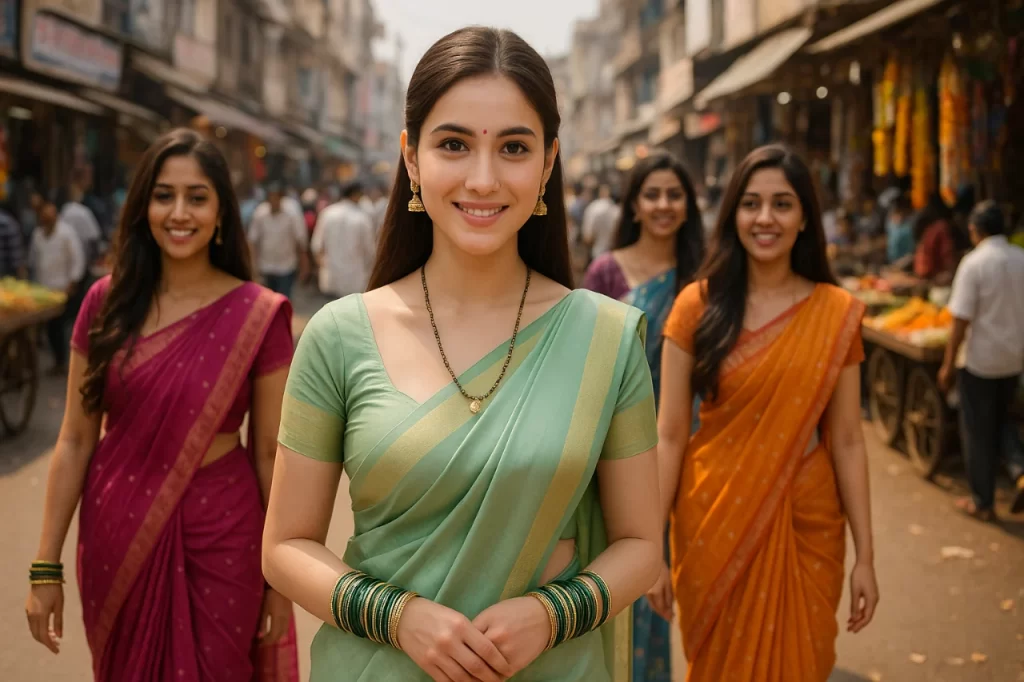
Ultimate 5-Day Sangamner Itinerary
🗓️ Day 1: Arrival & Local Exploration
📍 Arrival at Sangamner
✈️ Arrive via Pune/Mumbai/Nashik airport and reach Sangamner by Taxi or Bus.
🏨 Check-in at a hotel like Hotel Shri Krishna Executive or Hotel Nandanvan, known for comfort and traditional Maharashtrian meals.
🌇 Evening Local Exploration
🛕 Visit Datta Mandir and Shani Mandir for spiritual peace.
🚶♂️ Take a leisurely walk around Sangamner Bus Stand Area, observe the bustling markets.
🍽️ Dinner at Hotel Swagat or Hotel Panchavati – enjoy a Maharashtrian Thali with Puran Poli and Bharli Vangi.
🗓️ Day 2: Heritage & Temple Tour
🌄 Morning: Spiritual Trail
🛕 Visit Someshwar Temple (Ancient Shiva Temple) – best visited at dawn.
🌿 Stop by Godavari Riverbanks, where you’ll find rural pilgrims offering prayers.
🍵 Tea break at a local Tapri for Masala Chai and Poha.
🏰 Afternoon: Historical Sights
📍 Head to Dhandarphal Fort ruins or nearby Devthan (Devgad) known for Ancient Temple Architecture and hidden stone inscriptions.
🧭 Guided tour of ancient Maratha-era wells and caves in the outskirts.
🥗 Lunch at Hotel Sai Paradise, known for hygienic local delicacies.
🎭 Evening: Cultural Performance (if available)
Attend local Lavani dance or Bhajan Sandhya (seasonal; check calendar).
🍛 Dinner at Hotel Grand Legacy or Kaka’s Family Dhaba – try Misal Pav and Zunka Bhakar.
🗓️ Day 3: Village Tourism & Handicrafts Trail
🚜 Morning: Rural Tour
🚗 Start early for a visit to Ashwi, Chincholi, and Dhotre villages – interact with local artisans and farmers.
🧺 Witness Paithani Weaving, Organic Jaggery Making, or Brick Kiln Tours.
🌾 Participate in Bullock cart rides or Turmeric harvesting (Seasonal).
🥘 Afternoon: Village Lunch
Have an authentic home-cooked meal at a local villager’s home – includes Bhakri, Thecha, Pitla, and Solkadhi.
🛍️ Shop for handmade Copper-ware, Mud Toys, and Bamboo Baskets in Kohane or Talegaon.
🌅 Evening: Nature Walk
Enjoy sunset at Malpada Hilltop or Wakadi Windmill Farm.
📸 Photography opportunities with natural light and rural silhouettes.
🍴 Dinner at Hotel Pankaj Garden, known for peaceful ambience and Thali meals.
🗓️ Day 4: Local Market Tour & Festivals
🛍️ Morning: Market Visit
Explore Sangamner Main Bazaar, Saptashrungi Mandai, and Naka area.
Buy Kolhapuri chappals, Hand-Embroidered sarees, locally grown Raisins, Onions, and Jaggery.
🥪 Snack break at Hotel Sai Krupa – try Batata Vada and Kharwas.
🎉 Afternoon: Festival Participation (if aligned)
If visiting during Mahashivratri, Ganeshotsav, or Gudhi Padwa, join local processions and Pooja rituals.
Witness Palakhi Sohala during Ashadhi Ekadashi.
🕌 Evening: Temple Closing Visit
Conclude with Aarti at Hanuman Temple near College Road.
Relax at your hotel or take a rooftop dinner at Hotel Siddhi – try Kadhi-Khichdi and Sitaphal Rabdi.
🗓️ Day 5: Adventure and Departure
🌄 Morning: Offbeat Nature Trail
Go for early morning trekking to Bhavli Water Reservoir or Kokanwadi View Point.
Nature enthusiasts can spot local Birdlife like Kingfishers, Peacocks, and Indian Rollers.
🌤️ Light breakfast picnic with Sabudana Khichdi and lemon sherbet.
🧳 Check-Out & Return Journey
Return by road to Nashik (85 km), Pune (125 km), or Mumbai (180 km) for further travel.
Carry souvenirs like local Jaggery, Handmade Snacks, and Miniature Warli Art.
📌 Additional Tips
✅ Best time to visit: October to March for pleasant weather and festival season.
✅ Always carry cash in small denominations for village visits.
✅ Respect local customs, especially in temples and during traditional rituals.
✅ Pre-book guides or ask your hotel for contacts for rural tours.
🙋 Frequently Asked Questions (FAQs)
What is Sangamner famous for?
Its confluence of rivers, Chandika Devi Temple, and Agro-tourism.
Is Sangamner safe for solo travellers?
Yes, it’s considered safe with friendly locals.
How far is Sangamner from Shirdi?
Just 23 km, easily accessible by road.
Is there a railway station in Sangamner?
No, nearest stations are Belapur and Nashik Road.
✅ Closing Comments
Sangamner, though often passed by en route to more famous destinations like Shirdi or Nashik, is a standalone marvel steeped in history, nature, culture, and spiritual tranquility. From its ancient temples and scenic rivers to its delicious food and local hospitality—Sangamner is a journey into the heart of Maharashtra’s heritage. Whether you seek soulful travel, cultural exploration, or peaceful retreats, this town delivers on every front. So next time you travel in Ahmednagar district, don’t just pass through—make a memorable stop in Sangamner.

🏁 Detailed Conclusion: The Soul of Sangamner – Where Tradition Meets Transformation 🌿 🏙️
Sangamner, nestled in the heart of Ahmednagar district, is more than just a geographic location — it is a living, breathing tapestry of history, heritage, progress, and people. From its rich agrarian legacy and spiritual landmarks to its growing industrial backbone and vibrant cultural scene, Sangamner truly embodies the essence of rural Maharashtra intertwined with urban aspirations. 🌾 ✨
What makes Sangamner stand apart is its balanced lifestyle — where farmers rise with the sun, tending to onion and sugarcane fields with time-honoured techniques, while entrepreneurs and youth move forward with digital businesses, education, and social enterprise. The Godavari river, flowing gently through this landscape, is not just a physical feature, but a spiritual and emotional lifeline for the communities that thrive on its banks. 🌊 🧘♀️
The local food trail is a sensory delight, showcasing flavours that are earthy yet rich — from spicy Zunka Bhakri and cooling Mattha, to festive Puran Poli and village-made Jaggery. With every bite, you’re not just tasting food — you’re tasting Ancestral Wisdom, Soil, and Soul. 🍽️ 🌿
Culturally, Sangamner is an unseen powerhouse of traditions: whether it’s Lavani dance, Kirtan Bhajans, Ganeshotsav processions, or age-old village fairs, the town pulsates with rhythm, devotion, and colour. 🎉 💃 The language diversity, with Marathi at its core and Hindi, Urdu, and English coexisting, fosters a multilingual harmony rarely seen in small towns. 🗣️ 📚
Demographically, it is a microcosm of India — with a healthy blend of Maratha, Mali, Brahmin, Dalit, Dhangar, and Muslim communities, each contributing to its identity in their own vibrant way. The literacy rate is on the rise 📈, women’s education and participation in businesses is growing 💪 👩🎓, and the youth are leading climate, startup, and tech innovations, carving a sustainable future for Sangamner.
Industrially, it’s not just an agricultural town anymore. Emerging MIDCs, Pharmaceutical Parks, Logistics hubs, and Education centres are rewriting its economic narrative. Yet, the local ethos remains grounded — where development walks hand-in-hand with eco-consciousness and heritage preservation. 🏭 🌱
Perhaps the greatest treasure of Sangamner lies in its people. Whether it’s the humble farmer, the spirited teacher, the progressive industrialist, or the dedicated folk artist — everyone carries a deep sense of belonging, pride, and hospitality. Here, guests aren’t just visitors — they’re welcomed as family. 🤝 ❤️
To visit Sangamner is to embark on a journey through time — where centuries-old traditions coexist with 21st-century aspirations, where every turn offers a story, a flavour, or a song. 🛣️ 🎶 It is a destination for those who seek authenticity over glamour, depth over distraction, and a connection with the real India.
So, whether you’re a curious traveler, a culture seeker, a spiritual wanderer, or a history enthusiast — Sangamner promises an experience that is profound, personal, and unforgettable. Come, explore this hidden gem of Ahmednagar, and take back not just photos, but memories etched with warmth, wisdom, and wonder. 📸 🌅 🧳
Note: Distance is approximate and travel time may vary. Please check with google maps or local authorities before travelling.
Note: Hotel rates are subject to change and may vary based on factors like seasonality, availability, and promotions. Taxes, service charges, and other applicable fees are not always included in displayed rates.
📚 Article Sources:
➛ Wikipedia – Sangamner
➛ Wikipedia – Sangamner Taluka
➛ Ahmednagar District Official Portal
➛ MakeMyTrip – Mumbai to Sangamner Route Planner
Image Credit
➛ Wikimedia Commons – Sangamner
➛ Wikimedia Commons – Pravara River
➛ Wikimedia Commons – 217-Sangamner
➛ Wikimedia Commons – संगमनेर विधानसभा मतदारसंघ
For more information, you can visit our website: ExploreXP
Latest Posts
- 4 Steps to Teach English in Vietnam (Complete 2026 Guide)

- The Complete Guide to Living in Ho Chi Minh City, Vietnam
- What Living in Hanoi Is Really Like for Foreigners
- Expat vs Immigrant: What’s the Real Difference?
- 7 Best Places to Live in Mexico Right Now: A Complete Guide
- Best Places to Live in Thailand: A Complete Guide for Expats in 2026