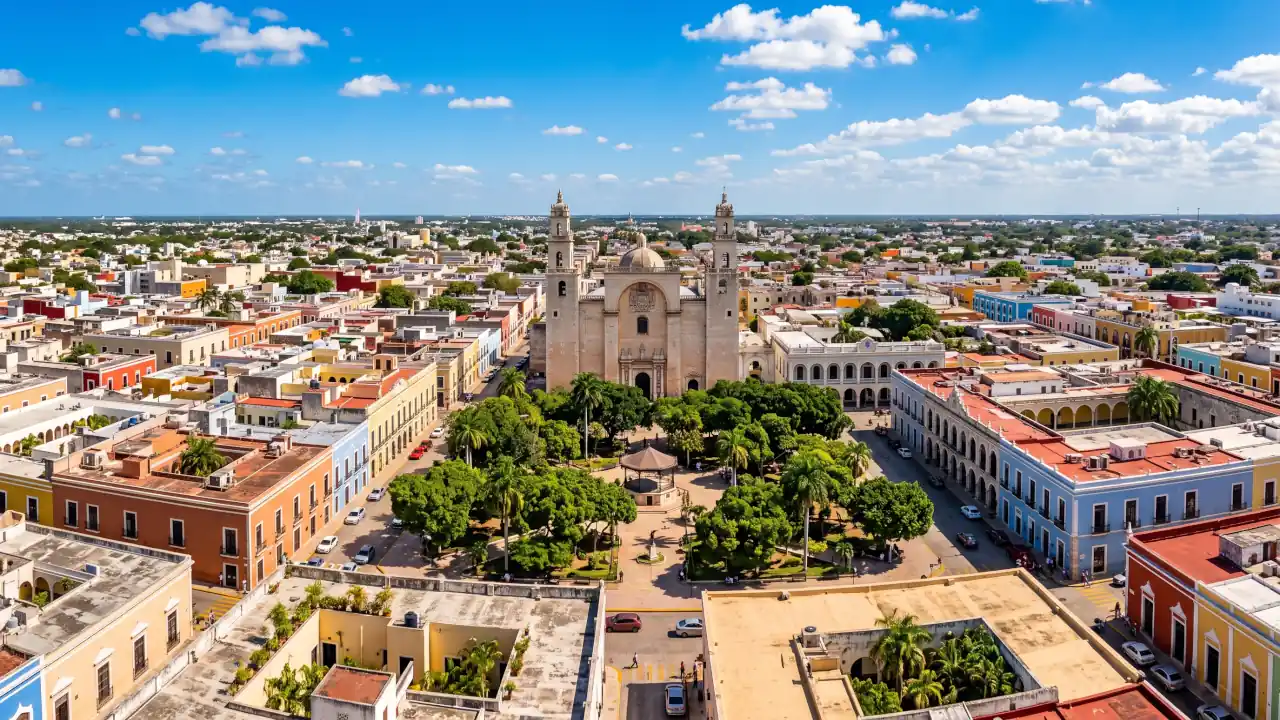
I still remember the first time I sat in Mérida’s Plaza Grande on a Sunday evening, watching families stroll beneath the laurel trees while a marimba band played somewhere out of sight. That was the moment I stopped thinking of Mérida as another stop on a Mexico trip and started wondering what it would actually be like to live there.
If you’re considering relocating, Mérida offers one of Mexico’s safest cities, a relatively affordable cost of living, excellent healthcare, reliable infrastructure, and a rich cultural scene. It’s one of the true gems among Mexico’s colonial cities, especially for travelers and expats willing to venture beyond the country’s better-known destinations. In this guide, I’ll walk you through housing costs, neighborhoods, residency requirements, and the practical pros and cons of living in Mérida.
Also Read: Living in Cancun in 2026: Costs, Pros, Cons & Local Tips
Quick Answer
Living in Mérida is ideal for people looking for a safe, culturally rich city with a lower cost of living than most North American cities. A comfortable lifestyle typically costs between $1,000 and $2,200 USD per month, depending on household size and neighborhood. While the climate is hot year-round, many expats find Mérida’s healthcare, infrastructure, and quality of life worth the trade-off.
Key Takeaways
- Mérida is consistently regarded as one of Mexico’s safest cities.
- Most expats spend between $1,000–2,200 USD monthly.
- Centro offers history and walkability, while North Mérida offers newer developments.
- Temporary Residency is the most common long-term visa route.
- The biggest adjustment for newcomers is the year-round heat.
Whether you’re an expat, retiree, digital nomad, or remote worker, this guide covers the practical information you need before living in Mérida long-term, from choosing the right neighborhood to understanding costs, residency requirements, and everyday life.
Why I Love Living in Mérida
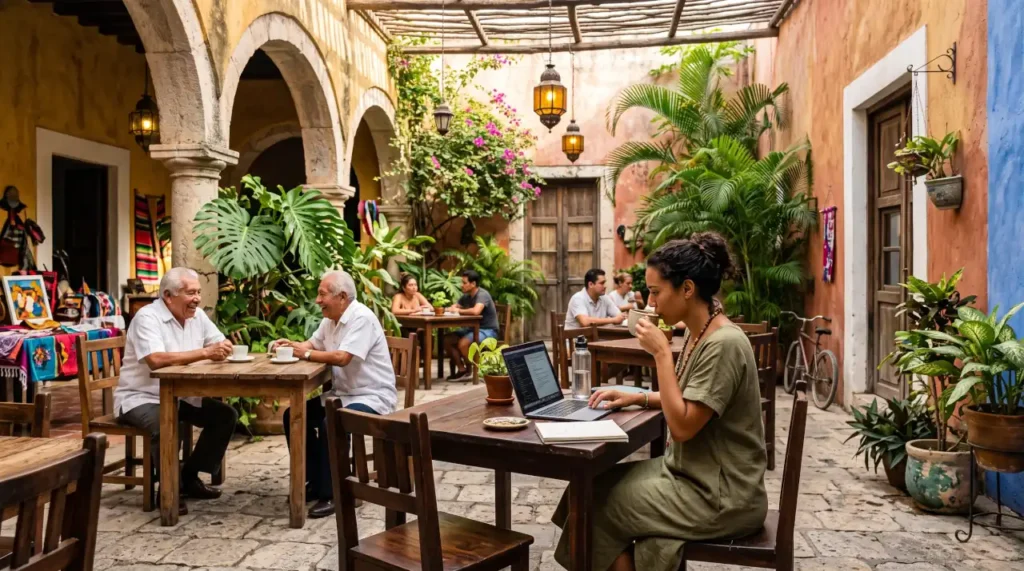
People ask me all the time why I keep coming back to Mérida instead of chasing the beach towns everyone else talks about. After spending extended periods living and working from the city over multiple visits, I’ve seen how dramatically daily life can differ between neighborhoods, which is why I always recommend choosing your location carefully before signing a lease.
The truth is, Mérida gives you something most beach destinations can’t: a real city with real infrastructure, deep culture, and a slower pace, while still keeping you close enough to the coast that you’re never far from the water. You can be sitting in a 400-year-old courtyard house for lunch, and forty minutes later you’re dipping your feet into the gorgeous Yucatan beaches along the Gulf coast. For many locals and expats, the nearby beach town of Progreso is the go-to weekend escape, offering an easy way to enjoy the coast without giving up the conveniences of city life.
Beyond daily life, Mérida makes an excellent base an excellent base for weekend trips to cenotes, Mayan archaeological sites like Chichén Itzá, and the Gulf Coast beaches that make the Yucatán Peninsula so popular.
With a metropolitan population of around one million people, Mérida manages to feel surprisingly manageable compared with many large Latin American cities, which is part of what attracts so many newcomers.
Mérida also doesn’t have the tourist crush you get in Cancun or the Riviera Maya. Mérida is a working city first and a tourist destination second, which changes the pace of everyday life in ways many newcomers immediately appreciate. You’re not competing with cruise ship crowds for a table at your favorite taco stand. There’s a rhythm to daily life here that feels closer to how Mexicans actually live, not a version built for vacationers.
I also love that Mérida keeps getting ranked among the best places to live in the Yucatan Peninsula, and for good reason. It has excellent hospitals, reliable high-speed internet, well-stocked grocery stores, and convenient airport connections that make it genuinely livable long-term, not just charming for a two-week visit. Mérida International Airport offers convenient domestic routes across Mexico along with a growing number of international connections, making it easy to travel for work, family visits, or weekend getaways. If you’re weighing it against other options, it holds up well.
For anyone building a location-independent career, Mérida has quietly become one of the better bases for a digital nomad in Mexico. Coworking spaces have multiplied over the last few years, fiber internet is common in the newer neighborhoods, and the time zone lines up nicely with both U.S. coasts, which matters more than people expect when you’re on client calls. It’s a different vibe than living in Mexico City, which is bigger, faster, and colder in the winter months, or Guadalajara, which has its own tech scene but a very different climate and culture. Mérida sits in its own lane, and once you’ve spent real time there, it’s hard to go back to comparing it directly to anywhere else.
Best Areas to Live in Mérida, Mexico
Mérida isn’t a one-neighborhood city, and the best neighborhoods in Mérida really depend on your budget, lifestyle, and how you plan to spend your time. If you’re unsure where to begin, Centro is usually the best choice for first-time expats who want walkability, while North Mérida suits families and those looking for newer housing developments. I’ll break it down by region and by budget tier, because “Mérida rent” means wildly different things depending on which of these you pick.
Central Mérida
Central Mérida is the city’s historic heart, known for its beautifully preserved colonial architecture, lively plazas, and walkable streets lined with cafés, markets, and museums. It’s an excellent choice for first-time expats, retirees, and remote workers who want to immerse themselves in Mérida’s culture while having many of the city’s main attractions within easy walking distance.
Budget Stay: The streets just outside the historic core, think areas like García Ginerés edges or the quieter blocks of Santiago, give you walkability to Centro without paying premium colonial-home prices. You’ll find modest one-bedroom apartments here for roughly $350 to $500 a month, often in older buildings without much insulation from the heat, so budget for a good fan setup or a portable AC unit.
Mid-Tier Stay: Restored colonial homes and renovated apartments closer to the Plaza Grande and the Paseo de Montejo corridor run higher, typically $600 to $900 a month for a one or two-bedroom. This is the sweet spot most expats land in during their first year, since it puts you within walking distance of markets, cafes, and the cultural calendar that makes Centro special.
Luxury Stay: Fully restored colonial mansions with private pools, high ceilings, and interior courtyards can run anywhere from $1,200 to $2,500 a month to rent, and considerably more if you’re buying and renovating one yourself. These properties are a big draw for retirees and remote professionals who want the historic aesthetic without sacrificing modern comfort.
North Mérida
North Mérida offers a more modern and suburban lifestyle, with newer residential developments, shopping malls, international schools, and many of the city’s best private hospitals. It’s particularly popular with families, long-term expats, and professionals looking for contemporary housing, gated communities, and easy access to everyday amenities.
If you’re also considering the capital, our guide to Mexico City neighborhoods compares the city’s most popular areas by cost, safety, and lifestyle, making it easier to decide which destination better matches your priorities.
Budget Stay: North Mérida is generally the priciest quadrant of the city, but you can still find smaller apartments in older sections for around $450 to $600 a month if you’re willing to skip the newest developments and gated amenities.
Mid-Tier Stay: This is where a lot of families and long-term expats end up, in neighborhoods like Montebello or near Altabrisa Mall. Expect $700 to $1,100 a month for a modern two or three-bedroom apartment or townhouse, often with a shared pool, gym, and better AC infrastructure than you’ll find downtown.
Luxury Stay: Gated communities with private pools, 24-hour security, and proximity to international schools push rents to $1,300 to $2,000 a month or more. This area attracts a lot of families relocating with kids, since the private schools and hospitals here are considered among the best in the city.
East & West Mérida
East and West Mérida provide a more residential, local feel while offering some of the city’s best value for money. These neighborhoods appeal to expats who prefer quieter surroundings, larger homes, and a more authentic day-to-day experience without being too far from Centro or the newer northern districts.
Budget Stay: These are the most affordable quadrants overall, and increasingly popular with expats who don’t need to be walking distance from Centro. A comfortable one-bedroom here can run $300 to $450 a month.
Mid-Tier Stay: Newer residential developments in the east and west have been expanding fast, and a modern two-bedroom with amenities typically lands around $500 to $750 a month, often at a noticeably better value than similar units up north.
Luxury Stay: Luxury here usually means larger single-family homes with land, sometimes with a workshop or garden space, priced from $900 to $1,400 a month. It’s a good option if you want more square footage for your money and don’t mind a slightly longer drive into the center.
How to Find an Apartment in Mérida
Most people start their apartment search the same way I did, by joining a few Facebook groups dedicated to Mérida expats and rentals. Groups like “Merida Living” or “Yucatan Living” have active listings, and landlords post directly, which cuts out a middleman. That said, treat these listings the way you would anywhere: verify the person is who they say they are, and never wire a deposit before seeing the place, either in person or through a trusted friend already in the city.
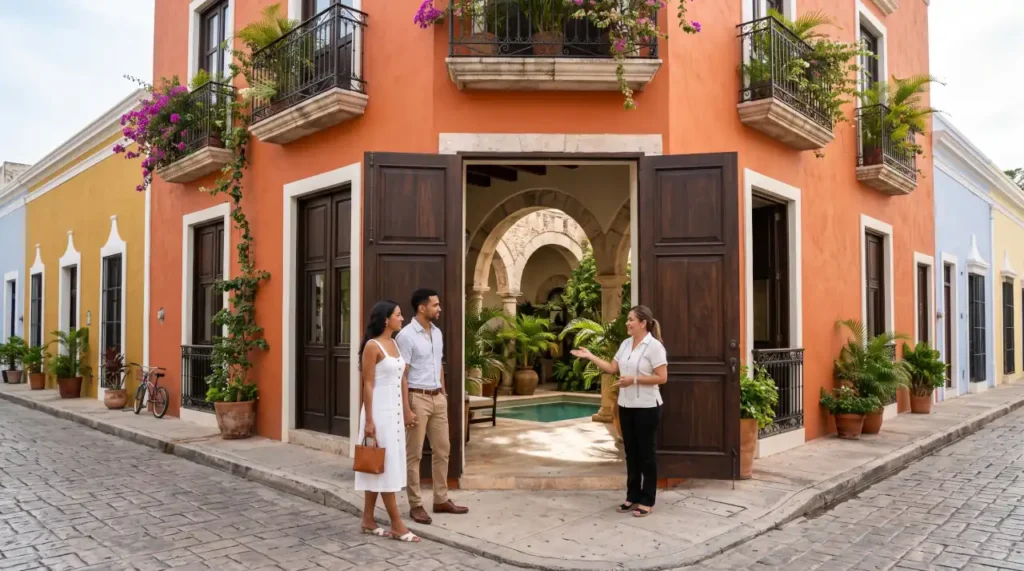
If you’re signing a long-term lease, ask for a written contract (“contrato de arrendamiento”) and carefully review the payment schedule, deposit terms, and maintenance responsibilities before signing.
Local real estate offices and property managers are worth using too, especially if you’re not fluent in Spanish yet. Many now specialize specifically in expat clients and can walk you through lease terms, which in Mexico are usually written in Spanish even if the agent speaks English. A standard lease runs one year, and landlords commonly ask for one month’s rent as a security deposit plus the first month upfront. Some will also ask for a Mexican guarantor or an extra deposit if you don’t have local rental history, so don’t be surprised if that comes up in negotiations.
I’d also recommend renting short-term for your first month or two before signing anything long-term. Airbnb or a furnished monthly rental gives you the chance to actually live in a neighborhood, get a feel for the noise levels, the walk to groceries, and how the heat sits in that particular block, before committing to a full year lease. Mérida’s neighborhoods can feel completely different just a few streets apart, so this small step saves a lot of regret later.
One thing I noticed after renting in Mérida is that two apartments on the same street can feel surprisingly different depending on afternoon shade, traffic, and airflow. If possible, visit a property more than once and at different times of day before signing a lease—you’ll get a much better sense of what everyday life will actually feel like.
Cost of Living in Mérida
Here’s the part everyone actually wants to know: what does it cost to actually live here, day to day? A single person can comfortably cover rent, food, transportation, and basic entertainment on somewhere between $1,000 and $1,500 a month, depending on the neighborhood and lifestyle choices above. Couples typically land between $1,500 and $2,200 a month for a comfortable, not extravagant, lifestyle.
Here’s a quick breakdown of the typical monthly expenses you can expect when living in Mérida.
| Expense | Monthly Cost (USD) |
| Rent | $350–1,500 |
| Utilities | $60–120 |
| Internet | $25–35 |
| Groceries | $300–400 |
| Transportation | $30–80 |
| Dining Out | $150–300 |
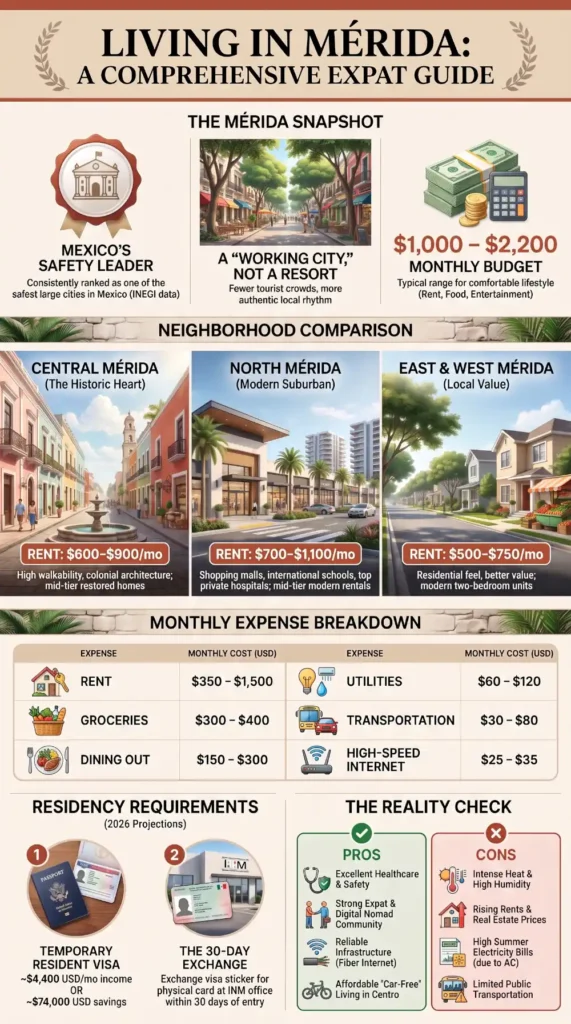
Groceries run cheaper than most people expect coming from the U.S., Canada, or Europe. A couple can expect to spend around $300 to $400 a month shopping at local markets and mid-range grocery stores, more if you lean heavily on imported goods or shop exclusively at the pricier international supermarkets. Eating out is genuinely one of Mérida’s best deals. A filling meal at a local fonda can cost under $5, while a nice dinner for two at a trendy restaurant runs closer to $30 to $40.
Utilities for a typical apartment, including electricity, water, and gas, average around $60 a month, though electricity spikes noticeably in the hot months if you’re running AC constantly, since Mérida’s climate is tropical and humid for a good chunk of the year. High-speed internet costs between $25 and $35 a month and is widely available, even in the newer suburbs. Transportation is another area where Mérida shines. Many residents in or near Centro don’t bother owning a car at all, relying instead on walking, bikes, or rideshares. A thirty-minute Uber ride across the city typically costs around $5, which makes car-free living a genuinely practical option here in a way it isn’t in most Mexican cities.
Healthcare costs deserve a mention too, since it’s often a deciding factor for retirees. Mérida is home to several highly regarded private hospitals, and the city has developed a strong reputation for medical tourism in southeastern Mexico. According to the Mexican Ministry of Health (Secretaría de Salud), Yucatán continues to invest heavily in healthcare infrastructure, contributing to the city’s appeal for retirees and long-term residents.
It’s worth being honest that Mérida isn’t the bargain-basement destination it was a few years back. Even so, Mérida continues to offer excellent value compared with most cities in the United States and Canada. While housing costs have risen in recent years, residents generally benefit from lower everyday expenses, affordable private healthcare, and a lifestyle that combines modern conveniences with a strong sense of local culture.
Rising demand from both Mexican and international buyers has pushed real estate and rental prices up noticeably, and Mérida now ranks among the pricier cities in Mexico relative to where it started. It’s still dramatically cheaper than comparable U.S. or Canadian cities, but if you’re comparing it to smaller Yucatan towns or less popular Mexican cities, expect to pay a premium for Mérida’s infrastructure and expat-friendly reputation.
| Mérida is ideal for | Mérida may not suit |
| Retirees | People who dislike heat |
| Digital nomads | Nightlife-focused travelers |
| Families | Beach-first lifestyles |
| Slow travelers | Those wanting major-city pace |
How to Get a Visa to Live in Mérida, Mexico
If you’re planning to stay longer than the standard 180-day tourist permit (the FMM you get on arrival), you’ll need to apply for residency before you travel, at a Mexican consulate in your home country. This part trips a lot of people up, so it’s worth saying clearly: you cannot walk into Mexico as a tourist and later apply for residency status from inside the country in most cases. The application has to start at a consulate abroad.
The most common route for people relocating is the Temporary Resident Visa, which allows you to legally live in Mexico for up to four years before you’re eligible to convert to permanent residency. To qualify through “economic solvency,” Mexican consulates now calculate financial thresholds using a unit called the UMA rather than minimum wage, which as of 2026 puts the typical monthly income requirement around $4,400 USD, or a savings and investment balance of roughly $74,000 USD held over the preceding twelve months. These figures shift slightly by consulate and by the exchange rate on the day you apply, so it’s smart to aim comfortably above the published minimum rather than exactly at it.
Because individual Mexican consulates may interpret the financial documentation requirements slightly differently, it’s always worth confirming the latest eligibility criteria and required paperwork directly with the Mexican consulate where you’ll submit your application. Doing so can help you avoid delays or unnecessary repeat appointments.
Permanent Residency, by contrast, requires a much higher bar, generally around $7,400 USD in monthly income or roughly $300,000 USD in savings, and it’s typically reserved for retirees or those who’ve already spent several years as temporary residents. Residency applications are handled by Mexico’s National Immigration Institute (Instituto Nacional de Migración), while each Mexican consulate assesses financial eligibility using the annual UMA calculation. Although the framework is national, documentation requirements may vary slightly between consulates.
Once you have your visa stamped in your passport, you’ll need to “exchange” it for a physical residency card at an INM (Instituto Nacional de Migración) office within 30 days of entering Mexico, so don’t let that window slip. This is also the point to think about timing your move around Mérida’s climate. The best time to visit doubles as the smartest window to handle paperwork and apartment hunting, since the cooler, drier months between November and February make house tours and long walks through Centro a lot more pleasant than doing the same errands in the thick heat of July.
Deciding to Stay in Mérida Long-Term
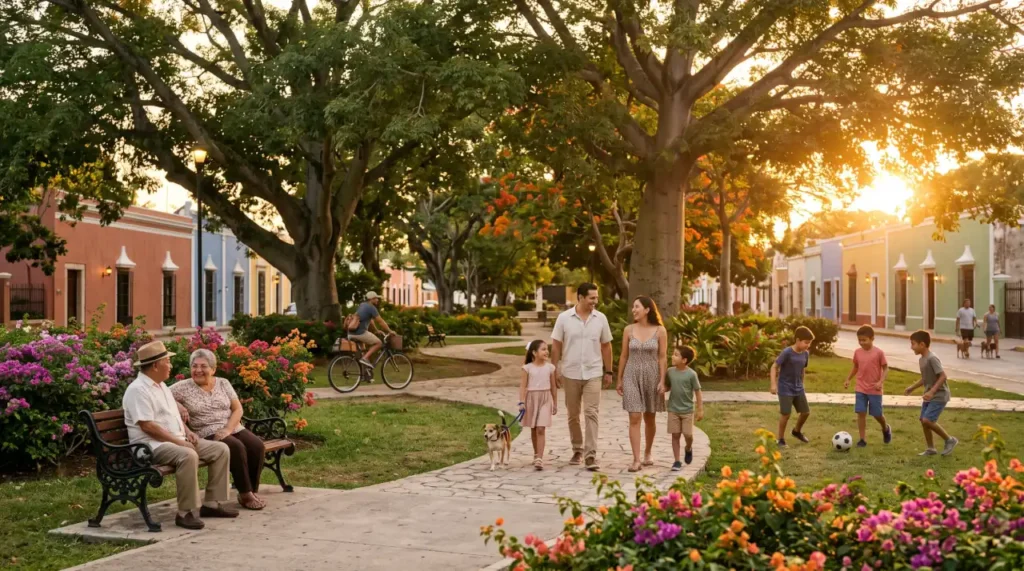
The honest answer to “should I stay long-term” comes down to how you handle heat and how much you value safety and predictability over constant novelty. Mérida is hot, genuinely hot, for a solid chunk of the year, with humidity that catches a lot of newcomers off guard even if they’ve lived somewhere warm before. Most residents plan outdoor activities early in the morning or after sunset, with many businesses naturally adjusting to the afternoon heat.
If air conditioning is a dealbreaker for you, make sure whatever place you rent has it installed and not just promised, because plenty of older homes, especially those built by locals who grew up without it, simply don’t have it.
On the flip side, Mérida is widely regarded as one of Mexico’s safest large cities. While crime can occur anywhere, Yucatán consistently reports some of the country’s lowest crime rates according to data published by Mexico’s National Institute of Statistics and Geography (INEGI). That single factor is often what tips people from “extended vacation” into “actual home.”
The other consideration is community. Mérida has a well-established expat network at this point, with English-language libraries, meetup groups, and long-running social circles that make it easier to build a life here than it would have been a decade ago. That said, if your goal is to really integrate rather than live inside an expat bubble, learning Spanish, and specifically getting used to the Yucatecan accent and vocabulary, which carries a strong Maya influence, will open a completely different version of the city to you.
Applying for Mexican Residency
Once you’ve chosen the appropriate residency route, the application process is relatively straightforward as long as you prepare your documents in advance.
Once you’ve decided Mérida is home for the long haul, the residency process itself is fairly linear, even if it takes patience. Start by gathering your financial documentation, six months of bank or income statements if you’re going the income route, or twelve months if you’re proving solvency through savings, and get them translated into Spanish if your consulate requires it. Book your consulate appointment early, since wait times can stretch out, especially at busier consulates in major U.S. and Canadian cities.
At your interview, a consular officer will review your documents, ask a few questions about your plans in Mexico, and take your biometric information. If approved, you’ll receive a visa sticker in your passport, not a finished residency card, which is an important distinction. That sticker is only valid for a limited window, so you’ll need to travel to Mexico and complete the “canje” or exchange process at an INM office within 30 days of entry to receive your actual Temporary Resident card. Skipping or delaying this step is one of the most common and avoidable mistakes people make, so treat it as priority one in your first month in the country.
After holding temporary residency, most people are eligible to renew for one, two, or three additional years, and after four cumulative years, you can apply to convert to permanent residency without having to re-prove economic solvency from scratch. It’s a long game, but for most people planning to actually settle in Mérida rather than just test the waters, it’s a straightforward and predictable path.
Top Things to Do in Mérida, Mexico
Living somewhere is different from visiting it, but the things that make Mérida a great place to visit are exactly what make it a great place to live, because you get to enjoy them on a regular Tuesday instead of cramming them into a five-day trip. This is also one of the reasons Mérida keeps showing up on lists of the best places to live in all of Latin America: the day-to-day quality of life here is genuinely high, not just the highlight reel.
Explore the Yucatecan Culinary Scene
Yucatecan food is its own distinct cuisine within Mexico, shaped by Maya ingredients and techniques you won’t find further north. Cochinita pibil, slow-roasted pork marinated in achiote and wrapped in banana leaf, is the dish most people fall in love with first, but the variety goes much deeper, from sopa de lima to panuchos to fresh horchata sold from carts on nearly every corner.
Local markets like Mercado Lucas de Gálvez and Mercado de Santiago are some of the best places to eat like a local, offering everything from traditional Yucatecan breakfasts to fresh produce and regional specialties at affordable prices. Meanwhile, the growing fine-dining scene along Paseo de Montejo shows how far Yucatecan cooking has evolved without losing its roots.
Take a Free Walking Tour
Nearly every day, free walking tours depart from near the Plaza Grande, run by guides who genuinely know the city’s layered history, from its Maya origins as the city of Tho, through Spanish colonization, to its boom years as a henequen export capital in the 1800s that built many of the mansions along Paseo de Montejo. It’s one of the easiest, cheapest ways to understand the city you’re moving to, and a great way to meet other newcomers doing the same thing.
Experience Mérida by Night
Mérida’s evenings have their own personality entirely. The city closes streets for weekly cultural events, Centro on Sunday nights turns into a pedestrian celebration with music and dancing in the plazas, and rooftop bars along Paseo de Montejo offer a completely different, more upscale side of the city after dark. Whether you’re into a quiet cantina with a live trova musician or a proper night out with cocktails and a view, Mérida has enough range that you won’t run out of options once the sun goes down.
Is Mérida a Good Place to Live?
Mérida is one of the best cities in Mexico for expats, retirees, remote workers, and families seeking a safe, affordable lifestyle with modern healthcare and strong infrastructure. The biggest drawbacks are the year-round heat and gradually rising housing costs, but for many newcomers, the overall quality of life outweighs those challenges.
Ready to Try Living in Mérida?
If everything you’ve read here sounds appealing rather than overwhelming, that’s usually a good sign. Mérida rewards people who want a real city with real culture, not a resort bubble, and who don’t mind trading a few months of serious heat for a level of safety and community that’s genuinely rare to find together in one place. Start with a longer visit before committing to a lease, spend time in more than one neighborhood, and give yourself permission to take the visa process step by step rather than rushing it.
Also Read: Living in Guadalajara: Costs, Safety & Daily Life
Common Mistakes to Avoid When Moving to Mérida
Final Thoughts
Mérida isn’t perfect. Like any relocation, your experience will depend on choosing the right neighborhood, setting realistic expectations, and giving yourself time to adjust to a different pace of life. The heat is real, prices have crept up as more people discover it, and if you’re craving constant beach access at your doorstep, you’ll want a car or a tolerance for the forty-minute drive to the coast.
But for the combination of safety, culture, cost, and quality of life it offers, it remains one of the strongest options in Mexico for anyone serious about relocating rather than just vacationing. I’ve watched this city grow over the past few years, and every reason I fell for it originally still holds true today.
If you’re looking for a city that balances affordability, safety, culture, and long-term livability, Mérida deserves a place at the top of your shortlist.
If you’re still on the fence, consider spending at least a month in Mérida before making any long-term commitments. That extra time will give you a much clearer feel for the neighborhoods, climate, and daily routine than any guidebook or apartment listing ever could, making it far easier to decide whether the city is the right fit for your lifestyle.