If you’ve ever daydreamed about trading gray winters for warm evenings, cheap tacos, and a slower pace of life, the Yucatán Peninsula probably already has your attention. It’s the part of Mexico people move to and then never quite leave. Big cities like Mexico City and Guadalajara get most of the headlines, but this region does something those cities can’t: it gives you colonial charm, Caribbean water, and Mayan ruins all within a two-hour drive of each other.
I’ve spent a lot of time in this corner of Mexico, talking to expats who moved for six months and stayed for six years. What I’ve noticed is that people rarely regret the move itself. They regret not researching the specific town first. The Yucatán Peninsula covers three states (Yucatán, Quintana Roo, and Campeche), and the difference between living in a quiet colonial city and a beach town packed with tourists is night and day. So before you pack a bag, let’s walk through where people are actually settling down in 2026, and just as importantly, where you might want to think twice.
Also Read: Living in Playa del Carmen: The Complete Expat Guide (2026)
Quick Answer
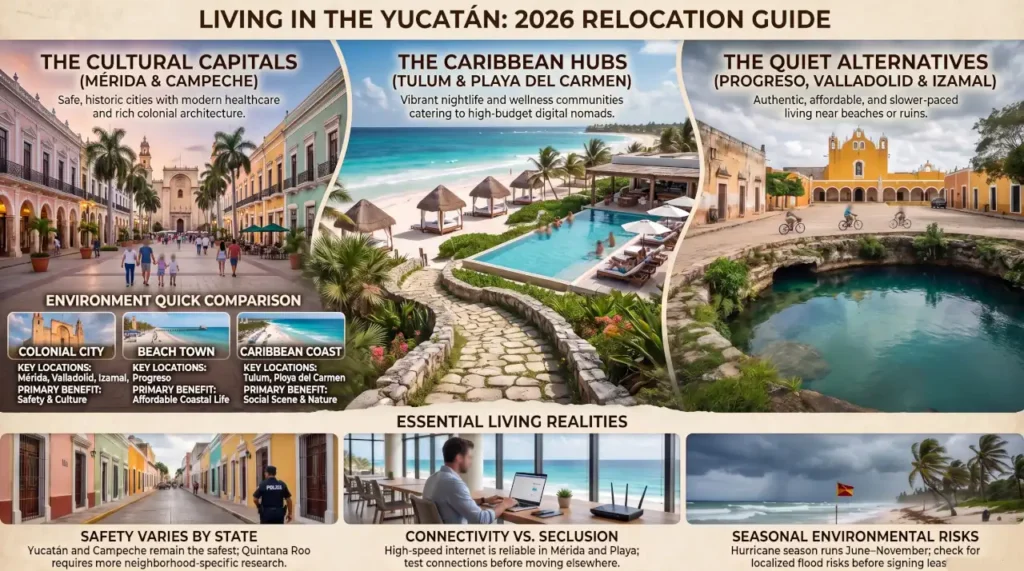
The best places to live in the Yucatán Peninsula in 2026 are Mérida, Valladolid, Progreso, Tulum, Izamal, Playa del Carmen, and Campeche. The best choice depends on your lifestyle, budget, and whether you prefer colonial city living, a quiet beach town, or a vibrant Caribbean destination.
Mérida offers safety and modern amenities, Progreso is ideal for affordable beach living, while Tulum and Playa del Carmen suit digital nomads seeking vibrant coastal communities.
Key Takeaways
- Mérida remains the safest and most balanced city for most expats.
- Progreso offers affordable beachfront living close to Mérida.
- Valladolid and Izamal provide authentic colonial lifestyles at lower costs.
- Playa del Carmen and Tulum offer stronger digital nomad communities but higher living costs.
- Research neighborhoods, healthcare access, internet quality, and flood risks before signing a lease.
What Everyday Life in the Yucatán Peninsula Is Really Like
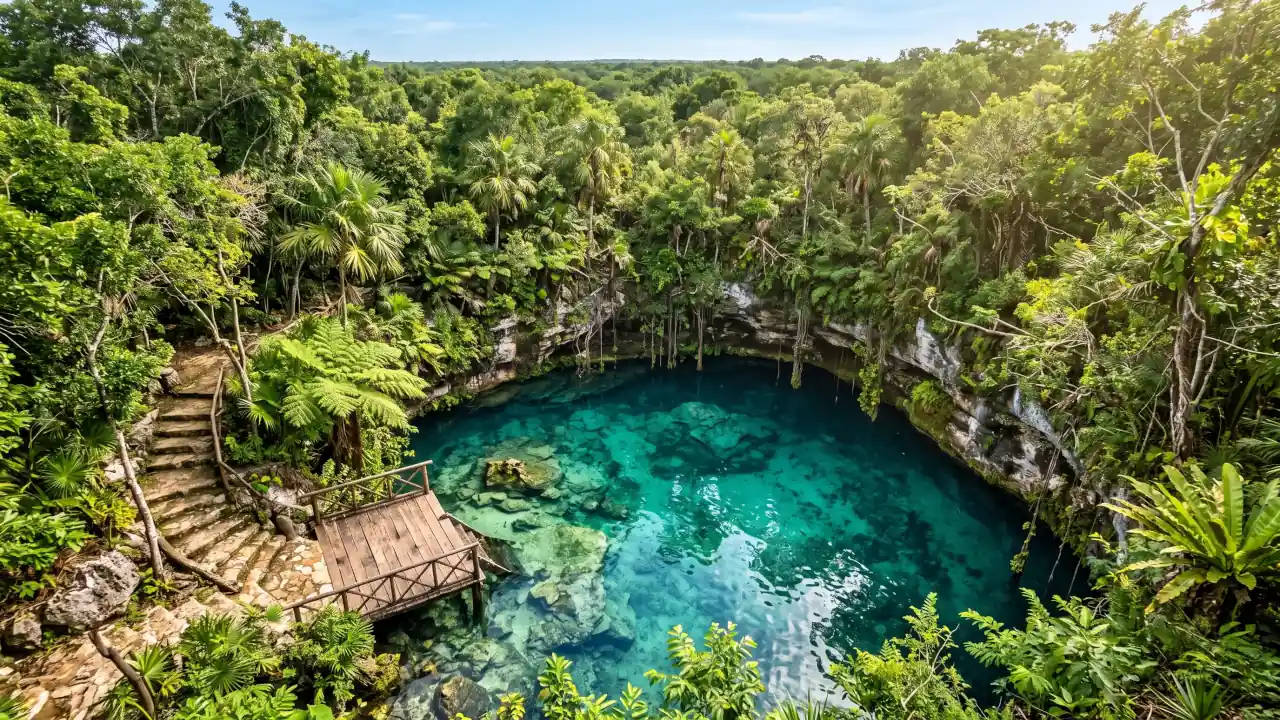
There’s no single “Yucatán lifestyle.” That’s kind of the point. You can live in a walkable colonial city with museums and coffee shops a block from your door, or you can wake up to the sound of waves and nothing else. You can join a bar crawl on a Tuesday night or spend your evenings watching flamingos wade through a lagoon. The region has ancient ruins like Chichén Itzá and Uxmal scattered across the map, thousands of cenotes (those swimmable limestone sinkholes the area is famous for) hiding in the jungle, and a genuinely warm culture that makes newcomers feel welcome fast.
The cost of living is also a huge draw. Compared to most of the US, Canada, and Western Europe, your money stretches noticeably further here, whether that’s rent, groceries, or a night out. That said, “affordable” doesn’t mean the same thing in every town on this list. Tulum, for example, has gotten expensive enough that some longtime expats have started looking elsewhere. Let’s get into the specifics.
One thing every town on this list has in common is the climate. The Yucatán Peninsula is warm year-round, with hot, humid summers and a rainy season that typically runs from June through October, so weather is an important factor when choosing where to live.
1. Mérida — Relaxed City Charm with Modern Amenities
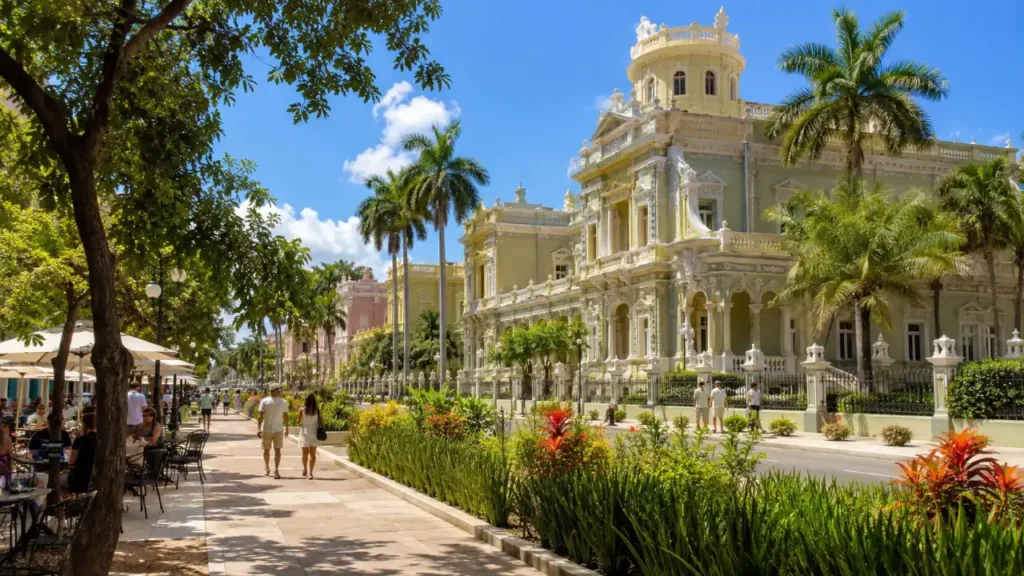
Mérida is the capital of Yucatán state and, for a lot of expats, the obvious starting point. It’s consistently ranked as one of the safest cities in Mexico, which matters a lot if you’re moving with a family or just want to walk home at night without thinking twice. The city blends colonial mansions and shaded plazas with modern grocery stores, coworking spaces, and a genuinely active social calendar.
According to Mexico’s National Institute of Statistics and Geography (INEGI), Mérida consistently records one of the country’s highest urban perceptions of public safety, making it a popular destination for retirees, remote workers, and families relocating to Mexico.
What makes Mérida different from a lot of “expat hotspots” is that it never feels like it was built for tourists. Locals actually outnumber foreigners by a wide margin, so you get real Yucatecan culture instead of a version of Mexico dressed up for visitors. The weather runs hot for most of the year, but evenings cool off enough to sit outside comfortably, and the city’s Sunday street closures (when whole avenues shut down for walking, biking, and live music) are a great way to meet people. It’s no exaggeration to call Mérida one of the best places to live in all of Latin America, not just Mexico.
Best Areas to Live in Mérida
Paseo de Montejo is the postcard version of the city, a wide, tree-lined avenue lined with restored 19th-century mansions, now home to museums, cafes, and boutique hotels. It’s a popular choice for expats who want elegance and walkability without sacrificing modern comforts.
Centro Histórico puts you right in the middle of everything. Markets, churches, live music, and street food are all within walking distance, which makes it a favorite for people who want to feel immersed in daily Mexican life rather than watching it from a distance.
Norte de Mérida is where a lot of families and retirees end up. It’s newer, quieter, and built around shopping centers, gated communities, and international schools. If you want air conditioning, a car, and a bit more suburban comfort, this is the part of town to look at.
Things to Do in Mérida
You could spend months here and still not run out of things to do. The Gran Museo del Mundo Maya gives you a solid crash course on the region’s history before you head out to see actual ruins like Uxmal or the smaller, quieter Dzibilchaltún. The Lucas de Gálvez market is where locals shop for everything from fresh produce to hammocks, and it’s a great place to try Yucatecan classics like cochinita pibil.
Mérida also has one of the liveliest cultural calendars in the country, with free concerts, dance performances, and festivals happening most weekends. And when the heat gets to be too much, cenotes near towns like Cuzamá and Homún are close enough for an easy day trip, along with the beaches along the Gulf coast if you’re craving saltwater instead of freshwater.
Living in Mérida means these experiences become part of your routine, whether that’s spending weekends exploring nearby cenotes, attending free cultural events, or enjoying Yucatecan cuisine at neighborhood restaurants instead of just visiting them as a tourist.
2. Valladolid — Surrounded by Natural Wonders & Ancient Ruins
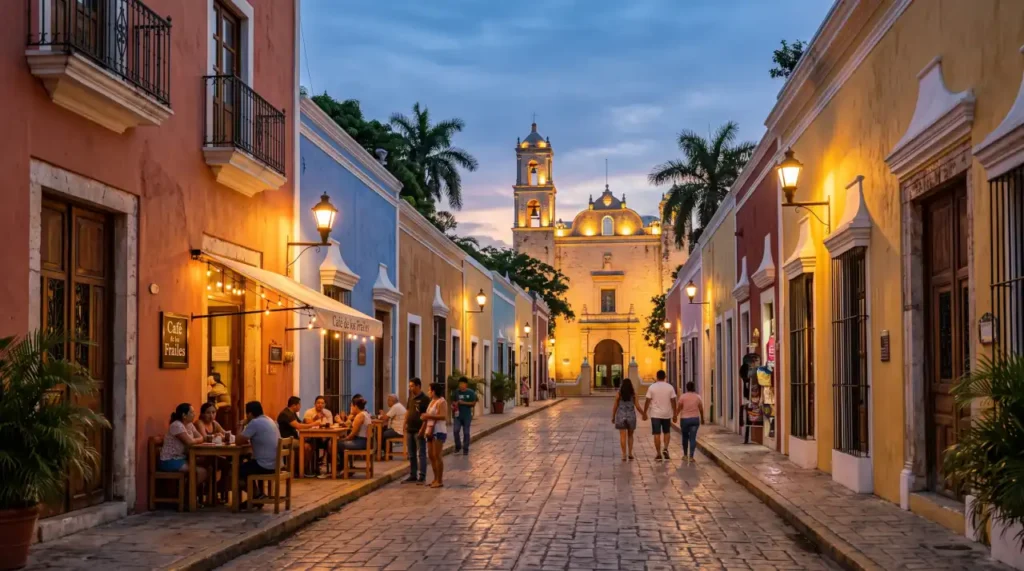
Valladolid is smaller, quieter, and a lot more low-key than Mérida, which is exactly why some people prefer it. This colonial town sits almost dead center in the peninsula, which means you’re close to some of the region’s biggest attractions without actually living in the middle of the crowds. Chichén Itzá is a short drive away, and the town itself has kept its cobblestone streets and pastel-colored buildings largely intact.
Life moves slowly here. You won’t find much nightlife or a massive expat community, but you will find warm locals, cheap rent, and a level of authenticity that’s getting harder to find elsewhere in the region.
Best Areas to Live in Valladolid
Centro Histórico puts you within walking distance of the main square, local markets, and the town’s best-known churches and cultural sites, all in colonial homes that have plenty of character.
Sisal (the neighborhood, not the coastal town of the same name) is quieter and known for its beautiful old convent and easy access to some of the cleanest cenotes in the area.
Santa Lucía blends the old-town feel with a more residential, local atmosphere, which appeals to people who want charm without being right in the thick of the tourist foot traffic.
Things to Do in Valladolid
Chichén Itzá, one of the New Seven Wonders of the World, is the headline attraction, but don’t skip Ek Balam, a lesser-known Mayan site that’s often far less crowded and just as impressive. The town itself is worth exploring on foot, with colorful streets, small cafes, and a genuine small-town rhythm to daily life.
Cenote Zaci sits right in town, making it an easy spot for an afternoon swim without any real travel involved. And when you want a proper meal, the local Yucatecan cuisine here tends to be more traditional (and cheaper) than what you’ll find in more touristy parts of the peninsula.
For residents, Valladolid’s biggest advantage is its slower pace of life, where historic streets, local markets, and nearby archaeological sites become part of everyday living rather than weekend sightseeing.
3. Progreso — Relaxed Expat Community on the Beach
Progreso sits on the Gulf of Mexico, about 45 minutes north of Mérida, and it’s become a go-to spot for retirees and anyone chasing a slower, beach-focused lifestyle. Progreso is also one of the peninsula’s busiest cruise ports, although most residential neighborhoods remain quiet outside cruise arrival hours. It has a long, walkable coastline, a famously long pier, and a laid-back community where you’ll recognize the same faces at the same cafes week after week.
Because it’s so close to Mérida, you get the best of both worlds: quiet beach living with quick access to a real city whenever you need a hospital, an airport, or a bigger grocery run. Prices here are still noticeably lower than what you’d pay in Tulum or Playa del Carmen for a similar beachfront setup.
Best Areas to Live in Progreso
The beachfront strip is the obvious draw for anyone who wants ocean views out the window and a short walk to the sand every morning.
Chicxulub Puerto, just east of Progreso, tends to be quieter and less developed, with a friendly, low-key community that’s popular with people who want beach life without quite so much foot traffic.
Centro, the downtown area, gives you a more local experience, with easier access to markets, pharmacies, and everyday errands than you’d get right on the beach.
Things to Do in Progreso
Most days here revolve around the water. You can walk or bike along the malecón, swim, or just watch the fishing boats come in. The Ría Lagartos nature reserve isn’t far and is one of the best places in the region to see wild flamingos up close.
Seafood restaurants along the coast serve some of the freshest catches in the peninsula, and the town’s markets are a good way to get a feel for daily Yucatecan life without the tourist markup you’d find in a bigger city.
Living here is less about checking attractions off a list and more about enjoying simple routines like morning beach walks, fresh seafood lunches, and easy day trips into Mérida whenever you need city amenities.
4. Tulum — Unparalleled Natural Beauty from White Beaches to Jungle
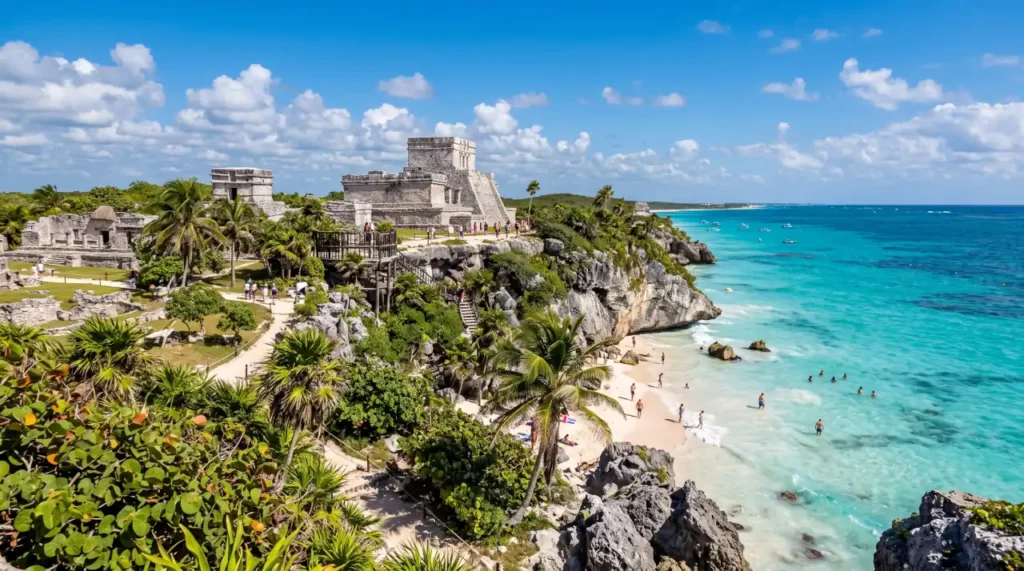
Tulum has transformed dramatically over the past decade, going from a sleepy fishing village to one of the most talked-about destinations in Mexico. White sand beaches, turquoise water, and jungle scenery give it a look that genuinely lives up to the photos, and the wellness and eco-conscious crowd has built a real community here.
The catch is that Tulum’s popularity has driven prices up fast. Rent, groceries, and eating out can rival what you’d pay in a mid-sized US city, which is a big shift from the rest of the peninsula. If budget is a top priority, Tulum probably isn’t your best bet, but if you want beach living with a health-and-wellness lifestyle built in, it’s hard to beat.
Best Areas to Live in Tulum
Aldea Zama is the modern, eco-conscious neighborhood most new expats gravitate toward, with a mix of condos and gated developments close to both the beach and downtown.
La Veleta is still developing but tends to be quieter and somewhat more affordable, with easy access to Tulum’s natural attractions.
The Tulum Beach Zone puts you right on the coast, which comes with a premium price tag but also some of the best views in the region.
Things to Do in Tulum
The Tulum ruins, perched dramatically on a cliff above the sea, are one of the few Mayan sites where you get ocean views along with the history. The Sian Ka’an Biosphere Reserve, a UNESCO site just south of town, is a huge draw for anyone into wildlife, kayaking, or simply getting away from crowds.
Yoga studios and wellness retreats are everywhere, and the food scene leans heavily toward organic, plant-forward menus. For adventure seekers, cenotes like Gran Cenote and Dos Ojos offer some of the best snorkeling and diving in the entire peninsula.
If you choose to live in Tulum, outdoor living quickly becomes part of your daily routine, whether that’s cycling to the beach, working from a café, or spending your weekends exploring cenotes and nature reserves.
5. Izamal — A Small Historic, Charming, & Distinctly Yellow Town
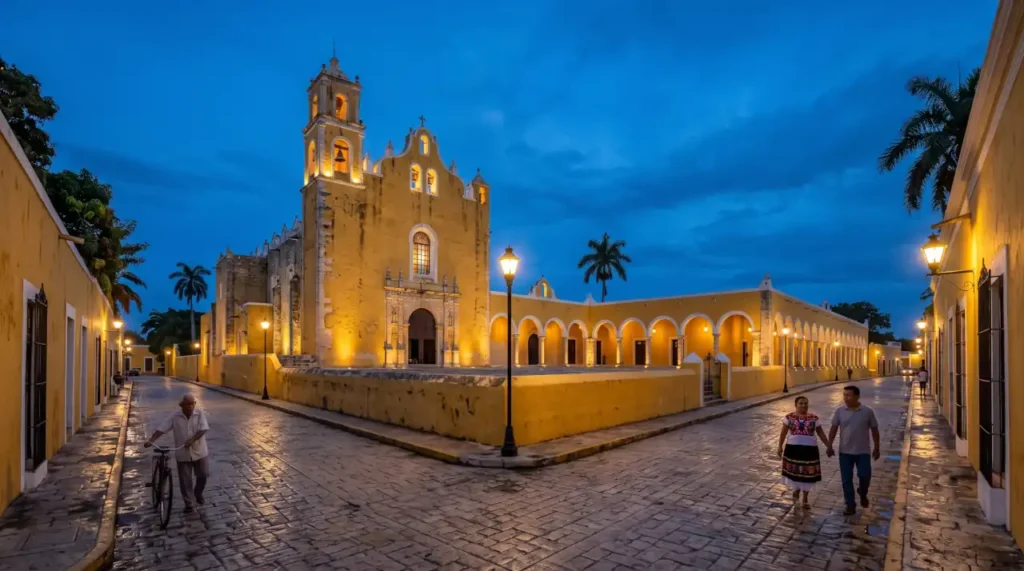
Izamal earns its nickname, the Yellow City, honestly. Nearly every building in the historic center is painted the same warm yellow, which gives the whole town a distinct, almost storybook feel. It’s small, it’s quiet, and it moves at a pace that can feel jarring if you’re used to city life, in the best possible way.
This is a good fit for people who want deep cultural immersion and don’t mind trading modern conveniences for authenticity. You won’t find much of an expat scene here, but you will find some of the friendliest locals in the region and rent that’s noticeably cheaper than almost anywhere else on this list.
Best Areas to Live in Izamal
Centro Histórico offers the most character, with beautifully preserved colonial buildings just steps from the town’s main plaza and markets.
The area near the Convent of San Antonio de Padua puts you close to the town’s most recognizable landmark, with a peaceful, unhurried atmosphere.
The outskirts of the town center tend to offer larger properties and more privacy, ideal if you want a bit of space while still being a short walk from daily essentials.
Things to Do in Izamal
The Convent of San Antonio de Padua, built in the 16th century, is the town’s centerpiece and worth exploring even if you’re not particularly into architecture. Mayan pyramids sit right within the town itself, which is genuinely unusual and gives Izamal a layered, historic feel most towns can’t match.
Beyond that, life here is mostly about slowing down: cobblestone streets to wander, plazas to sit in, and local restaurants where you’ll likely become a regular within a few weeks.
Izamal is best suited to people who value a quiet, community-focused lifestyle, where everyday life revolves more around local traditions and neighbors than nightlife or big-city conveniences.
6. Playa del Carmen — Vibrant Beaches & Party Nightlife
Playa del Carmen has grown from a quiet fishing town into one of the most energetic cities on the Riviera Maya. If Tulum is wellness retreats and green juice, Playa del Carmen is beach clubs, Fifth Avenue shopping, and a nightlife scene that runs late. It’s a genuinely fun place to live if that lifestyle appeals to you, with white sand beaches and warm Caribbean water right at your doorstep.
It also has one of the largest and most established expat communities on the peninsula, which makes settling in easier logistically (more English spoken, more familiar amenities) even if it means a slightly less “authentic” experience than smaller towns nearby.
Best Areas to Live in Playa del Carmen
Playacar is the upscale option, a gated community with golf courses, private beach access, and a mix of luxury homes and condos.
Centro puts you in the middle of the action, close to Fifth Avenue’s shops, bars, and restaurants, which is great if you want to be able to walk everywhere.
El Cielo, north of the main strip, is quieter and still developing, appealing to people who want proximity to the beach without the constant noise of downtown.
Things to Do in Playa del Carmen
Fifth Avenue (Quinta Avenida) is the city’s main pedestrian corridor, packed with restaurants, shops, and bars that stay lively well into the night. Eco-parks like Xcaret and Xel-Há offer a mix of cultural exhibits and outdoor activities, and the nearby coral reefs make this one of the better spots on the peninsula for snorkeling and scuba diving.
When you want something calmer, the beaches themselves are wide, soft, and easy to spend a whole day on, and the city hosts international festivals and events throughout the year that draw crowds from across the region.
Residents benefit from having beaches, coworking spaces, international restaurants, and an active social scene all within walking or cycling distance, making Playa del Carmen especially attractive for remote workers.
7. Campeche — World Heritage City with a Colonial Historic Center
Campeche doesn’t get nearly as much attention as Mérida or the beach towns, and honestly, that works in its favor. This UNESCO World Heritage city still has its original fortifications, built centuries ago to fend off pirates, wrapped around a beautifully preserved colonial core. Streets are quiet, buildings are colorful, and the pace of life is noticeably slower than in the more tourist-heavy parts of the peninsula.
It’s a strong option for anyone who wants history and coastal living without the crowds or the price tag that comes with places like Tulum. The city is also considered one of the safer options in the region, which adds to its appeal for retirees.
Best Areas to Live in Campeche
Centro Histórico is the heart of the city, with colonial homes and apartments within easy walking distance of the main landmarks and local eateries.
San Francisco is known for charming houses and its closeness to the seafront and the old city walls.
San Román offers a quieter, more residential feel with colonial architecture, popular with people looking for an authentic, low-key living experience.
Things to Do in Campeche
The city’s well-preserved fortifications, including Fort San Miguel, are worth a slow afternoon of exploring, and the Mayan Cultural Museum adds context to the region’s deeper history. The malecón (seafront promenade) is ideal for evening walks with views over the Gulf of Mexico.
Campeche also has a strong food scene built around fresh seafood and traditional Campechan dishes, and nearby mangroves and nature reserves give bird watchers and eco-tourists plenty to explore just outside the city.
Living in Campeche is ideal for those who enjoy a quieter coastal lifestyle, where evening walks along the malecón and weekends exploring historic neighborhoods become part of everyday life.
Places Where You Might NOT Want to Live in the Yucatán Peninsula
Not every corner of this region is a great fit for full-time living, even if it’s a fantastic place to visit. Here’s where to be a little more careful.
Cancun
Cancun is famous for a reason, but that reason (huge resorts, packed beaches, and a nonstop tourist economy) is exactly what makes it a tough place to actually settle into. Costs run higher here than almost anywhere else in the region, and the atmosphere can feel more like a resort than a real community, especially if you’re hoping for an authentic day-to-day Mexican lifestyle.
Certain Parts of Playa del Carmen That Are Dangerous
Playa del Carmen is generally a safe and popular place to live, but like any city of its size, some neighborhoods carry more risk than others. Petty crime and occasional violent incidents do happen, so it’s worth doing real research (or spending time in a neighborhood before signing a lease) rather than picking a place based on price alone. That’s true whether you’re moving to Playa del Carmen or one of Mexico’s larger cities, where neighborhood choice often has a bigger impact on your experience than the city itself.
Remote Areas in the Interior of the Peninsula
The deep interior of the peninsula is gorgeous, full of Mayan heritage and untouched jungle, but it’s genuinely difficult to live in day to day. Healthcare, reliable grocery stores, and basic services can be a long drive away, which makes these areas better suited to weekend trips than permanent residency, especially for people used to having conveniences close by.
Tulum’s Rapidly Developing Areas
Tulum’s fast growth has brought a lot of construction, rising prices, and environmental strain that longtime residents have started to notice. If the appeal of Tulum was always its untouched, jungle-meets-beach vibe, some of the newer developments are starting to chip away at exactly that.
Overcrowded Tourist Zones During Peak Season
Popular beaches and attractions across the peninsula get genuinely packed during peak season, which drives up prices, traffic, and noise in a way that can wear on you if you’re living there full time rather than just visiting. It’s worth planning your move (or at least your apartment hunting trips) around the time of year you visit, since the region looks and feels very different in high season versus the quieter months.
Progreso’s Port Area
Progreso is a relaxed beach town overall, but its working port sees regular cruise ship traffic, which brings noise, crowds, and congestion that can clash with the peaceful lifestyle most people move there for. If quiet is your priority, it’s worth living a bit further from the docks.
Flood-Prone Areas
Parts of the peninsula, especially low-lying areas near the coast, are prone to flooding during the rainy season, which typically runs from June through October. It’s worth checking whether the property sits in a designated flood-risk area and whether the landlord carries appropriate insurance, especially if you’re renting near the coast.
Hurricane season in the Atlantic officially runs from June through November, although not every year brings major storms to the Yucatán Peninsula. If you’re planning to live near the coast, it’s worth understanding local hurricane preparedness plans and choosing housing that’s built to handle severe weather.
Areas With Poor WiFi Connectivity
If you’re planning to work remotely on a digital nomad visa, internet reliability should be near the top of your checklist. Smaller, more remote towns like Celestún, Sisal, and parts of the interior can have spotty or unreliable connections, which is a serious problem if your income depends on being online. Testing the WiFi in person, or at least asking current residents, before committing to a lease can save you a lot of frustration later. Before renting long term, ask the landlord for recent internet speed tests or test the connection yourself if possible, particularly if your work depends on video calls or large file uploads.
Pros and Cons of Living in the Yucatán Peninsula
A Few Things to Know Before Moving to the Yucatán Peninsula
Picking a town is only half the equation. A few practical realities are worth thinking through before you actually book a one-way ticket.
If you’re planning expat life in the Yucatán Peninsula, spending time in your preferred destination before relocating can help you decide whether the local lifestyle, climate, and community are the right fit for your long-term goals.
The Language
You can absolutely get by in most of the peninsula’s bigger towns without speaking Spanish, especially in places with large expat communities like Mérida or Playa del Carmen. But the more Spanish you know, the more of the actual culture opens up to you, from chatting with your neighbors to navigating a doctor’s appointment without stress. Even a basic grasp of the language goes a long way, and it tends to make locals warmer toward you almost immediately.
Healthcare Facilities
Larger cities like Mérida and Campeche have solid private healthcare, often at a fraction of what you’d pay in the US for similar care. Smaller towns are a different story. If you have ongoing medical needs or require specialist care, living within reasonable driving distance of a larger city can make a significant difference.
If you’re living somewhere remote, expect to travel for anything beyond basic care. Mexico has both public and private healthcare systems, but most expats choose private hospitals because wait times are typically shorter and many physicians speak English in larger cities. The U.S. Department of State advises travelers to ensure they have adequate medical insurance before traveling, since many hospitals require proof of payment or insurance before providing non-emergency treatment.
It’s also worth checking current safety guidance before you commit to a specific state or city, since conditions can shift. As of 2026, Yucatán and Campeche are rated at the lowest advisory level by the U.S. State Department, while Quintana Roo, home to Cancun, Tulum, and Playa del Carmen, sits a notch higher. That doesn’t mean one is unsafe and the other isn’t, but it’s a useful data point when you’re weighing your options.
Getting Around
Larger cities like Mérida, Campeche, and Playa del Carmen have public buses, taxis, and ride-hailing services that make getting around relatively easy. In smaller towns such as Izamal or Progreso, many residents rely on bicycles, scooters, or personal vehicles, especially if they live outside the town center. If you plan to explore the peninsula regularly or live in a more rural area, owning or renting a car can make daily life much more convenient.
Also Read: 7 Best Places to Live in Mexico Right Now: A Complete Guide
How to Choose the Right Town
The best place to live in the Yucatán Peninsula depends on your priorities rather than a single “best” destination. If safety, healthcare, and city amenities matter most, Mérida is difficult to beat. If being able to walk to cafés, markets, restaurants, and everyday services matters to you, Mérida and Valladolid tend to offer the most walkable lifestyles, while smaller beach communities often require a car or bicycle for getting around.
For affordable colonial charm, consider Valladolid or Izamal. If living near the beach is your top priority, Progreso offers a quieter and more budget-friendly lifestyle, while Playa del Carmen and Tulum provide more nightlife, coworking spaces, and international amenities at a higher cost.
Where Will You Live in the Yucatán Peninsula?
There’s no wrong answer here, only the right answer for your specific situation. If you want culture, safety, and a real city with modern conveniences, Mérida is hard to beat. If you’re chasing something quieter and more historic, Valladolid, Izamal, and Campeche all deliver that in different ways. If beach life is non-negotiable, Progreso gives you a relaxed, budget-friendly version, while Tulum and Playa del Carmen offer more upscale, social alternatives at a higher price.
If you’re still exploring your options beyond the Yucatán Peninsula, you may also want to compare these destinations with some of the best cities in Central Mexico, where you’ll find a different mix of colonial architecture, mountain climates, and lower living costs.
The Yucatán Peninsula offers one of the widest ranges of lifestyles in Mexico, from historic colonial cities and quiet fishing towns to world-famous Caribbean beach destinations. Rather than asking which town is objectively “best,” focus on which one best matches your budget, lifestyle, healthcare needs, work requirements, and long-term goals.
Visiting your shortlisted destinations before signing a lease can help you make a far more confident decision and avoid costly mistakes after relocating. Still unsure which destination fits your lifestyle? Consider spending a few weeks in your top two or three choices before committing to a long-term lease. Experiencing each town firsthand is often the best way to decide.