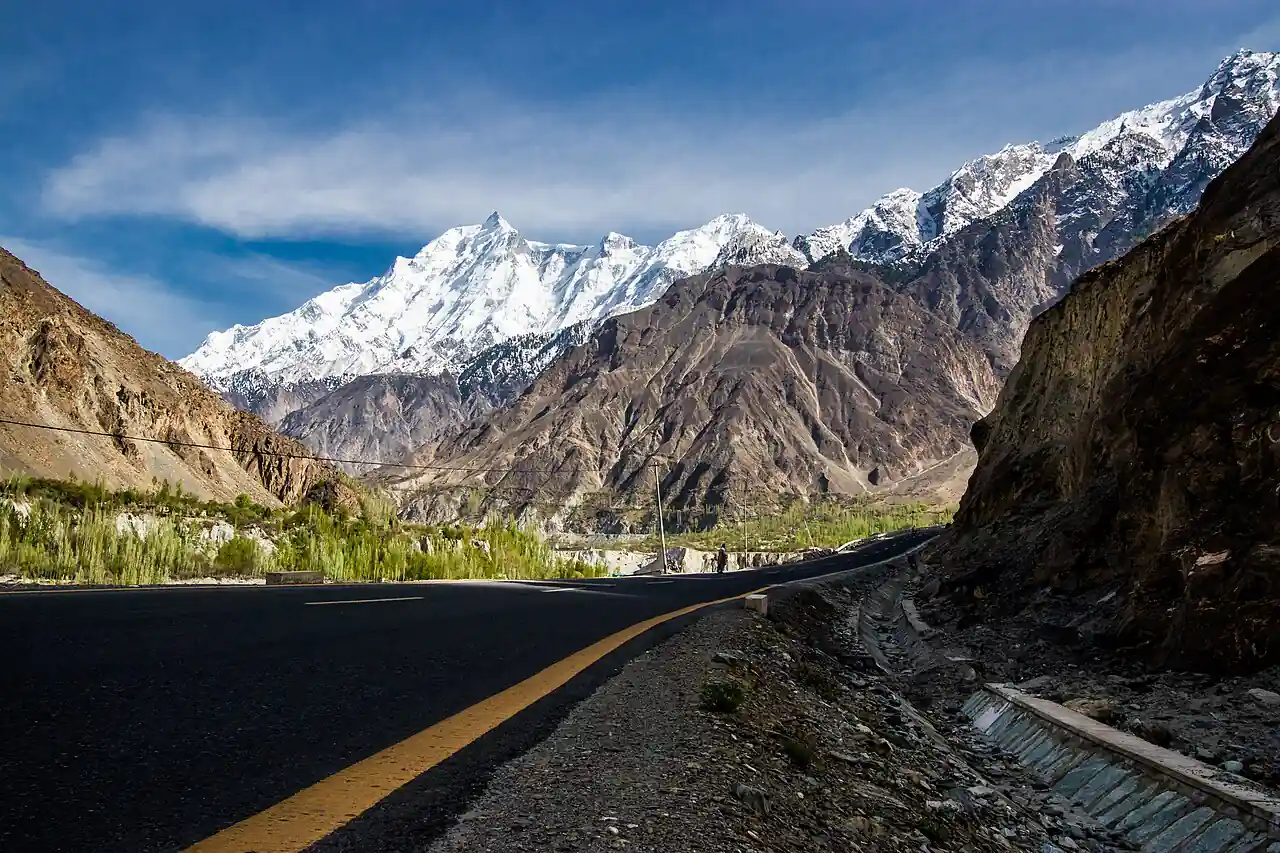
Skardu, located at an elevation of approximately 2,228 meters (7,310 feet) above sea level, is known for its high-altitude climate, influenced by the Karakoram mountain range. Its weather is a blend of cold alpine conditions, semi-arid characteristics, and occasional monsoon effects, making it a unique climate zone in Pakistan. Understanding Skardu’s climate is essential for travellers planning excursions to its lakes, valleys, and high-altitude plateaus. 🌄
🌤️ Overview of Skardu Climate
Skardu’s climate is extreme yet fascinating. Summers are generally short, mild, and sunny, while winters are long, harsh, and snowy. The region falls under a cold desert climate (BWk – Köppen classification), which means it has low annual precipitation, primarily as snow in winter months.
Despite low rainfall, the area’s high altitude and mountainous terrain can create localised weather anomalies, including sudden hailstorms, temperature drops, and snow showers even in late spring or early autumn. 🏔️
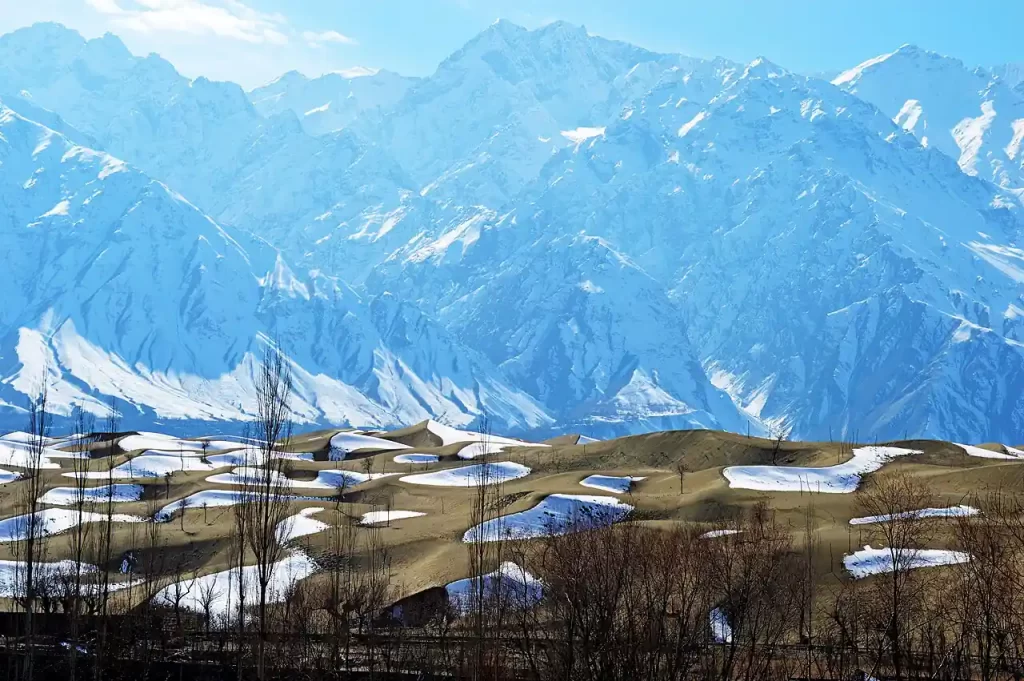
❄️ Winter Season (December – February)
Winter in Skardu is cold and snowy, with temperatures often dropping below -10°C (14°F) at night and hovering around 0–5°C (32–41°F) during the day.
➪ Snowfall can accumulate up to several feet, covering roads and valleys, making travel challenging.
➪ Deosai Plateau and Shigar Valley become inaccessible without 4×4 vehicles.
➪ Local inhabitants use wood and yak dung fires for heating, while travellers are advised to wear thermal layers, windproof jackets, and insulated boots.
➪ Winter offers stunning snow-capped landscapes, making it ideal for photography enthusiasts. 📸
🌼 Spring Season (March – May)
Spring is brief but breathtaking in Skardu, as temperatures rise and snow starts melting in the valleys.
➪ Daytime temperatures range between 10°C to 18°C (50–64°F), while nights can still dip to 0–5°C (32–41°F).
➪ The valleys bloom with apricot flowers, wild herbs, and alpine blossoms, offering a spectacular visual feast for visitors.
➪ Spring is also the ideal trekking season, as mountain passes begin to open, but early March can still see unexpected snowfall at higher altitudes.
Also Read
Skardu, Gilgit-Baltistan, Pakistan – “Gateway to the Roof of the World”
Detailed Historical Facts, and Timeline of Skardu, Gilgit–Baltistan, Pakistan
Explore the Architectural Marvels in Skardu, Gilgit–Baltistan, Pakistan
How to Reach Skardu, Gilgit–Baltistan, Pakistan – A Complete Travel Guide with Granular Details
Best Time to Visit & Where to Stay in Skardu along with Its Cultural Festivals and Traditions – A Complete Guide with Local Insights
Best Places to Visit in and near Skardu, Gilgit–Baltistan, Pakistan
Best Places for Refreshments & Authentic Local Food in Skardu, Gilgit–Baltistan, Pakistan
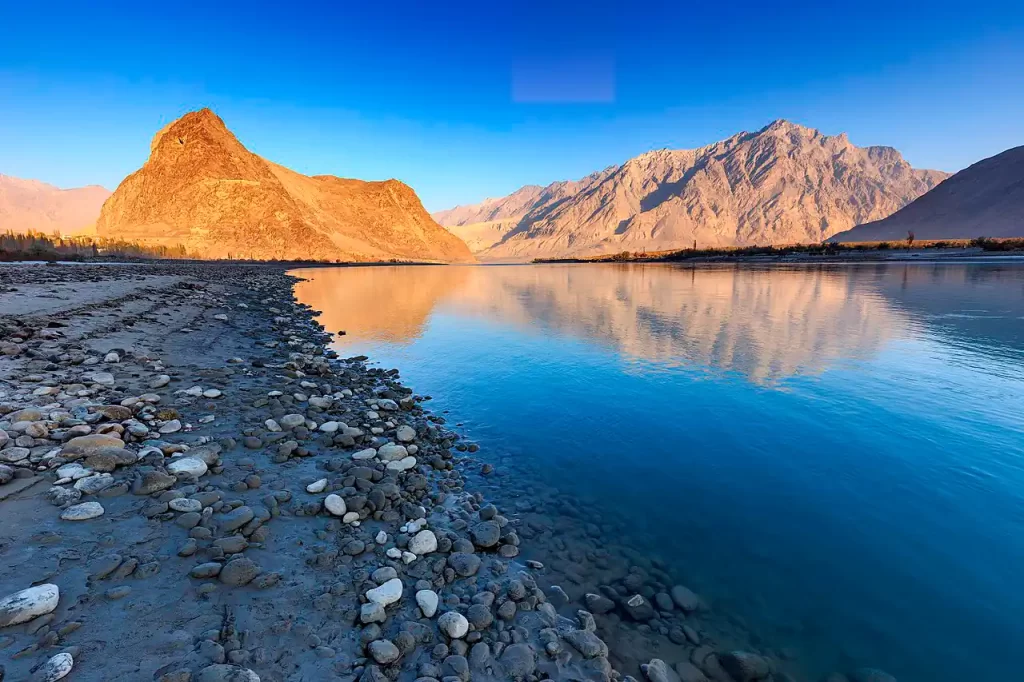
🌞 Summer Season (June – August)
Summer in Skardu is pleasant, sunny, and perfect for tourism.
➪ Daytime temperatures range between 20°C to 30°C (68–86°F), while nights remain cool at 10°C to 15°C (50–59°F).
➪ This is the peak season for travellers, as major attractions like Deosai National Park, Satpara Lake, and Upper/Lower Kachura Lakes become accessible.
➪ Rainfall is low but occasional monsoon winds from the south can bring light showers or thunderstorms.
➪ Travellers should carry sunglasses, sunscreen, and hydration packs, as UV exposure is high at altitude.
🍂 Autumn Season (September – November)
Autumn in Skardu is cool, crisp, and colourful, with trees turning golden and apricot orchards ready for harvest.
➪ Temperatures gradually drop from 20°C (68°F) in September to 5°C (41°F) by November.
➪ Clear skies make it ideal for mountain photography and sightseeing.
➪ Wind speeds increase slightly, and occasional frost may appear in late October.
➪ Autumn also marks the end of the trekking season, as higher passes begin to close due to early snowfall.
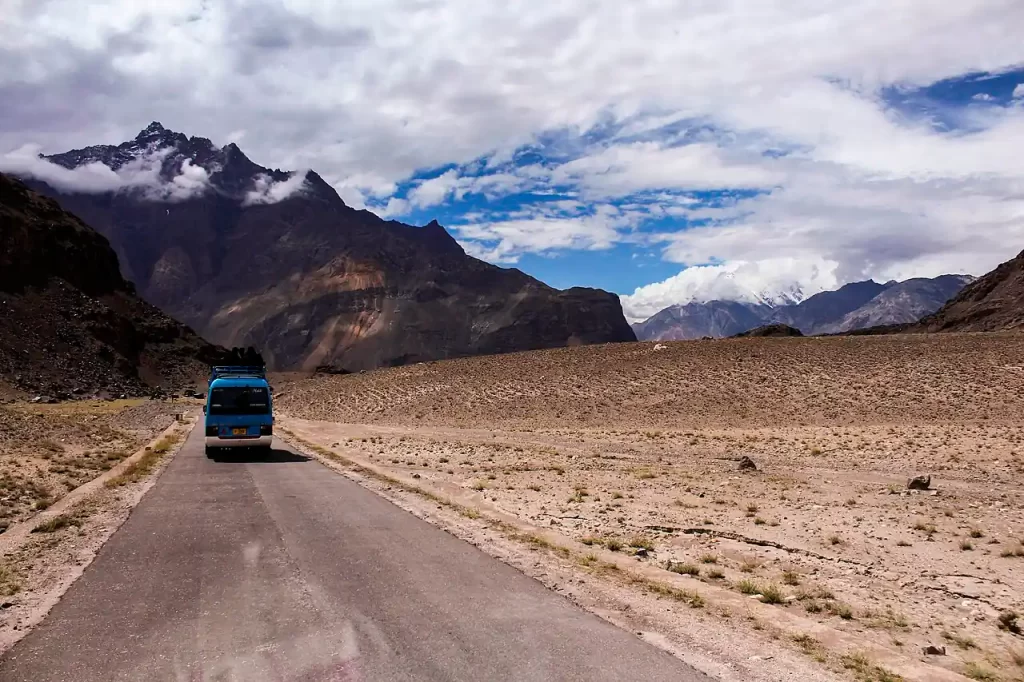
🌨️ Precipitation & Snowfall Patterns
➪ Annual precipitation in Skardu is low, averaging 100–200 mm, with most precipitation occurring in winter months as snow.
➪ Summer thunderstorms are rare but can bring brief heavy rain in the valleys.
➪ Snow often persists on high peaks and glaciers year-round, feeding rivers like the Shigar River and Indus tributaries.
➪ Travellers should be prepared for sudden weather changes, especially when visiting Deosai, Upper Kachura, or Shigar Valley.
🌬️ Wind & Atmospheric Conditions
➪ Skardu experiences moderate to strong winds, especially in open plains like the Katpana Cold Desert and Deosai Plateau.
➪ Winds can make perceived temperatures much colder than actual readings, especially in winter and early spring.
➪ Protective windproof jackets, gloves, and headgear are highly recommended for all high-altitude excursions.
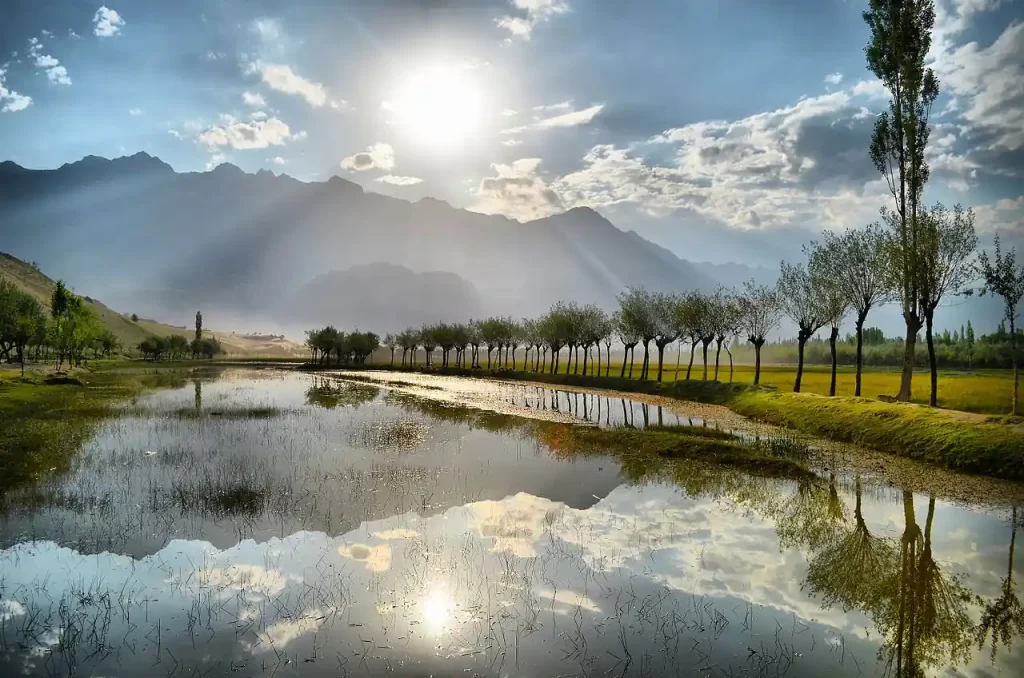
🌡️ Temperature Summary Table
| Season | Daytime Temp | Nighttime Temp | Key Features |
| Winter ❄️ | 0–5°C | -10°C | Heavy snow, frozen lakes, challenging travel |
| Spring 🌼 | 10–18°C | 0–5°C | Blooming valleys, melting snow, ideal trekking |
| Summer 🌞 | 20–30°C | 10–15°C | Pleasant weather, accessible lakes & treks |
| Autumn 🍂 | 15–20°C | 5°C | Colourful foliage, clear skies, early frost |
✅ Climate Tips for Travellers
➪ Always check local weather forecasts before visiting high-altitude areas.
➪ Carry layered clothing, as temperatures fluctuate between day and night.
➪ For summer visits, UV protection, hydration, and light jackets are essential.
➪ For winter visits, thermal layers, heavy boots, and insulated gloves are critical.
➪ Keep in mind that road conditions can be affected by snow or rain, particularly en route to Deosai Plateau, Khaplu, and Shigar Valley.
🎉 Climatic Impact on Local Lifestyle & Festivals
➪ The harsh winters influence local housing, with thick mud walls and wood heating systems.
➪ Agricultural activities peak in summer and early autumn, producing apricots, barley, and potatoes.
➪ Cultural festivals, like the Skardu Summer Festival, are timed to coincide with the pleasant summer climate, ensuring maximum accessibility and visitor comfort.
➪ Climate also dictates tourism schedules, with winter being ideal only for photography enthusiasts and adventure travellers experienced in snow navigation.
Skardu’s climate is truly diverse and dynamic, offering visitors breathtaking snow-capped landscapes, cool summer retreats, and vibrant autumn colours. By understanding these conditions, travellers can plan optimal trips, enjoy high-altitude adventures, and experience Baltistan’s natural beauty in comfort. 🌄 ❄️ 🌞
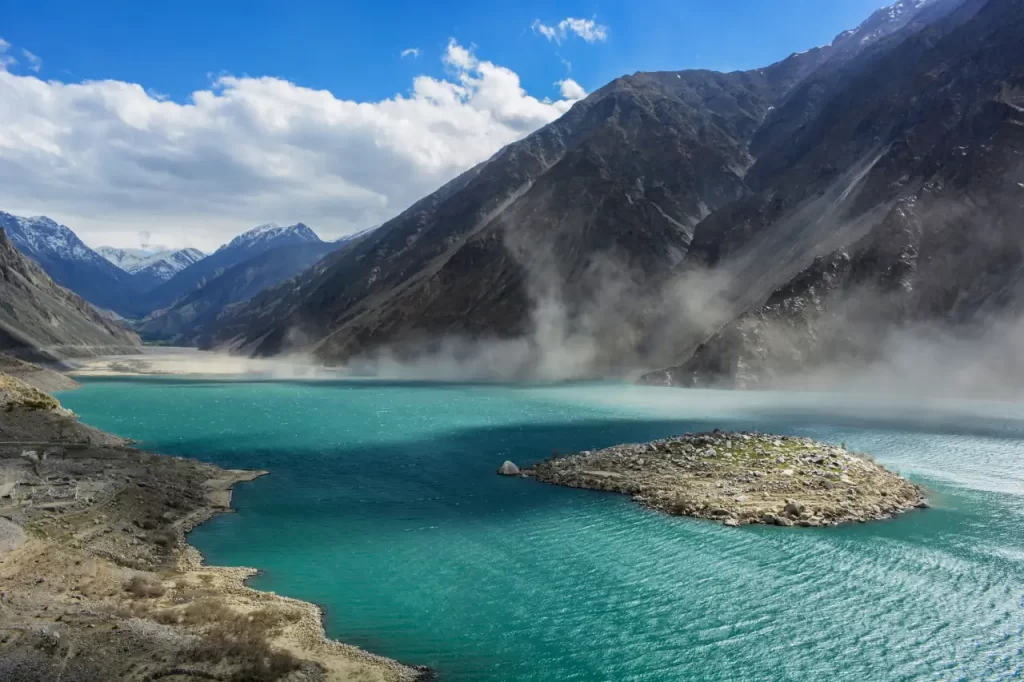
📊 Month-Wise Temperature & Rainfall in Skardu, Gilgit–Baltistan, Pakistan
Skardu, positioned at 2,228 meters (7,310 feet) in the Karakoram Range, experiences a cold desert climate (BWk) with distinct seasonal variations. Its weather is largely influenced by high altitude, mountain ranges, and monsoon patterns, making it crucial for travellers and locals to understand month-wise temperatures and precipitation levels.
Creating a month-wise climate overview provides insights into peak travel seasons, agricultural cycles, and optimal trekking windows, as well as planning for festivals and adventure sports. 🌄
❄️ January – Coldest Winter Month
⦿ Average Day Temperature: 0°C – 2°C (32–36°F)
⦿ Average Night Temperature: -12°C – -8°C (10–18°F)
⦿ Rainfall/Snowfall: ~20–25 mm, mostly as snow
👉 Characteristics:
➪ Deep snow blankets the valleys and high passes.
➪ Roads to Deosai Plateau and Shigar Valley often become inaccessible.
➪ Ideal for winter photography, snow trekking, and capturing frozen lakes and snow-covered peaks.
Travel Tip: Dress in multiple thermal layers, use insulated boots, and check road clearance before venturing out. 🥾 ❄️
🌨️ February – Late Winter, Increasing Daylight
⦿ Day Temperature: 2°C – 5°C (36–41°F)
⦿ Night Temperature: -10°C – -6°C (14–21°F)
⦿ Rainfall/Snowfall: ~15–20 mm, predominantly snow
👉 Characteristics:
➪ Snow begins to melt slightly in lower valleys, though mountains remain snow-bound.
➪ Skardu Bazaar and local markets continue to function despite cold.
➪ Early trekkers may start planning trips to spring passes, but high-altitude access remains limited.
🌸 March – Transition to Spring
⦿ Day Temperature: 8°C – 12°C (46–54°F)
⦿ Night Temperature: -2°C – 2°C (28–36°F)
⦿ Rainfall: 10–15 mm (snow diminishing)
👉 Characteristics:
➪ First signs of blooming apricot flowers and melting snow in lower regions.
➪ Roads to Shigar Valley start clearing.
➪ Spring treks can begin toward Satpara Lake and lower elevations.
Travel Tip: Carry a light jacket with a windproof layer as mornings remain cold. 🌿
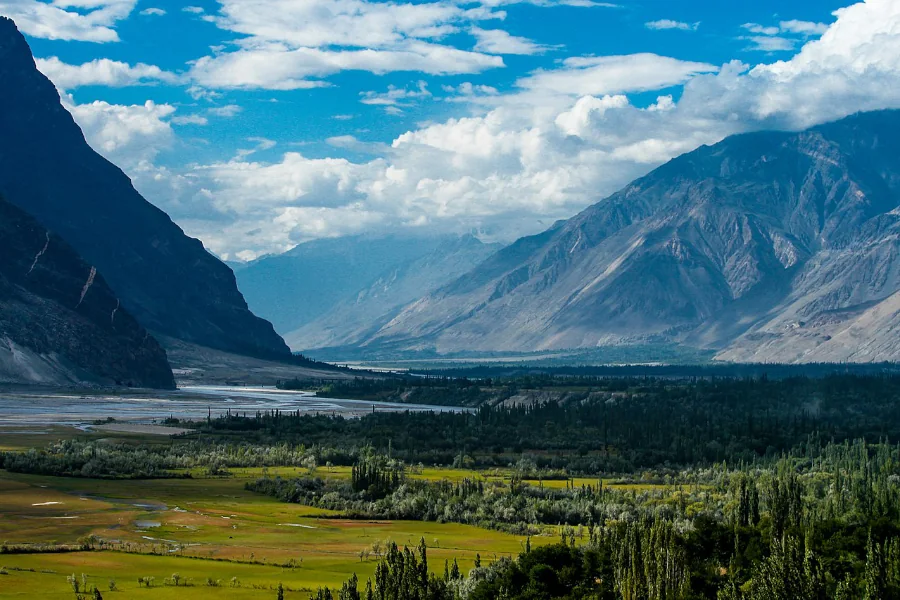
🌼 April – Early Spring, Moderate Temperatures
⦿ Day Temperature: 12°C – 18°C (54–64°F)
⦿ Night Temperature: 3°C – 7°C (37–45°F)
⦿ Rainfall: 10–20 mm, occasional hail showers
👉 Characteristics:
➪ Valleys are lush green; flowers and apricot orchards are at their peak.
➪ High-altitude trekking remains limited but lower routes are accessible.
➪ Local festivals begin preparation for summer tourist arrivals.
🏔️ May – Spring Peak & Trekking Season
⦿ Day Temperature: 18°C – 22°C (64–72°F)
⦿ Night Temperature: 7°C – 12°C (45–54°F)
⦿ Rainfall: 10–15 mm, mostly light showers
👉 Characteristics:
➪ Skardu is green and vibrant, ideal for lakeside tourism and trekking.
➪ Deosai Plateau begins opening for day trips, with snow still on higher passes.
➪ Tourists can enjoy apricot-based dishes, local markets, and early cultural festivities.
🌞 June – Start of Summer, Pleasant Weather
⦿ Day Temperature: 22°C – 28°C (72–82°F)
⦿ Night Temperature: 10°C – 15°C (50–59°F)
⦿ Rainfall: 20–25 mm, occasional light showers
👉 Characteristics:
➪ Peak travel season for lakes, trekking, and adventure sports.
➪ High passes are accessible; glaciers remain snowy but lower routes are clear.
➪ Deosai National Park and Upper/Lower Kachura Lakes become highly frequented by tourists.
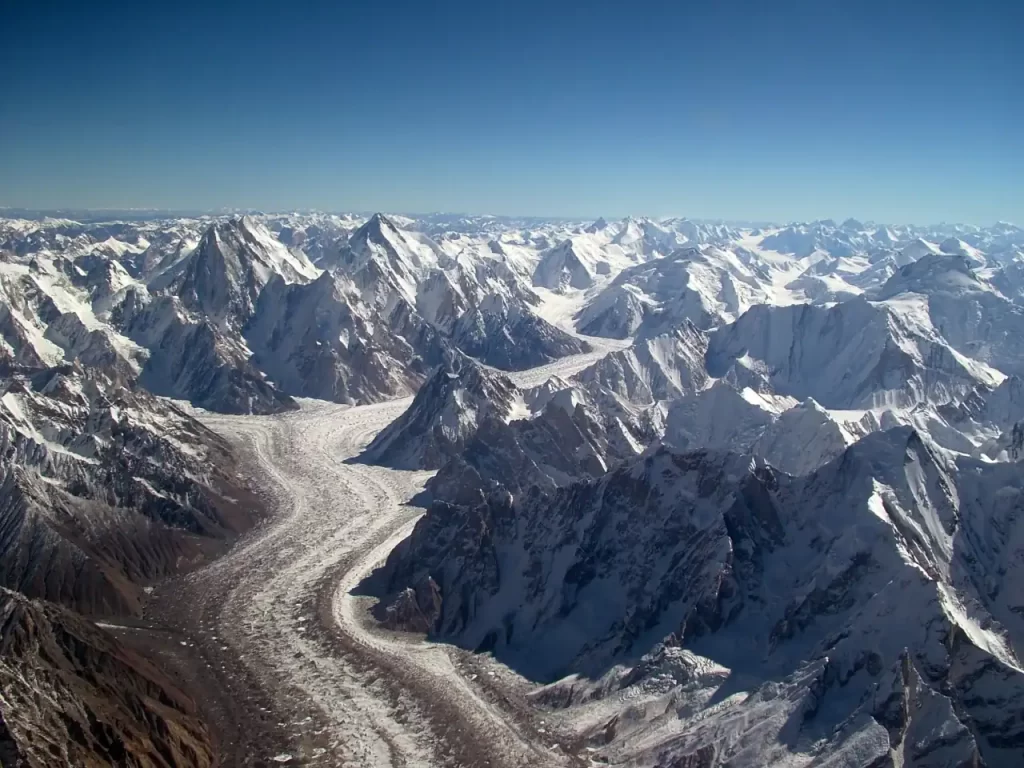
☀️ July – Warmest Month & Summer Peak
⦿ Day Temperature: 25°C – 30°C (77–86°F)
⦿ Night Temperature: 12°C – 16°C (54–61°F)
⦿ Rainfall: 25–30 mm (some monsoon influence, mostly light rain)
👉 Characteristics:
➪ Best time for lake boating, trout fishing, and high-altitude trekking.
➪ Sun is strong; UV exposure is high due to altitude.
➪ Evening temperatures remain cool, perfect for lakeside dining and photography.
Travel Tip: Use sunscreen, sunglasses, and hydration packs for safety. 🌄 🕶️
🌦️ August – Late Summer, Pleasant with Showers
⦿ Day Temperature: 23°C – 28°C (73–82°F)
⦿ Night Temperature: 10°C – 15°C (50–59°F)
⦿ Rainfall: 20–25 mm, occasional thunderstorms
👉 Characteristics:
➪ Summer retreat continues; valleys and orchards are lush.
➪ Occasional rainfall cools the air, reducing dust and keeping rivers full.
➪ End of the peak tourist season, though festivals like the Skardu Summer Festival take place.
🍁 September – Early Autumn
⦿ Day Temperature: 18°C – 23°C (64–73°F)
⦿ Night Temperature: 5°C – 10°C (41–50°F)
⦿ Rainfall: 10–15 mm, mostly light showers
👉 Characteristics:
➪ Colours of autumn begin to appear; apricot harvest season starts.
➪ Clear skies make it ideal for mountain photography and sightseeing.
➪ Trekking remains accessible in most areas except higher passes.
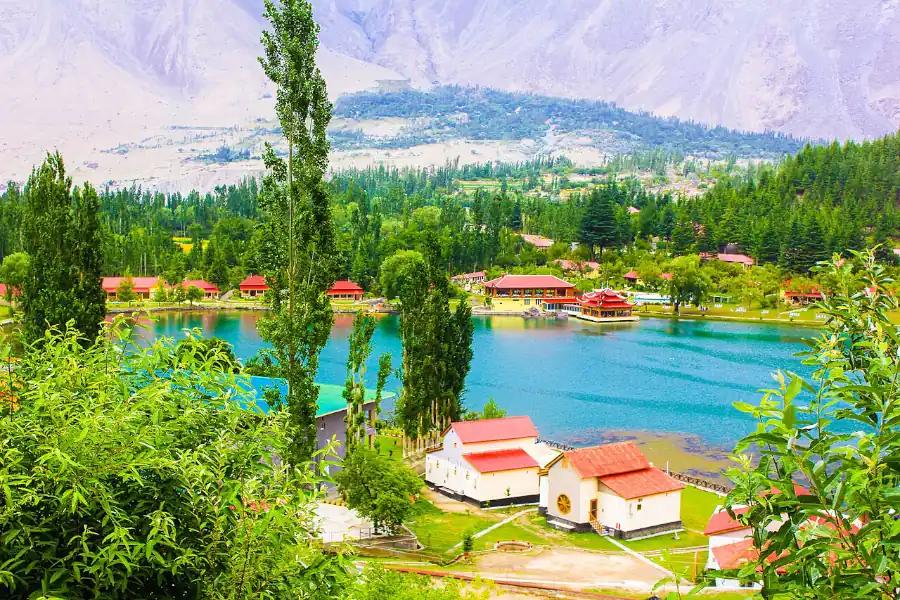
🍂 October – Autumn Peak
⦿ Day Temperature: 12°C – 18°C (54–64°F)
⦿ Night Temperature: 0°C – 5°C (32–41°F)
⦿ Rainfall/Snowfall: 10–20 mm, occasional early snowfall in high-altitude areas
👉 Characteristics:
➪ Golden valleys and snow-dusted peaks create scenic vistas.
➪ Trekking at moderate altitudes remains possible.
➪ Tourists should prepare for early winter conditions in higher regions.
❄️ November – Late Autumn, Transition to Winter
⦿ Day Temperature: 5°C – 12°C (41–54°F)
⦿ Night Temperature: -5°C – 0°C (23–32°F)
⦿ Rainfall/Snowfall: 15–25 mm, mostly snow at higher elevations
👉 Characteristics:
➪ Pre-winter conditions appear in mountains and valleys.
➪ Local markets prepare for winter supplies, including warm clothing and dried apricots.
➪ Roads to high-altitude destinations like Deosai and Shigar start closing due to snow accumulation.
❄️ December – Early Winter
⦿ Day Temperature: 0°C – 5°C (32–41°F)
⦿ Night Temperature: -10°C – -8°C (14–18°F)
⦿ Rainfall/Snowfall: 20–30 mm, heavy snowfall in mountains
👉 Characteristics:
➪ Winter fully sets in; valleys are snow-covered.
➪ Ideal for snow enthusiasts and high-altitude photography.
➪ Travel to remote areas becomes challenging; 4×4 vehicles and experienced guides are recommended.
📌 Seasonal Summary
➪ Peak Tourist Season: June – August (pleasant temperatures, accessible lakes & trekking).
➪ Best Time for Flower & Apricot Festivals: April – May (spring bloom).
➪ Snow & Winter Photography: December – February.
➪ Rainfall Peak: July – August (monsoon influence, light rain).
➪ Dry & Clear Months: March, April, September (ideal for treks and sightseeing).
Sources:
➟ Wikipedia – Skardu
➟ And deep Google Research & other verified sources
Image Credit
➟ Wikipedia – Skardu & Wikimedia Commons
➟ Featured Image Credit: Wikimedia Commons
Latest Posts
- 15 Unique Things to Do in Guadalajara Like a Local

- 7 Best Places to Live in the Yucatan Peninsula in 2026
- Living in Playa del Carmen: The Complete Expat Guide to Costs, Safety & Lifestyle (2026)
- Living in Guadalajara: Costs, Safety & Daily Life
- Living in Chiang Mai: What Every Expat Should Know in 2026
- Living in Mérida: Costs, Neighborhoods, Pros and Cons Explained