If you’ve been circling the idea of living in Ho Chi Minh City and keep landing back on this part of Southeast Asia, that’s not an accident. It’s loud, it’s hot, and the traffic will test your nerves in the first week. But it can also offer a relatively affordable lifestyle, a welcoming social scene, and plenty to do once you find your rhythm. This guide walks you through the real details: where to live, what it costs, and how to settle in without the usual rookie mistakes.
Also Read: What Living in Hanoi Is Really Like for Foreigners
Quick Answer
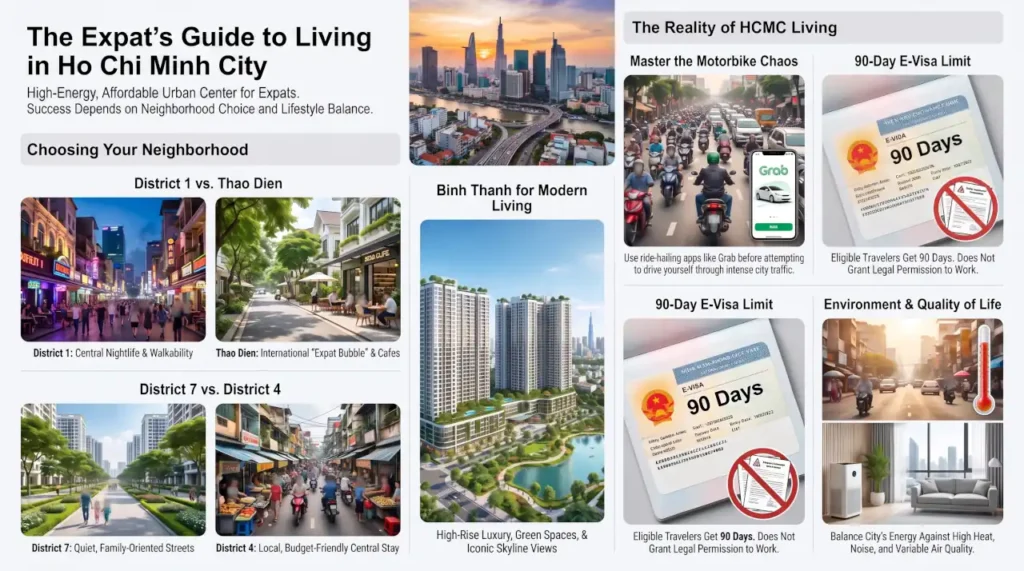
Ho Chi Minh City is one of Vietnam’s best options for expats who want an energetic, relatively affordable city with strong food, social, and international amenities. The trade-offs are traffic, heat, noise, air quality, and immigration complexity. Thảo Điền, District 1, Bình Thạnh, District 7, and District 4 suit different lifestyles and budgets.
Key Takeaways
- Thảo Điền is a strong choice for expats who prioritize international amenities, cafes, restaurants, and community.
- District 1 is best for people who want to be close to nightlife, attractions, restaurants, and the center of the action.
- Bình Thạnh suits people looking for modern high-rise apartments, amenities, and convenient access to central areas.
- District 7 and Phú Mỹ Hưng are particularly appealing to families who value quieter streets, modern housing, and international schools.
- District 4 can work well for budget-conscious residents who want a more local feel while staying close to central HCMC.
- Your visa status and work authorization are separate issues, so confirm the rules that apply to your nationality and work situation before making a long-term move.
Why People Keep Choosing Ho Chi Minh City
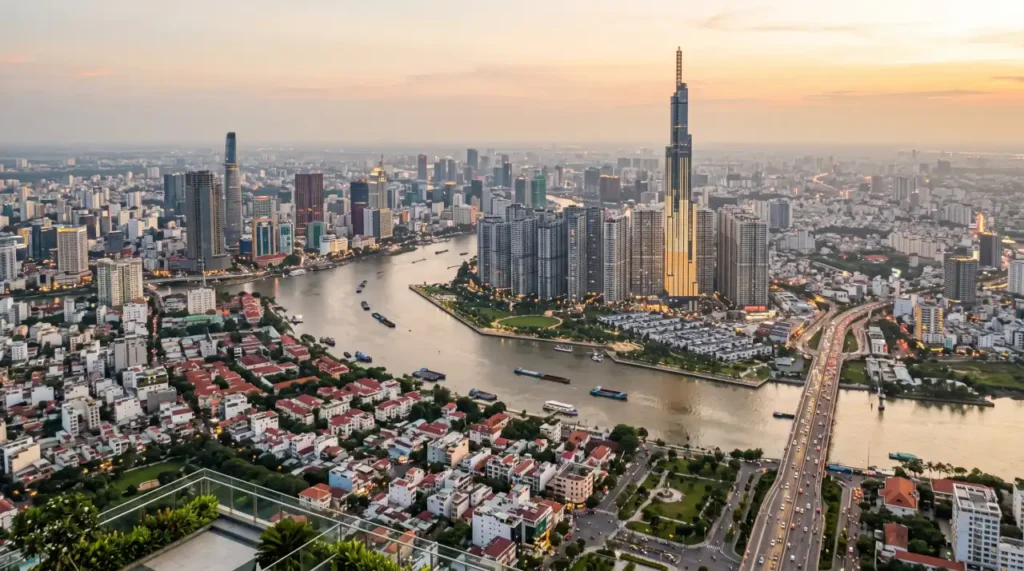
Ho Chi Minh City, still commonly called Saigon, is Vietnam’s largest urban center and one of Southeast Asia’s most energetic cities. It’s hot, noisy, crowded, and chaotic in ways that can take some getting used to, but that same energy is part of the appeal. You’ll find an enormous food scene, endless coffee shops, modern apartments, active nightlife, and neighborhoods that feel completely different from one another.
The city attracts a broad mix of foreigners, including retirees, entrepreneurs, remote workers, students, and young professionals. Some newcomers find work locally, including through teaching English in Vietnam, while others arrive with remote jobs or businesses already established.
If you’re planning to work for a Vietnamese employer, however, staying in the country and being legally authorized to work are separate questions. Your requirements can depend on your job, nationality, qualifications, and immigration status, so verify the rules that apply to your situation before accepting local employment.
The biggest trade-off is lifestyle. Ho Chi Minh City suits people who enjoy convenience, stimulation, and a strong social scene more than those looking for quiet streets and a slower pace. Traffic, heat, noise, and air quality are real considerations, but the city’s size means you can usually find a neighborhood that fits your priorities.
Vietnam also makes it relatively easy to explore beyond Saigon once you’re settled. Some residents eventually decide they prefer the slower, beach-oriented lifestyle of living in Da Nang, while others discover that Ho Chi Minh City’s energy is exactly what they were looking for.
Before making a long-term decision, it’s worth spending enough time here to experience ordinary daily life rather than judging the city purely as a tourist. And if you’re comparing Vietnam’s two biggest cities, it’s worth seeing how everyday life differs in the capital too—our guide to living in Hanoi covers the costs, neighborhoods, culture, and practical challenges there.
A Breakdown of Ho Chi Minh City’s Best Districts
Ho Chi Minh City has gone through a major administrative reorganization, so older guides can be confusing when they refer to the city’s former districts. Locals and expats still commonly use names such as District 1, District 3, District 4, District 7, Bình Thạnh, and Thảo Điền because those names remain extremely useful for describing neighborhoods and finding apartments.
For practical relocation purposes, we’ll use the familiar neighborhood names throughout this guide because they’re still widely used by locals, expats, apartment listings, and businesses. Keep in mind that these former district names are primarily useful as neighborhood references now; official addresses may use newer ward-level terminology following Vietnam’s 2025 administrative changes.
District 1
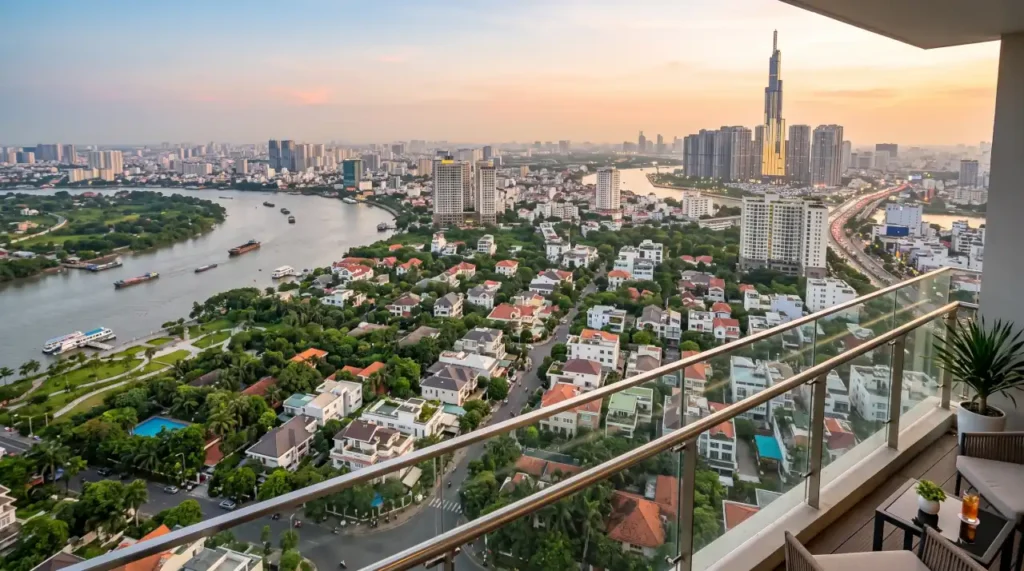
District 1 is the beating heart of the city, and it’s exactly what most people picture when they think of Saigon. This is where you’ll find the Bến Thành Market, the War Remnants Museum, the old Notre Dame Cathedral, and an endless stretch of rooftop bars, speakeasies, and restaurants that cater to every budget. Bui Vien Walking Street is here too, and it’s about as loud and chaotic as backpacker strips get, so know what you’re signing up for if you end up nearby.
Living in District 1 means you’re never more than a short walk from something to do, but that convenience comes at a price, and it’s also the noisiest, most tourist-heavy part of the city.
District 3
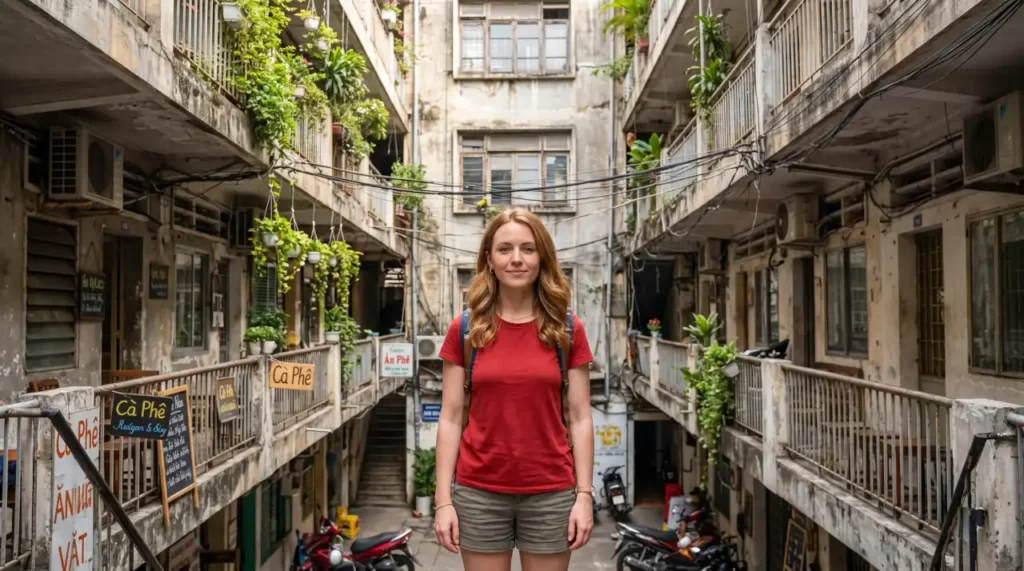
District 3 sits right next to District 1 and shares a lot of its energy, just turned down a notch. Far fewer expats actually live here compared to its neighbor, which makes it a solid pick if you want to stay close to the action without living directly inside the chaos. It’s a popular spot for offices, so you’ll see plenty of locals commuting through during the day, and there are some genuinely charming cafes tucked into the side streets. The pink Tan Dinh Church is here too, and it’s worth a look even if you’re not the churchgoing type. It photographs like something out of a fairy tale.
Thao Dien (Former District 2)
If you ask long-term expats where much of the foreign community lives, Thảo Điền will come up quickly. The neighborhood was historically part of District 2 and later became part of Thu Duc City; following the city’s 2025 administrative changes, official addresses may use newer ward-level terminology. For apartment hunting and everyday conversation, however, “Thảo Điền” remains the most useful name to know.
This is where you’ll find tree-lined streets, third-wave coffee shops, international grocery stores, co-working spaces, and a heavy concentration of Western and international restaurants. High-rise complexes like Masteri are extremely popular with newcomers because they come with pools, gyms, and a built-in community of other foreigners.
It’s undeniably the “expat bubble” of the city, and rents here are generally higher than in many other parts of the city, particularly for newer apartments and buildings with extensive amenities. That said, it’s an easy, low-friction place to land your first few months, especially if the culture shock of Vietnam is hitting harder than expected. Just make sure to get out and explore the rest of the city so Thao Dien doesn’t become the only version of Vietnam you actually experience.
Binh Thanh District
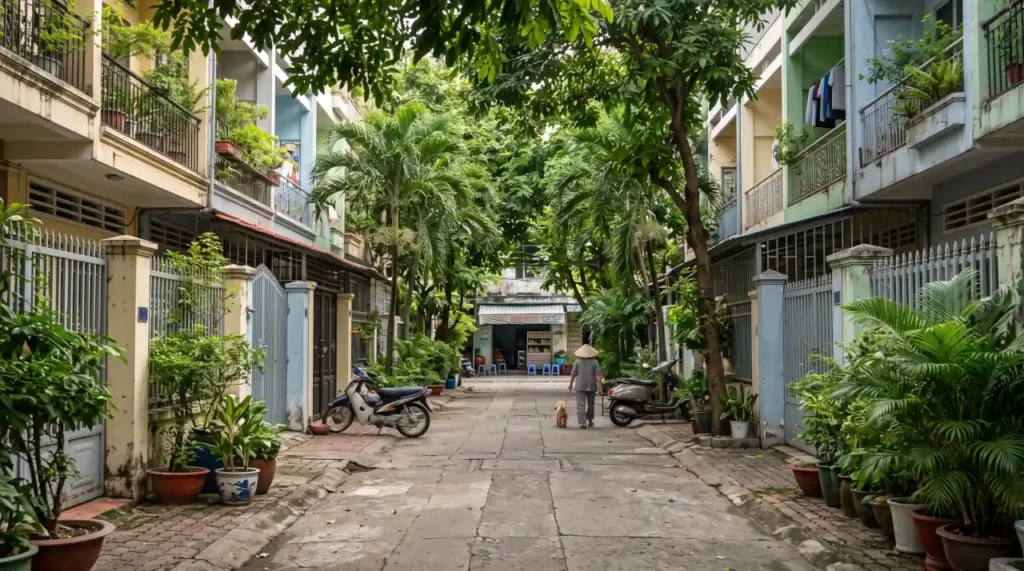
Binh Thanh is a big, sprawling district, so it’s a bit of an oversimplification to talk about it as one single neighborhood, but bear with the generalization. It’s home to Vinhomes Central Park and Landmark 81, one of Southeast Asia’s most recognizable skyscrapers, and it attracts a mix of wealthy locals and expats who want modern, high-rise living with green space nearby. There’s a riverside park, a large shopping mall with an ice-skating rink, and enough dining options to keep you busy for months.
Yes, the mall has a Lamborghini dealership, so you can guess which direction prices skew in the fancier corners of this district.
District 7
District 7 sits on the southern edge of the city and feels like a different world compared to the older, denser districts. It’s newer, more spread out, and noticeably quieter, with wider streets and modern apartment blocks that were largely built with international residents in mind. This is where you’ll find Phu My Hung, a planned urban development with a strong concentration of international schools and family-oriented housing.
It’s less chaotic and less atmospheric than District 1, but if peace and quiet matter more to you than being in the thick of things, this is probably your district.
District 4
District 4 sits right between District 1 and District 7, and it’s the pick for anyone chasing a more local, more affordable version of city living. You’ll still be close enough to walk into District 1 for a night out, but you can often find more budget-friendly housing and everyday dining here than in some of the city’s more expat-focused neighborhoods. Shared housing is common in District 4, which makes it a smart option if you’re trying to keep your monthly budget lean without sacrificing a central location.
Which Ho Chi Minh City Area Is Right for You?
There is no universally “best” neighborhood in Ho Chi Minh City. Your best choice depends on how you want to spend your everyday life.
| If you prioritize… | Start your search with… |
| Walkability, nightlife, and first-time convenience | District 1 |
| Cafes, local atmosphere, and central location | District 3 |
| Expat community and international conveniences | Thảo Điền |
| Modern high-rise living and amenities | Bình Thạnh |
| Quiet streets and family life | District 7 / Phú Mỹ Hưng |
| Lower costs while staying central | District 4 |
Before signing a long-term lease, spend at least several days in your preferred neighborhood. A street that looks perfect during the day can feel very different at night, during rush hour, or after heavy rain. Check noise, flooding, traffic, walkability, internet quality, nearby construction, and the actual commute to the places you expect to visit most often.
Cost of Living in Ho Chi Minh City
Ho Chi Minh City can be relatively affordable compared with many major Western cities, but your monthly budget will depend heavily on the lifestyle you choose. Housing is usually the biggest variable, followed by dining habits, transportation, healthcare, and—if you have children—international school fees.
| Expense | What affects your costs most |
| Rent | Neighborhood, apartment size, building, and amenities |
| Food | Local street food and restaurants vs. international dining |
| Transportation | Walking, public transport, ride-hailing, or owning a motorbike |
| Utilities | Apartment size and how often you use air conditioning |
| Healthcare | Insurance, provider, and type of treatment |
| Entertainment | Local activities vs. international bars, restaurants, and nightlife |
| Education | International school can become one of the largest family expenses |
The biggest mistake is choosing a monthly budget before deciding what kind of life you want. A modest apartment in a local neighborhood can produce a very different budget from a serviced apartment in Thảo Điền or a high-rise in Bình Thạnh.
For a realistic estimate, start with your expected rent, then add transportation, food, utilities, healthcare, entertainment, and an emergency buffer. That gives you a much more useful budget than relying on a single “average expat” figure.
Practical Tips for Living in Ho Chi Minh City
Not entirely sold on Saigon but still curious about life in Asia? It’s worth comparing notes with what it’s like being an expat in Hong Kong or living abroad in Taipei, both of which offer a very different, more polished pace of city life. But if HCMC still has your attention, here’s what actually helps once you land.
1. Let a realtor do the work for you
Finding an apartment in Vietnam is surprisingly painless, and it’s genuinely one of the easier parts of moving to Vietnam. There are large, active Facebook groups dedicated to apartment hunting in HCMC, and the moment you post a comment asking about availability, you’ll get a flood of messages from local realtors offering to help.
The good news is that many rental agents are compensated through the landlord or property side of the transaction, but don’t assume that every arrangement is free for the tenant. Ask the agent upfront whether you will pay any commission, service fee, deposit-related charge, or other cost before agreeing to anything. Don’t be afraid to be picky. You’re going to live with the decision every day, so check the building, neighborhood, noise, commute, and lease terms rather than judging an apartment by photos alone.
Before signing a lease, check more than the apartment itself. Ask who is responsible for building fees, utilities, internet installation, maintenance, and repairs. Confirm the deposit and notice period in writing, check whether the apartment has had flooding or recurring plumbing problems, and make sure the person signing the lease has the authority to rent the property.
It’s also worth visiting the apartment at different times of day. Traffic noise, construction, nightlife, and neighboring businesses can change the experience dramatically after dark.
2. Get ready for endless motorbikes
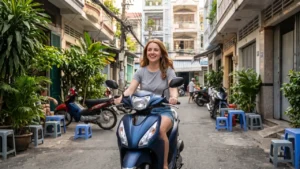
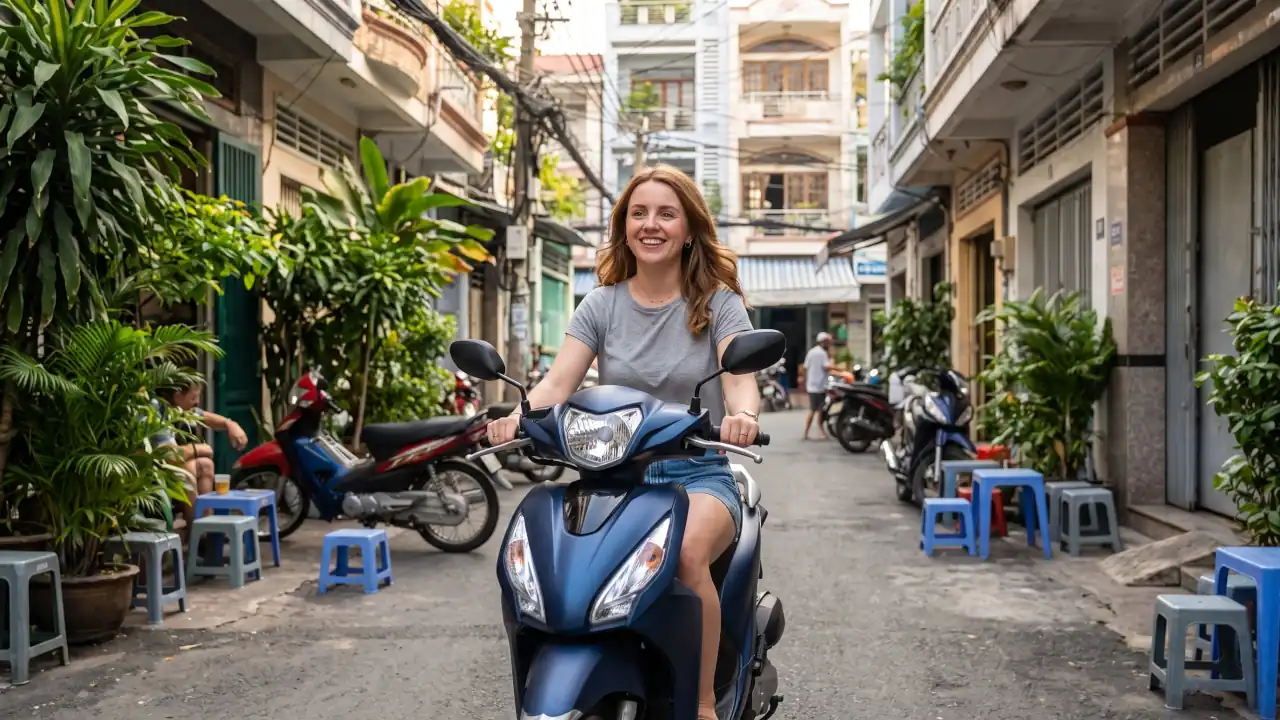
Once housing is sorted, transportation is next, and in Saigon that almost always means motorbikes. The streets, and sometimes the sidewalks, can be packed with motorbikes, and traffic patterns may feel very different from what you’re used to. Traffic jams are just part of daily life here, especially during rush hour.
Ride-hailing apps like Grab and Xanh SM are the easiest way to get comfortable with how traffic actually flows before you try driving yourself. Once you’re comfortable with the traffic, you may consider renting or buying a motorbike, but don’t treat it as a purely casual decision. Make sure you have the license, documentation, insurance, and other requirements that apply to you before riding. If you’re not legally permitted or aren’t comfortable in heavy traffic, Grab and other ride-hailing services are often the simpler option.
Keep the seasons in mind too. The wet season generally runs from around May through November, and heavy downpours can cause localized flooding and make traffic considerably slower. If you’re choosing an apartment, ask about the building’s history with flooding and pay attention to drainage in the surrounding streets. The rest of the year is hot, dry, and considerably easier to navigate on two wheels.
3. Don’t be scared to get lost
Some of the best parts of this city aren’t on any list. Wander down an alley you’ve walked past a hundred times and you’ll usually find something worth stopping for, a hidden coffee stall, a family-run noodle shop, a mural nobody talks about. Walking or biking without a fixed destination is genuinely one of the best ways to understand how the city actually works. Saigon regularly earns its spot among the best places to live in Vietnam, largely because there’s always something new tucked just out of sight.
Ho Chi Minh City is also a convenient base for exploring the rest of Vietnam. A weekend in Hanoi, a beach trip to Phu Quoc, or a slow float through the Mekong Delta are all realistic options once you’re settled, and domestic flight prices vary substantially by route, season, holidays, and booking date.
4. Try all the coffee
Vietnamese coffee culture deserves its own guidebook. Cà phê sữa đá, the classic iced coffee with condensed milk, is the obvious starting point, but you’ll also find versions made with egg, coconut, yogurt, and salted cream that somehow all work. Vietnamese coffee can be considerably stronger and more concentrated than what some newcomers are accustomed to, particularly when served with condensed milk over ice. If you’re sensitive to caffeine, start with a smaller serving and see how you react.
5. Don’t shy away from street food
Saigon’s international food scene is genuinely impressive given how many expats and travelers pass through, but skipping the street food would be a mistake. Street food is a major part of Vietnamese food culture, and Ho Chi Minh City gives you an enormous range of inexpensive local dishes to try. Pho, banh mi, cơm tấm, and many regional specialties are easy to find, although quality and hygiene can vary from one vendor to another.
6. Join a local expat Facebook group
Local Facebook groups can be useful for finding housing leads, recommendations, and up-to-date answers to everyday questions. Treat advice about visas, legal requirements, healthcare, and contracts as anecdotal, though, and verify anything consequential through the appropriate official or professional source. They’re particularly useful when you’re trying to understand the practical side of life in a neighborhood that isn’t covered well by mainstream travel guides.
7. Pay attention to air quality
Air quality can be a real consideration in Ho Chi Minh City, particularly if you spend a lot of time in traffic. Some residents choose to wear masks while riding or walking near busy roads, while others adjust their routines when air quality is poor.
If air quality matters to you, choose housing away from major traffic corridors where possible and consider checking local air-quality conditions before spending long periods outdoors. A good mask can also be useful on busy roads, but it shouldn’t be treated as a complete solution to poor air quality.
A Few Practical Things to Sort Out Early
Healthcare is one of the first things retirees, families, and long-term residents should research before moving. Ho Chi Minh City has private hospitals and clinics that cater to international patients, including facilities with English-speaking staff. Costs can be substantially lower than in countries such as the United States, but prices vary by provider, treatment, specialist, and whether you use insurance.
Rather than budgeting around a single “typical” consultation price, check the providers available near your neighborhood and find out what your insurance covers. For anything more complicated than routine care, confirm the hospital’s international-patient services, language support, payment process, and whether your insurer can arrange direct billing.
Banking is another early task worth researching. The documents required to open and use a Vietnamese bank account can depend on your immigration status, residency, employment, and the individual bank’s policies. Don’t assume that every foreigner will qualify for the same account.
If you’re staying temporarily, an international debit or credit card may be sufficient for many everyday purchases, while longer-term residents may want to investigate local banking once their immigration and employment documentation is in order. Before choosing a bank, compare account requirements, fees, English-language support, transfer options, and ATM availability.
Retirees may find that housing, food, transportation, and domestic services can stretch a fixed income further than in many Western countries, but your personal budget will depend heavily on housing standards, healthcare, travel, and lifestyle. Healthcare deserves particular attention: lower local medical costs do not automatically make self-insuring a sensible choice for every retiree. Before moving, consider international health coverage, exclusions, evacuation benefits, and how you would pay for a major medical event.
Tax residency and pension taxation can also become complicated when you live internationally. If Vietnam will become your long-term home, get professional advice based on your citizenship, tax residence, pension arrangements, and the relevant tax rules rather than assuming your home-country treatment will continue unchanged.
Before committing to a long-term move, spend enough time in your preferred neighborhood to test the commute, housing, healthcare options, internet, noise levels, and everyday routine. A short exploratory stay can reveal problems that a vacation never will.
Visas and Immigration for Living in Ho Chi Minh City
If you’re planning to live in Ho Chi Minh City for more than a short visit, understand the difference between having permission to stay in Vietnam and having permission to work there. Vietnam does not currently offer a dedicated digital nomad visa, while eligible travelers can use the country’s official e-visa system for stays of up to 90 days, with single- or multiple-entry options.
An e-visa should not automatically be treated as work authorization. If you’re employed by a Vietnamese company, your immigration situation may involve a work permit or an applicable exemption along with the appropriate residence documentation. Remote workers and business owners should also verify that their intended activities are permitted under the immigration status they plan to use.
Immigration rules can change, and requirements can vary by nationality and individual circumstances. Check the current official requirements before booking a long-term move or relying on repeated short-term entries.
Final Verdict: Is Ho Chi Minh City a Good Place to Live?
Ho Chi Minh City is a strong choice for people who value energy, convenience, food, community, and relatively affordable everyday living more than quiet streets or predictable traffic. It is not an effortless city, and the heat, motorbikes, noise, air quality, and bureaucracy can wear you down. But for people willing to adapt, those trade-offs can be worth it.
The smartest approach is to choose your neighborhood carefully, test ordinary daily life before committing to a long lease, keep your immigration status separate from your work authorization, and build a budget that reflects your actual lifestyle rather than a generic expat estimate.
Many newcomers are pleasantly surprised by how easy it can be to build a social routine in Ho Chi Minh City. The experience varies by neighborhood and by how much effort you make to interact beyond the expat community. You can get by with English in many expat-heavy areas, but learning a few basic Vietnamese phrases is worthwhile for dealing with landlords, drivers, local businesses, markets, and everyday situations.
You don’t need to be fluent before you arrive; even basic greetings, numbers, and common requests can make daily interactions easier. Being respectful of local customs and spending time in ordinary neighborhood businesses can make the transition smoother.
For all its noise and heat and traffic, Ho Chi Minh City has a way of getting under your skin. A lot of people plan to stay a few months and end up staying years. Others use it as a launchpad before moving somewhere quieter down the coast. Either way, it’s a city that rewards the people willing to actually explore it instead of just passing through.