So you’re thinking about moving to Mexico. Maybe you’re tired of your rent eating half your paycheck, maybe you work remotely and can technically live anywhere, or maybe you’re looking for a lower cost of living, better weather, or a completely different pace of life. Whatever brought you here, you’re not alone.
Hundreds of thousands of expats, retirees, and digital nomads have already made the jump, and Mexico keeps landing near the top of every “best countries to retire or relocate to” list for good reason. If you’re weighing Mexico against other options, it’s worth checking out our breakdown of the best places to live in Latin America first, since Mexico is just one piece of a much bigger picture.
This guide walks through seven cities that consistently come up when people ask where to actually live in Mexico, not just visit for a week. Each one has a different personality, so I’ll break down who each city fits best, what it costs, and which neighborhoods are worth a look. By the end, you should have a much clearer idea of where you’d actually want to unpack your bags.
Also Read: 7 Best Places to Live in the Yucatan Peninsula in 2026
Quick Answer
Mexico offers a wide range of lifestyles, from the fast-paced streets of Mexico City to the colonial charm of Mérida and the beaches of Playa del Carmen. The best place to live depends on your budget, preferred climate, lifestyle, and whether you prioritize city life, retirement, remote work, or coastal living.
Key Takeaways
- Mexico City is best for careers and big-city living.
- Guadalajara offers affordability and authentic urban life.
- Mérida is ideal for retirees and safety-conscious expats.
- Playa del Carmen and Cancún suit beach lovers and remote workers.
- Visit your preferred city before committing to a long-term move.
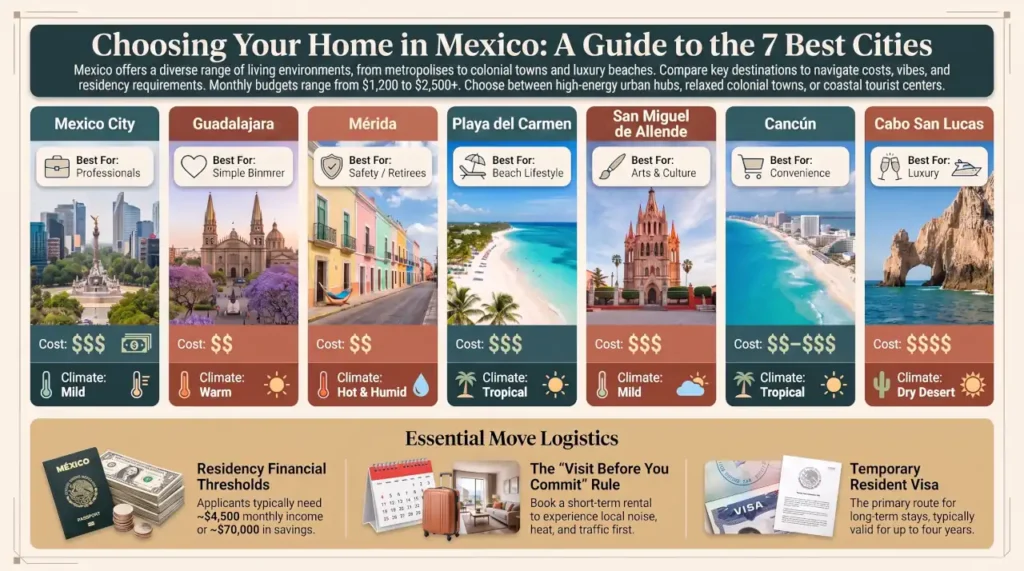
Best Places to Live in Mexico at a Glance
| City | Best For | Cost | Climate |
| Mexico City | Professionals, food lovers | $$$ | Mild year-round |
| Guadalajara | Families, remote workers | $$ | Warm, dry |
| Mérida | Safety, retirees | $$ | Hot & humid |
| Playa del Carmen | Beach lifestyle | $$$ | Tropical |
| San Miguel de Allende | Arts & retirees | $$$ | Mild |
| Cancún | Beach + international airport | $$–$$$ | Tropical |
| Cabo San Lucas | Luxury living | $$$$ | Dry desert |
1. Mexico City: For City Living
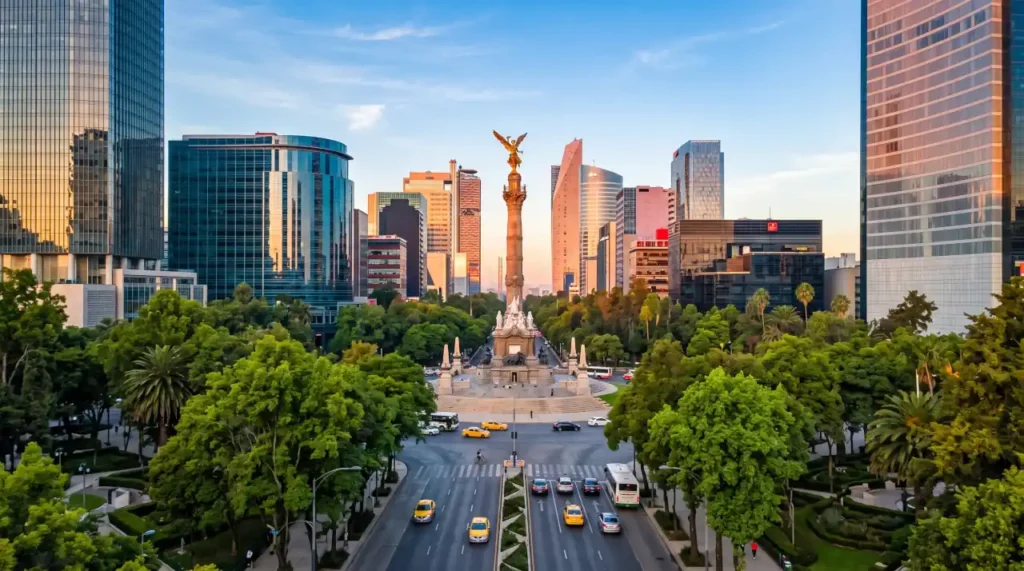
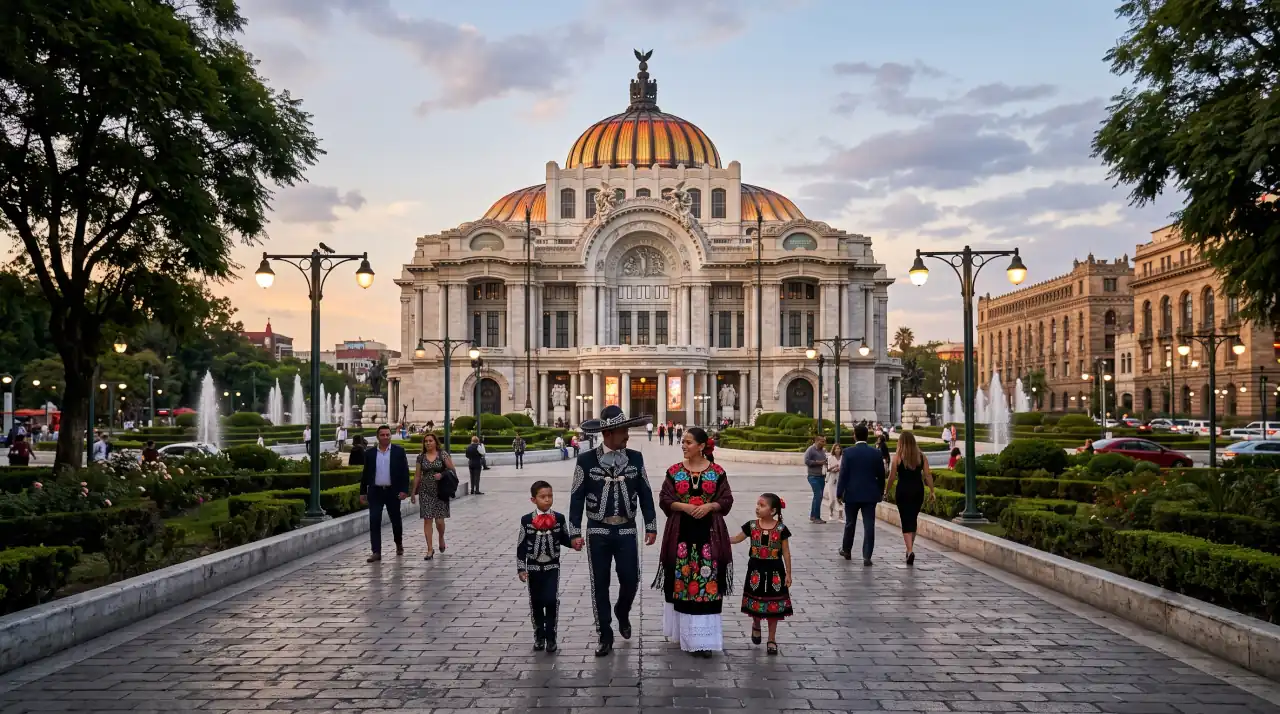
If you want a real city, with all the noise, food, art, and chaos that comes with it, Mexico City (locals call it CDMX) is hard to beat. It’s one of the largest metro areas in the world, and it genuinely has everything: world-class museums, a food scene that rivals Paris or Tokyo, rooftop bars, a thriving art and design community, and enough parks that you’d never guess you’re in a megacity of over 20 million people.
According to INEGI (Mexico’s National Institute of Statistics and Geography), the Mexico City metropolitan area is the country’s largest urban region, making it the economic, cultural, and business center of Mexico.
The altitude takes some getting used to (it sits at roughly 7,350 feet), and the traffic is a running joke among residents. But the trade-off is a city that never feels boring. There’s always a new restaurant to try, a gallery opening, or a market worth wandering through. Cost of living is higher than most of Mexico, but it’s still a fraction of what you’d pay in a comparable US or European capital.
Air quality can occasionally deteriorate during the dry season, particularly between late winter and spring, although conditions vary throughout the year and are generally manageable for most residents.
Costs vary considerably depending on neighborhood, housing choices, and exchange rates, so it’s worth comparing current rental prices before committing to a lease. Expect to budget somewhere between $1,200 and $2,500 a month for a comfortable single-person lifestyle, depending on the neighborhood and how much you eat out. A one-bedroom apartment typically costs around US$700–1,400 per month in central neighborhoods, with lower prices available farther from the city center.
If you like the idea of CDMX as a home base but also want to explore beyond it, plenty of people build in regular trips to nearby colonial towns. Our guide to weekend getaways in Central Mexico covers some of the best short trips you can take without ever needing a flight.
Best Areas of Mexico City to Live In
Roma Norte and Condesa are the two neighborhoods you’ll hear about most, and for good reason. Both are walkable, leafy, packed with cafes and co-working spaces, and popular with expats and young Mexican professionals alike. Roma Norte leans a little more polished and trendy, while Condesa has a slightly quieter, more residential feel with its art deco buildings and dog-friendly parks.
If you want something calmer, Coyoacán is worth a serious look. It’s the neighborhood where Frida Kahlo lived, and it still has that cobblestone, small-town charm even though it’s technically part of a massive city. Polanco is the upscale option, home to embassies, high-end shopping, and some of the best restaurants in the country, though it comes with a higher price tag to match.
If you’re moving to Mexico City for the first time, Roma Norte or Condesa are usually the easiest places to start. Both offer excellent walkability, plenty of amenities, and established international communities, making the transition to life in Mexico much smoother.
For a full breakdown of specific streets, rent ranges, and what daily life actually looks like in each pocket of the city, our guide to neighborhoods in Mexico City goes much deeper. And if you’re still deciding whether the capital is the right fit at all, our piece on living in Mexico City covers everything from healthcare to safety to what a typical month actually costs.
2. Guadalajara: For a More Local Experience
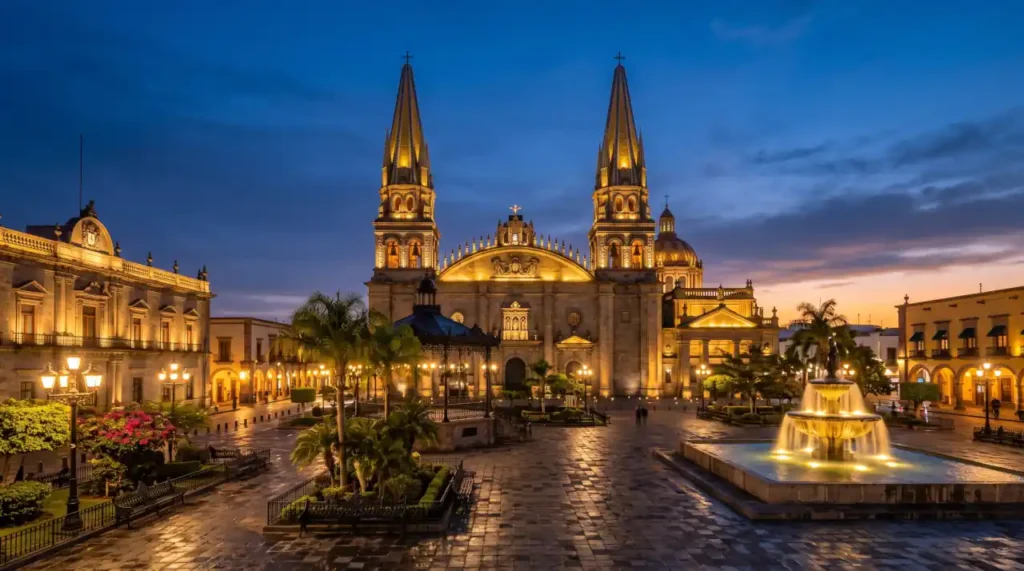
Guadalajara doesn’t get quite the same hype as Mexico City, and honestly, a lot of people who live there prefer it that way. It’s Mexico’s second largest city, but it feels far less overwhelming. Streets are wider, traffic is more manageable, and there’s a strong sense that you’re living in an actual Mexican city rather than an international bubble.
This is the birthplace of mariachi and tequila, and that cultural pride shows up everywhere, from the historic Centro to the plazas where families gather on weekend evenings. It’s also become something of a tech hub, earning the nickname “Mexico’s Silicon Valley,” which means good internet, a growing co-working scene, and a younger, more international crowd than you might expect. Cost of living tends to run lower than CDMX, often 15 to 25 percent cheaper depending on the neighborhood, which makes it an appealing option for anyone stretching a budget.
A centrally located one-bedroom apartment generally rents for about US$500–900 per month, depending on the neighborhood and building. While Guadalajara offers a lower cost of living, public transport isn’t as comprehensive as Mexico City, so many residents rely on driving or ride-sharing.
Best Areas of Guadalajara to Live In
Chapultepec is probably the closest thing Guadalajara has to Roma Norte: tree-lined streets, good restaurants, a lively nightlife scene, and a strong expat and digital nomad presence. Americana, right next door, has a similar vibe but with slightly more historic architecture and a bit less noise.
Providencia is the go-to for families and anyone who wants a quieter, more suburban feel without leaving the city entirely. It’s leafy, safe, and full of parks, though you’ll rely on a car or rideshare more than you would in the central neighborhoods. Zapopan, technically its own municipality but functionally part of Guadalajara, is where a lot of the newer development and upscale housing has gone, particularly around Puerta de Hierro.
If it’s your first time living in Guadalajara, Americana or Chapultepec are the easiest neighborhoods to settle into thanks to their walkability, restaurants, coworking spaces, and active expat community.
If you want the full picture on rent prices, day-to-day costs, and what it’s actually like settling in, our guide to living in Guadalajara walks through all of it in detail.
3. Mérida: For Colonial Charm
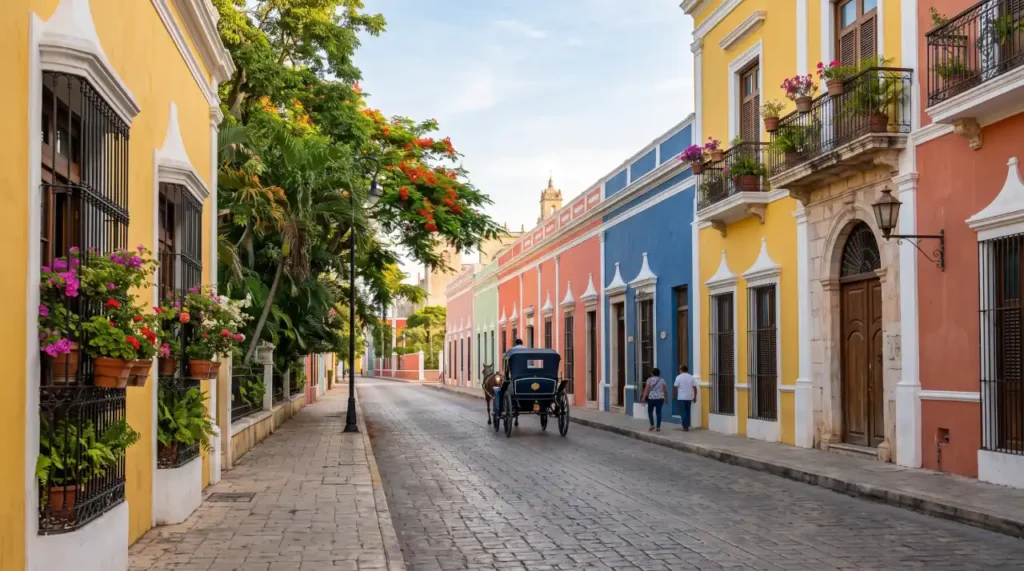
Mérida has quietly become one of the most talked-about cities for expats in the last few years, and it’s easy to see why once you spend a few days there. It is widely regarded as one of Mexico’s safest major cities, although safety ultimately varies by neighborhood and individual circumstances. The colonial architecture is stunning, and the pace of life is slower and more relaxed than almost anywhere else on this list.
The heat is real, especially between April and September, so this is a city where you’ll want air conditioning and a tolerance for humidity. The rainy season typically runs from around May to October, bringing short but often heavy afternoon showers that help cool temperatures without usually disrupting daily life for long.
In exchange, you get gorgeous colonial mansions, some of which have been converted into boutique hotels or restored as private homes, a genuinely warm and welcoming local culture, and easy access to the Yucatán’s cenotes, ruins, and beach towns for weekend trips. The region is also one of the best places in Mexico to experience Mayan heritage through archaeological sites, traditional cuisine, local festivals, and nearby historic communities.
Housing costs are still relatively low compared to the coastal hotspots, though prices have been climbing steadily as more people discover the city. Expect to pay approximately US$450–800 per month for a one-bedroom apartment in desirable neighborhoods, although prices continue to rise as demand grows.
Best Areas of Mérida to Live In
Centro, the historic core, is where you’ll find the colonial mansions and colorful facades that make Mérida famous, along with easy walking access to museums, markets, and cultural events. It’s popular with expats who want to be in the thick of things, though it can get warm and busy during festivals.
Itzimná and García Ginerés are quieter residential neighborhoods just outside the center, offering leafy streets and a more local, low-key atmosphere while still being an easy bike ride or short drive from downtown. Santiago is another favorite, known for its Sunday street parties and a strong sense of community that draws both locals and long-term expats.
For most newcomers, Centro offers the best introduction to Mérida thanks to its walkable streets, colonial architecture, and easy access to shops, cafés, and cultural events. If you prefer somewhere quieter, García Ginerés is an excellent alternative.
For a deeper look at what monthly costs, healthcare, and daily life actually look like here, check out our full guide to living in Merida.
4. Playa del Carmen: For Everyday Vacation
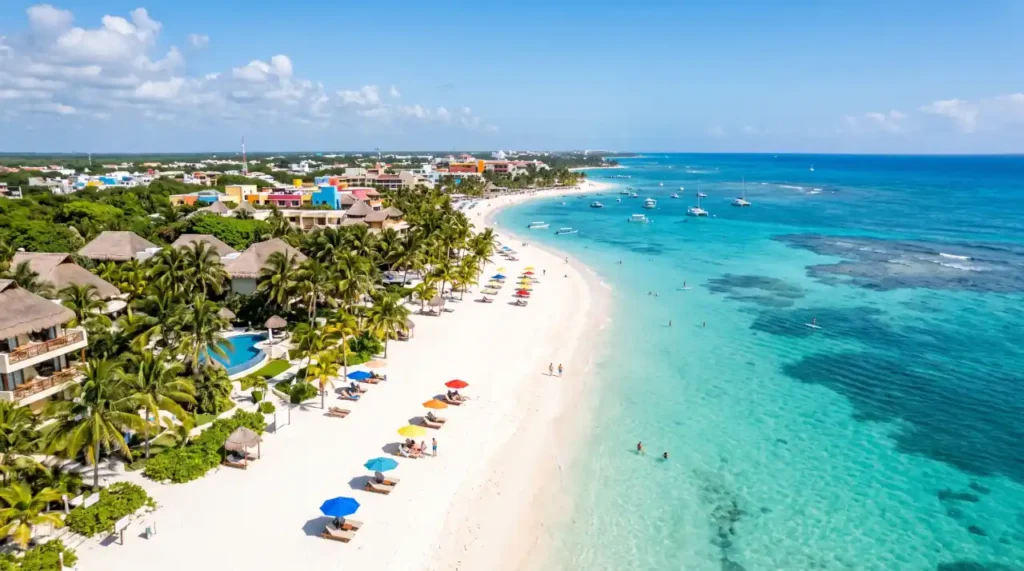
If your idea of a good life includes walking to the beach before breakfast, Playa del Carmen might be exactly what you’re picturing when you imagine moving to Mexico. It sits on the Riviera Maya, about 45 minutes south of Cancún’s airport, and it manages to feel like a real, functioning town rather than just a resort strip, even though tourism is clearly the backbone of its economy.
The vibe here is relaxed but social. There’s a large, well-established expat and digital nomad community, plenty of coworking spaces, and a nightlife scene along Quinta Avenida (Fifth Avenue) that ranges from beach bars to more upscale restaurants. Reliable fiber internet, numerous coworking spaces, and direct transport links to Cancún International Airport have made Playa del Carmen one of Mexico’s most popular bases for remote workers.
Cenotes, snorkeling, and easy ferry access to Cozumel are all part of daily life if you want them to be. The tradeoff is that prices have risen a lot over the past several years as the town has grown in popularity, so it’s no longer the budget destination it once was, though it’s still generally cheaper than comparable beach towns in the US or Europe. A one-bedroom apartment near the beach or downtown typically ranges from US$700–1,300 per month, while neighborhoods farther inland are often more affordable.
Best Areas of Playa del Carmen to Live In
Playacar is the gated, upscale option, popular with families and retirees who want resort-style amenities, golf courses, and a quieter, more secure environment right next to the beach. It comes at a premium compared to the rest of town.
Centro, especially the streets closer to Quinta Avenida, is where most of the energy is, with easy access to restaurants, shops, and nightlife, though it can get loud, especially on weekends. For something a little more residential and local, areas like Colosio and Gonzalo Guerrero, further from the tourist strip, tend to offer better value and a more everyday feel, while still being a short bike ride from the beach.
If you’re relocating for the first time, Centro offers the most convenient introduction to daily life, while Playacar is better suited to those who value quieter surroundings and resort-style amenities.
Our full guide to living in Playa del Carmen covers rent ranges, safety, and what to expect month to month if you’re seriously considering the move.
5. San Miguel de Allende: For a Community of Artists
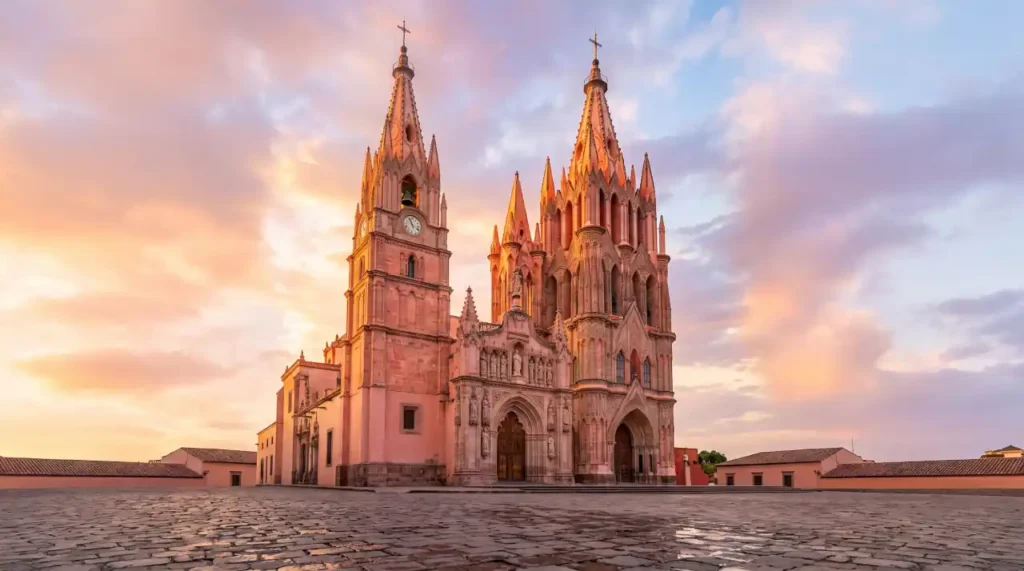
San Miguel de Allende has been on the radar of American and Canadian retirees for decades, and it’s easy to understand why. The historic center of San Miguel de Allende is recognized as a UNESCO World Heritage Site, known for its cobblestone streets, pink stone churches, colorful facades, and well-preserved colonial architecture. It’s also home to one of the largest and most established expat communities in the country, which makes settling in noticeably easier if you’re new to Mexico.
The town has a deep, decades-long reputation as an artists’ colony, and that identity still shapes daily life. Galleries, art schools, writing workshops, and cultural events are everywhere, and the town has a genuinely creative, slightly bohemian energy that feels different from the beach towns and big cities on this list. Because it’s smaller and land is limited within the historic center, housing costs have risen significantly, and San Miguel is no longer the bargain destination it was 20 years ago, but many people say the quality of life still justifies the price. Most one-bedroom apartments in popular neighborhoods rent for roughly US$700–1,200 per month, with Centro commanding the highest prices.
Best Areas of San Miguel de Allende to Live In
Centro, right around the iconic Parroquia church, is the most sought-after and expensive area, packed with galleries, restaurants, and boutique shops within walking distance of everything. San Antonio, just southwest of Centro, has become a popular alternative for people who want that same walkable charm at a somewhat lower price point, along with a strong local and expat mix.
Guadiana is a quieter, more suburban neighborhood favored by families and retirees who want more space and a car-friendly layout, while still being a short drive from downtown. Atascadero, on the outskirts, tends to offer newer construction and larger homes for those prioritizing space over proximity to the historic center.
Many first-time residents find San Antonio offers the best balance of affordability, walkability, and community, while Centro is ideal if you’re happy to pay more to live in the heart of the historic district.
6. Cancun: For Plenty to See & Do
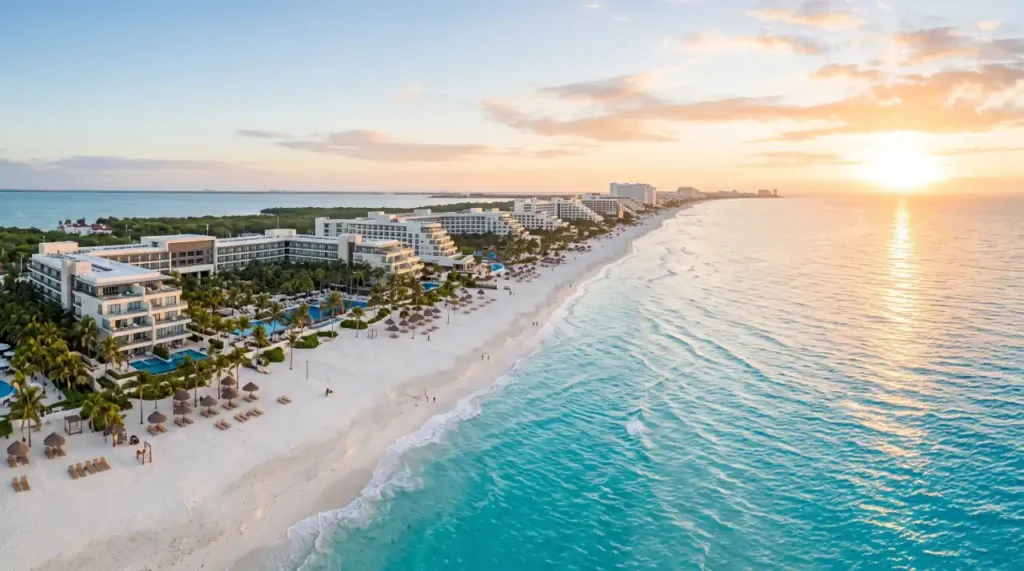
Cancún often gets written off as purely a spring break destination, but the city itself, separate from the Hotel Zone strip most tourists see, is actually a real, livable place with nearly one million residents, solid infrastructure, and an international airport that makes it easy to host visitors or fly back home.
Cancún International Airport is one of Latin America’s busiest airports, offering extensive domestic and international connections that make traveling throughout North America and Europe relatively straightforward.
If you want beach life plus genuine convenience, this is where a lot of people land.
Downtown Cancún has supermarkets, hospitals, shopping malls, and a much more local, affordable feel than the resort area a few miles away. One-bedroom apartments generally range from US$600–1,100 per month depending on proximity to the Hotel Zone and newer developments.
You get the same turquoise Caribbean water and white sand that draws millions of tourists every year, but you’re paying local prices for groceries and rent rather than tourist markups. It’s also a great base if you want easy access to day trips, since Playa del Carmen, Tulum, Isla Mujeres, and the ruins at Chichén Itzá are all within a few hours.
Best Areas of Cancun to Live In
Región 15, sometimes called Supermanzana 15, is one of the more popular expat pockets downtown, known for its central location, green spaces, and easy access to shops and restaurants. Puerto Cancún, on the other hand, is a newer, more upscale development with a marina, golf course, and modern apartment buildings, appealing to people who want resort-style amenities without staying in the Hotel Zone itself.
For beachfront living without the tourist crowds, Isla Mujeres, a short ferry ride away, is technically its own island but functions as an extension of Cancún life for many residents who want a slower pace. Downtown neighborhoods like Región 91 and 94 tend to be more budget-friendly and popular with locals, offering a more authentic, less polished version of city life.
For most newcomers, Región 15 is a great place to start because it combines convenience, good amenities, and relatively easy access to both downtown and the Hotel Zone.
If you want a full rundown of costs, safety, and what daily life looks like here, our guide to living in Cancun covers it in detail.
7. Cabo San Lucas: For a Slice of Luxury
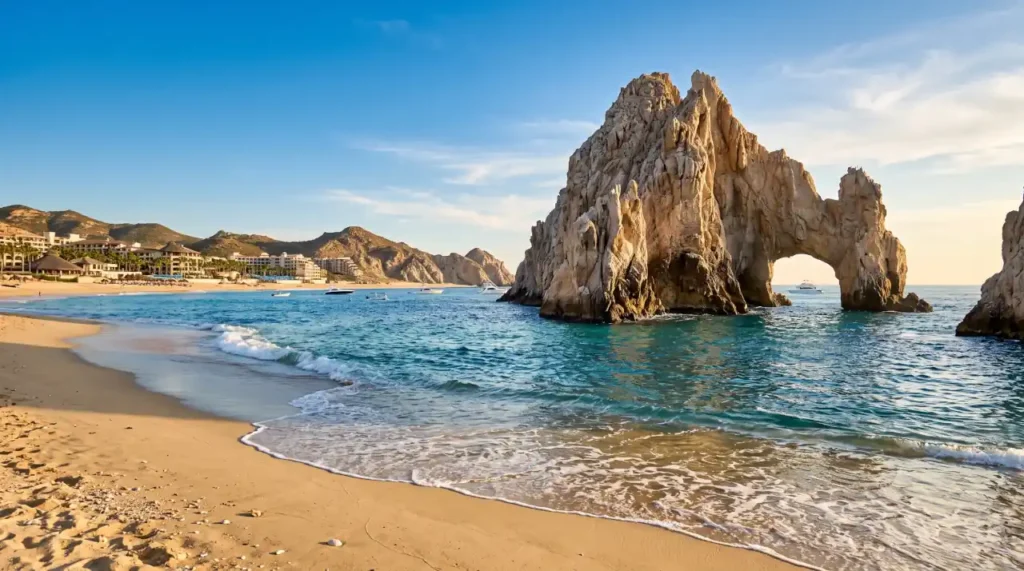
Cabo San Lucas sits at the tip of the Baja California peninsula, and it has built its reputation on luxury resorts, world-class golf courses, sport fishing, and a marina lined with yachts. It’s not the budget option on this list, and it’s not trying to be. If you want ocean views, a dry desert climate, and easy flights back to the US West Coast, Cabo delivers, but you’ll pay a premium for it compared to almost everywhere else in Mexico.
A centrally located one-bedroom apartment often costs between US$900–1,600 per month, making Cabo one of Mexico’s more expensive places to live.
The dry, desert-meets-ocean landscape is unlike anywhere else on this list, and the weather is reliably sunny nearly year round, which is a big part of the appeal for retirees escaping colder climates. There’s also a large American and Canadian expat community already established here, which means English is widely spoken and a lot of the day-to-day logistics (banking, healthcare, real estate) are set up with expats in mind. Because the local economy is heavily tourism-driven, housing costs and rents tend to fluctuate more than in many inland Mexican cities, particularly during peak travel seasons.
Families relocating to the area will also find several private and international schools serving both local and expatriate communities, making Cabo a practical option for those moving with children.
Best Areas of Cabo San Lucas to Live In
The Corridor, the stretch of coastline between Cabo San Lucas and San José del Cabo, is where most of the high-end resorts and gated residential communities sit, offering ocean views and top-tier amenities at top-tier prices. Downtown Cabo, closer to the marina, is more walkable and social, with restaurants and nightlife within easy reach, though it can get busy during peak tourist season.
San José del Cabo, the quieter, more historic sister city about 20 minutes away, has become a popular choice for people who want the Cabo lifestyle without quite as much tourist noise. It has a well-preserved colonial center, a strong art scene, and a slightly more local, laid-back feel than Cabo San Lucas proper.
If you’re planning to live in the area year-round rather than visit on holiday, San José del Cabo is often the better long-term choice thanks to its slower pace, stronger local community, and more residential atmosphere.
Pros & Cons of Living in Mexico
Things to Know Before You Move to Mexico
Picking a city is the fun part. Actually making the move involves a few practical steps that are worth understanding before you book a one-way flight.
Visa Options
Many foreign nationals can enter Mexico without obtaining a visa in advance for short visits. However, the length of stay is determined by immigration officers upon arrival and may be less than 180 days. If you intend to live in Mexico for an extended period, it’s generally more appropriate to apply for a Temporary Resident Visa before relocating.
For anyone planning to stay longer term, Mexico’s Temporary Resident visa is the most common route.
As of 2026, most Mexican consulates require applicants to demonstrate approximately US$4,300–4,500 in monthly income over the previous six months or roughly US$70,000–73,000 in savings held over the previous twelve months. Financial thresholds vary by consulate and exchange rates, so always verify current requirements before applying. Temporary residency is generally granted for up to four years before applicants become eligible for permanent residency.
If you’re working remotely for a company or clients outside Mexico, it’s also worth reading up on how a digital nomad visa compares to the standard temporary resident route, since the paperwork and requirements can differ depending on your situation.
Learning the Language
You can absolutely get by in tourist-heavy areas like Playa del Carmen or Cabo with minimal Spanish, since so many people you’ll interact with speak English. But even a basic grasp of Spanish changes the experience completely, whether it’s negotiating rent, chatting with a neighbor, or just ordering off a menu that isn’t translated. Cities like Guadalajara and Mérida, where daily life is more local, will reward the effort even more. Apps like Duolingo are fine for basics, but a few months of an actual class, even an online one, will get you conversational far faster than an app alone.
Finding an Apartment Rental
Facebook Marketplace and local Facebook expat groups tend to be the most active places to find rentals in most Mexican cities, often with better prices than international listing sites because you’re dealing directly with landlords rather than platforms built for tourists. Sites like Vivanuncios and Inmuebles24 are the local equivalents of Zillow and are worth checking too.
Most landlords will ask for the first month’s rent plus a deposit, and some may ask for a Mexican guarantor or extra months upfront if you don’t have local credit history, especially in competitive markets like Mexico City or Playa del Carmen. It’s generally smart to book a short-term Airbnb or hotel for your first few weeks so you can view apartments in person before committing to a longer lease, rather than signing anything sight unseen.
If possible, spend time walking the neighborhood during both the day and evening before signing a lease, as traffic, noise levels, and safety can vary significantly from one area to another.
Also Read:
Is Mexico Right for You?
Mexico appeals to a wide range of people, but no destination is perfect. Before relocating, think carefully about healthcare, climate, language, visa requirements, and how often you’ll want to travel back home. Spending a few weeks in your preferred city before committing can help you avoid expensive mistakes.
Where Will You Move in Mexico?
There’s no single “right” answer here, and that’s really the point. Mexico City makes sense if you want a real metropolis with endless things to do. Guadalajara and Mérida are better fits if you want something calmer and more local without giving up culture and good food. Playa del Carmen and Cancún are built for people who want the beach as part of their everyday routine, not just a vacation.
San Miguel de Allende suits anyone drawn to art, community, and colonial beauty, and Cabo San Lucas is the pick if a bit of luxury and reliably sunny weather matter more than a lower price tag.
The best move is usually to visit for a few weeks before committing to anything longer.
A place can look perfect in photos and still feel wrong once you’re dealing with the heat, the commute, or the noise outside your window every day. Renting short term first gives you a real feel for a city before you sign a year-long lease or ship your belongings across the border. Taking time to compare several destinations before making a final decision gives you the best chance of finding a city that matches both your lifestyle and your long-term budget.
Ultimately, the best place to live in Mexico isn’t the most popular one—it’s the city that best matches your budget, preferred climate, daily lifestyle, and long-term goals.