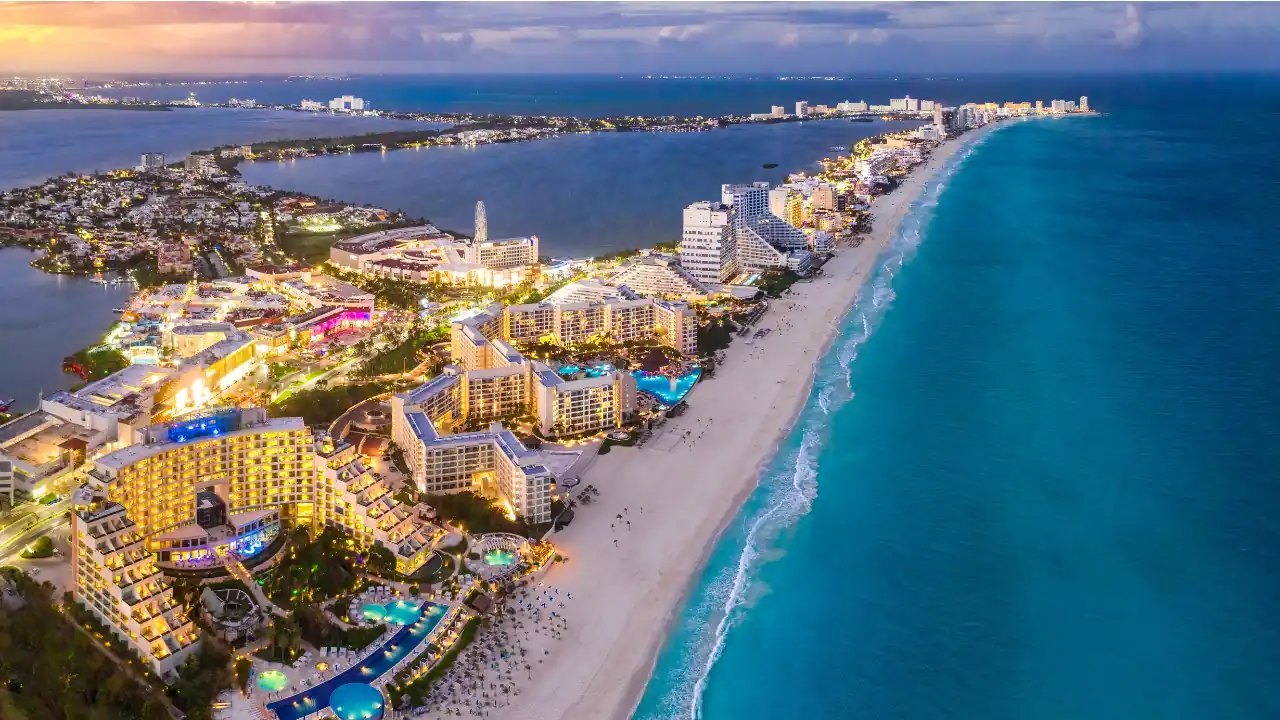
If you’ve only seen Cancun through a resort window, you’re missing the actual city. Behind the all-inclusive strip is a busy, growing, very livable place with real neighborhoods, real grocery stores, and a genuinely warm community. I’ve spent time digging into what it actually costs to live here, which areas make sense for different budgets, and what nobody tells you before you pack your bags. Here’s what living in Cancun is really like, from monthly costs and neighborhoods to healthcare, safety, and everyday life.
Also Read: 7 Central Mexico Cities Expats Can’t Stop Recommending
Quick Answer
Living in Cancun offers a lower cost of living than most major U.S. and Canadian cities, modern healthcare, reliable internet, and year-round warm weather. While housing costs are higher than in many inland Mexican cities, Cancun remains a popular choice for expats, retirees, and remote workers thanks to its international airport, established expat community, and Caribbean lifestyle.
Key Takeaways
- Cancun offers a lower cost of living than most major North American cities, although it’s generally more expensive than many inland destinations in Mexico.
- Most expats live in Downtown Cancun rather than the Hotel Zone because of lower housing costs, better access to everyday services, and a more local lifestyle.
- Reliable fiber internet, modern healthcare, and an international airport with extensive North American connections make Cancun a practical base for remote workers, retirees, and long-term expats.
- Learning basic Spanish will make everyday life much easier, even though English is widely spoken in tourist areas and many expat-friendly businesses.
- Before committing to a long-term lease, spend at least a few weeks—or ideally a month—living in your preferred neighborhood to make sure it suits your lifestyle and budget.
Getting Acquainted with Cancun
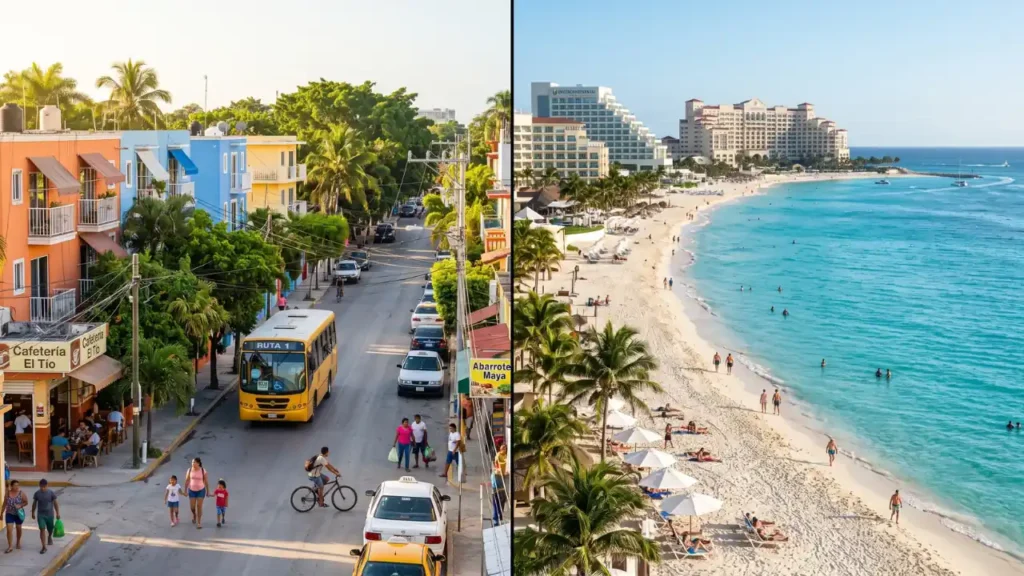
Cancun has a split personality, and understanding that split is the first thing you need to get your head around before you move here. On one side, you’ve got the Hotel Zone: the narrow, 14-mile strip of beach that the whole world pictures when they hear the word “Cancun.” On the other side is the mainland city, home to nearly 900,000 people who go to work, drop their kids at school, and grab tacos from the same corner stand every week. That second Cancun is the one you’ll actually be living in.
Where Is Cancun?
Cancun sits on the northeastern tip of the Yucatan Peninsula, right where Mexico’s Caribbean coast begins. It’s the gateway to the Riviera Maya, and it’s close enough to hop over to other expat-friendly spots whenever you want a change of scenery. Playa del Carmen is about 45 minutes south by car, and colonial Mérida is roughly a three-hour drive inland. That geography matters more than people expect. It means Cancun works as a hub: you get Cancun International Airport with direct flights to most of North America, a coastline lined with cenotes and ruins, and a handful of other livable cities within striking distance if Cancun ever starts to feel small.
The city itself was actually planned from scratch in the 1970s by the Mexican government, which is why it’s laid out in a grid of numbered neighborhoods called “supermanzanas” (super-blocks), rather than growing organically the way most Mexican cities did. Each supermanzana has its own school, market, and green space built in, which honestly makes daily life pretty convenient once you learn your way around.
Unlike many older Mexican cities, Cancun’s planned layout makes navigation relatively straightforward. Major avenues connect most residential areas with shopping centers, schools, hospitals, and the Hotel Zone, making daily errands easier once you become familiar with the numbered supermanzanas.
Is Cancun Safe?
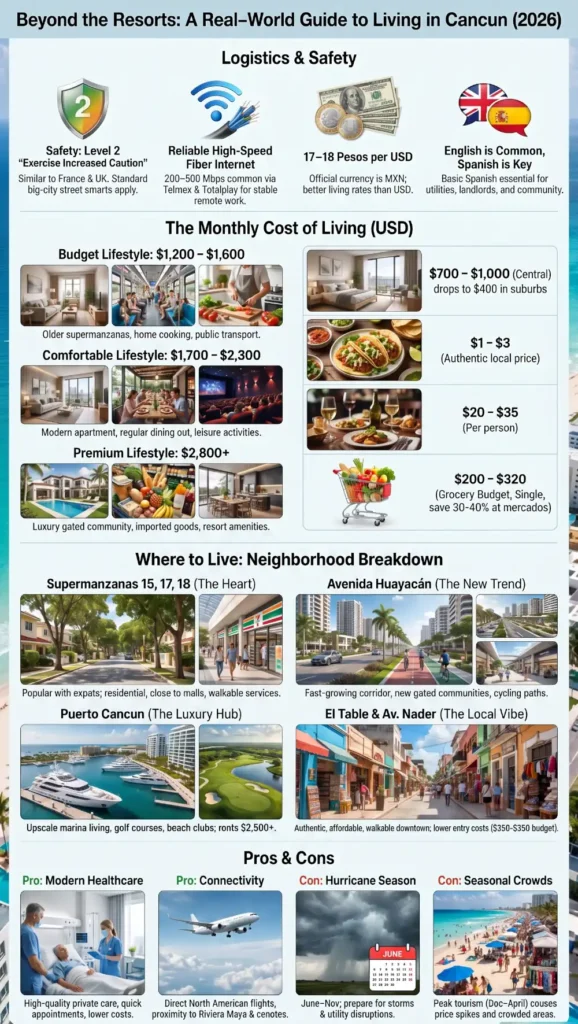
This is the question everyone asks first, and it deserves a straight answer instead of a scary headline. Yes, Cancun is safe to live in, as long as you use the same street smarts you’d use in any big city. The U.S. State Department currently rates the state of Quintana Roo (where Cancun sits) at Level 2, “Exercise Increased Caution.” For context, that’s the exact same rating given to France, Germany, and the United Kingdom, not exactly danger zones. It’s also worth remembering that New York City, like most major metros, has its rougher pockets and its safe ones, and the same logic applies here.
Most crime linked to organized groups happens far from where tourists and expats actually spend their time, and it rarely involves foreigners. The trouble people run into in Cancun tends to be far more mundane: pickpocketing in crowded markets, overpriced taxi rides, or getting scammed by someone posing as an “official” tour guide. None of that requires extraordinary precautions to avoid.
It requires the same habits you’d already use anywhere: don’t flash cash, use Uber or Didi instead of hailing a random cab off the street, keep your phone out of sight when you’re not using it, and don’t wander into unfamiliar neighborhoods alone late at night. Stick to those basics and you’ll find Cancun is a relaxed, welcoming place to settle down, with a growing expat community that’s used to helping newcomers find their footing.
Foreigners living in Cancun generally find it easy to settle in thanks to the city’s international character, although learning Spanish and understanding local customs can make integration much smoother.
What Currency Is Used in Cancun?
The official currency is the Mexican peso (MXN), and you’ll want to get comfortable using it fast. For current exchange rates, use the Bank of Mexico (Banco de México) or a reputable currency provider instead of relying on airport exchange counters, which often offer less favorable rates.
Yes, plenty of shops and restaurants in the Hotel Zone will happily take U.S. dollars, but you’ll pay a worse exchange rate for the convenience, sometimes a noticeably worse one. Once you’re living here full time, you’ll be paying rent, buying groceries, and settling utility bills in pesos, so it’s worth opening a local bank account or at least getting comfortable with a low-fee international card.
ATMs are everywhere, but stick to ones attached to actual banks rather than the standalone machines in convenience stores, which tend to charge steep fees. As of mid-2026, the exchange rate hovers around 17 to 18 pesos to the dollar, though that number moves, so it’s worth checking before you budget anything big.
Banking
Many expats eventually open a Mexican bank account to simplify rent payments and utility bills. Some banks require temporary or permanent residency, while others offer limited accounts for foreign residents. Until then, a low-fee international debit card is usually the simplest solution.
The banks most commonly used by expats include BBVA México, Santander México, Banorte, and Scotiabank. While requirements vary, most full-service accounts require a passport, proof of address, and either temporary or permanent residency. If you’re still settling in, many newcomers rely on an international debit card until they’re eligible to open a local account with low foreign transaction fees until they’re eligible to open a local account.
Mobile Phone Plans
SIM cards are inexpensive and easy to purchase from providers like Telcel, AT&T Mexico, and Movistar. Most prepaid plans include generous data allowances and cost significantly less than comparable plans in the U.S. or Canada.
Getting Around Cancun
Cancun’s public buses are inexpensive and connect Downtown with the Hotel Zone throughout the day. Ride-sharing services such as Uber and Didi are widely used, although airport pickup rules can occasionally change. If you plan to live outside the central neighborhoods or explore the Riviera Maya regularly, owning a car can make daily life more convenient.
Do I Need to Speak Spanish in Cancun?
You can absolutely get by without it, at least at first. Cancun’s economy runs on tourism, so English is spoken widely in restaurants, hotels, real estate offices, and most businesses that deal with foreigners regularly. That said, “getting by” and “actually living well” are two different things.
The moment you step outside the tourist-facing bubble, whether that’s dealing with your landlord, chatting with a neighbor, or trying to sort out a problem at the utility company, Spanish becomes genuinely useful. Learning even a conversational level will make your day-to-day life smoother, help you build real friendships with locals instead of just other expats, and honestly just makes you feel less like a permanent tourist. Even a few months of casual practice before you move goes a long way.
Living in Cancun as an American
Americans make up one of the largest expat communities in Cancun, thanks to the city’s direct flights, warm climate, and lower cost of living compared to many U.S. cities. While adjusting to a different language, healthcare system, and bureaucracy takes time, many Americans find that living in Cancun offers a comfortable lifestyle with modern conveniences still close at hand.
Cost of Living in Cancun, Mexico
Let’s get into the number that actually decides whether this move makes sense for you: the cost. Cancun is not the cheapest place in Mexico. Because it’s such a major tourism hub, prices run higher here than in inland cities like Mérida or Guadalajara. That said, it’s still dramatically more affordable than living in most major U.S. cities. According to Wise’s Cost of Living guide, a single person in Cancun can expect to spend around $872 a month on essentials like food and transport, not counting rent, while a family of four typically needs closer to $2,996 a month for the same categories.
For a rougher comparison point, think about a city like Miami. Compared with many cities in the United States, the cost of living in Cancun is generally much lower, particularly for rent, dining out, healthcare, and everyday services. Imported products and luxury housing, however, can cost almost as much as they do in the U.S.
Rent, groceries, and eating out in Cancun generally run somewhere between a third and half of what you’d pay in a comparable U.S. coastal city. Your money genuinely stretches further here, but the exact amount depends heavily on your lifestyle. Someone shopping at local markets and eating where the locals eat will spend a fraction of what someone chasing an imported, all-American grocery list and Hotel Zone restaurants will spend. Budget for somewhere in the middle until you figure out your own rhythm.
Internet & Remote Work
Cancun has reliable fiber internet in most modern neighborhoods, with speeds of 200–500 Mbps commonly available in newer developments from providers like Telmex and Totalplay. Remote workers should still confirm internet quality before signing a lease, particularly in older buildings. Living and working in Cancun is increasingly common among remote workers, freelancers, and entrepreneurs. Reliable fiber internet, coworking spaces, and convenient international flights make the city a practical base for people who earn income online while enjoying a beach lifestyle.
Example Monthly Budgets
While everyone’s lifestyle is different, these estimates provide a useful starting point:
Budget Lifestyle: Around $1,200–$1,600 USD/month by renting outside premium neighborhoods, cooking at home, and relying on public transportation.
Comfortable Lifestyle: Around $1,700–$2,300 USD/month with a modern apartment, occasional dining out, and regular leisure activities.
Premium Lifestyle: $2,800+ USD/month for luxury housing, imported groceries, frequent restaurant meals, and resort-style amenities.
Cost of Rent in Cancun
Rent is where your budget will live or die, and it swings wildly depending on the neighborhood. In the city center and popular expat-friendly supermanzanas, a one-bedroom apartment averages somewhere around $700 to $1,000 a month, while the same size unit outside the central areas can run as low as $400 to $500. A three-bedroom apartment in a central area averages closer to $1,200 to $1,500 a month, dropping to around $900 to $1,200 in the suburbs.
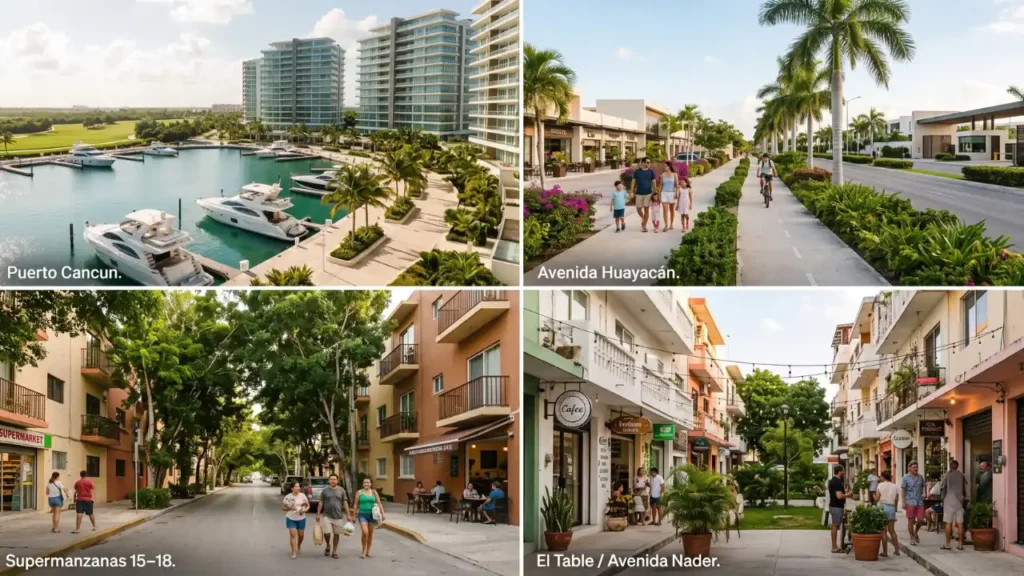
If you’re eyeing the newer, gated developments (think Puerto Cancun or the Avenida Huayacán corridor), expect to pay a premium for the security, amenities, and shiny finishes. On the flip side, older supermanzanas further from the tourist zones can get you a basic two-bedroom for as little as $400 to $700 a month. One tip that locals and long-time expats will echo again and again: never sign a lease sight unseen. Book a short-term rental first, spend a week or two actually living in the neighborhood, and then decide if it’s the right fit before committing to anything long-term.
If you eventually decide to buy instead of rent, it’s worth knowing that foreign buyers purchasing property within Mexico’s restricted coastal zone generally do so through a bank trust called a fideicomiso. This doesn’t affect renters, but it’s useful to understand if you think homeownership might be part of your long-term plans.
Renting Tip
Most long-term rentals require a security deposit, the first month’s rent upfront, and sometimes a guarantor (“aval”). If you don’t have a local guarantor, some landlords accept additional deposits instead. It’s also worth asking whether utilities such as electricity, water, internet, and HOA fees are included in the monthly rent, since listings vary considerably.
Cost of Grocery Shopping in Cancun
Groceries in Cancun are noticeably cheaper than in the U.S. or Canada, especially if you shop the way locals do: fresh produce from the mercados, local butcher counters, and Mexican grocery chains like Chedraui or Soriana rather than the pricier import-heavy supermarkets. A basic grocery run covering fruit, vegetables, rice, beans, eggs, and chicken can easily run you 30 to 40% less than back home. Where it gets pricier is imported goods. Shopping seasonally at neighborhood markets is one of the easiest ways to keep grocery costs low.
If you’re craving a specific American cheese, a particular brand of cereal, or good ribeye steak, you’ll pay a premium and sometimes still come up empty-handed. Costco and Walmart both have locations in Cancun and are popular with expats who want a wider selection, though prices there run closer to what you’d expect stateside for imported items.
Local produce is often freshest when purchased at neighborhood fruit and vegetable markets rather than supermarkets, especially for seasonal tropical fruit.
A single person cooking mostly at home should budget somewhere around $200 to $320 a month for groceries, while a family of four eating a mix of local and imported goods should plan for closer to $500 to $700 a month.
Cost of Eating Out in Cancun
This is genuinely one of the best parts of living here. Local taco stands and small family-run spots will run you anywhere from $1 to $3 per taco, and a full meal at a casual local restaurant typically lands around $7 to $15 per person. A sit-down dinner with drinks at a mid-range restaurant runs closer to $20 to $35 per person, and that’s before you even get into the more upscale Hotel Zone dining, where a nice dinner for two with wine can easily hit $80 to $100.
Coffee culture is alive and well here too, with a cappuccino averaging around $3, and casual breakfast spots serving up eggs, fruit, and juice for $8 to $12. The trick to keeping your food budget reasonable is simple: eat where the locals eat. Downtown taquerias and the food stalls at places like Mercado 28 or Mercado 23 serve genuinely excellent food at a fraction of what you’d pay two miles away in the Hotel Zone.
Healthcare in Cancun
Healthcare is one of Cancun’s biggest advantages for expats. The city has several modern private hospitals and clinics offering high-quality care, with many doctors speaking at least conversational English. Appointments are often available much sooner than in the U.S. or Canada, and consultation fees are generally much lower.
If you become a legal resident, you may also qualify to enroll in Mexico’s public healthcare system through IMSS. Many expats still choose private insurance or pay out of pocket for routine appointments because costs remain relatively affordable compared to North America.
Before relocating, it’s worth checking whether your current health insurance provides international coverage or whether purchasing a dedicated expat health insurance policy makes more sense for your situation.
Schools in Cancun
Families moving to Cancun have a mix of public, private, bilingual, and international schools to choose from. While public schools operate primarily in Spanish, many expat families opt for private bilingual schools that teach in both English and Spanish. There are also several international schools following American or International Baccalaureate (IB) curricula.
If you’re relocating with children, it’s worth researching school locations before choosing a neighborhood, as daily commute times can vary considerably across the city.
Cancun can be a good choice for families thanks to its mix of international schools, family-friendly neighborhoods, modern shopping centers, parks, and easy access to outdoor activities. Areas such as Avenida Huayacán and Supermanzanas 15, 17, and 18 are particularly popular with families because they combine residential living with convenient access to schools and everyday services.
Pros and Cons of Living in Cancun
Before you dive into neighborhoods and budgets, it helps to weigh the trade-offs honestly, because Cancun isn’t a perfect fit for everyone.
The Pros
The weather is a huge draw on its own: warm, sunny, and beach-adjacent almost year-round, which is hard to put a price on if you’re coming from somewhere with long, gray winters. The cost of living, while higher than inland Mexico, still stretches much further than a comparable lifestyle in the U.S. or Canada.
Healthcare is another underrated perk. Private care is modern, appointments are often available quickly, and many expats appreciate having access to both affordable private clinics and Mexico’s IMSS public healthcare system if they’re eligible.
The Cons
Tourism cuts both ways. The same industry that built Cancun’s infrastructure also means prices spike during peak season (December through April), and certain areas can feel overrun with visitors rather than authentically local. Hurricane season, running June through November, brings real risk of storms and occasional disruptions to power and water, so it’s worth building some flexibility into your plans during those months.
If you’re moving during hurricane season, it’s worth checking whether your rental includes storm shutters and confirming what your insurance policy covers for weather-related damage.
The language barrier, while manageable, becomes a real limitation the moment you step outside tourist-facing businesses. And finally, Cancun’s layout is spread out and car-dependent in a lot of areas, so if you’re picturing a fully walkable lifestyle, you’ll want to choose your neighborhood carefully.
Best Areas to Live in Cancun
Choosing the right neighborhood is honestly the single biggest decision you’ll make when moving here, and Cancun offers a real range depending on your budget and lifestyle. If you’re considering living in Downtown Cancun, you’ll generally enjoy lower housing costs, easier access to public transportation, local restaurants, grocery stores, and government services than in the Hotel Zone. Many long-term expats prefer Downtown because it offers a more authentic day-to-day experience.
Locals refer to most residential zones as “supermanzanas,” numbered blocks that each function almost like their own mini-neighborhood, complete with schools, small markets, and parks. Generally speaking, lower-numbered supermanzanas tend to be older and more central, while higher numbers push out into newer, quieter suburbs. Here’s a breakdown of the areas expats gravitate toward most, along with what you can expect to pay at different budget levels.
Supermanzana 15 | 17 | 18
These central supermanzanas are consistently some of the most popular with expats and long-term foreign residents, and for good reason. They sit close to Las Américas mall, a short hop from downtown, and roughly halfway between the mainland and the Hotel Zone, so you’re never too far from anything. The streets here feel genuinely residential, with a mix of local families and a steadily growing foreign community, plus easy access to public transport if you don’t want to drive.
Budget Option: A simple one-bedroom apartment in an older building, often without amenities like a pool or gym, typically runs $400 to $600 a month.
Mid-Tier Option: A modern two-bedroom apartment in a security-gated building with basic amenities lands around $700 to $1,000 a month.
Luxury Option: Newer high-rise condos with pools, gyms, and covered parking in this area can run $1,200 to $1,800 a month.
El Table
El Table is a bit further from the tourist strip and offers a more local, laid-back feel while still being close enough to essential services and grocery stores. It’s a good pick if you want a quieter, more authentic slice of daily Cancun life without sacrificing convenience.
Budget Option: Basic one or two-bedroom apartments here run roughly $350 to $550 a month, among the more affordable options on this list.
Mid-Tier Option: A comfortable, updated apartment or small house with some added security runs closer to $600 to $850 a month.
Luxury Option: Larger homes with modern finishes and private outdoor space top out around $1,000 to $1,300 a month.
Puerto Cancun
Puerto Cancun is the newest, most upscale development in the city, built around a marina, a golf course, and high-rise residential towers with private beach club access. It’s the pick for people who want resort-style amenities as part of their everyday life and don’t mind paying for it. If you’re not sure it’s the right fit, book a short-term rental here for a night or two first to get a real feel for the pace before signing anything long-term.
Budget Option: Smaller, air-conditioned condo units with pool access typically start around $900 to $1,200 a month.
Mid-Tier Option: Spacious multi-bedroom units, often with rooftop terraces or private outdoor bars, run $1,500 to $2,200 a month.
Luxury Option: Marina or beachfront residences with private pools and premium finishes can run $2,500 a month and up.
Avenida Huayacan
Avenida Huayacán is one of Cancun’s newest and fastest-growing corridors, and it shows. Think brand-new gated communities, shopping plazas, cycling paths, and restaurants popping up constantly, all about 15 to 20 minutes from the airport. It’s become a magnet for young professionals, digital nomads, and families who want modern housing stock without the Puerto Cancun price tag.
Budget Option: Entry-level apartments in newer complexes run around $500 to $700 a month.
Mid-Tier Option: Well-maintained two or three-bedroom homes in gated communities land around $800 to $1,100 a month.
Luxury Option: Larger houses in premium gated developments like Cumbres or Vía Cumbres can run $1,400 to $2,000 a month.
Avenida Nader
Avenida Nader runs through a more central, walkable part of the city, giving you quick access to downtown life, local markets, and public transport without the higher price tag of the newer developments. It’s a solid pick if you want to be in the middle of everyday Cancun life.
Budget Option: Simple studio or one-bedroom apartments here run $350 to $500 a month.
Mid-Tier Option: A renovated two-bedroom apartment with modern amenities runs closer to $600 to $850 a month.
Luxury Option: Larger, updated units with added security and parking top out around $1,000 to $1,300 a month.
Other Places to Live in Mexico
If Cancun doesn’t end up being quite the right fit, or you just want to explore your options before committing, Mexico has plenty of other cities worth considering:
- Playa del Carmen – A more walkable, laid-back beach town about 45 minutes south of Cancun, popular with digital nomads.
- Mérida – Widely considered one of the safest cities in Mexico, with a rich colonial feel and a lower cost of living than Cancun.
- Guadalajara – Mexico’s second-largest city, known for a booming tech scene, lower costs than Mexico City, and a strong sense of local culture.
- Mexico City – The country’s massive, dynamic capital, with the largest expat community in Mexico and neighborhoods like Roma Norte and Condesa that draw remote workers from all over the world.
Cancun vs. Playa del Carmen
If you’re deciding between living in Cancun or Playa del Carmen, the biggest difference comes down to lifestyle. Cancun offers more job opportunities, better shopping, larger hospitals, and stronger transportation links, while Playa del Carmen tends to appeal to people looking for a more walkable beach town with a slower pace of life.
Things to Do in Cancun
Living somewhere means you eventually run out of “vacation mode” activities, so it helps to know Cancun has real depth once you look past the resort strip. Playa Delfines is one of the best free beaches in the city, wide, uncrowded most weekdays, and popular with locals rather than tour groups. Downtown’s Parque de las Palapas comes alive on weekend nights with live music, food stalls, and families out enjoying the evening, a genuinely good way to feel like part of the community rather than a visitor passing through.
Once you settle in, everyday life feels very different from a vacation. Most residents spend weekdays commuting, shopping at neighborhood markets, working from cafés or home, and meeting friends for dinner downtown rather than spending every afternoon in the Hotel Zone. That’s one of the biggest surprises for newcomers: Cancun quickly starts to feel like a normal city with beaches nearby rather than a permanent resort.
For day trips, you’re spoiled for choice. Isla Mujeres is a quick ride on the Ultramar Ferry and makes for an easy weekend escape with golf carts, quiet beaches, and excellent snorkeling. Puerto Morelos, about 30 minutes south of Cancun, is another favorite weekend escape thanks to its quieter beaches, laid-back atmosphere, and excellent snorkeling along part of the Mesoamerican Barrier Reef.
The cenotes scattered across the Yucatan Peninsula are worth exploring regularly, not just once, since each one has its own character, from cavernous underground pools to open, jungle-ringed swimming holes. If you enjoy marine life, Akumal is another easy day trip where visitors can snorkel alongside sea turtles in their natural habitat, making it one of the Riviera Maya’s most popular coastal excursions.
Mercado 28 and Mercado 23 are great for grocery runs and picking up handmade goods without tourist markups, and if you’re into sports, catching a Cancun FC match at the Olympic Stadium is a fun way to spend a Saturday with locals. If you have a long weekend, Bacalar is well worth the drive. Known for the stunning Lagoon of Seven Colors, it’s one of southern Quintana Roo’s most beautiful destinations and offers a much slower pace than Cancun.
Weather plays a role in how you’ll plan your time outdoors, so it’s worth reading up on the best time to visit Mexico before you settle into a routine, especially around hurricane season, which runs from June through November. December through April tends to bring the driest, most pleasant weather, while the summer months bring more humidity and the occasional afternoon storm, though also fewer crowds and lower prices if you’re hosting visitors.
If you’re planning a move, many expats consider November through April the easiest time to settle in thanks to lower humidity and more comfortable temperatures. Moving during the rainy season isn’t necessarily a bad idea, but you’ll want to be prepared for heavier afternoon showers and the possibility of tropical storms between June and November.
Getting a Visa to Live in Mexico
Most travelers from the U.S., Canada, the UK, and much of Europe get an automatic 180-day tourist permit (FMM) on arrival, which is enough time to test the waters before making a bigger commitment. If you’re planning to actually settle in long-term, you’ll want to look into Mexico’s Temporary Resident Visa, which is valid for one to four years and covers the vast majority of expats and remote workers, since Mexico doesn’t currently offer a dedicated digital nomad visa.
To qualify, you’ll generally need to demonstrate financial solvency through qualifying monthly income or savings. Mexico bases these requirements on the Unidad de Medida y Actualización (UMA), and individual Mexican consulates may apply slightly different thresholds. Because these requirements are updated regularly, always confirm the latest financial criteria with the Mexican consulate where you’ll submit your application before making plans.
The application process starts at a Mexican consulate in your home country, not once you’ve already arrived in Mexico. After approval, you’ll have 30 days from entering the country to exchange your visa for a resident card at a local immigration office (INM).
After four consecutive years on temporary residency, you become eligible to apply for permanent residency, which removes the need for renewals altogether. It’s a fairly straightforward process on paper, but many expats choose to work with an immigration facilitator to avoid the paperwork headaches, especially given how frequently the requirements shift.
Taxes for Expats
Moving to Mexico doesn’t automatically mean you’ll pay taxes there, but your obligations can change depending on how long you stay, where your income comes from, and whether you become a Mexican tax resident. If you’re working remotely, receiving retirement income, or earning money from a business, it’s a good idea to speak with a tax professional who understands both your home country’s tax rules and Mexico’s requirements before relocating.
Who Should Live in Cancun?
Cancun is a particularly good fit for:
- Remote workers who want reliable internet and beach access
- Retirees looking for warm weather and private healthcare
- Families who value international connectivity
- Expats who enjoy an active social scene
Cancun is best suited to remote workers, retirees, families, and expats who enjoy warm weather, reliable infrastructure, and an active lifestyle. If your priorities are maximum affordability, complete walkability, or a quieter pace of life, cities such as Mérida or Guadalajara may be a better fit.
So, what’s it actually like living in Cancun? Most expats describe daily life as relaxed but practical. After the initial adjustment period, routines revolve around work, shopping locally, spending time outdoors, and taking advantage of the region’s beaches and nearby attractions rather than constantly visiting tourist hotspots.
Also Read: Living in Mérida: Costs, Neighborhoods, Pros and Cons Explained
Will You Try Living in Cancun?
At this point you’ve got the real picture: the costs, the neighborhoods, the safety situation, and what your day-to-day life could actually look like. Cancun isn’t for everyone. If you’re chasing dead-quiet, off-the-radar small-town living, you’ll probably find it too built up and too touristy for your taste. But if you want warm weather year-round, a genuine and growing expat community, a lower cost of living than most of North America, and a home base that puts the entire Yucatan Peninsula within easy reach, Cancun is worth serious consideration.
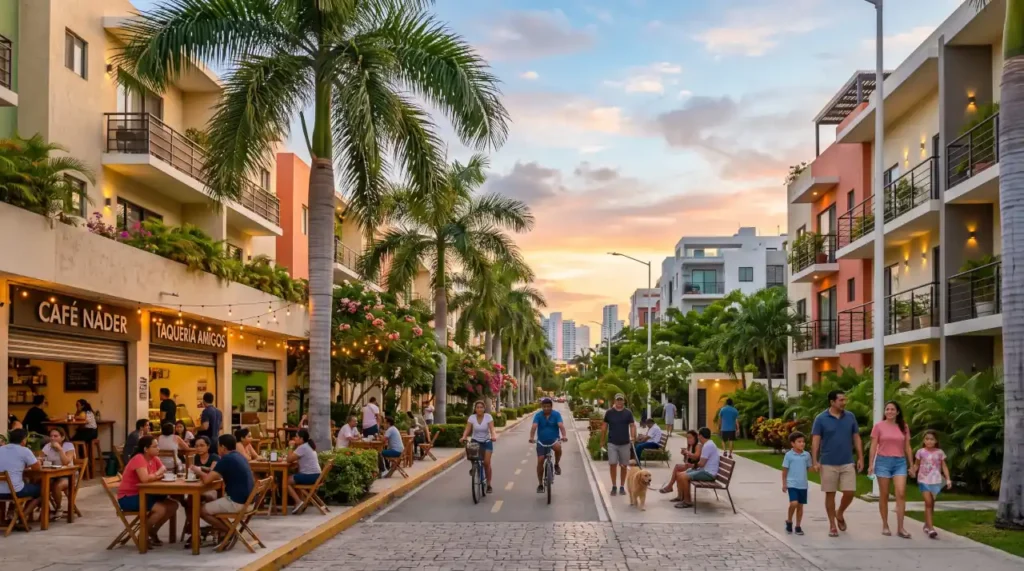
The best way to know for sure is to spend real time here before committing. Book a month in one of the neighborhoods above, live like a resident rather than a tourist, and see how it actually feels once the honeymoon period wears off. That’s the only way to know if the trade-offs, and every place has them, are ones you’re genuinely willing to live with.
Final Thoughts
Cancun in 2026 is a far more livable, layered city than its reputation suggests. Yes, it’s built around tourism, and yes, that means certain areas and certain months will feel crowded and pricier than the rest of Mexico. But strip away the Hotel Zone and you’ll find a city with real neighborhoods, a manageable cost of living, dependable infrastructure, modern healthcare, reliable internet, and expanding residential communities that continue to make Cancun an increasingly attractive place to build a long-term home.
Do your research, visit before you commit, and be honest with yourself about your budget and what kind of daily life you actually want, and Cancun could be one of the most rewarding places in Mexico to build a long-term home.
Like any move abroad, success depends less on choosing the “perfect” city and more on understanding the trade-offs before you arrive. Spending a few weeks exploring neighborhoods, talking with residents, and testing your daily routine will give you a much clearer picture than any guide can.