Exploring Mexico City neighborhoods is one of the most important parts of planning a move to the Mexican capital. Some expats arrive after considering smaller destinations such as Mérida, while others compare it with larger cities like Guadalajara. Many simply want to understand what day-to-day life is really like before deciding whether living in Mexico City is the right fit.
Locally, these neighborhoods are often referred to as colonias, and each has its own personality, amenities, and pace of life. What makes Mexico City different is its scale. With more than 20 million people across the metropolitan area, it is one of the largest urban centers in the world. Yet most expats and digital nomads end up choosing from a relatively small group of neighborhoods that offer walkability, good restaurants, strong community networks, and an easier transition into local life. Choosing the right neighborhood often has a bigger impact on your experience than choosing the city itself.
Quick Answer: Best Mexico City Neighborhoods for Expats
The best neighborhoods in Mexico City for expats are Condesa, Roma, and Polanco for walkability, convenience, and international amenities. Those looking for a quieter lifestyle often prefer Coyoacán, San Ángel, or San Miguel Chapultepec, while Centro Histórico, Zona Rosa, and Narvarte Poniente offer distinct advantages depending on budget, nightlife preferences, and daily routines.
Key Takeaways
- Condesa and Roma are the most popular neighborhoods for first-time expats.
- Polanco offers the most upscale lifestyle and amenities.
- Coyoacán and San Ángel appeal to those seeking history, culture, and a slower pace.
- Narvarte Poniente and San Rafael often provide better value than the city’s best-known expat areas.
- Centro Histórico is ideal for history lovers but can feel intense for long-term living.
- The best neighborhood depends more on your lifestyle than on popularity.
What Are the Best Mexico City Neighborhoods for Expats?
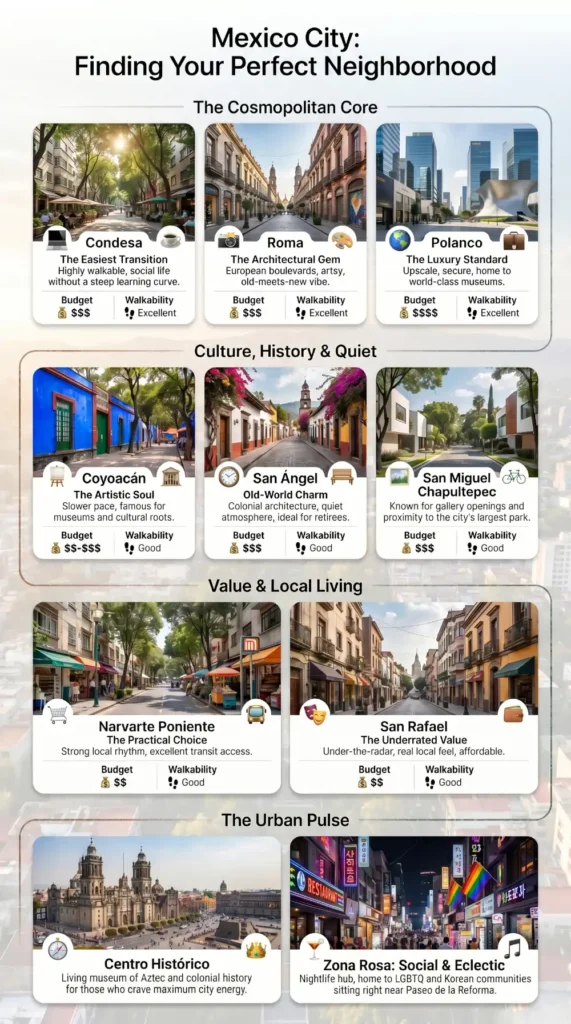
The best Mexico City neighborhoods for expats include:
- Condesa
- Roma
- Polanco
- Coyoacán
- San Ángel
- San Miguel Chapultepec
- Centro Histórico
- Zona Rosa
- San Rafael
- Narvarte Poniente
Mexico City Neighborhoods at a Glance
Mexico City neighborhoods vary dramatically in atmosphere, cost, walkability, and lifestyle. Some areas attract digital nomads and first-time expats, while others appeal to families, professionals, or long-term residents looking for a quieter pace. Understanding the differences between neighborhoods is often the key to choosing the right place to live.
Is Mexico City a Good Choice for Expats and Digital Nomads?
Yes, for a lot of people, it absolutely is. Mexico City works well if you want a big-city lifestyle without giving up food, culture, neighborhood character, and day-to-day convenience. Mexico City’s extensive metro, Metrobús, and ride-sharing options make it possible to live comfortably without owning a car in many of the neighborhoods popular with expats.
The city’s official tourism material groups Roma, Condesa, and Polanco together as the “modern neighborhoods,” and describes them as the city’s cosmopolitan side, with design, Art Deco architecture, luxury, and a pedestrian feel.
The same official city guides also note that Condesa and Roma have long been among the most visited areas for foreign guests. In other words, these are not random trendy picks. They are the neighborhoods where a lot of international residents naturally land because the lifestyle makes sense.
That does not mean the whole city feels the same. Mexico City changes block by block. One area may feel polished and international, while another feels historic, local, or much more residential. That is why the best neighborhood choice depends less on the city itself and more on what kind of daily life you want. Remote workers also benefit from a growing network of coworking spaces, laptop-friendly cafés, and reliable internet throughout much of the city.
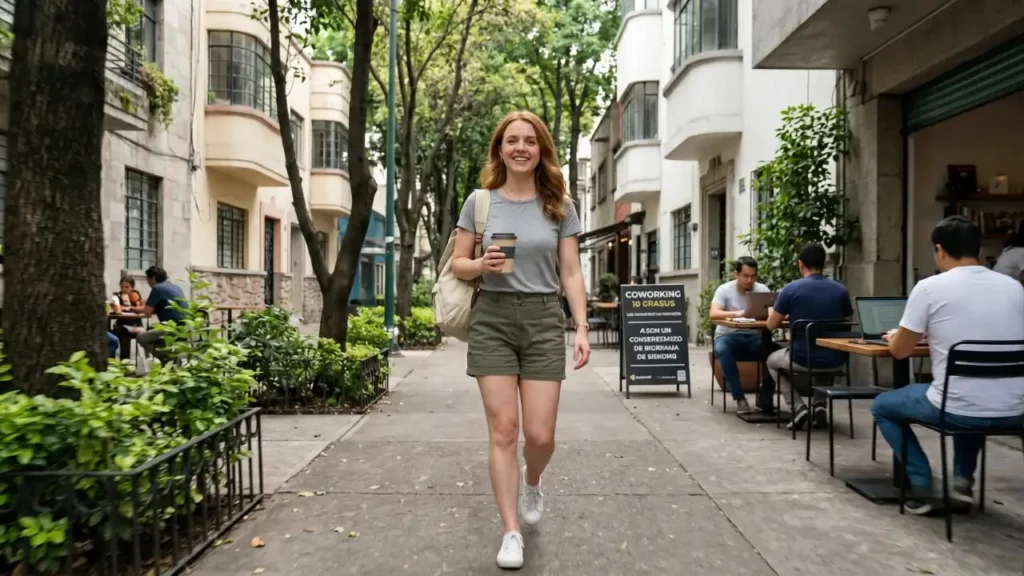
If you care about walkability, cafes, and easy social life, the central neighborhoods are usually the first stop. Access to parks and green space is another important consideration. Neighborhoods such as Condesa, San Miguel Chapultepec, and Coyoacán are especially attractive for residents who enjoy walking, running, or spending time outdoors.
One thing worth knowing before choosing a neighborhood is that costs vary significantly across the city. Polanco is generally among the most expensive areas for housing, while neighborhoods such as Narvarte Poniente and San Rafael often provide better value.
Condesa and Roma typically sit somewhere in the middle, offering a balance between lifestyle and cost for many expats. If you want more old-school character or a quieter local feel, you will probably like the south and the inner residential areas more.
Condesa
Condesa is one of the easiest neighborhoods for expats to understand because it feels pleasant right away. Many newcomers end up choosing Condesa because it offers the shortest learning curve. Daily errands are simple, the streets are highly walkable, and it is easy to build a social routine without speaking fluent Spanish.
The city’s official description highlights Condesa as part of the modern, cosmopolitan side of Mexico City, alongside Roma and Polanco. It is one of those places where people actually walk around, sit outside, meet friends, and build routines without much effort.
If you are new in town and want a neighborhood that feels social without being chaotic, Condesa is usually near the top of the list. The trade-off is that rents can be high, and some streets have become noticeably busier as the neighborhood has grown in popularity.
Best for: First-time expats, remote workers, and digital nomads who want a social and walkable neighborhood.
Budget stay: Condesa is not truly cheap, so “budget” here usually means a smaller apartment, an older building, or a place a few streets away from the most expensive café zones. The upside is that even budget options still put you close to parks, restaurants, and the neighborhood energy people move here for. You may sacrifice space, but you usually do not sacrifice location.
Mid-tier stay: This is the sweet spot for many expats. A good mid-tier place in Condesa gives you the lifestyle most people picture when they think about Mexico City living: tree-lined streets, strong coffee, good food, and easy weekend plans. If you are staying a few months or longer, this is often the most balanced choice.
Luxury stay: Luxury in Condesa is about comfort, design, and convenience. Think polished apartments, boutique-style buildings, and nicer finishes rather than huge square footage. You pay for atmosphere here. If you want a beautiful base and do not mind paying for it, Condesa delivers that very well.
Roma
Roma has a different feel from Condesa even though they are often grouped together. Long-term expats often describe Roma as the neighborhood that balances convenience with personality. It feels established rather than manufactured, which is part of its appeal.
The official Mexico City tourism site describes Colonia Roma as an urban gem built in 1903, with tree-lined streets, beautiful buildings, and a layout inspired by grand European boulevards. That gives Roma a slightly more architectural, artsy, and old-meets-new feeling than Condesa.
It is stylish, but not in a loud way. It feels lived-in, creative, and very easy to enjoy on foot. The downside is that rising popularity has pushed housing costs higher, particularly for renovated apartments and short-term rentals.
Best for: Creative professionals, food lovers, and long-term expats who enjoy a neighborhood with character.
Budget stay: Roma budget options can still be expensive by general standards, but you may find better value than in Condesa if you are willing to trade polish for character. Smaller studios and older apartment buildings can be smart picks here. The neighborhood rewards people who do not need the flashiest building on the block.
Mid-tier stay: Mid-tier in Roma is ideal for long stays. You get access to great restaurants, casual bars, design shops, and a real neighborhood feel. Roma is one of those places where daily life feels interesting without you having to plan it. You can just step outside and the neighborhood does the work for you.
Luxury stay: Luxury in Roma usually means design-forward apartments, restored historic buildings, or boutique residences with strong style. Roma luxury is less about exclusivity than Polanco and more about character. If you care about aesthetics and want a neighborhood with personality, this is a strong fit.
Centro Histórico
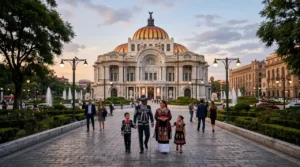
Centro Histórico is the part of Mexico City where the city’s scale really hits you. The official city guide calls Cuauhtémoc, which includes the historic core, the “foundational heart” of the capital and describes it as a living museum, with landmarks like the Templo Mayor, the Zócalo, the Palace of Fine Arts, and the Monument to the Revolution.
According to UNESCO World Heritage Centre, the Historic Centre of Mexico City was built on the remains of the Aztec capital of Tenochtitlan and remains one of the most historically significant urban areas in the Americas. If you want daily life surrounded by history, this is the neighborhood that gives you that feeling most strongly.
Centro Histórico is great if you want to feel connected to the city’s past and do not mind more urban energy. It is busy, practical, and full of movement. It is also not the softest or quietest place to live, so it suits people who like action, transit access, and being in the middle of things. Some expats love it for the architecture and centrality. Others visit often but live elsewhere because the pace feels intense day after day. As with any large city center, it is worth researching individual streets and residential blocks before committing to a long-term rental.
Best for: History lovers, urban explorers, and expats who want to live in the heart of the city.
Budget stay: This is one of the better areas if you want central access without automatically aiming for a high-end neighborhood. Budget stays can be surprisingly useful here, especially for shorter stays or for people who value transit and location over lifestyle polish.
Mid-tier stay: Mid-tier works well if you want a stronger balance of comfort and convenience. At this level, you can still be close to the action while avoiding some of the rough edges that come with the most tourist-heavy streets.
Luxury stay: Luxury here is about premium location, high ceilings, character buildings, and easy access to the city’s main attractions. You are paying to live inside the story of the city. That is the real appeal.
San Miguel Chapultepec
San Miguel Chapultepec is one of those neighborhoods people discover after they have already visited the obvious expat favorites. The official city guide describes it as important for several reasons, especially its art scene, its central location, and its proximity to Condesa and Chapultepec Park. It also calls the neighborhood chic, pedestrian-friendly, and a place where gallery openings and cultural evenings are well rewarded. That makes it a strong choice for people who want something central but a little calmer and more refined than the busiest expat zones.
This is a good neighborhood if you like walking, art, and a slightly more low-key daily rhythm. It has the kind of atmosphere that feels adult in the best way. Less noise, more texture. Less “look at me,” more “I actually live here.” For many expats, that is exactly what they want after a few months in the city.
Best for: Professionals, creatives, and long-term residents looking for a quieter central neighborhood.
Polanco
Polanco is the neighborhood people think of when they want the polished, high-end version of Mexico City. The city’s official tourism material places Polanco in the modern neighborhood group with Roma and Condesa, but with a stronger luxury angle.
The city also highlights Polanco alongside Masaryk Avenue, the Soumaya Museum, and the Jumex Museum, which gives you a good sense of the area’s tone. Polanco is central, upscale, and very comfortable if your budget allows for it.
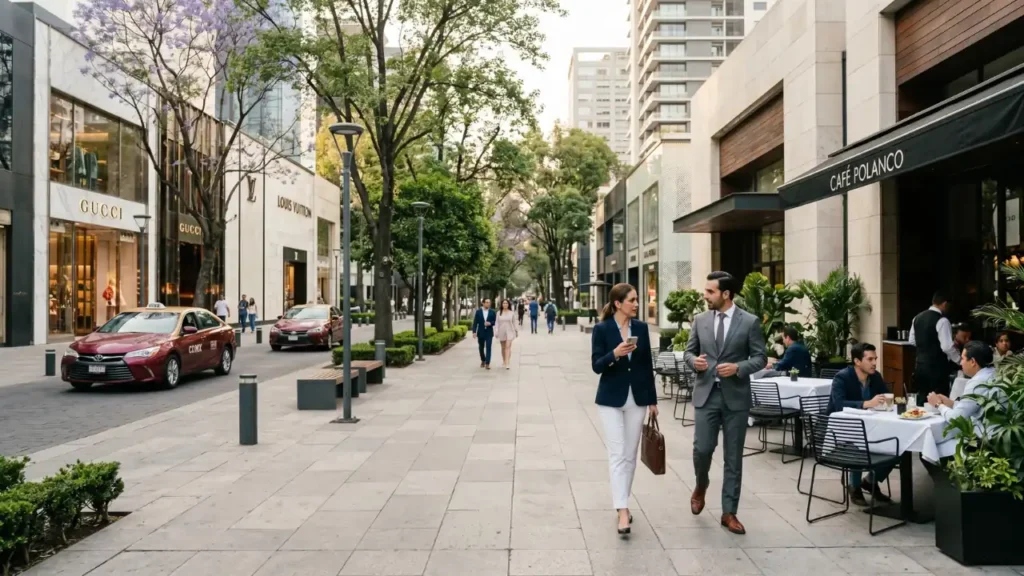
Many expats also appreciate Polanco for its reputation as one of the city’s more secure and well-maintained residential areas. Some expats also find Polanco less culturally immersive than other neighborhoods because of its international atmosphere and luxury focus.
Best for: Professionals, executives, families, and expats prioritizing comfort and convenience.
Budget stay: Budget living in Polanco is hard to do well because the neighborhood skews expensive. If you are on a tighter budget, you are usually looking at smaller spaces, older apartments, or very careful compromises on location and size. Still, some people choose it because they want to be in the middle of the upscale side of the city.
Mid-tier stay: Mid-tier Polanco can work if your budget stretches and you value convenience, security, and polished surroundings. It is a strong neighborhood for people who want a clean daily routine, easy access to restaurants, and a more international feel.
Luxury stay: This is where Polanco shines brightest. If you want a premium apartment, top restaurants, designer shopping, and a neighborhood that feels effortlessly high-end, Polanco is the place. It suits executives, families with bigger budgets, and expats who want comfort first.
Zona Rosa
Zona Rosa is one of the city’s most social and international-feeling neighborhoods. The official Mexico City tourism site says it has long been the center of the city’s LGBTQ community, the Korean community, and a major hub for antiques, and notes that it sits in the east side of Juárez near Paseo de la Reforma. That mix makes Zona Rosa feel busy, energetic, and a little more eclectic than the polished calm of Polanco or the leafy mood of Condesa.
This is a smart pick if you want nightlife, easy access to central areas, and a neighborhood that feels plugged into the city’s international side. It is not the most peaceful place to live, but it can be a lot of fun if you like restaurants, bars, and constant activity. For some people, Zona Rosa is a great base. For others, it is the neighborhood they visit on purpose and live just far enough away from to sleep better.
Best for: Nightlife lovers, social expats, and people who enjoy an active urban environment.
Coyoacán
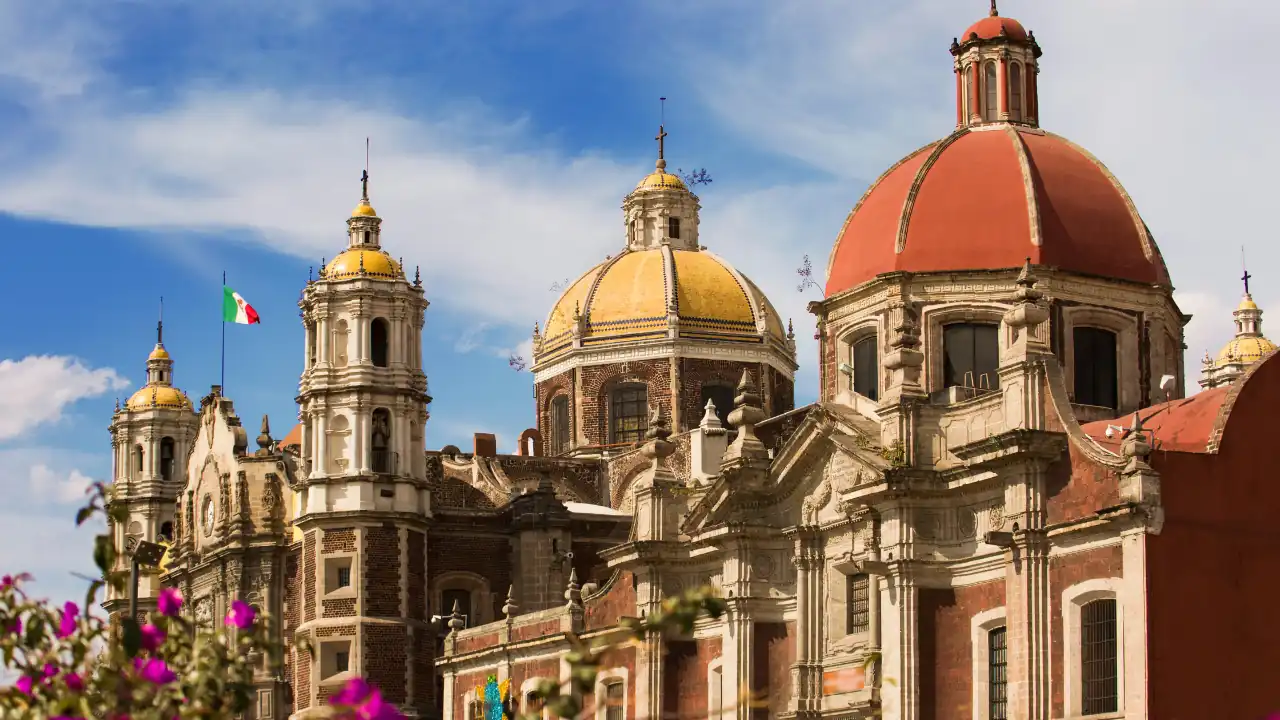
Coyoacán has a completely different mood from the central expat corridor. The city’s official guide says Coyoacán forged its identity as a key city before the rise of the Mexica and was officially founded in 1521 as the first New Spanish city council.
Another official city page describes the Coyoacán area as a global tourist magnet, known for Ciudad Universitaria, the Frida Kahlo Museum, the Anahuacalli Museum, and the Leon Trotsky Museum. In practical terms, that means Coyoacán blends deep history, strong cultural identity, and a slower pace that many people find easy to love. Many residents choose Coyoacán specifically because it feels separate from the pace of central Mexico City while still remaining connected to it.
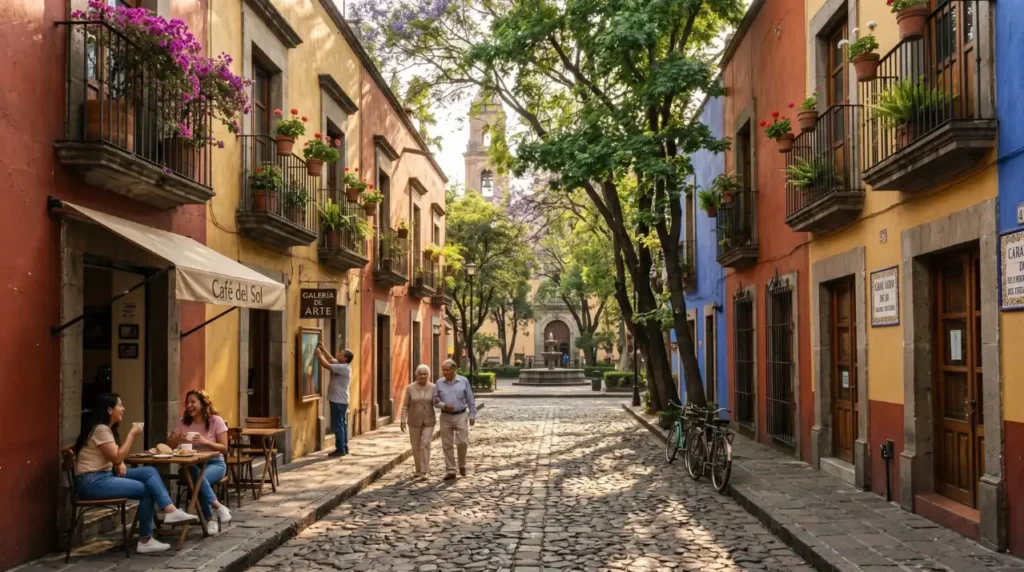
Coyoacán feels more like a neighborhood where you settle into routines than one where you race through life. It is especially good for people who want a more relaxed, family-friendly, and artistic environment. Families often gravitate toward Coyoacán because of its quieter streets, cultural attractions, and stronger neighborhood feel compared with some of the busier central districts.
The streets feel warmer and more human than some of the denser central zones. If your idea of a good neighborhood includes plazas, museums, and weekend wandering, Coyoacán deserves a serious look.
Best for: Families, culture lovers, artists, and expats seeking a slower pace.
San Rafael
San Rafael is one of the most underrated neighborhoods on this list. The official city guide calls it an “in-between” neighborhood between Santa Maria La Ribera and Cuauhtémoc, and says it is another great walking neighborhood. That pretty much sums it up: it is central enough to be useful, but not so famous that it feels overrun. It has history, character, and a practical side that appeals to people who care about daily life more than neighborhood bragging rights.
San Rafael is a solid option if you want value, a real local feeling, and easier access to central Mexico City without paying the premium of Condesa, Roma, or Polanco. It is especially appealing to expats who like neighborhoods that still feel a little under the radar. In a city this large, that can be a big advantage.
Best for: Value-focused expats, long-term residents, and people who prefer a local atmosphere.
San Angel
San Ángel is one of the prettiest neighborhoods in Mexico City, and it has the kind of old-world charm people remember. The city’s official guide says San Ángel has long been a favorite for visitors, with tree-lined streets that spread out from former church atriums, a Saturday art market, and a striking mix of colonial architecture and cobblestone streets. It is the kind of neighborhood that feels slower, greener, and more graceful than the central expat districts.
If you want a neighborhood with personality and history, San Ángel is easy to recommend. It suits people who enjoy art, heritage buildings, and a calmer pace. It is not the most obvious choice for every expat, mainly because it sits farther from the most common social and work hubs. But if the south of the city fits your lifestyle, San Ángel can be one of the most rewarding places to live.
Best for: History lovers, retirees, families, and anyone seeking charm and tranquility.
Narvarte Poniente
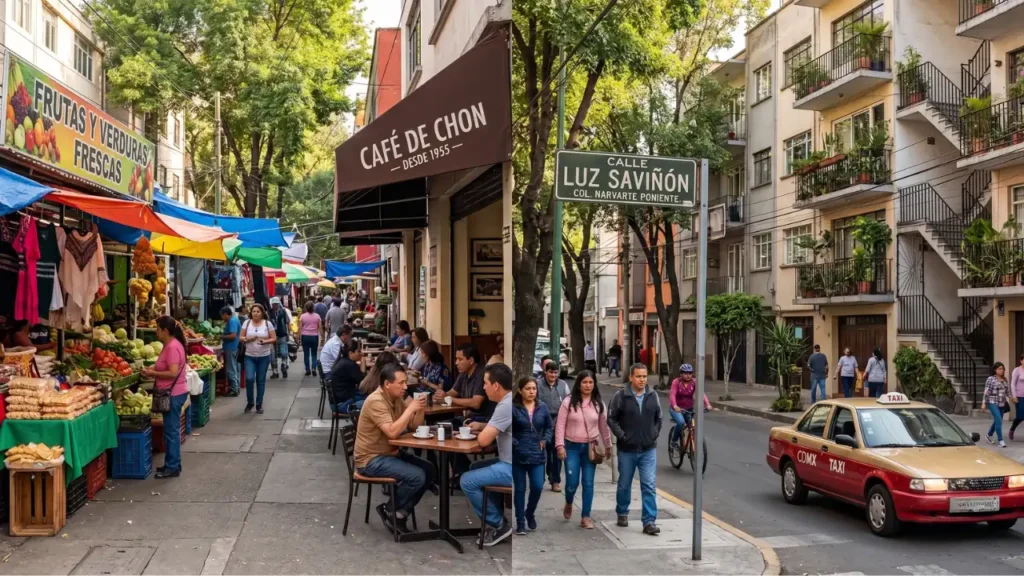
Narvarte Poniente is a very practical choice, and that matters more than people often admit. The city’s official pages show Narvarte Poniente as a neighborhood with strong market life, metro access, and a solid everyday rhythm. It is not trying to be the coolest neighborhood in town. That is exactly why many people like it. It feels residential, lived-in, and useful, with a more local pace than the headline neighborhoods.
This is a strong option if you want a better value than the most famous expat zones and do not need your neighborhood to look like a lifestyle magazine. Narvarte Poniente works well for people who want good transit, everyday convenience, and a calmer home base. It is one of those areas that makes more sense the longer you stay in the city.
Best for: Long-term expats, remote workers, and residents prioritizing convenience and value.
The best Mexico City neighborhoods vary significantly in cost, atmosphere, walkability, and lifestyle. This quick comparison can help you identify which area may be the best fit for your needs.
| Neighborhood | Best For | Budget Level | Walkability | Family Friendly |
| Condesa | Digital nomads | $$$ | Excellent | Good |
| Roma | Creative professionals | $$$ | Excellent | Good |
| Polanco | Luxury lifestyle | $$$$ | Excellent | Excellent |
| Coyoacán | Families & culture lovers | $$-$$$ | Good | Excellent |
| San Ángel | History & charm | $$$ | Good | Very Good |
| Centro Histórico | History lovers | $$ | Very Good | Fair |
| Zona Rosa | Nightlife | $$-$$$ | Very Good | Fair |
| San Rafael | Value seekers | $$ | Good | Good |
| Narvarte Poniente | Long-term residents | $$ | Good | Very Good |
| San Miguel Chapultepec | Quiet central living | $$$ | Very Good | Very Good |
While comparison tables are useful, your ideal neighborhood ultimately depends on how you plan to spend your time in Mexico City. The next section can help you narrow the options based on lifestyle and priorities.
Which Neighborhood Should You Choose?
Choosing among Mexico City neighborhoods is largely a matter of lifestyle, budget, and daily routine. While some areas attract first-time expats and digital nomads, others are better suited to families, professionals, or long-term residents.
- Choose Condesa if you want the easiest transition into Mexico City life.
- Choose Roma if you enjoy architecture, cafes, and creative communities.
- Choose Polanco if comfort and premium amenities matter most.
- Choose Coyoacán if you want a slower, more cultural lifestyle.
- Choose San Ángel if historic charm is a priority.
- Choose Centro Histórico if you want to live among the city’s most important landmarks.
- Choose Zona Rosa if nightlife and social activity are major priorities.
- Choose Narvarte Poniente or San Rafael if value and local living matter more than trendiness.
How to Choose the Right Neighborhood in Mexico City
Before signing a lease, spend at least a few days exploring the neighborhoods that interest you most. If you’re still deciding when to relocate, understanding the best time to visit Mexico can also help you experience different weather, crowds, and neighborhood atmospheres before committing to a move. Mexico City changes dramatically from one area to the next. A neighborhood that feels perfect during the day may feel very different at night, and a place that works well for a short trip may not suit everyday life.
Focus on your actual routine rather than the neighborhood’s reputation. Think about where you will work, how often you use public transportation, whether walkability matters to you, and how important nightlife, green space, or family-friendly amenities are. The best neighborhood is rarely the most famous one. It is the one that makes daily life easier.
The Best Neighborhoods in Mexico City
If I had to narrow this list down for most expats and digital nomads, I would start with Condesa, Roma, and Polanco because they are the easiest to live in, the easiest to explain to newcomers, and the most naturally aligned with international lifestyles. That is also how the city itself frames the modern neighborhood core, with design, luxury, pedestrian life, and cosmopolitan energy at the center of the appeal.
Also Read: 7 Central Mexico Cities Expats Can’t Stop Recommending
After that, I would put Coyoacán, San Ángel, and San Miguel Chapultepec very high on the list for people who want more charm, history, and atmosphere. These areas feel less like a default expat answer and more like a thoughtful long-term choice. Then I would add Centro Histórico for people who want maximum city energy and historic depth, Zona Rosa for nightlife and international buzz, San Rafael for value and walkability, and Narvarte Poniente for a more everyday residential life.
Many expats researching the best areas in Mexico City quickly narrow their search to a handful of neighborhoods that combine convenience, safety, walkability, and access to amenities.
| Neighborhood | Biggest Advantage | Biggest Drawback |
| Condesa | Walkability | Higher rents |
| Roma | Character | Rising housing costs |
| Polanco | Luxury amenities | Expensive |
| Coyoacán | Culture | Longer commute |
| Centro Histórico | History | Busier environment |
| Zona Rosa | Nightlife | Noise |
| San Rafael | Value | Fewer expat services |
| Narvarte Poniente | Practicality | Less tourist infrastructure |
So the real answer is this. The best neighborhood is not the one everyone posts about. It is the one that fits your routine. If you work remotely and want a social life, Condesa or Roma are easy wins. If you want polish and convenience, Polanco makes sense. If you want history and charm, Coyoacán or San Ángel may fit better. If you want value and a more local daily rhythm, Narvarte Poniente and San Rafael deserve a look.
The Bottom Line
Mexico City neighborhoods offer one of the widest ranges of living experiences in Latin America, giving expats and remote workers plenty of options regardless of their budget or lifestyle goals. If you decide that the capital feels larger or busier than you’d like, there are several Central Mexico cities that offer a slower pace of life while still providing excellent amenities for expats. From the leafy streets of Condesa and Roma to the historic plazas of Coyoacán and the upscale avenues of Polanco, there is a neighborhood suited to almost every lifestyle, budget, and stage of expat life.
If you want the easiest first landing, start with Condesa or Roma. If you want more comfort and a premium feel, look at Polanco. If you want history, go to Centro Histórico or Coyoacán. If you want a quieter, more thoughtful middle ground, San Miguel Chapultepec, San Rafael, and Narvarte Poniente are worth a close look. Mexico City gives you a lot of choices. The trick is picking the one that matches how you actually live, not how you imagine city life should look. If you’re still weighing up different destinations in Mexico, our guide to living in Cancun explores how life on the Caribbean coast compares with living in the country’s largest city.