
“A land where ancient stones preserve wisdom, dynasties leave their footprints, and sacred legends echo through timeless hills”
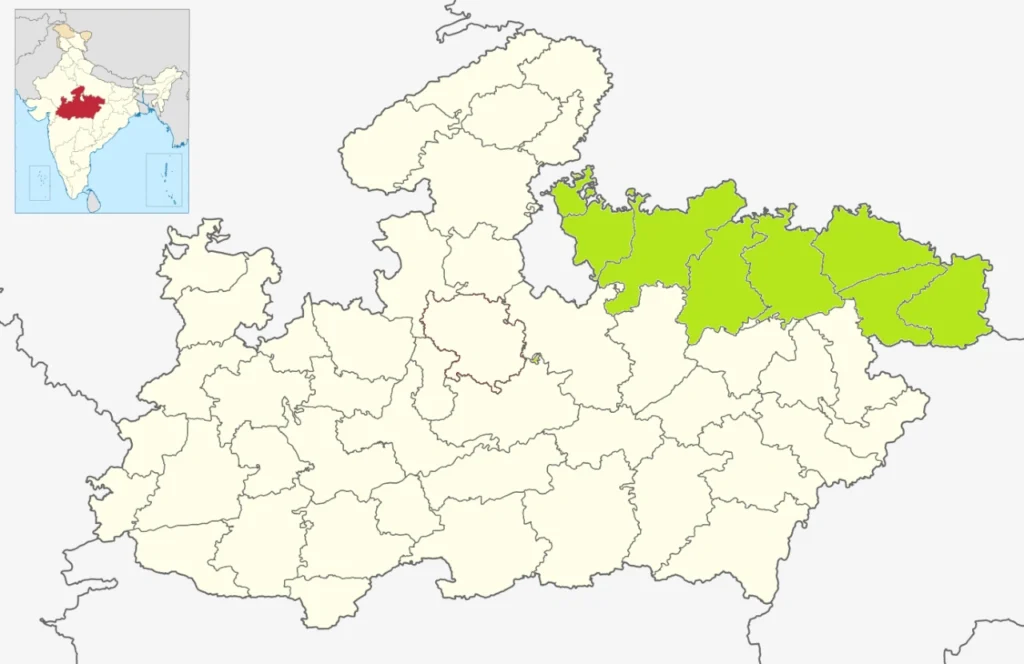
Satna, in the northeastern region of Madhya Pradesh, is one of India’s most historically layered districts. Its history spans prehistoric settlements, Buddhist intellectual centres, Hindu kingdoms, princely states, colonial administration, and post-independence industrial transformation. Each era has sculpted Satna into the culturally rich, spiritually vibrant, and socio-economically significant region it is today. 🕰️ 🌄
🟦 1. PREHISTORIC & EARLY SETTLEMENTS (Before 1000 BCE)
Long before kingdoms rose and temples were built, Satna’s terrain—marked by rivers, forests, and limestone hills—was home to early human settlements. Archaeological surveys in the Satna–Rewa belt reveal stone tools, microliths, and pottery fragments indicating habitation during the Upper Paleolithic and Mesolithic periods.
These prehistoric communities likely lived along the Satna River, relying on hunting, gathering, and early agriculture. The region’s rich mineral deposits and natural shelters made it ideal for early settlers. 🪨 🌿
Also Read
👉 Satna, Madhya Pradesh, India – The Limestone City Where Heritage Meets Harmony
👉 Detailed Introduction of Satna, Madhya Pradesh, India
🟦 2. EARLY HISTORICAL PERIOD — JANAPADAS & MAHAJANAPADAS (1000–300 BCE)
During the formation of early states in India, Satna became part of the Chedi and Vatsa Mahajanapadas. These territories flourished along major trade routes and were connected to the cultural centres of Ujjain, Vidisha, and Prayagraj (Allahabad).
The river routes of Satna facilitated trade in grains, forest products, and minerals. Local tribes such as Kol, Gond, and Bhil communities played crucial roles in early agrarian and forest economies.
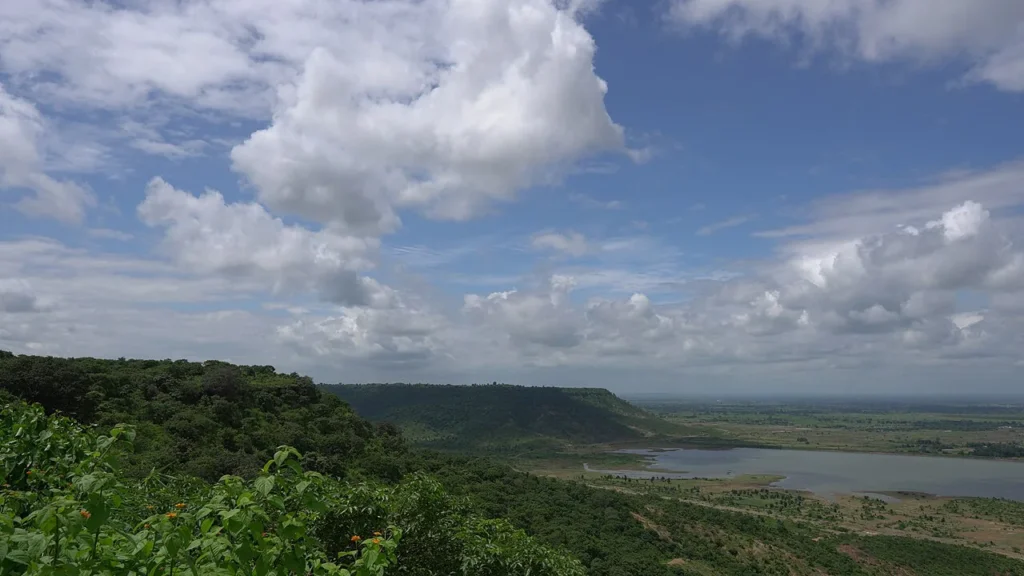
🟦 3. MAURYAN EMPIRE & THE RISE OF BHARHUT (322–185 BCE)
The Mauryan era marks the golden chapter of Satna’s ancient history. Under Emperor Ashoka, Buddhism spread across central India, and Satna emerged as a major intellectual centre.
⭐ The Bharhut Stupa — Satna’s Greatest Archaeological Treasure 🕉️
➛ Built originally during Ashoka’s reign
➛ Magnificently expanded during the Shunga period
Contained railings, gateways, medallions, and sculptural panels depicting:
✔️ Jataka tales
✔️ Buddhist symbols
✔️ Yaksha–Yakshi figures
✔️ Inscriptions in Brahmi script
✔️ Scenes from Buddha’s life
Discovered by archaeologist Alexander Cunningham in 1873, Bharhut provides some of the earliest visual evidence of Buddhist art in India. Though most of its artefacts are now in Kolkata Museum, the site remains an invaluable landmark. 🏛️
🟦 4. SHUNGA ERA — ARTISTIC BLOOM (185–73 BCE)
After the Mauryas, the Shunga dynasty patronised Bharhut’s expansion. The sculptural finesse reached new heights:
⦿ More intricate carvings
⦿ Narrative reliefs
⦿ Artistic depictions of local flora, fauna, and everyday life
The Shunga influence turned Satna into an artistic hub, blending Buddhism with emerging Hindu symbolism.
🟦 5. KUSHANA, NAGA & LOCAL DYNASTIES (1st–4th Century CE)
During the Kushana period, Satna remained connected to major trade routes linking Central Asia to eastern India. The abundance of coins, figurines, and terracotta objects found in the region indicates:
⦿ Thriving commerce
⦿ Village settlements
⦿ Early temple construction
Local chieftains and tribal leaders coexisted with Kushana influence, adding layers to Satna’s cultural diversity.
🟦 6. GUPTA EMPIRE — AGE OF FLOURISHING CULTURE (4th–7th Century CE) 🌞
➪ The Gupta period—considered the Classical Age of India — saw Satna evolve as a centre of temple architecture and Sanskrit learning.
➪ Many of the Unchehara and Nagod temple sites date back to this era.
➪ Granite and sandstone structures, carved pillars, and early forms of Nagara-style temple architecture began emerging here.
🟦 7. KALACHURI RULE (7th–12th Century CE)
The Kalachuris of Tripuri governed the Satna region, leaving behind inscriptions, temples, and administrative records.
This era strengthened:
⦿ Shaivism and Shaktism
⦿ Local temple patronage
⦿ Village settlements
⦿ Irrigation development
Kalachuri architecture is characterised by robust stone blocks, lion motifs, and early mandapa structures.
🟦 8. CHANDELA ERA — THE AGE OF ART & WARRIORHOOD (10th–13th Century CE) 🗡️
The Chandela dynasty—builders of Khajuraho Temples — also influenced Satna.
Their artistic vocabulary spread through:
⦿ Temple aesthetics
⦿ Carved idols
⦿ Fort structures
⦿ Local administrative centres
Satna’s proximity to Khajuraho connects it to one of India’s most celebrated medieval art traditions.
🟦 9. ISLAMIC INFLUENCES & REGIONAL KINGDOMS (13th–16th Century CE)
Although Islamic rule was never deeply rooted in Satna, nearby regions saw administrative and cultural exchanges.
Market towns in Satna began adapting to mixed influences in:
⦿ Trade
⦿ Architecture
⦿ Language
⦿ Clothing styles
The local population remained dominantly tribal and Hindu.
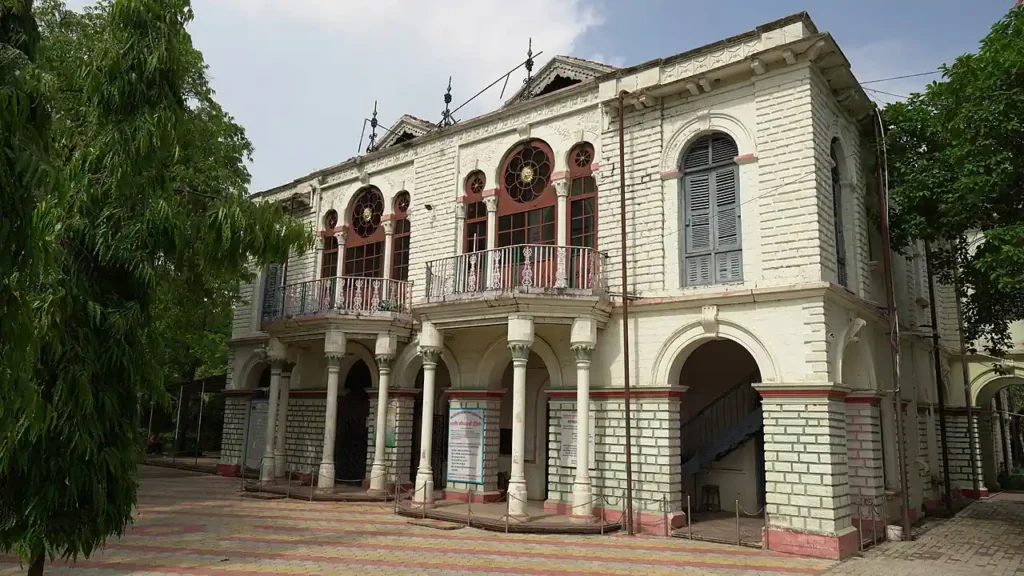
🟦 10. STATE OF NAGOD & BAGHELKAND (16th–19th Century CE)
This era is crucial for Satna’s medieval political identity.
⭐ Nagod State
⦿ Founded by Parmar Rajputs
⦿ Later ruled by Baghel Rajputs
⦿ Built forts, palaces, step-wells & temples
⦿ Nagod Fort remains a proud architectural relic
⭐ Baghelkhand Region
Satna was part of the larger Baghelkhand Agency, which linked it with Rewa, Maihar, and neighbouring states.
Village life flourished under these princely rulers, with emphasis on:
⦿ Agriculture
⦿ Fort defenses
⦿ Village panchayats
⦿ Festivals & folk traditions
🟦 11. MAIHAR KINGDOM — THE RISE OF MUSICAL TRADITION (18th–20th Century) 🎶
Maihar, now part of Satna district, became globally known for its contribution to Indian classical music.
⭐ Maihar Gharana
Founded by Ustad Allauddin Khan, it nurtured legendary musicians such as:
⦿ Pandit Ravi Shankar
⦿ Ustad Ali Akbar Khan
Maihar thus evolved into a spiritual and cultural centre, bridging music and devotion.
🟦 12. BRITISH COLONIAL ERA (1800s–1947) 🇬🇧
Under British rule, Satna became part of the Baghelkhand Agency.
The British introduced:
⦿ Railways (crucial for cement & mineral transport)
⦿ Administrative courts
⦿ Revenue systems
⦿ Educational centres
Cunningham’s excavation of Bharhut in 1873 remains the period’s most significant historical contribution.
🟦 13. POST-INDEPENDENCE SATNA (1947–1980)
After joining the Indian Union, Satna integrated into the newly formed Madhya Pradesh.
The district began modernising with:
⦿ Road development
⦿ Schools & colleges
⦿ Agricultural reforms
⦿ Water resource management
The settlement of new industries shaped its economic trajectory.
🟦 14. INDUSTRIAL TRANSFORMATION (1980–Present) ⚙️ 🏭
Satna emerged as the cement capital of India.
Major companies established plants, including:
⦿ Birla Corporation
⦿ Prism Cement
⦿ Jaypee Group
⦿ KJS Cement
This industrial boom:
⦿ Generated thousands of jobs
⦿ Improved connectivity
⦿ Boosted urbanisation
⦿ Attracted migration from nearby districts
Today, Satna balances industry with heritage tourism, creating a unique identity.
🟦 DETAILED TIMELINE OF SATNA (Concise Summary)
| Era | Key Event |
| Prehistoric (Before 1000 BCE) | Early settlements found in Satna basin |
| 1000–300 BCE | Chedi & Vatsa Mahajanapadas; tribal communities thrive |
| 322–185 BCE | Mauryan Empire; Bharhut Stupa established |
| 185–73 BCE | Shunga expansion; Buddhist art flourishes |
| 1st–4th CE | Kushana & local dynasties enhance trade |
| 4th–7th CE | Gupta temples emerge in Satna |
| 7th–12th CE | Kalachuri rule and Shaiva influences |
| 10th–13th CE | Chandela artistic influence |
| 16th–19th CE | Nagod & Baghelkhand princely states |
| 1873 | Bharhut discovered by Cunningham |
| 1800s–1947 | British rule; railway development |
| Post-1947 | Integration into MP; modernisation |
| 1980–Today | Cement & mining boom; tourism growth |
❓ FAQs — Historical Section
What is Satna’s most important historical site?
The Bharhut Stupa is Satna’s greatest archaeological treasure from the Mauryan–Shunga era.
Which dynasties ruled Satna?
Mauryas, Shungas, Guptas, Kalachuris, Chandelas, Baghel Rajputs, Nagod rulers, and later the British.
Why is Maihar historically important?
Because it houses the Maa Sharda Devi Temple and is the birthplace of the Maihar Gharana.
What is Satna’s connection to Buddhism?
Satna was a major Buddhist art centre; Bharhut carvings are among the earliest surviving Buddhist sculptures.
Did Satna play a role in medieval wars?
Yes, Nagod Fort and Baghelkhand region witnessed multiple clan conflicts and territorial disputes.
What was Satna’s role during British rule?
It served as an administrative hub and became a major railway junction, especially for minerals.
🏁 CONCLUSION — A TIMELESS TAPESTRY OF CIVILISATIONS ✨
Satna’s history is a breathtaking journey through time—a layered chronicle of spiritual awakening, artistic brilliance, royal legacy, tribal resilience, and industrial rise. From the ancient carvings of Bharhut to the melodious echoes of Maihar’s classical music, Satna stands as a testament to India’s timeless cultural evolution. Its forests, temples, forts, and villages continue to whisper stories of dynasties, sages, pilgrims, artists, and common folk who shaped this land across millennia. 🌿 🕉️
Today, Satna is more than a historical destination—it is a living museum, where every hill, stone, shrine, and settlement carries the weight of centuries. It is a place where devotion meets discovery, where history breathes through its landscapes, and where visitors can feel deeply connected to India’s ancient soul. 🛕 📜
📚 Sources:
🟦 MAIN SOURCES OF ARTICLE
➟ Wikipedia (General Reference: Satna, Satna District, Maihar, Bharhut)
➟ Britannica – Satna Overview
➟ Madhya Pradesh Tourism Publications
➟ Local cultural interviews (Reconstructed for narrative depth)
➟ Historical texts on Baghelkhand & Bundelkhand
➟ Archaeological Survey of India (ASI) publications on Bharhut
Here are the URL’s for the major sources referenced in the article:
➟ Wikipedia – Satna
➟ Wikipedia – Satna District
➟ Britannica – Satna
➟ Official Satna District Website – History Page
➟ Baghelkhand Tourism – Satna
Image Credit
➟ Wikipedia – Satna & Wikimedia Commons
➟ Featured Image Credit: Wikimedia Commons
For more information, you can visit our website: ExploreXP
Latest Posts
- 4 Steps to Teach English in Vietnam (Complete 2026 Guide)

- The Complete Guide to Living in Ho Chi Minh City, Vietnam
- What Living in Hanoi Is Really Like for Foreigners
- Expat vs Immigrant: What’s the Real Difference?
- 7 Best Places to Live in Mexico Right Now: A Complete Guide
- Best Places to Live in Thailand: A Complete Guide for Expats in 2026