Let’s start exploring the Architectural Marvels in Skardu, Gilgit–Baltistan, Pakistan with Granular Details
🏯 Architectural Marvels in Skardu, Gilgit–Baltistan, Pakistan
🕌 A Living Canvas of Culture and Craftsmanship
Skardu, the crown jewel of Gilgit–Baltistan, is not just known for its natural beauty — it’s a living museum of architecture, where each structure tells a story of resilience, faith, and artistry 🏔️ ✨. From ancient fortresses that once guarded kings and traders to serene monasteries and intricately built Balti homes, Skardu’s architecture mirrors the fusion of Tibetan, Persian, and Islamic influences. The city’s architectural landscape beautifully reflects the passage of time — transitioning from Tibetan-Buddhist design elements to Islamic-Balti craftsmanship, resulting in a distinct regional aesthetic that is both ancient and timeless.
🏰 Kharpocho Fort – The Sentinel Above Skardu
Perched majestically on a rugged cliff overlooking the Indus River, the Kharpocho Fort (meaning “King of Forts”) is perhaps the most iconic architectural landmark of Skardu. Built in the 16th century by Ali Sher Khan Anchan, the fort served as a military stronghold and royal residence for the Maqpon rulers. Its strategic location allowed it to guard the Skardu Valley from invading forces, while its elevated position offered panoramic views of the entire town 🌄.
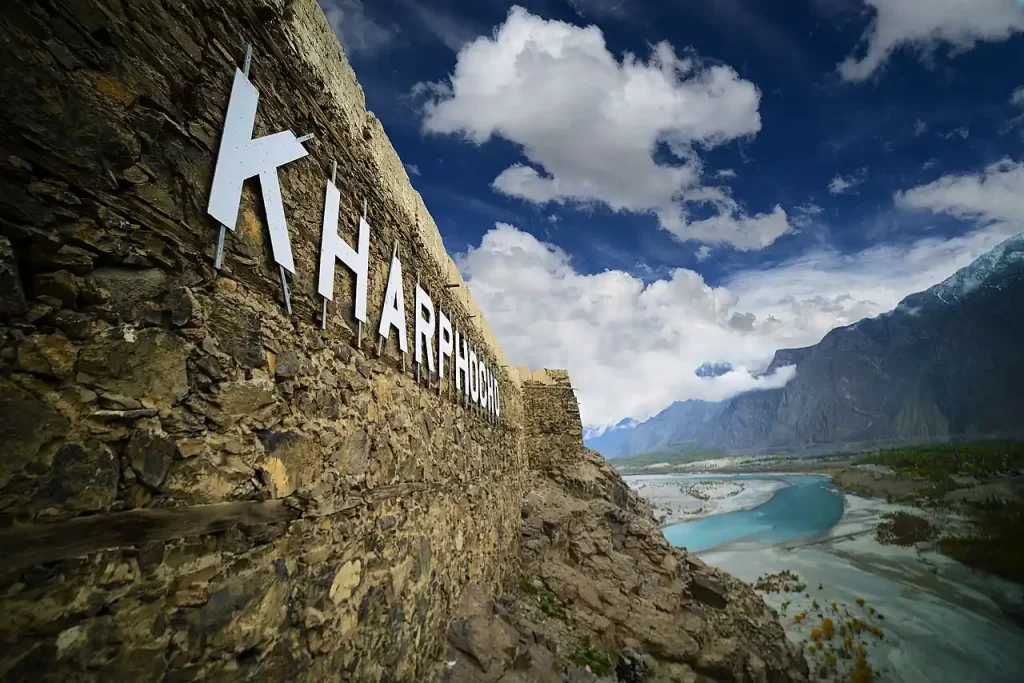
Constructed primarily from stone, timber, and mud mortar, the fort showcases remarkable ingenuity in adapting to mountainous terrain. The walls, rising in stepped layers, blend naturally with the rocky landscape — a technique known as “organic fortification”. Inside, remnants of storage rooms, watchtowers, and prayer spaces reveal the lifestyle of ancient Balti royalty. The view from Kharpocho, especially at sunrise and sunset 🌅, captures the essence of Skardu — raw, spiritual, and majestic.
Also Read
Skardu, Gilgit-Baltistan, Pakistan – “Gateway to the Roof of the World”
Detailed Historical Facts, and Timeline of Skardu, Gilgit–Baltistan, Pakistan
🏛️ Shigar Fort – The “Palace on the Rock”
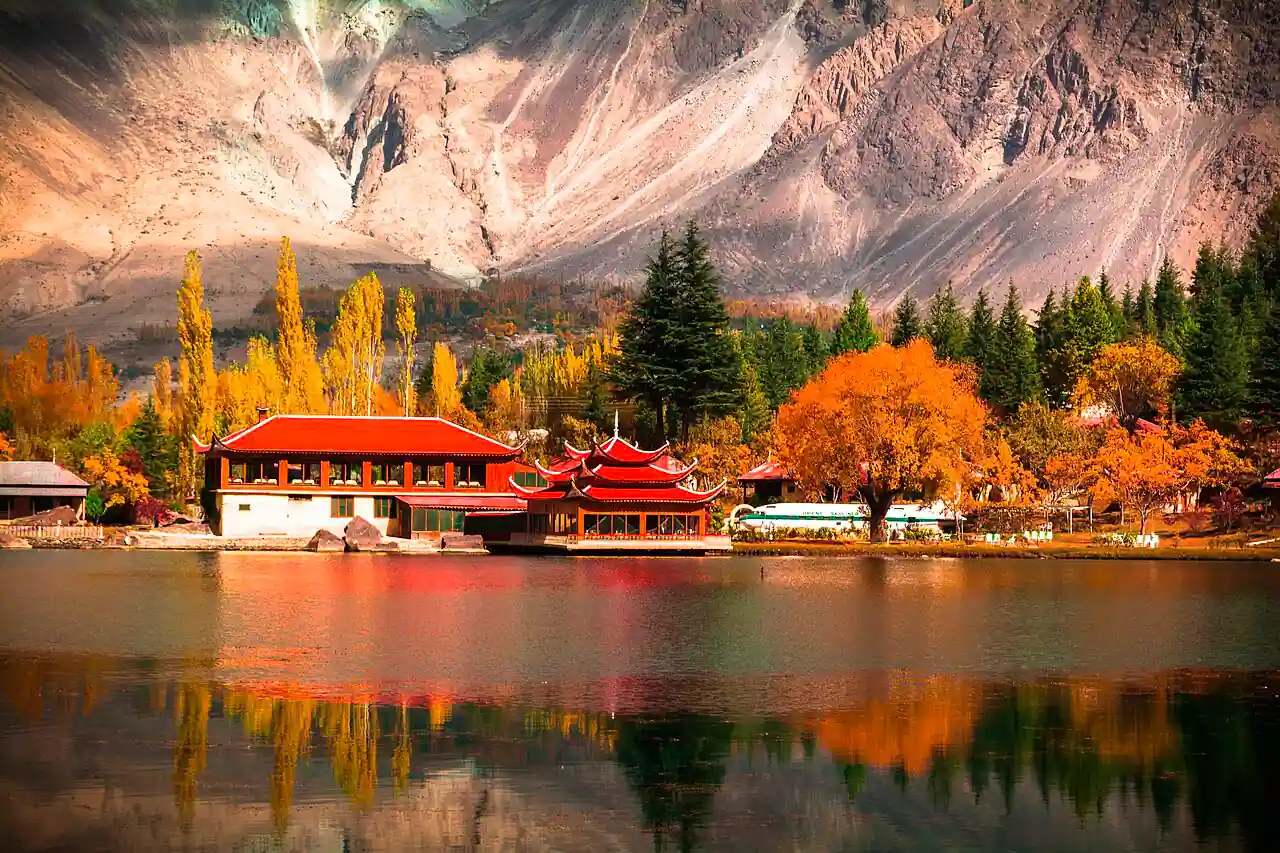
About 30 kilometres from Skardu lies the Shigar Fort, locally called “Fong-Khar”, meaning “Palace on the Rock”. Built in the 17th century by Raja Hassan Khan of the Amacha Dynasty, this architectural marvel stands as a symbol of Balti heritage, royal elegance, and structural genius 🏯. The fort seamlessly integrates Tibetan and Kashmiri architectural elements with local Balti craftsmanship — reflecting cultural crosscurrents that shaped the region.
What sets Shigar Fort apart is its adaptive restoration by the Aga Khan Cultural Service Pakistan (AKCSP). Today, it functions as a heritage hotel and museum, preserving its ancient façade while allowing visitors to experience royal life. The fort features wood-carved balconies, lattice windows, sloped wooden roofs, and a stone foundation designed to resist seismic shocks. Its inner courtyards, open terraces, and ceremonial halls are a tribute to sustainable architecture and aesthetic harmony 🌿.
🏯 Khaplu Palace – The Last Royal Residence
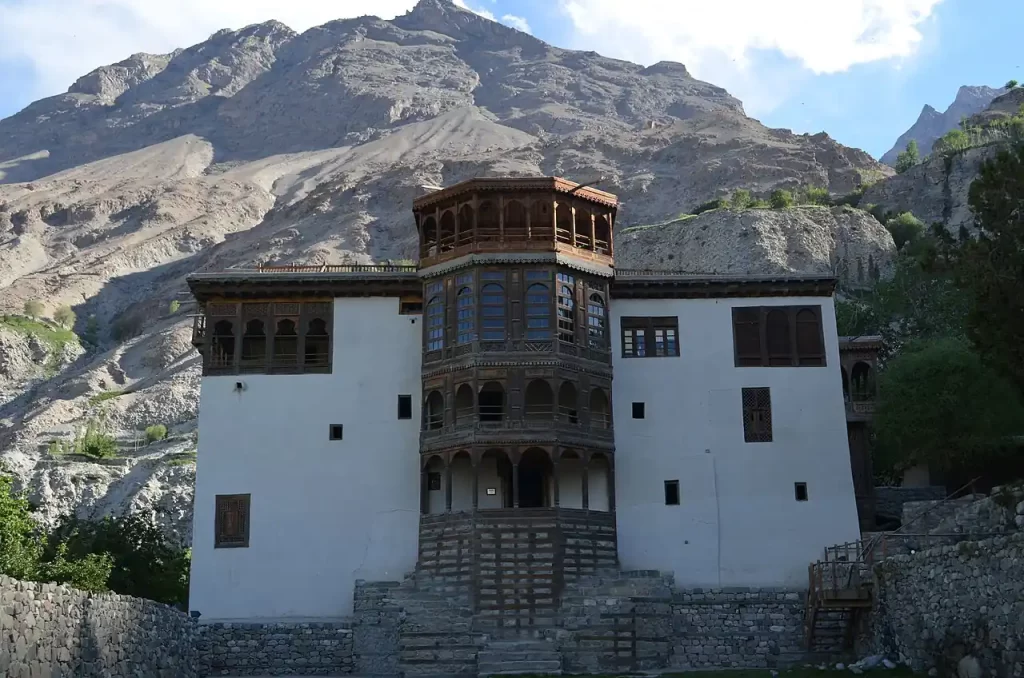
Further east of Skardu lies Khaplu Palace, also known as “Yabgo Khar”. Built around 1840 by Raja Daulat Ali Khan, this grand palace represents the culmination of Balti architectural mastery blended with Tibetan, Kashmiri, and Central Asian influences. The palace is constructed with local stone, timber, and mud plaster, incorporating ornately carved wooden beams and multi-tiered balconies that open toward the snow-covered peaks of Masherbrum Mountain ❄️.
The interior of Khaplu Palace is adorned with handcrafted wood panels, calligraphic motifs, and traditional Balti furnishings. The building’s design cleverly utilises natural light and airflow, demonstrating centuries-old eco-conscious planning 🌬️. Like Shigar Fort, Khaplu Palace has been beautifully restored by the Aga Khan Trust for Culture, and today it houses a museum and cultural centre that showcases the royal family’s history, Balti art, and lifestyle.
🕉️ Ancient Buddhist Monasteries and Rock Carvings
Long before the arrival of Islam, Skardu was a thriving centre of Buddhist learning and spirituality. Though many monasteries have disappeared over time, their legacy endures through ancient stupas, rock carvings, and inscriptions scattered around the valley. The Manthal Buddha Rock, located about 3 km from Skardu city, is one of the region’s most remarkable archaeological relics 🪶.
Dating back to the 8th century, this massive granite boulder features a relief carving of Buddha in a meditative pose, surrounded by smaller Bodhisattvas and celestial figures. The intricate detailing on the rock’s surface reflects the artistic finesse of the Gandhara and Tibetan schools of art. Locals consider it a sacred site, symbolising Skardu’s pre-Islamic past and its enduring spiritual diversity 🕊️.
🏡 Traditional Balti Houses – Simplicity Meets Sustainability
In the villages surrounding Skardu — such as Katpana, Hussainabad, and Shigar — you’ll find traditional Balti homes that stand as masterpieces of vernacular architecture. Built primarily using mud, stone, and timber, these houses are designed to endure harsh winters and seismic tremors. The flat roofs, often layered with straw and soil, serve multiple purposes — insulation during winter and storage during summer.
Each house features a central hearth where families gather, surrounded by carved wooden pillars and patterned walls. The architecture is functional yet artistic, emphasising communal living and harmony with the environment 🌍. Many homes incorporate ornamental carvings and painted motifs symbolising prosperity and spiritual protection — a testament to Balti artisans’ craftsmanship and cultural pride 🎨.
🕌 Islamic Architecture and Mosques in Skardu
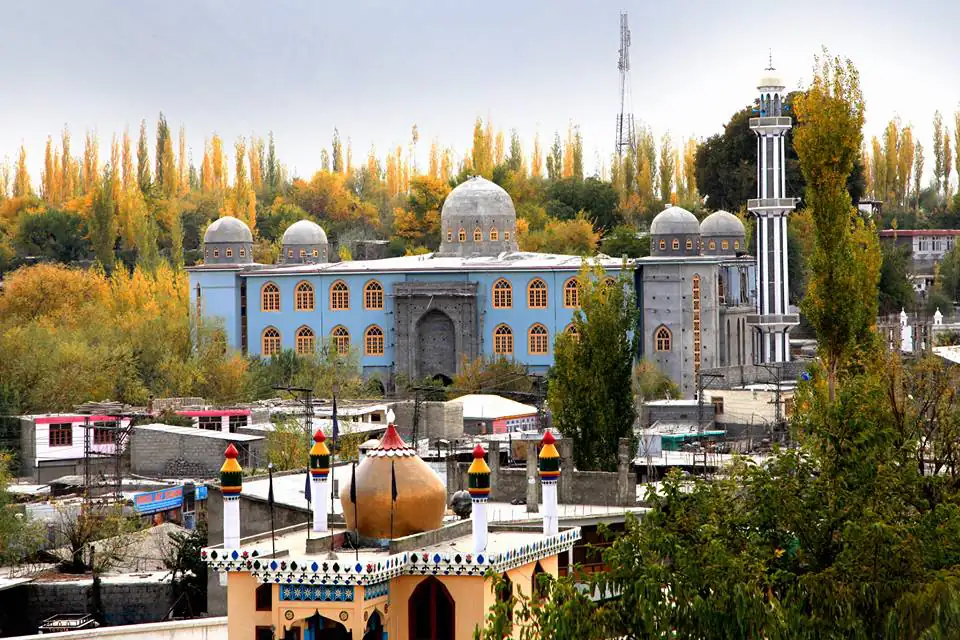
With the spread of Islam during the Maqpon era, Islamic architecture began to flourish across Skardu. The Amburiq Mosque in Shigar, one of the oldest in Baltistan (dating back over 700 years), stands as a striking example of early Islamic influence fused with Tibetan design. Constructed with timber beams and mud-plastered walls, the mosque features a multi-tiered roof, a wooden minaret, and intricate floral carvings that represent both Islamic and Buddhist motifs 🌙.
Another remarkable structure is the Chaqchan Mosque in Khaplu, built in the 15th century, often regarded as one of the oldest mosques in Pakistan. It combines Tibetan wooden architecture with Islamic geometrical art, symbolising a peaceful coexistence of cultures and faiths. These mosques remain active places of worship, education, and community gathering even today, resonating with centuries of devotion and heritage 💫.
🪵 The Craftsmanship Behind Balti Architecture
What makes Skardu’s architecture truly unique is not just its beauty — it’s the philosophy of craftsmanship behind it. Balti artisans have mastered the art of timber joinery, stone masonry, and carved ornamentation without relying on modern machinery. The structures are built with locally available materials, designed to resist earthquakes and harsh weather, while maintaining warmth and aesthetic grace 🪚 🌲.
Many of these artisans still use ancestral techniques passed down orally, blending practical engineering with cultural symbolism. For instance, wood carvings often depict floral patterns, suns, or geometric stars, representing divine protection and cosmic balance 🌞. This deep-rooted craftsmanship ensures that Skardu’s architecture remains alive — not just as monuments, but as a living expression of Balti identity.
🌄 Modern Architecture and Preservation Efforts
In recent decades, Skardu has seen a delicate balance between modernisation and heritage conservation. The construction of modern hotels, educational institutions, and Skardu Airport has transformed the region’s infrastructure. However, great care has been taken to preserve traditional aesthetics and ecological sustainability. Organisations such as the Aga Khan Cultural Service Pakistan, UNESCO, and local heritage bodies have initiated programs to restore decaying forts, mosques, and homes.
Modern architecture in Skardu now borrows from traditional Balti forms — sloped roofs, natural materials, and minimalistic stone facades — maintaining visual harmony with the mountainous backdrop 🏔️. Sustainable tourism, eco-lodges, and cultural festivals have reintroduced traditional design philosophies to contemporary use, ensuring that Skardu’s architectural legacy continues to inspire future generations 🌿.
💫 Conclusion: A Heritage Carved in Stone and Soul
The architectural marvels of Skardu are not mere relics — they are living embodiments of the region’s soul. From the ancient Kharpocho Fort that guards the valley to the serene Shigar and Khaplu Palaces that whisper tales of royal grace, every structure in Skardu stands as a symbol of endurance, elegance, and cultural harmony 🕋 ❤️.
Each carved beam, every weathered wall, and every sunlit courtyard tells the story of a civilisation that thrived in harmony with nature and faith. Skardu’s architecture is more than a visual delight — it is a spiritual journey, a cultural dialogue, and a testament to human creativity at the edge of the world 🌍 ✨.
Sources:
➟ Wikipedia – Skardu
➟ And deep Google Research
Image Credit
➟ Wikipedia – Skardu & Wikimedia Commons
➟ Featured Image Credit: Wikimedia Commons
Latest Posts
- 4 Steps to Teach English in Vietnam (Complete 2026 Guide)

- The Complete Guide to Living in Ho Chi Minh City, Vietnam
- What Living in Hanoi Is Really Like for Foreigners
- Expat vs Immigrant: What’s the Real Difference?
- 7 Best Places to Live in Mexico Right Now: A Complete Guide
- Best Places to Live in Thailand: A Complete Guide for Expats in 2026