“Where Faith Meets Festivity: Discover the Legacy of Tulshibaug Ganapati, Pune’s Beating Devotional Heart”
🔴 Introduction to Tulshibaug Ganapati – A Century of Devotion
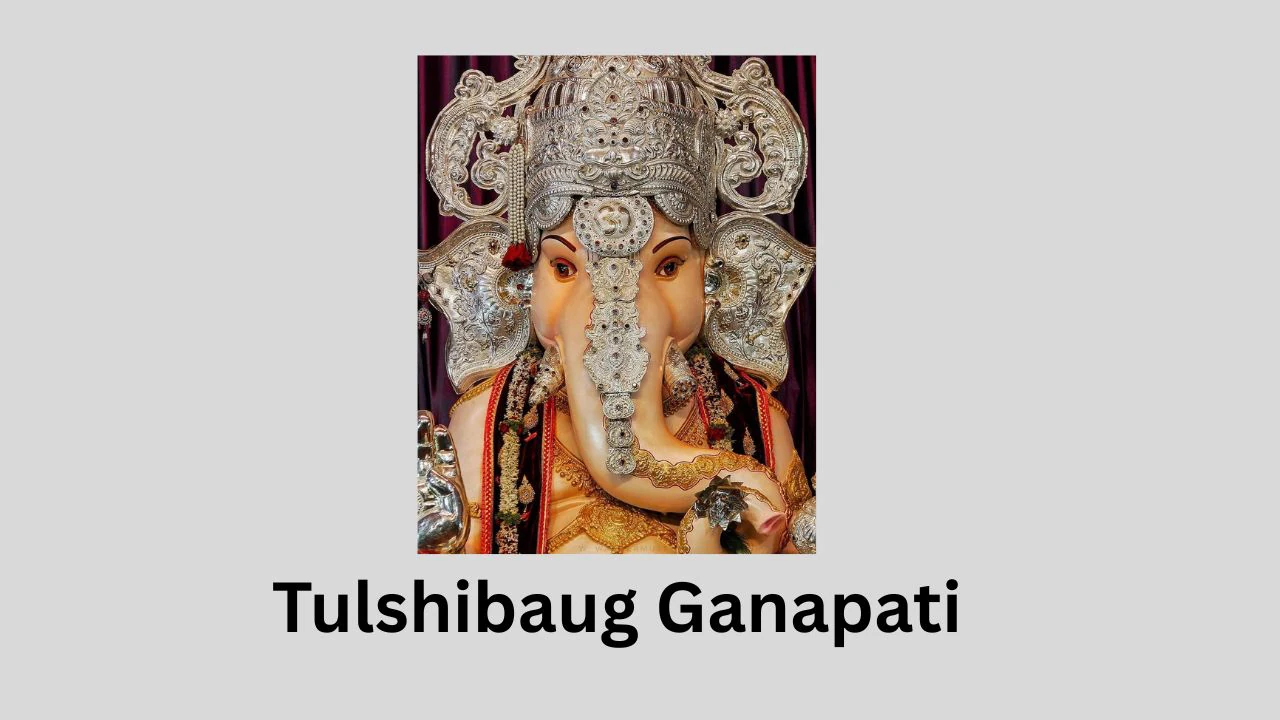
Hidden within the bustling maze of Pune’s oldest commercial hub lies a spiritual marvel that commands reverence beyond measure — Tulshibaug Ganapati, the Fourth Manacha Ganpati. For over a century, this grand idol of Lord Ganesha has stood as an emblem of faith, unity, and tradition, nestled amidst the age-old shops of the vibrant Tulshibaug market. At 15 feet tall, the idol—ornately adorned in shimmering silver jewellery and flanked by mythological symbolism—draws thousands of devotees and tourists every Ganesh Chaturthi.
But Tulshibaug Ganapati is much more than an idol—it is a living tradition. The lore, the community spirit, the rich visuals of festival décor, and the spiritual magnetism that draws even atheists towards its charm—this place is a sensory and emotional pilgrimage in itself. The Ganpati here is widely believed to be the benevolent force that blesses the shopkeepers with prosperity and protects the ancient bazaar, keeping its legacy intact.
The origins of Tulshibaug Ganapati date back to 1901, when a group of locals—including Aba Khatavkar, Sadashivrao Pawar, and Boloba Walke — initiated the Ganeshotsav Mandal to unite citizens through culture and spirituality. Since then, Tulshibaug Ganapati has grown into one of the most creatively adorned, revered, and spiritually significant Ganpati Mandals in Pune.
Each year, the Ganeshotsav celebration at Tulshibaug is a dazzling spectacle. With grand mythological themes, artistic set designs, eco-conscious decor, and social messaging, the Mandal never fails to impress. In 1975, a game-changing moment came when DS Khatavkar sculpted a 15-foot Fibreglass Idol — the first of its kind in Pune. This idol, known for its majestic beauty, has become a permanent fixture, worshipped throughout the year.
Nestled in the Old Peth area, surrounded by heritage shops and temples, the Tulshibaug Mandal is a sensory explosion during the Ganesh festival, with rhythmic Dhol-tasha, the scent of incense, and thousands thronging for darshan. But even beyond Ganeshotsav, the place remains spiritually active, thanks to the permanent Ganesh idol that continues to attract devotees daily.
The spiritual weight of the Tulshibaug Ganapati lies not just in its status as the Fourth Manacha Ganpati, but in its deep community roots, its Pioneering Artistic Approach, and its continuous efforts to preserve cultural heritage in the face of urban transformation.
This blog is your complete guide to discovering this iconic Ganpati — from the mythologies woven into its establishment to the architectural marvel of the idol, and from seasonal itineraries to cultural festivals. Whether you’re a spiritual traveler, history enthusiast, or cultural explorer, the Tulshibaug Ganapati experience is sure to leave you enchanted.
So come, let’s take a deep dive into the past, present, and legacy of Tulshibaug Ganapati, a true symbol of Pune’s devotional grandeur.
Also Read
5 Manache Ganpati in Pune, Maharashtra
🔘 Historical Roots and Cultural Legacy
Tulshibaug Ganapati’s legacy is embedded in the freedom movement-era ideologies of Lokmanya Bal Gangadhar Tilak, who popularised public Ganesh festivals to unite people under a common cultural cause. Riding this wave of cultural resurgence, the Tulshibaug Ganpati Mandal was established in 1901, making it one of the earliest Mandals in the city.
It was around this time that Tulshibaug itself was known for its 18th-century Lord Ram temple, making the area a spiritual nucleus of Pune. The Ganpati Mandal quickly rose in importance due to its location, devotional fervour, and grand celebrations.
In 1950, Tulshibaug Ganapati was recognised officially as “Manacha Chowtha Ganpati”, ranking fourth in the prestigious list of “Manache Ganpati“, the most revered Ganesh Mandals of Pune. This designation wasn’t arbitrary — it was a result of decades of consistent community involvement, devotional service, and artistic innovation.
One of the Mandal’s pioneering moments came in 1975, when D.S. Khatavkar created a Fibreglass Idol — a technological leap for that era. It became a blueprint for other Mandals, many of which later adopted fibreglass for durability and sustainability.
Even today, the Ganpati is not immersed post-festival but is Worshipped permanently throughout the year, symbolising eternal presence and blessings.
🔘 Architectural Brilliance of the Ganpati Mandal
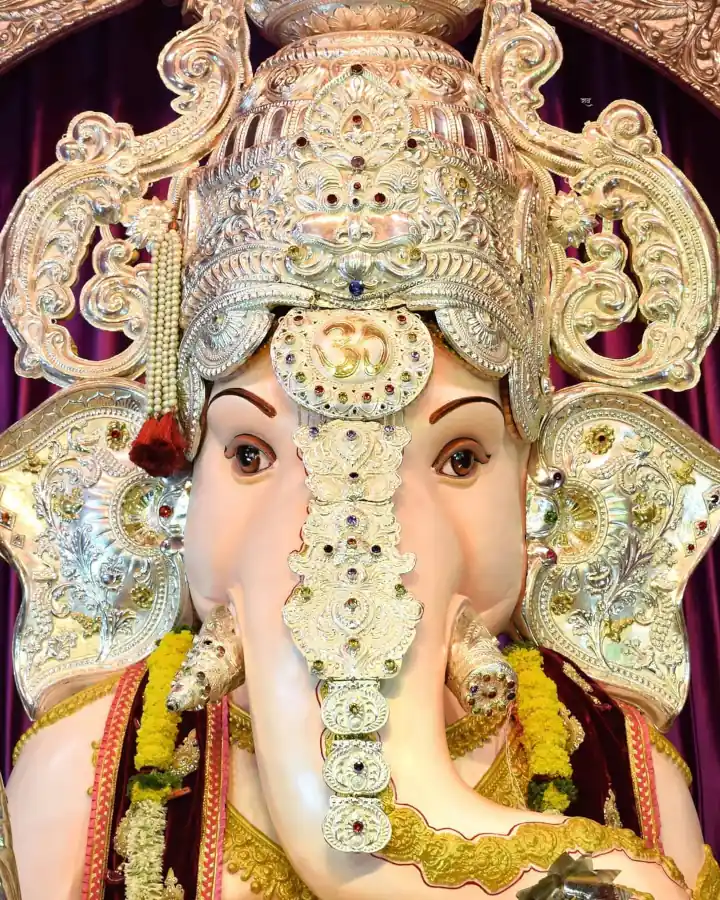
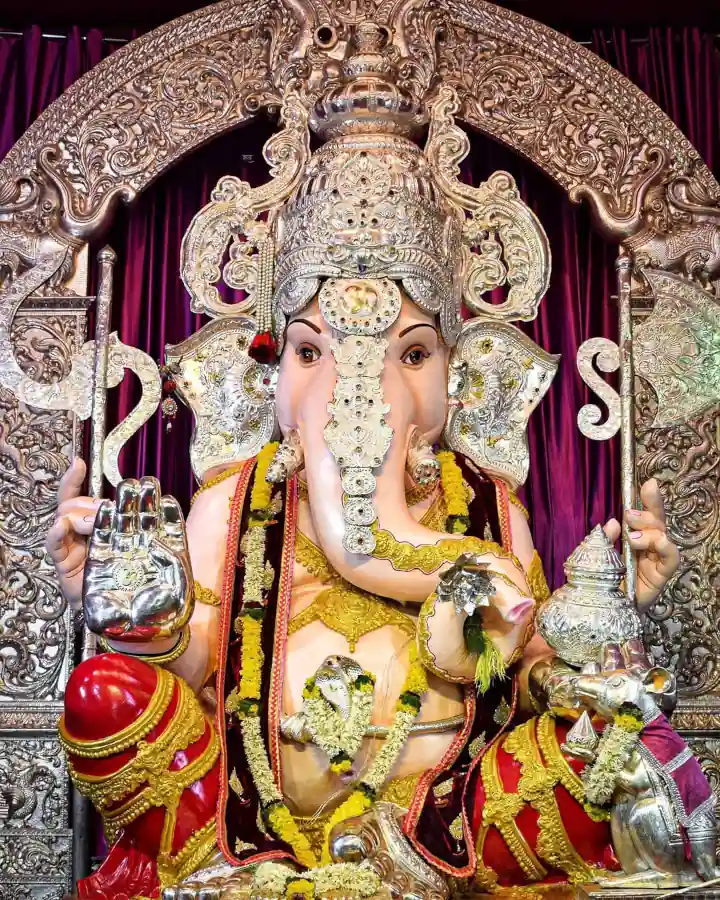
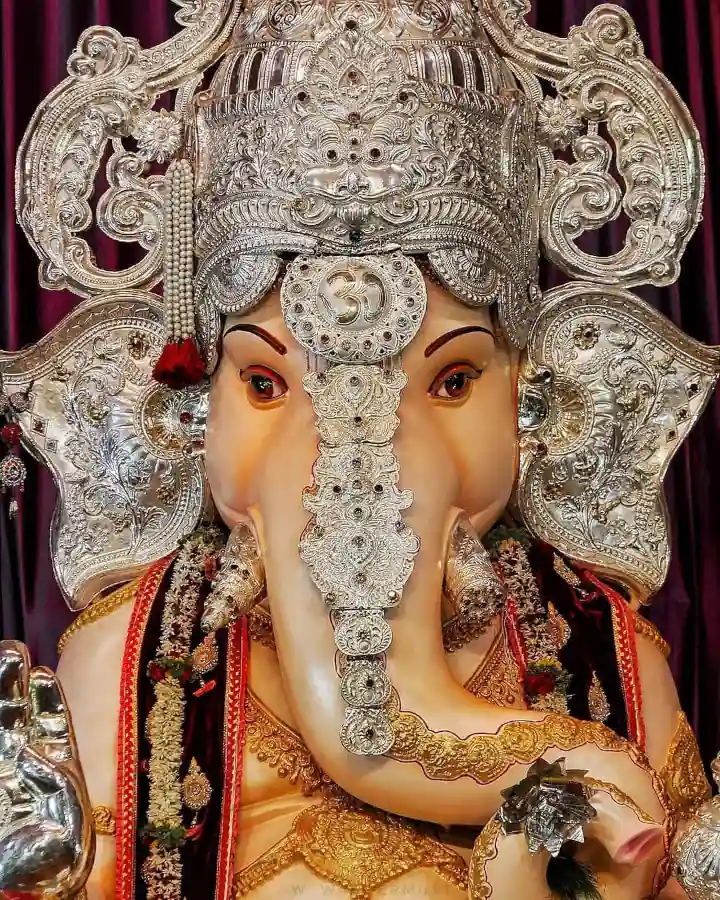
The architecture of Tulshibaug Ganapati is a perfect fusion of tradition and creativity. The 15-foot idol is crafted in a Traditional Maharashtrian sitting posture, with intricate silver jewellery custom-made every few years to maintain aesthetic excellence.
✦ Key features include:
⦿ Adorned Silver Mukut (Crown) with fine carvings
⦿ Decorative Silver Chest Plate symbolising strength and valour
⦿ Lifelike detailing in Lord Ganesha’s facial expressions and limbs
⦿ Mushakraj (Mouse vehicle) at the foot of the idol, beautifully sculpted
⦿ Grand Pandal Architecture, themed every year based on Mythological Epics, Spiritual symbolism, or Modern social causes
The temple’s Open-air architecture, surrounded by narrow lanes and traditional shops, gives a rustic charm that’s distinctly “Punekar”.
🔘 Ganeshotsav at Tulshibaug – Themes, Decorations & Festivities
Every Ganeshotsav here is an event. The Tulshibaug Mandal is renowned for its innovative themes—from mythological epics like Ramayana and Mahabharata to current global concerns like climate change or digital addiction.
⦿ Daily Aartis: Held at 8:30 AM, 12 PM, and 8:30 PM
⦿ Cultural Programs: Classical dances, Bhajans, street plays
⦿ Social Initiatives: Health camps, Blood donation drives, and Awareness campaigns
⦿ Live Darshan: Offered on social media for remote devotees
The immersive set designs and emotional storytelling through decor make this Ganpati one of the most talked-about in Maharashtra.
🔘 Distance from Major Indian Cities
For travellers planning a pilgrimage or a cultural visit, understanding the connectivity of Tulshibaug Ganapati with major Indian cities is crucial. Below is a detailed breakdown of distances and approximate travel times by road, rail, or air:
✦ Mumbai: Approximately 160 kilometres away, Mumbai is easily accessible by a 3 to 4-hour drive on well – maintained highways. Frequent bus services and trains connect Pune with Mumbai, making it an ideal destination for a quick getaway.
✦ Delhi: With a distance of roughly 1,500 kilometres, Delhi is connected to Pune via daily flights and a network of trains. Air travel takes about 2 hours, whereas train journeys can last between 24 to 30 hours.
✦ Bangalore: Bangalore is about 840 kilometres from Pune. Flights are the fastest option, taking just over an hour, while road trips can offer scenic views over 12 to 14 hours.
✦ Hyderabad: At a distance of around 570 kilometres, Hyderabad can be reached by a 9 to 10-hour drive or a direct flight that lasts about an hour and 15 minutes.
✦ Chennai: Chennai is nearly 1,170 kilometres from Pune. Direct flights are available, taking approximately 2 hours, while train journeys offer a comfortable albeit longer alternative.
✦ Kolkata: Although Kolkata is farther away at approximately 2,000 kilometres, travellers can opt for direct flights (about 3 hours) or an enriching train journey through India’s diverse landscapes lasting over 30 hours.
Each of these travel options is supported by comprehensive connectivity that ensures Tulshibaug Ganapati remains accessible to tourists and devotees from all over the country.
Also Read
Kasba Ganapati – Pune’s Eternal Guardian and Cultural Heartbeat
🔘 How to Reach Tulshibaug Ganapati – Pune
Reaching the spiritual nucleus of Tulshibaug is as much a journey into Pune’s vibrant urban life as it is a pilgrimage. Here’s a detailed guide:
✦ By Air:
⦿ Pune International Airport (PNQ): Located around 10 km from the city centre, the airport offers frequent domestic and international flights. Upon arrival, you can hire a taxi or use app-based cabs that connect directly to Tulshibaug.
✦ By Train:
⦿ Pune Junction: As one of India’s well-connected railway hubs, Pune Junction welcomes trains from all major cities. From the station, you can take a local rickshaw or an auto-rickshaw ride to reach the Tulshibaug area in less than 20 minutes.
✦ By Road:
⦿ Buses and Taxis: Pune is well-served by government and private buses. Regular taxi services and app-based ride-hailing services are available for a hassle-free commute in the busy downtown area.
⦿ Driving Yourself: If you are driving, the city’s roads lead right into the historic centre. However, note that parking in the dense market area might be challenging during festive seasons.
✦ Local Transport:
⦿ Auto-rickshaws: These are a cost-effective option for shorter distances and are readily available near Pune’s railway stations and bus terminals.
⦿ Pune Metro: With Pune’s metro network continually expanding, it promises a modern alternative that might soon cover routes near Tulshibaug in future phases.
Interviews with local drivers and regular patrons reveal that punctuality, a friendly fare, and authentic local narratives make every ride to Tulshibaug a culturally immersive experience.
🔘 Best Time to Visit Tulshibaug Ganapati
The experience at Tulshibaug Ganapati varies greatly with the time of year. Here are insights on the best times for a visit:
✦ Ganesh Chaturthi (Late August to September): The festive season is undoubtedly the most exhilarating time. During these days, the whole area comes alive with music, dance, and luminous decoration themes. However, expect larger crowds and extended queues for Darshan.
✦ Post-Ganeshotsav Period: After the festivals, the idol remains revered year-round. This period offers a quieter, more reflective atmosphere ideal for those interested in the history and architecture without the hustle of peak festivities.
✦ Monsoon (June to September): Pune’s monsoons add a lush greenery to the cityscape, rendering the market area a refreshing retreat. Yet, it is advisable to plan for occasional downpours while enjoying the spiritual ambience.
✦ Winter (November to February): With mild weather conditions, the winter season is perfect for leisurely walks, architectural tours, and in-depth cultural exploration of Tulshibaug and its surrounding heritage.
🔘 Nearby Tourist Attractions
Tulshibaug Ganapati is not just about the idol—it is a gateway to exploring Pune’s rich cultural and historical tapestry:
✦ Shaniwar Wada: A historical fortress steeped in Maratha history and offering insight into Pune’s regal past.
✦ Dagadusheth Halwai Ganpati Temple: Another renowned Ganpati temple known for its opulent decorations and traditional rituals.
✦ Sinhagad Fort: A short drive away, this hill fort is perfect for history enthusiasts and trekkers alike.
✦ Pune Okayama Friendship Garden: A tranquil retreat that juxtaposes Japanese landscaping with local flora, ideal for nature lovers.
✦ Raja Dinkar Kelkar Museum: Home to an extensive collection of artefacts that narrate the socio-cultural evolution of Maharashtra.
✦ Pune Tribal Museum: Offering insights into the heritage, lifestyle, and art forms of local tribes, making it a must-visit cultural centre.
Interviews with local tourism guides indicate that a combined tour of these attractions along with a visit to Tulshibaug provides a well-rounded experience of Pune’s multifaceted charm.
🔘 Local Markets and Handicrafts
No visit to Tulshibaug is complete without wandering through its time-honoured market lanes. Here’s what you can expect:
✦ Traditional Handicrafts: From finely woven textiles to intricately carved wooden artefacts, the market offers an abundance of local craftsmanship.
✦ Spiritual Souvenirs: Shops around Tulshibaug provide an array of religious memorabilia—ranging from small statues and idols to handcrafted jewellery inspired by Ganesh motifs.
✦ Antique Collectibles: As one strolls through the bustling lanes, numerous vendors offer antiques that reflect Pune’s rich history and artistic heritage.
✦ Local Street Art: Murals and canvases showcasing local history and folklore adorn many corners of the market, offering travellers a glimpse into the region’s creative dynamism.
Local artisans frequently share that every item tells a story—a narrative interwoven with Pune’s past and present, making every purchase an investment in culture.
🔘 Local Food and Culinary Experiences
Pune’s culinary landscape is as vibrant as its spiritual traditions. When you explore Tulshibaug, be sure to sample the city’s signature flavours:
✦ Maharashtrian Thali: Enjoy a complete meal featuring curries, Bhakri (flatbread), Varan (dal), Bhaji (Mildly spiced Vegetables) and an array of spicy chutneys in a traditional setting.
✦ Street Food Delicacies: Experience the burst of flavours in local favourites such as Vada Pav, Misal Pav, and Bhel Puri. The aroma of freshly prepared snacks and the hustle of street vendors contribute to an unforgettable sensory journey.
✦ Sweets and Desserts: Don’t miss the traditional Modak—a sweet dumpling believed to be Lord Ganesha’s favourite. Other sweet treats include Shrikhand and Puran Poli.
✦ Café Culture: For a contemporary twist, enjoy a cup of locally brewed coffee at one of the quaint cafés dotting the market area. These places often double as meeting spots for cultural conversations and travel planning.
Interviews with local food critics reveal that the culinary scene in Tulshibaug is a veritable melting pot—where age-old recipes meet modern dining trends in a harmonious blend.
🔘 Local Lifestyle and Cultural Ethos
Tulshibaug is not merely a place—it is a living canvas that portrays Pune’s evolving lifestyle and cultural ethos. Here are some detailed perspectives:
✦ Community Spirit: The Ganpati idol is a focal point around which the local community unites. The enduring belief is that the blessings of the idol play a significant role in business success and personal prosperity.
✦ Traditional Values: With its roots stretching back to the early 20th century, the area remains steeped in tradition. Elder residents often share tales of the idol’s inception and the evolution of its decorations, highlighting a time when artistry and devotion went hand in hand.
✦ Modern Adaptations: Despite its historic legacy, Tulshibaug has embraced modern influences—evidenced by the annual theme changes for Ganeshotsav, which now incorporate social issues and contemporary art forms.
✦ Interviews with Locals: Conversations with shopkeepers and residents reveal heartfelt reminiscences of decades past. They recall times when every decoration and festival ritual was an act of community bonding, a testimony to Pune’s abiding love for its cultural icons.
✦ Art and Craft Revival: The market’s many artisans actively work to preserve traditional crafts while integrating modern aesthetics—a reflection of Pune’s balanced outlook toward heritage and innovation.
🔘 Weather and Climatic Conditions in Pune District
Pune enjoys a climate that enhances every visit to Tulshibaug Ganapati. Here’s a detailed look at what to expect throughout the year:
✦ Summer (March to May): Summers in Pune are typically dry and warm, with daytime temperatures often reaching the high 30s °C. Early mornings and late evenings, however, offer a cooling respite, perfect for temple visits or market strolls.
✦ Monsoon (June to September): The monsoon season brings refreshing rains that revitalise the city. Lush green landscapes, cooler ambient temperatures, and a vibrant market atmosphere make this a unique time to witness the spiritual fervour amidst nature’s rejuvenation. However, travellers should be prepared with rain gear as sudden showers are common.
✦ Winter (November to February): Winters are mild and pleasant, with temperatures ranging between 10°C to 25°C. This season is ideal for long walks, touring heritage sites, and enjoying outdoor cultural events without the burden of extreme weather.
Local meteorological experts and travel bloggers highlight that while seasonal variations exist, Pune remains largely visitor-friendly year-round, providing a comfortable ambiance for every type of traveler.
🔘 Talukas, Demographics, Economy & Notable Personalities
To understand the true essence of Tulshibaug Ganapati, it’s important to consider the larger socio-economic and cultural landscape of Pune:
✦ Talukas and Demographics:
⦿ Administrative Division: Pune district is divided into multiple talukas, each with its own unique cultural heritage and administrative significance.
⦿ Population Diversity: With a mix of Maharashtrian traditions and a cosmopolitan population, the region boasts an intricate tapestry of cultures, languages, and lifestyles.
⦿ Languages: Marathi is the primary language; however, Hindi, English, and various regional languages flourish, reflecting Pune’s dynamic and diverse populace.
✦ Economy and Local Trade:
⦿ Traditional Commerce: Tulshibaug’s thriving market culture is a testament to the centuries-old tradition where spiritual belief meets entrepreneurial spirit. The aura of the Ganpati blessing is widely credited with the bustling economic activity in the area.
⦿ Modern Business Trends: Today, the area strikes a balance between age-old trade and contemporary retail, with digital initiatives increasingly complementing traditional commerce.
✦ Notable People Associated with Tulshibaug:
⦿ Community Leaders and Pioneers: Founders like Aba Khatavkar, Sadashivrao Pawar, and DS Khatavkar are revered figures whose initiatives shaped the legacy of Tulshibaug Ganapati.
⦿ Cultural Icons: Over the years, numerous local artisans, actors, and public figures have shared anecdotes of the idol’s influence on their personal and professional lives, establishing a narrative that transcends generations.
Such depth in local details and demographics not only enriches your knowledge of Tulshibaug but also deepens the cultural context behind every ritual and market corner.
🔘 Detailed Travel Itineraries and Travel Tips
For those planning an in-depth visit to Tulshibaug and its surroundings, here is a sample itinerary designed to offer a perfect blend of spirituality, culture, and leisure:
✦ Day 1: Arrival and Exploration
⦿ Morning: Arrive in Pune via flight or train. Check in at a centrally located hotel.
⦿ Afternoon: Head to Tulshibaug for your first Darshan of the 15-foot Ganpati idol. Explore the bustling market and sample street foods.
⦿ Evening: Attend the evening aarti at 8:30 PM and enjoy local eateries that offer authentic Maharashtrian cuisine.
✦ Day 2: Cultural and Historical Tours
⦿ Morning: Visit nearby attractions such as the Dagadusheth Halwai Ganpati Temple and Shaniwar Wada to absorb Pune’s royal history.
⦿ Afternoon: Enjoy lunch at a traditional Thali restaurant. Walk through the streets, interact with local shopkeepers, and learn about the history from community members.
⦿ Evening: Return to Tulshibaug for live cultural performances that accompany the ongoing Ganeshotsav festivities.
✦ Day 3: Nature and Heritage Excursions
⦿ Morning: Take an early drive to Sinhagad Fort for a scenic trek and panoramic views.
⦿ Afternoon: Visit the Raja Dinkar Kelkar Museum to further explore the region’s artisan legacy.
⦿ Evening: Wind down your day with a stroll in Pune’s communal gardens and an optional dinner cruise on local lakes (where available).
✦ Travel Tips:
👉 Book accommodations early: Ganesh Chaturthi sees a surge in visitors—early bookings secure the best stays.
👉 Comfortable walking shoes: The narrow alleys of Tulshibaug demand a lot of walking.
👉 Stay hydrated: Whether during the summer heat or monsoon humidity, ensure you have water with you at all times.
👉 Local SIM or Wi-Fi device: Stay connected to access maps and local travel apps for real-time updates.
👉 Cash on hand: Although many vendors now accept digital payments, small shops in the market might only accept cash.
👉 Cultural etiquette: Respect local customs by dressing modestly, especially when visiting places of worship.
🔘 Frequently Asked Questions (FAQs)
What is the significance of Tulshibaug Ganapati?
Tulshibaug Ganapati is renowned for being the Fourth “Manacha Ganpati” in Pune, celebrated for its grand stature, innovative themes during Ganeshotsav, and the perceived blessings that contribute to local commerce.
When is the best time to visit Tulshibaug Ganapati?
The most vibrant experience is during Ganesh Chaturthi (late August to September). However, the idol is worshipped all year round, so every season offers its own unique charm.
How do I reach Tulshibaug in Pune?
Visitors can reach Tulshibaug by air (via Pune International Airport), train (Pune Junction), or by road using buses, taxis, or personal vehicles. Local auto-rickshaws offer easy access once you’re in the city.
What other attractions are nearby?
Popular nearby sites include Shaniwar Wada, Dagadusheth Halwai Ganpati, Sinhagad Fort, and the Raja Dinkar Kelkar Museum, among others.
What are some popular local foods in Tulshibaug?
Do try the Maharashtrian thali, street snacks like Vada Pav and Misal Pav, and desserts such as modak and puran poli for an authentic culinary experience.
Are there travel itineraries available for a multi-day visit?
Yes, many local travel guides offer detailed itineraries that cover cultural sites, heritage tours, and natural excursions, ensuring a balanced experience of spirituality and leisure.
🔘 Conclusion
Tulshibaug Ganapati stands as an enduring symbol of faith, heritage, and artistic innovation in Pune—a place where centuries-old traditions and contemporary visions converge to create a living monument of devotion. This majestic 15-foot idol has witnessed numerous transformations of the bustling Tulshibaug market, influencing not only spiritual practices but also local commerce and lifestyle. From its historical inception in 1901 to its present status as one of Pune’s cultural landmarks, Tulshibaug Ganapati continues to evoke awe, inspire creativity, and nurture communal bonds.
Whether you are a devout pilgrim, a history enthusiast, or a curious traveler looking for an immersive cultural experience, a visit to Tulshibaug Ganapati offers a unique window into the soul of Pune. Every corner of the area—from the busy market lanes and traditional eateries to the artful decorations and serene temple spaces—tells a story of a community bound by faith and an enduring spirit of celebration.
We hope this guide provides you with not only logistical insights and travel tips but also a deeper understanding of the rich tapestry that makes Tulshibaug Ganapati a must-visit destination. Embrace the journey, soak in the vibrant cultural heritage, and let the blessings of Lord Ganesha guide you on every step of your adventure.
🔘 Sources
For further reading and detailed information on Tulshibaug Ganapati, please refer to the following trusted resources:
👉 Esakal – Ganesh Darshan: Information on Tulshibaug Ganpati, Pune
👉 Pune Tourism – Tulsi Baug Ganpati, Pune
👉 LBB – Tulshibaug Ganpati, Pune
👉 Bhaktibharat – Tulsibaug Ganpati Mandir
👉 MyAdhyatm – Tulshi Baug Ganpati, Pune
👉Image Credit – Instagram
By merging meticulous research, cultural narratives, and practical travel guidance, this article is intended to empower you with a holistic understanding of Tulshibaug Ganapati and to inspire an enriching journey to one of Pune’s most iconic spiritual landmarks.
If you found this guide helpful, please share it with fellow travellers and devotees! For more detailed itineraries, local tips, and cultural insights, subscribe to our newsletter and join our community of passionate explorers. Experience the magic of Tulshibaug Ganapati — where every visit is a journey of tradition, art, and heartfelt blessings.
- Jade Laroche: From Spotlight to Soundwaves — The Reinvention of a French Icon

- Milind Shinde – The Relentless Craftsman of Marathi Cinema Who Turned Every Frame into Fire

- Subodh Bhave: The Timeless Torchbearer of Marathi Cinema Who Redefined Biographical Storytelling

- Svetlana Khodchenkova: The Enigmatic Russian Beauty Who Conquered Hollywood Without Losing Her Soul

- Rashmi Gautam: The Fearless Voice of Telugu Television Who Turned Stardom into Substance

- Simone Holtznagel: From Wollongong’s Coastal Dreams to Global Runways — A Blonde Force Who Turned Reality TV into a Fashion Empire