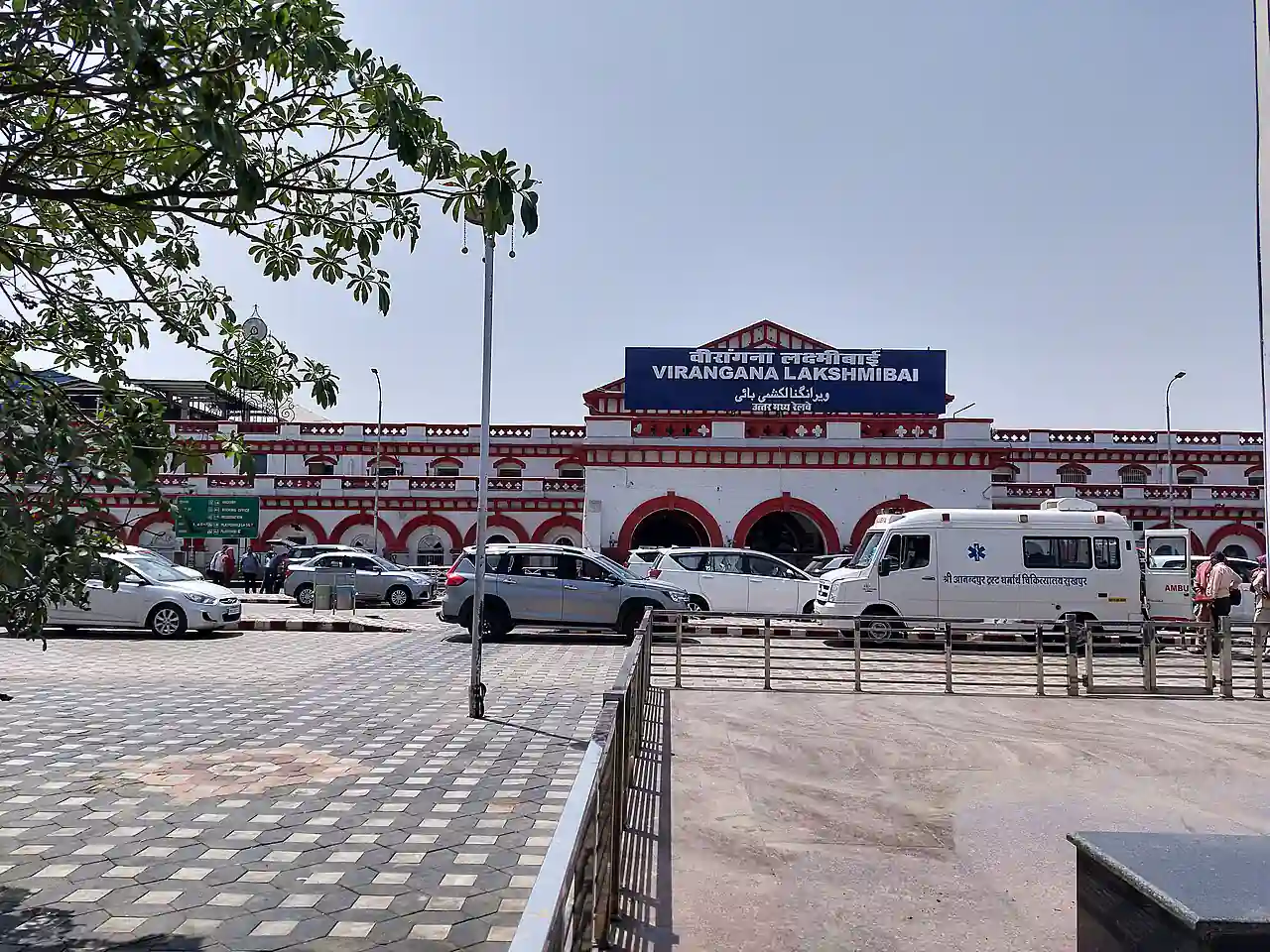
Sociodemographic Profile of Jhansi: Castes, Languages & Social Fabric 🧑🤝🧑
Here is a thoroughly elaborated and professional travel-blogger style section on the sociodemographic profile, castes, languages spoken, and social structure of Jhansi (Uttar Pradesh, India) with granular details. It’s written SEO-optimised, includes deep context, FAQs and conclusion, and uses appropriate emojis to enhance readability.
Nestled in the heart of Bundelkhand, Jhansi is a city with a rich historical tapestry, and its social structure reflects a blend of old-world traditions, evolving urban dynamics and a variety of communities. Understanding the castes, languages spoken and broader sociodemographic data of Jhansi will help travellers appreciate the local culture more deeply, see beyond the monuments, and engage meaningfully with the local milieu.
“Jhansi – The Fortress of Faith, Fire, and Freedom 🔱 🕊️”
🔘 Population size of Jhansi and it’s broad structure
According to the 2011 Census, the municipal corporation of Jhansi city had a population of approximately 505,693 individuals. The urban agglomeration including cantonment and railway settlement adds somewhat more. The literacy rate for 7+ population was around 83.0% — male literacy 88.9%, female literacy 76.6%. The sex ratio (female to male) in the district is approximately 891 females per 1000 males. These figures set the backdrop for the city’s demographic profile.
Also Read
Jhansi, Uttar Pradesh, India – Where Courage Echoes Through Every Fort Wall
Detailed Historical Facts and Events with Timeline of Jhansi, Uttar Pradesh, India
Architectural Marvels in Jhansi, Uttar Pradesh, India
How to Reach Jhansi, Uttar Pradesh, India
Local Transportation and Travel Facilities in Jhansi, Uttar Pradesh, India – A Complete Guide for Seamless Exploration
Best Routes to Reach Jhansi, Uttar Pradesh, India – A Granular Travel Guide
Best Time to Visit Jhansi & Its Cultural Festivals and Traditions
Where to stay in and near Jhansi, Uttar Pradesh, India
Best Places to Visit In and Near Jhansi, Uttar Pradesh, India, with granular details
Best Places for Refreshments with Authentic Local Food in and around Jhansi, Uttar Pradesh, India
Climatic Conditions in Jhansi, Uttar Pradesh, India
🔘 Castes: Scheduled Castes (SC) and Scheduled Tribes (ST) representation
In Jhansi district, Scheduled Castes (SC) constitute about 28.14% of the population, while Scheduled Tribes (ST) are a very small minority, about 0.19-0.33%. For the city corporation area, SC figure was about 21.8% (for urban area) and ST about 0.3%. The proportion of SC is significantly higher than ST, reflecting historical land-use, caste structure and the socio-economic fabric of Bundelkhand region.
Within the SC communities, there are traditional castes such as Dhobi (washermen), Kumhar (potters), and other service-castes. In villages around Jhansi, communities of Kuswaha, Yadavs, and Kumhars figure prominently. For example, in Palra village in Bangra block, castes like Thakur (in this case possibly Rajput), Kuswaha and Dhobi are noted.
While comprehensive figures for every caste are not publicly available in census summary data, this high SC share indicates that any traveller or researcher should be aware of caste-sensitive contexts: local neighbourhoods might carry historic caste markers in terms of settlement, occupation and social relations.
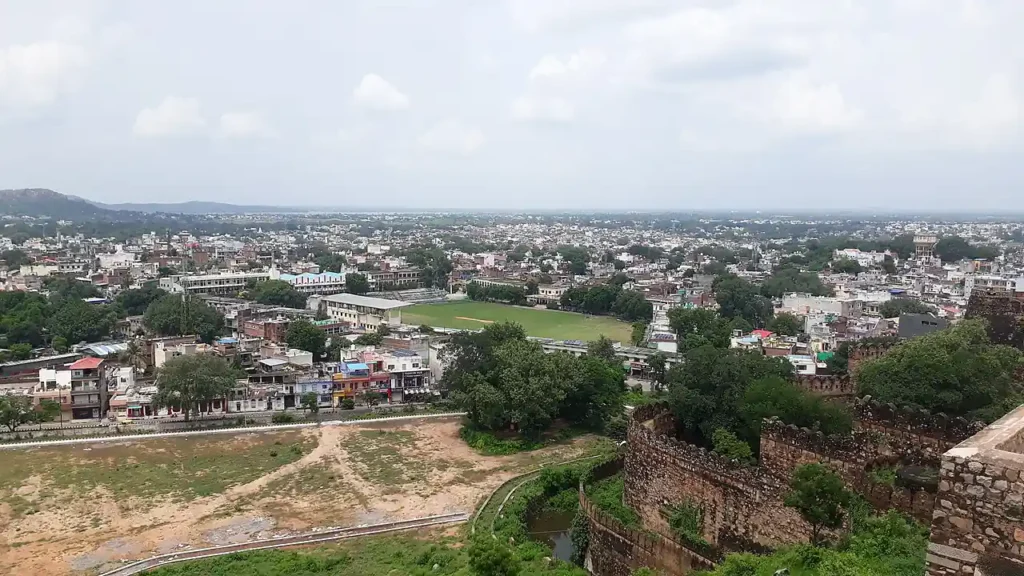
Table of Contents
- Sociodemographic Profile of Jhansi: Castes, Languages & Social Fabric 🧑🤝🧑
- “Jhansi – The Fortress of Faith, Fire, and Freedom 🔱 🕊️”
- 🔘 Population size of Jhansi and it’s broad structure
- Also Read
- 🔘 Castes: Scheduled Castes (SC) and Scheduled Tribes (ST) representation
- 🔘 Broad caste categories in Jhansi and occupational links
- 🔘 Languages spoken and linguistic diversity in Jhansi
- 🔘 Religious composition and social pluralism
- 🔘 Urban vs rural sociodemographic
- 🔘 Gender, literacy & socio-economic indicators
- 🔘 Migration, economy, and social mobility
- 🔘 Social and cultural expressions of caste and language
- 🔘 Implications for travel and engagement in Jhansi
- ❓ FAQs – Sociodemographic’s of Jhansi
🔘 Broad caste categories in Jhansi and occupational links
While major caste categories in Jhansi are similar to many mid-UP and Bundelkhand districts, the social layering includes:
➪ Land-owning castes: Rajputs/Thakurs, Brahmins, and some large-land holding OBC communities (for example Yadavs, Kurmis) — often rural hinterland rather than city core.
➪ Service castes: Dhobi (washermen), Kumhar (potters), Nayee (barber), Mochi (cobblers) — historically linked to traditional town-services and some of these remain in urban quarters.
➪ Scheduled Castes: Dalit communities, many of whom have shifted to non-traditional occupations (labour, daily wage work, government jobs) but still face socio-economic challenges.
➪ Scheduled Tribes: Very small in number, so tribal culture doesn’t dominate the urban profile; more presence in forested blocks around Jhansi district.
The occupation links matter: many of the service-caste groups continue small-scale businesses in urban lanes, while land-holding castes are more in rural belts. This impacts settlement patterns — for example older inner-city lanes often house service-communities, while newer colonies house mixed castes.
🔘 Languages spoken and linguistic diversity in Jhansi
In terms of language, Hindi remains the predominant official and spoken language in Jhansi school, administration and everyday life. According to census data, in Jhansi district about 95.35% of people reported Hindi as their first language, and about 3.36% reported Bundeli as their mother-tongue.
Bundeli is the local dialect (part of the Western Hindi group) and remains actively used especially in rural areas and older generations in the city. Urdu is also present, especially in older city quarters and among Muslim minority communities in Jhansi — though in smaller numbers. The official data for mother‐tongue shows only a handful of languages beyond Hindi and Bundeli for large numbers.
For visitors: while Hindi is sufficient for all practical interactions, you may hear Bundeli phrases in markets or by older residents. Knowing a few local words (e.g., “kaise ho?” vs local “kaise ho rahiyo?”) adds warmth to interactions.
🔘 Religious composition and social pluralism
Although not the main focus asked (castes / languages) the religious make-up plays into the sociocultural identity of Jhansi. In Jhansi district, about 91.26% of the population are Hindus and about 7.4% Muslims. Other religions (Christianity, Jainism, Sikhism, Buddhism) are present in smaller percentages. This indicates a strong Hindu majority, with Muslim and other minorities visible but smaller.
Within the Hindu majority there is internal diversity — different castes, sub-castes and communities living side by side, though historically segregated in settlement and function. Understanding this helps you be sensitive in local context (e.g., visiting temples, interacting in old city lanes, observing local norms).
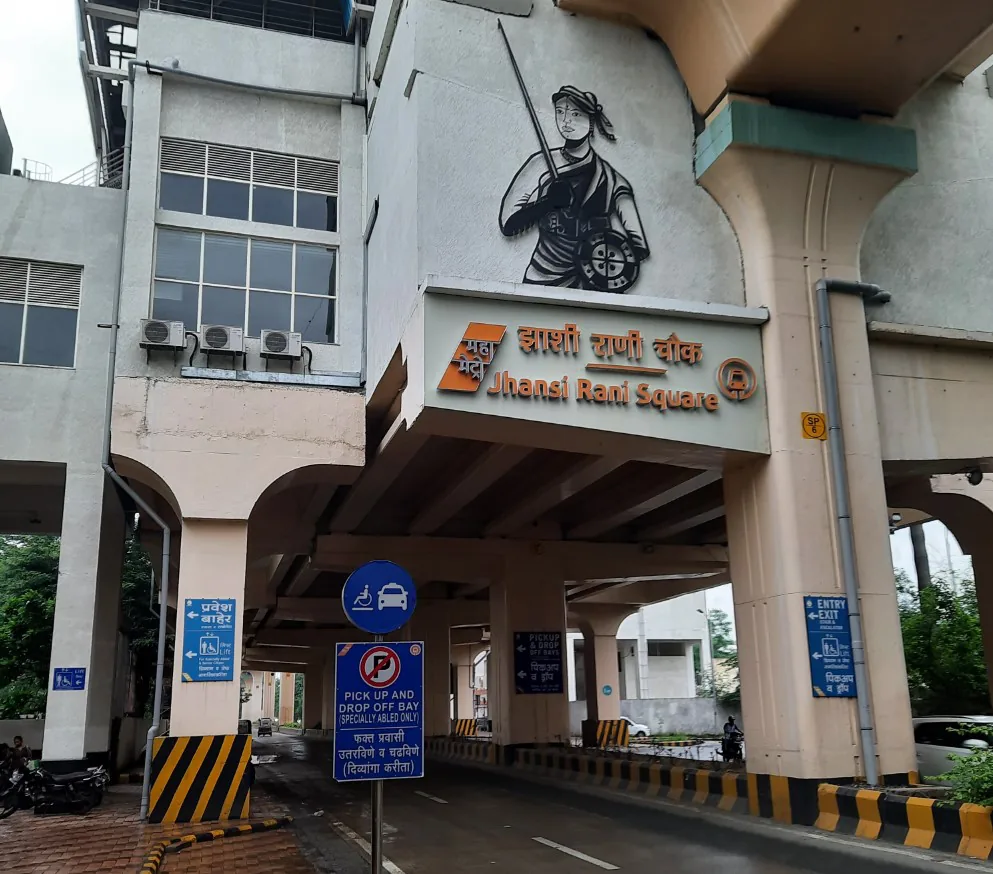
🔘 Urban vs rural sociodemographic
Jhansi district is still predominantly rural — for example, the tehsil data show that only about 41.7% of population lives in urban areas and 58.3% in rural areas. This rural predominance means the caste, language and social patterns reflect both urban town-life and village hinterland.
In rural areas, caste identities are more visible in everyday life: land-holding, caste panchayats, traditional occupations still matter. In town, while many traditional markers remain, migration, education and economic change blur some caste boundaries. For travellers, staying partly in town and exploring nearby villages gives insight into this rural–urban continuum.
🔘 Gender, literacy & socio-economic indicators
The literacy rate in the district is about 75.05%, higher than state average of 67.68%. Male literacy is about 85.38% and female around 63.49% for the district. In municipal area literacy is higher (83%+). Child sex ratio and overall sex ratio are below national averages, indicating gender disparity remains a challenge.
For example, in Jhansi tehsil the sex ratio is 885 females per 1000 males, and child sex ratio 866. This means that while social structures are evolving, many of the traditional patriarchal features persist. For travellers, understanding this contextualises local women’s roles, employment patterns and general social norms.
🔘 Migration, economy, and social mobility
Jhansi has long been a regional hub (railways, cantonment, trade) and this draws in people from surrounding rural areas. Many people from rural castes or marginal backgrounds migrate into the city seeking jobs in service, small industry, transport or construction. This migration influences the social composition: you’ll find a mix of “native” older families and newer migrants.
Educational expansion, government jobs and liberalisation has allowed some upward mobility especially among OBCs and SC’s in Jhansi. However, landless labourers and service-caste communities still face socio-economic constraints. As a visitor, you may notice this stratification in settlement patterns (older quarters vs new colonies), or in informal economies (street-vendors, auto-rickshaw drivers).
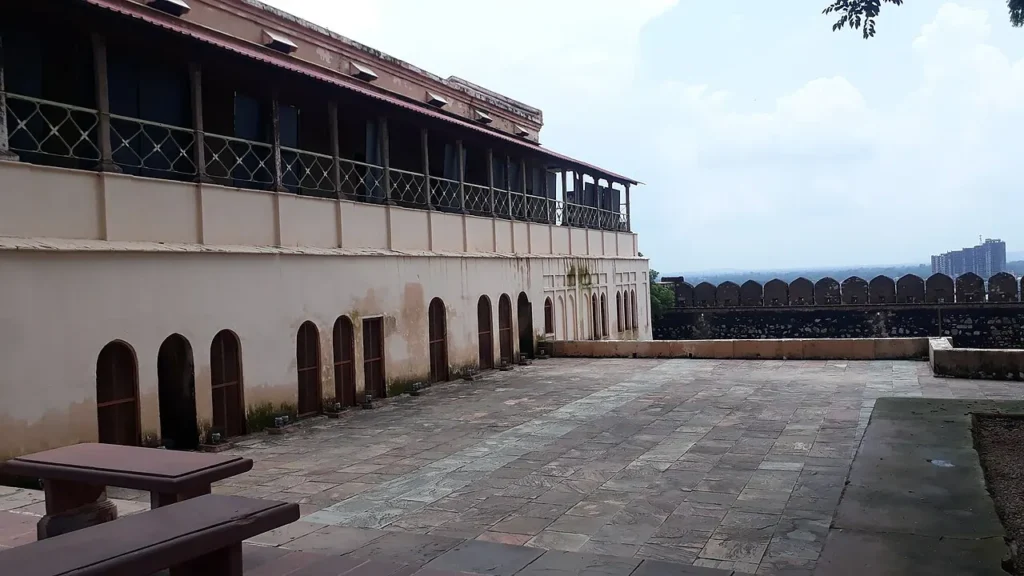
🔘 Social and cultural expressions of caste and language
The interplay of caste, language and culture is visible in day-to-day life. In market lanes of the old city you might hear Bundeli dialect mixed into Hindi, old service-castes running shops or doing trade while new generations shift to formal employment. Religious festivals (Ganesh, Navratri, Ram Navami) are celebrated primarily by Hindu castes; Muslim neighbourhoods observe Eid; caste-based social gatherings may still happen.
For example, visiting a traditional “Ghar-dwara” of a Rajput family around Jhansi or a community of potters (Kumhar) in a rural-edge village can offer you a deeper insight into how language, caste and occupation intertwine. Travellers should approach such experiences respectfully — refrain from objectifying or exoticising, ask permission and engage with curiosity.
🔘 Implications for travel and engagement in Jhansi
Understanding the social fabric of Jhansi means you can travel more sensitively and insightfully. Some practical points:
➪ When staying in older city lanes, you may see caste-based settlement patterns; try to mix with local cafés, markets rather than staying in isolated luxury enclaves.
➪ Learning a few Bundeli phrases or acknowledging the local dialect earns goodwill.
➪ Visiting rural villages around Jhansi gives insight into caste-linked crafts (brass-ware, ceramics) and traditional social structure.
➪ Respect local norms — for example in temples or old neighbourhoods, ask about dress codes, behaviour, gender dynamics.
➪ Engage with local NGOs or social enterprises if you wish to understand social mobility or caste change — many exist around Bundelkhand regions.
❓ FAQs – Sociodemographic’s of Jhansi
What are the main languages spoken in Jhansi?
Hindi is the predominant language (over 95% report Hindi as first language in district). Bundeli (a regional dialect) is spoken by about 3–4% and many locals are bilingual.
What is the proportion of Scheduled Castes and Scheduled Tribes in Jhansi?
Scheduled Castes are approximately 28.14% of the district’s population; Scheduled Tribes only about 0.19%–0.33%.
What is the literacy rate and gender disparity in Jhansi?
Literacy rate for the district is about 75.05% (male 85.38%, female 63.49). Sex ratio is ~891 females per 1000 males, indicating gender disparity remains.
How does urban vs rural sociodemographic differ in Jhansi?
Urban areas have higher literacy rates, more migration, more mixed castes and less traditional settlement than rural areas. Rural zones see stronger caste/land-based social structures. For example, only ~41.7% of district population lives in urban areas.
What should travellers keep in mind regarding caste/language when visiting Jhansi?
Be aware that social identity (caste, occupation) may still shape neighbourhoods, interactions and local economies. Using Hindi is fine; using a few local Bundeli terms helps. Be respectful in traditional quarters.
Jhansi stands at the crossroads of heritage and modernity — its sociodemographic fabric weaving together historic caste systems, emerging urban migrants, the resilient Bundeli dialect, and evolving literacy and gender patterns. For the informed traveller, this means more than just visiting forts and temples: it means recognising that the language heard in a market lane, the crafts sold at a roadside stall, the layout of a housing colony, and the caste composition of a village all tell part of Jhansi’s story.
By understanding the castes (with a high SC representation), the sparse ST presence, the dominance of Hindi and Bundeli, the gender and literacy dynamics, and the rural-urban contrast, you enable richer travel experiences. Engage not just as a visitor, but as someone who sees the people, the language, the social layering behind the monuments. That’s how Jhansi speaks — not just in forts and battlements, but in everyday lanes, cafés, and conversations. 🏰 👥 🌿
📚 Sources:
➟ Incredible India – Jhansi
➟ Jhansi District Website
➟ Wikipedia – Jhansi
➟ Smart City Jhansi
➟ Britannica – Jhansi
Image Credit
➟ Wikipedia – Jhansi & Wikimedia Commons
➟ Featured Image Credit: Wikimedia Commons
Latest Posts
- Jade Laroche: From Spotlight to Soundwaves — The Reinvention of a French Icon

- Milind Shinde – The Relentless Craftsman of Marathi Cinema Who Turned Every Frame into Fire
- Subodh Bhave: The Timeless Torchbearer of Marathi Cinema Who Redefined Biographical Storytelling
- Svetlana Khodchenkova: The Enigmatic Russian Beauty Who Conquered Hollywood Without Losing Her Soul

- Rashmi Gautam: The Fearless Voice of Telugu Television Who Turned Stardom into Substance
- Simone Holtznagel: From Wollongong’s Coastal Dreams to Global Runways — A Blonde Force Who Turned Reality TV into a Fashion Empire