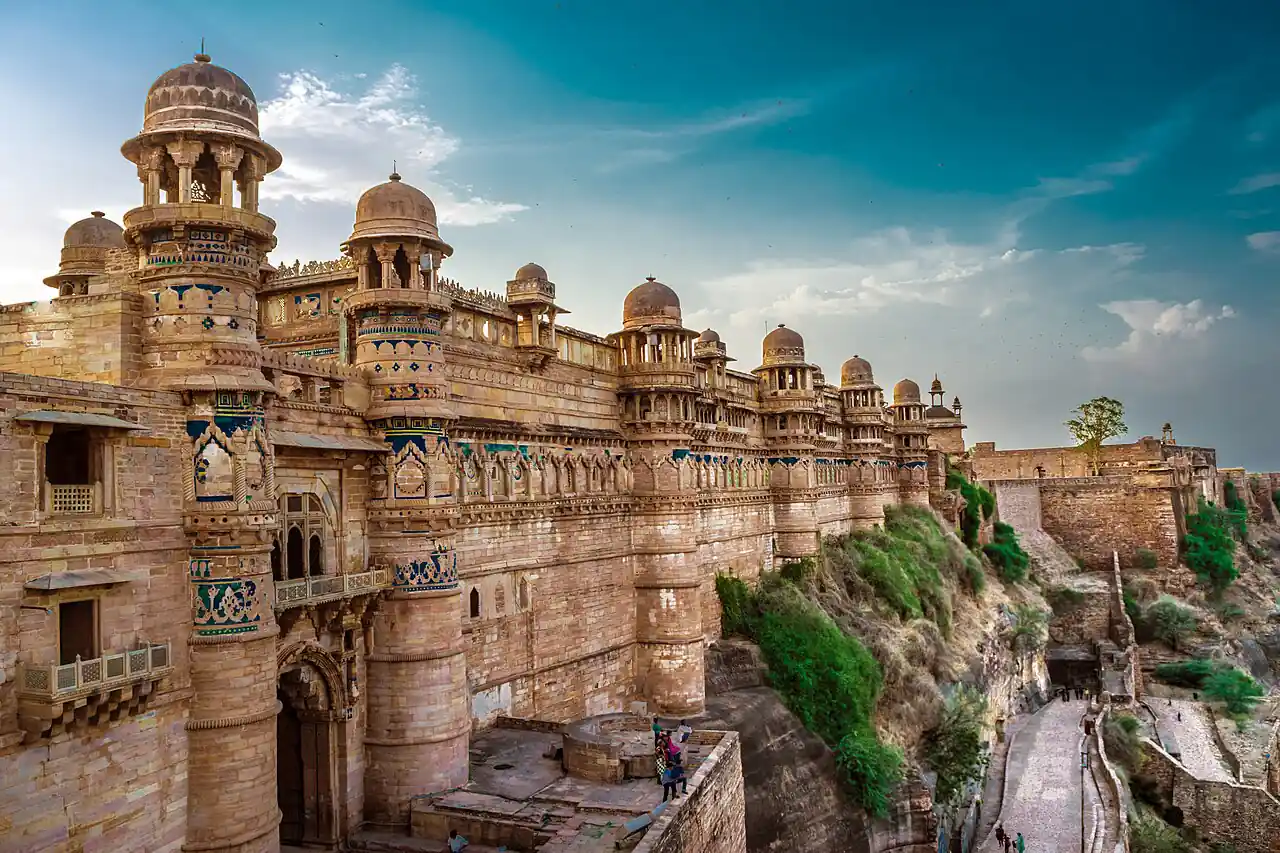
Exploring Gwalior: History, Culture, and Heritage
Step into the Gibraltar of India, where ancient stones sing ballads of valour and every alley hums a classical raga!
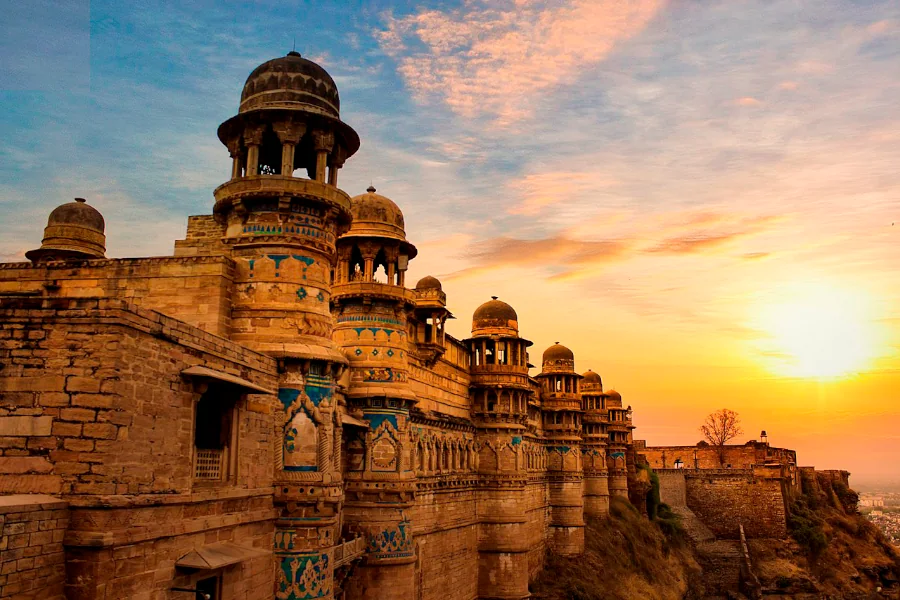
Table of Contents
- Exploring Gwalior: History, Culture, and Heritage
- 🔴 Introduction: The Multifaceted Pearl of Central India
- Gwalior: The Fortress City Where History Resonates and Music Soars
- 🟢 Detailed Introduction
- ⭕ A Tapestry Woven Through Time: Gwalior’s Rich History
- ➤ Ancient Foundations & Mythic Origins:
- ➤ Medieval Flux: Dynasties & Devotion:
- ➤ The Tomar Golden Age:
- ➤ Mughals, Marathas, and the Scindia Legacy:
- ➤ 1857 Rebellion & Modern Integration:
- ⭕ Architectural Symphony in Stone: From Fortresses to Palaces
- ➤ Gwalior Fort – The Imposing Masterpiece:
- ➤ Man Mandir Palace (1486-1516):
- ➤ Temples of Time:
- ➤ Jain Colossi:
- ➤ Later Additions:
- ➤ Gujari Mahal & Archaeological Museum:
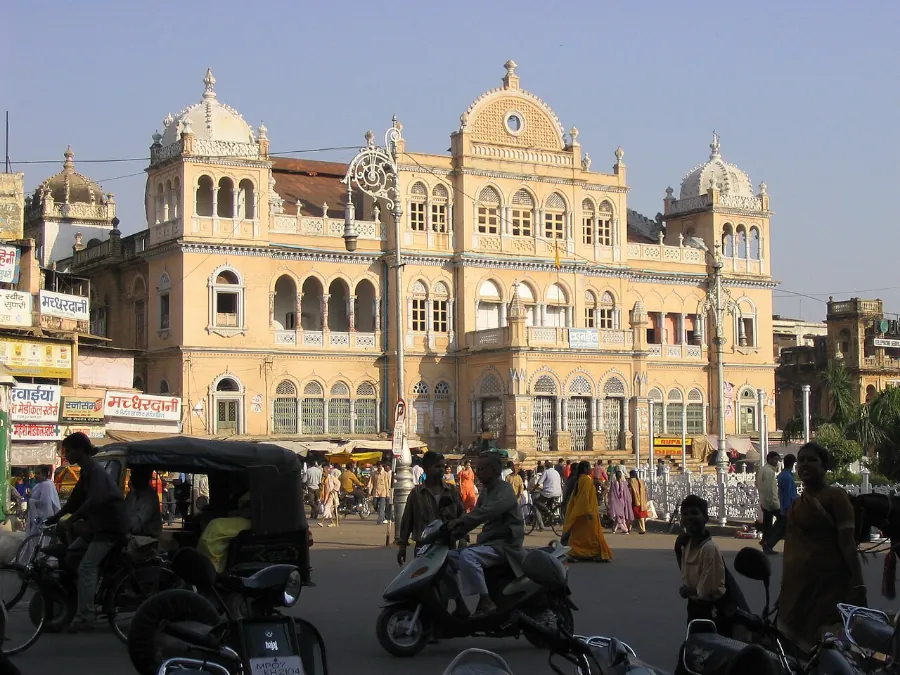
- ➤ Lashkar’s European Grandeur:
- ➤ Sufi Serenity & Mughal Grace:
- ⭕ Journey to the Heartbeat: Distance to Gwalior from Major Cities
- Table: Distance from Key Indian Cities to Gwalior
- ➨ Getting There:
- ⭕ Experiencing Gwalior: Beyond the Fort Walls
- Best Places to Visit (Briefly Described – For detailed extended version, scroll down ↓):
- ➨ Best Time to Visit & Detailed Weather:
- ➨ Nearby Tourist Attractions (Day Trips):
- ➨ Places of Worship:
- ➨ Local Market Places (Bazaars):
- ➨ Local Food: A Culinary Adventure:
- ➨ Handicrafts: Take Home a Piece of Gwalior:
- ➨ Local Lifestyle:
- ➨ Best Route to Reach Key Sites:
- ➨ Things to Do:
- ⭕ Gwalior District: The Larger Canvas
- ➨ Demographics (2011 Census):
- ➨ Languages:
- ➨ Economy: Major commercial & industrial hub for N. MP. Key sectors:
- ➨ Notable People from Gwalior:
- 🟣 Brief Sectional Details
- ➤ Best Places for Refreshments with Authentic Local Food
- ➤ Best Places to Visit with Beief Details
- 🎯 Gwalior Fort Complex (Open 8 AM – 6 PM; ₹75 Entry): Enter through the Hathiya Paur (Elephant Gate) to explore:
- 🎯 Jai Vilas Palace & Scindia Museum (10 AM – 5:30 PM; ₹100): In Lashkar, this 1874 Italianate palace showcases Scindia opulence:
- 🎯 Tomb of Tansen & Ghaus Mohammed: At sunset, hear local musicians perform Raga Deepak (believed to ignite lamps) near Tansen’s tomb—a tribute to his Musical Genius.
- ➤ Where to Stay
- Table: Accommodation Options in Gwalior
- ➤ Detailed Demographics of the Region (Gwalior District)
- ➤ Climatic Conditions
- ➤ Talukas (Tehsils) of Gwalior District
- ➤ Industrial Development and Key Industries
- Table: Major Industries and Companies
- ➤ Notable People and Their Contributions
- ➤ Local Voices: Cultural Insights
- ➤ Historical Timeline
- ➤ Seasonal Itinerary Suggestion
- ☁️ Winter Heritage & Music Trail (3 Days):
- 🟠 Detailed Section Breakdown – with Granular Details
- A long and elaborated detailed description of the “Architectural Marvels in Gwalior, Madhya Pradesh, India”, offering rich, granular insight into the city’s diverse Historical, Religious and Royal Structures that reflect over 1,000 years of Artistic Excellence.
- 🏰 1. Gwalior Fort – The “Gibraltar of India”
- 🕌 2. Gujari Mahal – A Queen’s Love Story in Stone
- 🛕 3. Sas Bahu Temples – Intricate Hindu Stone Carvings
- 🕍 4. Jain Rock-Cut Statues – Colossal Monolithic Sculptures
- 🕌 5. Teli ka Mandir – Tallest Structure in Gwalior Fort
- 🕋 6. Tomb of Ghaus Mohammed – Mughal-Era Masterpiece
- 🎶 7. Tomb of Tansen – A Musical Pilgrimage
- 🛕 8. Sun Temple (Surya Mandir) – Inspired by Konark
- 🏛️ 9. Jai Vilas Palace – European Grandeur in the Heart of Gwalior
- 🏛️ Final Thoughts
- Here is a long, elaborated, and detailed guide on How to Reach Gwalior, Madhya Pradesh, India from various parts of India, including all modes of Transport — Air, Rail and Road — with granular details:
- ✈️ 1. Reaching Gwalior by Air (Domestic and Nearby International Connectivity)
- 🚆 2. Reaching Gwalior by Train – The Most Convenient Option
- ➨ Some notable trains include:
- 🚘 3. Reaching Gwalior by Road – A Well-Paved Highway Network
- ➨ Distances by road:
- 🚉 4. From Northern India – Delhi, Chandigarh, and Lucknow
- 🚄 5. From Western India – Mumbai, Ahmedabad, and Rajasthan
- 🛤️ 6. From Southern India – Bengaluru, Hyderabad, and Chennai
- 🛺 7. Local Transportation within Gwalior
- ➨ Key transit points:
- 🗺️ 8. Suggested Multi-Modal Itineraries
- 📌 Final Tips
- Best places to visit in Gwalior, Madhya Pradesh, with Rich, Granular detail
- 🏰 1. Gwalior Fort (The Pearl of Fortresses)
- 🏛️ 2. Man Mandir (Man Singh Palace)
- 🕉️ 3. Saas‑Bahu and Teli Ka Mandir Temples
- 🧘♂️ 4. Chaturbhuj Temple and the Zero Inscription
- 🎨 5. Gopachal Parvat and Jain Sculptures
- 🏛️ 6. Gujari Mahal Museum
- 🏯 7. Jai Vilas Palace & Scindia Museum
- 🎶 8. Tomb of Tansen & Tansen Festival
- 🌞 9. Sun Temple, Phool Bagh & Zoo
- 🌅 10. Sound & Light Show; Trade Fair & Markets
- ⏱️ Visiting Tips & Suggested Itineraries
- Where to Stay in and near Gwalior, Madhya Pradesh: A Granular Neighbourhood Guide
- 🔘 Lashkar: The Vibrant City Centre (Best for First-Time Visitors & Shoppers)
- 🔘 Morar Cantonment: Colonial Charm & Greenery (Best for Families & Peace Seekers)
- 🔘 Thatipur: Strategic Connectivity Hub (Best for Business Travellers)
- 🔘 Kampoo: Transport & Budget Stays (Best for Backpackers)
- 🔘 Fort-Adjacent Heritage Zone (Best for History Enthusiasts)
- 🔘 Countryside Resorts (Best for Luxury Escapes)
- 🔘 Budget Insights & Seasonal Price Shifts
- 🔘 Specialised Stays
- 🔘 Accommodation Comparison Table
- Here is a long and elaborated description of the “Best Places for Refreshments with Authentic Local Food in Gwalior, Madhya Pradesh, India”, with rich granular detail. This guide highlights where to taste true Gwaliori flavours—across local eateries, heritage sweet shops, modern cafes, and iconic street food joints.
- 🍛 1. SS Kachoriwala – The Morning Pulse of Gwalior
- 🧁 2. Bahadura Sweets – A Legacy of Authentic Gwaliori Sweets
- 🍲 3. Chhappan Bhog – Multicuisine with a Gwaliori Twist
- 🌮 4. Hemu’s Chat – The Street Food Star of Gwalior
- 🫓 5. Indian Coffee House – Old-World Charm with Comfort Food
- 🥘 6. Param Food Complex – Variety, Hygiene, and Value
- 🧋 7. Swad Restaurant – For Poha, Jalebi, and Tea
- 🥪 8. Café Unplugged and Blue Fox – Modern Cafés with Local Fusions
- 🍢 9. Tansen Residency Restaurant – Government-Run with Authentic Cuisine
- 🧭 10. Maharaj Bada & Patankar Bazaar – Street Food Explorers’ Paradise
- Here is a long and elaborated description of the Climatic Conditions in Gwalior, Madhya Pradesh, India, covering Granular Seasonal Patterns, Temperature Fluctuations, Humidity, Rainfall and Travel-related implications:
- ☀️ 1. General Overview – Semi-Arid Climate
- 🔥 2. Summer (March to June) – Scorching and Prolonged
- 🌧️ 3. Monsoon (Late June to September) – Short but Impactful
- ❄️ 4. Winter (November to February) – Cold, Crisp, and Pleasant
- 🌡️ 5. Temperature Profile – Year-Round Fluctuations
- 💨 6. Wind, Humidity, and Visibility Patterns
- 🌿 7. Climatic Impact on Tourism and Daily Life
- 🧭 8. Ideal Time to Visit Gwalior
- 🌍 9. Climatic Comparison with Neighbouring Cities
- ✅ Final Tips
- Here’s a complete and elaborated list of notable people from Gwalior, Madhya Pradesh, along with Granular Details of their contributions and significance across various fields such as Music, Politics, Cinema, Sports and Spirituality.
- 🎶 1. Tansen (Ramtanu Pandey) – Legendary Hindustani Classical Musician
- 🎶 2. Ustad Amjad Ali Khan – Sarod Maestro
- 🏛️ 3. Madhavrao Scindia – Politician & Royal Scion
- 🏛️ 4. Jyotiraditya Scindia – Current Union Minister
- 🎭 5. Jaya Bachchan (née Bhaduri) – Veteran Actress and Politician
- 🧘♂️ 6. Mahesh Yogi (Maharishi Mahesh Yogi) – Spiritual Leader and Founder of Transcendental Meditation
- 🎥 7. Shivraj Singh Chouhan – Prominent Politician (Honorable Mention)
- 🎭 8. Makrand Deshpande – Actor, Director, and Playwright
- 🎵 9. Nida Fazli – Celebrated Urdu Poet and Lyricist
- 🏏 10. Naman Ojha – Cricketer (Wicket-keeper Batsman)
- 🧕 11. Shubhangi Atre – Television Actress
- 📜 Conclusion: The Enduring Allure of Gwalior
- ➤ FAQs (Frequently Asked Questions)
🔴 Introduction: The Multifaceted Pearl of Central India
Imagine standing atop a mighty sandstone citadel, gazing upon a city where history isn’t just studied, it’s palpably felt in the air – a blend of martial echoes and melodic strains. Welcome to Gwalior, Madhya Pradesh, a city where time folds in upon itself. Dominated by one of India’s most formidable forts, dubbed the “Gibraltar of India” by Babur himself, Gwalior is far more than its martial past. It’s the undisputed “Music City of India”, cradle of the oldest Hindustani Classical Music Gharana (tradition) – the Gwalior Gharana. This dual identity, warrior and artist, defines its soul.
In late 2023, Gwalior’s cultural heartbeat received global recognition with its Inclusion in UNESCO’s Creative Cities Network for Music. This prestigious tag spotlights its millennia-old musical heritage, from the legendary Tansen, one of Akbar’s nine jewels, to the continuous legacy nurtured through events like the Tansen Sangeet Samaroh. Strategically located in northern Madhya Pradesh, roughly 313 km South of Delhi and 446 km North of Bhopal, Gwalior serves as a vital crossroads in the Chambal region, effortlessly connecting the plains of North India with the heart of the peninsula.
Also Read
Exploring Latur: Maharashtra’s Ancient City of Resilience, Learning, and Sugar
Gwalior’s story is etched into its very stones. Founded, as legend whispers, in the 6th century CE when chieftain Suraj Sen was cured of leprosy by the sage Gwalipa at Suraj Kund, the city was named in gratitude. Its recorded history pulsates with the rise and fall of empires: from the Alchon Huns (5th century CE) and the mighty Gurjara-Pratiharas who built the towering Teli Ka Mandir (8th century), to the Kachchhapaghatas and their exquisite Sas Bahu Temples (11th century). The Tomar Rajputs (15th century) gifted it its golden age under Raja Man Singh Tomar, building the magnificent Man Mandir Palace within the fort and fostering an unparalleled musical renaissance. Mughal splendour, Maratha valor under the Scindia Dynasty, and British colonial intrigue all left indelible marks, culminating in its role as the capital of Madhya Bharat post-independence before merging into Madhya Pradesh in 1956.
Today, Gwalior thrives as a bustling metropolis. It’s a major Industrial and Commercial Hub (footwear, textiles, stone carving), an Educational centre (Jiwaji University, medical colleges), and a Political Nerve Centre. Recognised for its relatively Good Air Quality among MP cities and selected as a Smart City under the national mission, Gwalior seamlessly blends ancient grandeur with modern aspirations. Its metropolitan expanse encompasses the historic Fort City (Old City), the Scindia-founded Lashkar, Gwalior West, Gwalior East, Greater Gwalior, and the colonial-era Morar Cantonment.
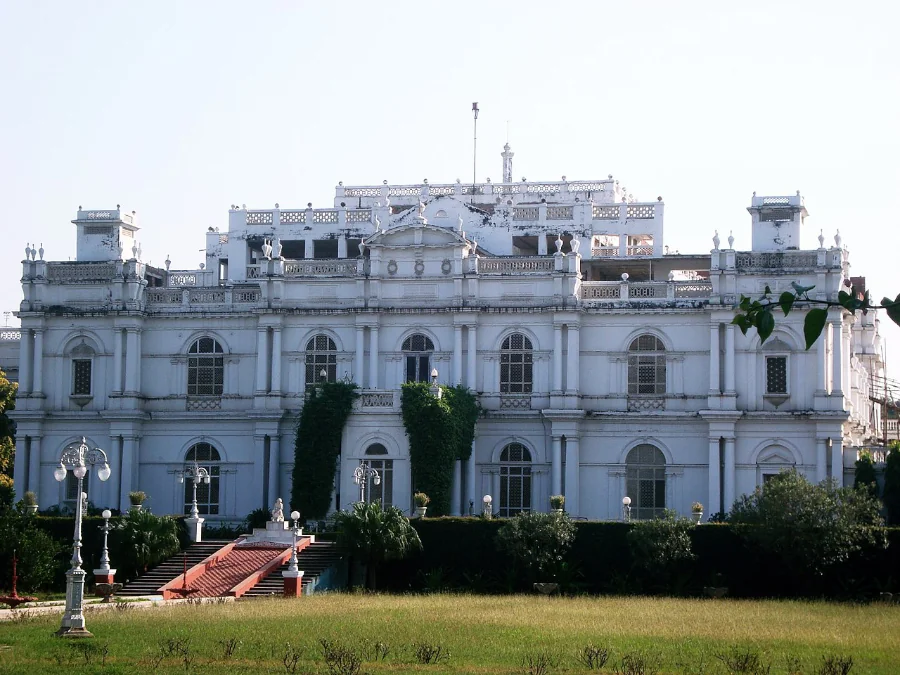
Why This Guide? We won’t just skim the surface. We’ll delve deep into the Granite Bones of Gwalior Fort, exploring its Palaces, Temples and the World’s Oldest Recorded Zero. We’ll trace the Evolution of the Gwalior Gharana and feel the pulse of the Tansen festival. You’ll get Practical Itineraries for Monsoon Magic or Winter Wonders, Discover Hidden Culinary Gems like Gwalior ke Mangode and understand the Demographic Tapestry woven from Hindi, Bundeli and Marathi threads. We’ll provide Granular Travel Logistics, from Conquering the Fort’s six gates to navigating bustling Bazaars for the perfect Chanderi sari.
What Lies Ahead: Prepare for a journey through time and tune. We’ll explore its Architectural Marvels, from Indo-Aryan Temples to Versailles-inspired Palaces. We’ll map the Distances from major Indian cities, detail the Best Times to Visit based on climate, uncover Local Lifestyles in neighbourhoods like Thatipur and list Notable Sons and Daughters who shaped its legacy. Detailed sections on Places of Worship, Markets, Handicrafts and Things to do; will equip you for an unforgettable experience. Let the exploration begin!
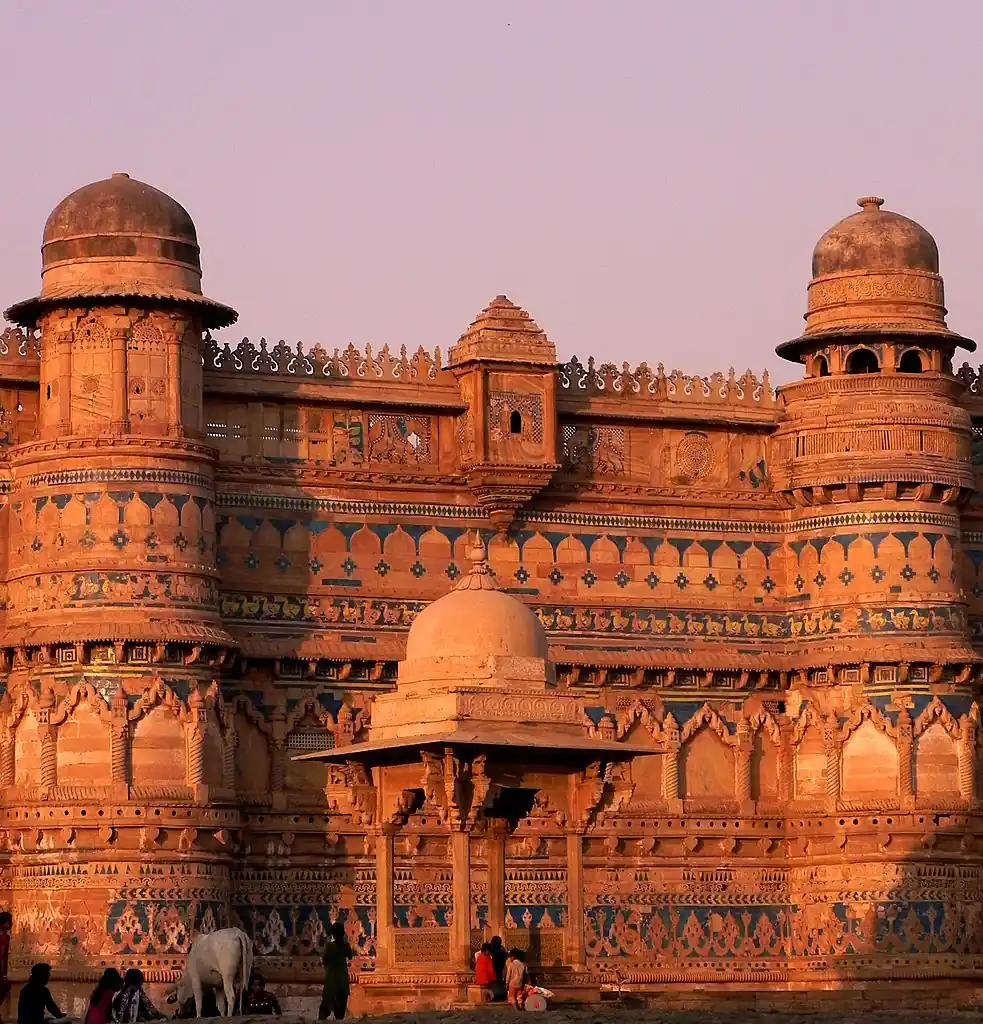
Gwalior: The Fortress City Where History Resonates and Music Soars
🟢 Detailed Introduction
Perched majestically in Northern Madhya Pradesh, Gwalior (Population 1.07 million) is a living tapestry of India’s cultural and political evolution. Founded according to legend in 6th century CE when chieftain Suraj Sen was cured of leprosy by sage Gwalipa at Suraj Kund, the city derives its name from this mystical healer. Dominated by one of India’s most impregnable forts — described by Mughal emperor Babur as “the pearl among fortresses of India” — Gwalior’s strategic 3-km-long cliff – top stronghold has witnessed the rise and fall of dynasties from the Tomar Rajputs (15th century) to the Maratha Scindias (18th century). Beyond its martial legacy, Gwalior is revered as India’s “City of Music”, cradle of the oldest Hindustani classical Gharana (Tradition), and home to Tansen, the legendary composer among Akbar’s Nine Jewels. In 2023, UNESCO designated it a Creative City for Music, spotlighting its living Musical Heritage.
The city’s Strategic Location — 313 km south of Delhi and 423 km north of Bhopal—made it a coveted prize for empires. The Alchon Huns left the earliest inscription (520 CE), while the Gurjara-Pratiharas (9th century) built the iconic Teli Ka Mandir, blending Dravidian and Nagara Architectural styles. Raja Man Singh Tomar’s reign (1486–1516) marked a golden age: he constructed the Man Mandir Palace with its iconic tile mosaics and established India’s first formal music academy. The Scindia Dynasty (1745–1947) shaped modern Gwalior, founding Lashkar city and building the Versailles-inspired Jai Vilas Palace. The city’s role in the 1857 Rebellion remains poignant — Rani Lakshmibai’s martyrdom near Phool Bagh is commemorated by an 8-meter bronze statue.
⭕ A Tapestry Woven Through Time: Gwalior’s Rich History
Gwalior’s history isn’t linear; it’s a dramatic epic penned by successive dynasties, each adding a vivid chapter:
➤ Ancient Foundations & Mythic Origins:
Long before recorded kings, the region was known as Gopasetra or Gopadri – “Land of Cowherds”, hinting at deep connections to Krishna lore. Archaeological evidence points to Stone and Iron Age settlements near Gupteshwar, west of the fort. The legend of Suraj Sen and Sage Gwalipa (6th-8th century CE) remains the city’s founding myth, explaining its name and the sacred Suraj Kund. The earliest concrete evidence comes from the Gwalior Inscription of Mihirakula (circa 520 CE), glorifying the Alchon Hun ruler and his father Toramana, showcasing the fort’s early strategic importance.
➤ Medieval Flux: Dynasties & Devotion:
The 8th century saw the Gurjara-Pratiharas rise, leaving behind the towering Teli Ka Mandir – a unique fusion of Dravidian Shikhara and Nagara elements dedicated to Vishnu/Shiva. They were succeeded by the Kachchhapaghata Dynasty (10th-12th centuries), devout patrons of Jainism and Vaishnavism. Their legacy shines in the stunning twin Sas Bahu Temples (Originally Sahastrabahu, dedicated to Vishnu) and the proliferation of colossal Jain rock-cut sculptures adorning the fort cliffs, some soaring to 57 feet. Mahmud of Ghazni’s raid in 1021 underscored the fort’s coveted status.
➤ The Tomar Golden Age:
In 1398, Raja Veer Singh Tomar established Tomar rule, but it was under Raja Man Singh Tomar (1486-1516) that Gwalior reached its zenith. A warrior, musician, and visionary builder, he constructed the Man Mandir Palace, a masterpiece of Hindu palace architecture adorned with dazzling tile work, intricate carvings, and innovative acoustics designed for music. He founded the Gwalior Gharana, establishing a formal music school within the palace complex, attracting luminaries like Baiju Bawra. His love for Queen Mrignayani inspired the beautiful Gujari Mahal (now an Archaeological Museum). Babur’s admiration for the fort as the “Pearl among Fortresses” was well-earned.
➤ Mughals, Marathas, and the Scindia Legacy:
The fort fell to Ibrahim Lodi in 1516 and later became a prized possession of the Mughals. Akbar used it as a prison, notably for his cousin, Kamran. The Jats, under Bhim Singh Rana, briefly wrested control in the 18th century after Aurangzeb’s death. The city’s modern character, however, was shaped by the Maratha Scindia Dynasty from the 1740s onwards. Ranoji Scindia laid the foundation, and Mahadaji Scindia (late 18th century) expanded their dominion significantly. They established Lashkar (“the Army Camp”) south of the fort as their capital. Despite losses to the British in the Anglo-Maratha Wars, the Scindias retained Gwalior as a Princely State under British paramountcy, ruling with remarkable autonomy.
➤ 1857 Rebellion & Modern Integration:
Gwalior played a pivotal, tragic role in the 1857 uprising. Rani Lakshmibai of Jhansi, after being ousted from Jhansi, sought refuge here. Though the Maharaja Jayajirao Scindia initially remained loyal to the British, his troops rebelled, allowing Lakshmibai and Tatya Tope to capture the fort briefly in June 1858. Lakshmibai met her heroic end fighting the British near Phool Bagh, where her Cenotaph (Chhatri) stands today. Post-independence, the last ruling Maharaja, Jiwajirao Scindia, peacefully acceded to India. Gwalior became the Capital of the new state of Madhya Bharat (1948-1956) before its merger into Madhya Pradesh. The Scindias continue to be influential figures in Indian politics.
⭕ Architectural Symphony in Stone: From Fortresses to Palaces
Gwalior is an open-air museum of Indian architecture, showcasing an incredible evolution of styles across centuries:
➤ Gwalior Fort – The Imposing Masterpiece:
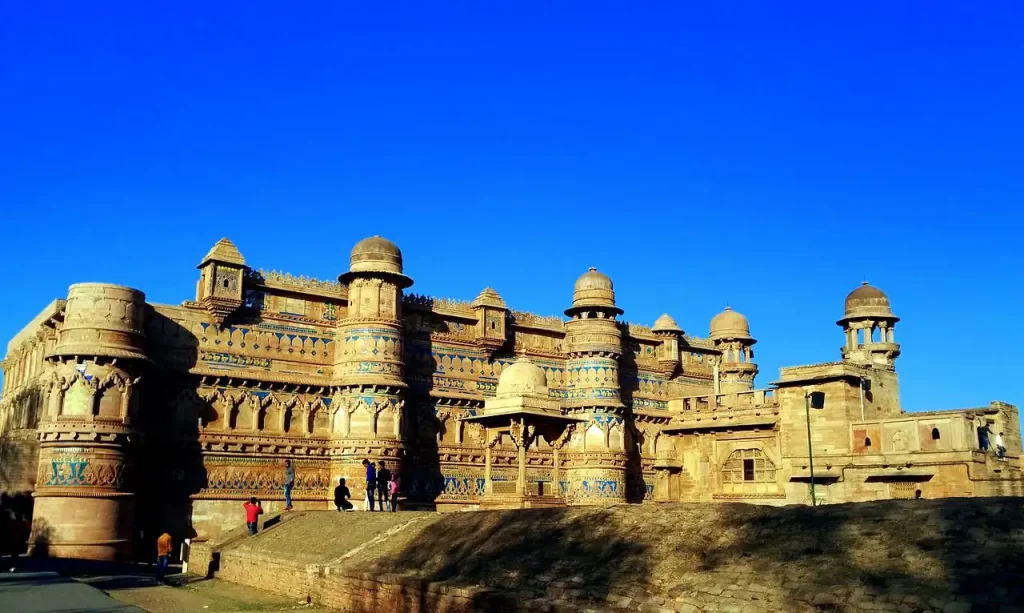
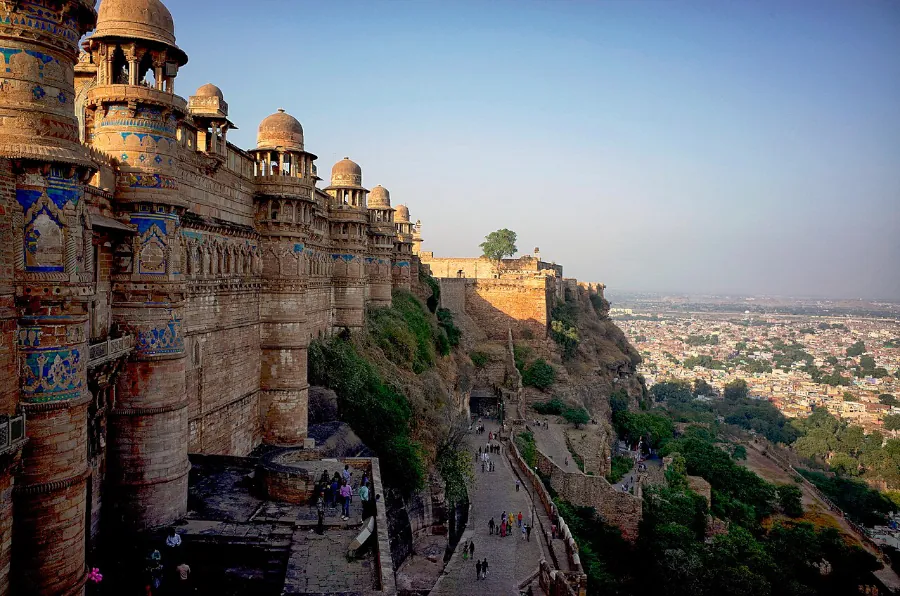
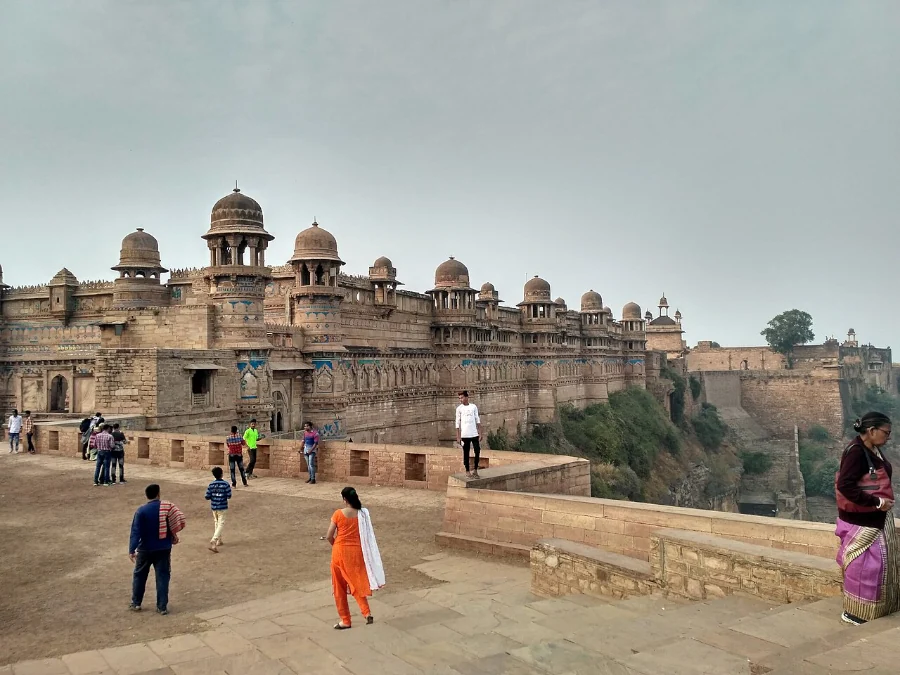
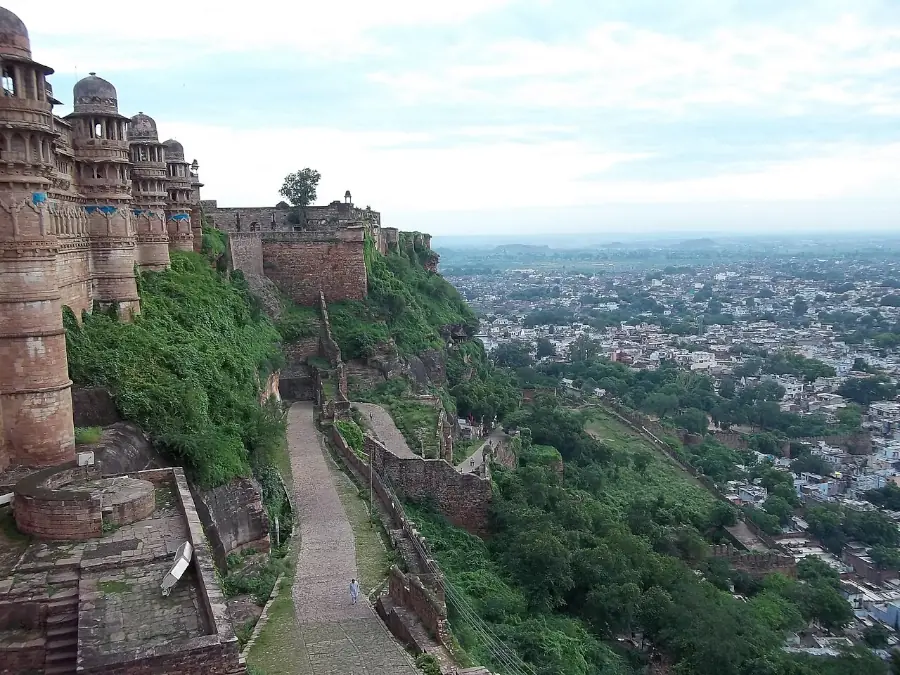
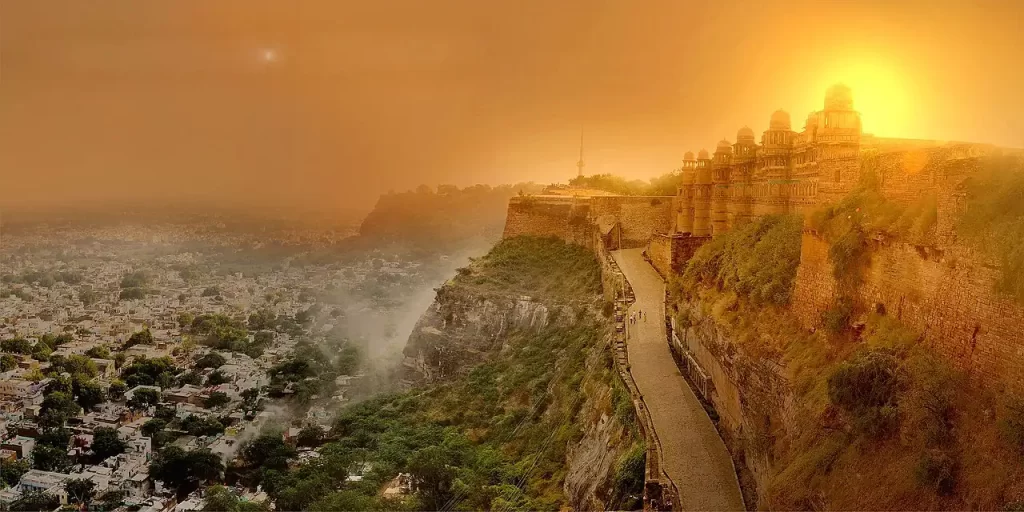
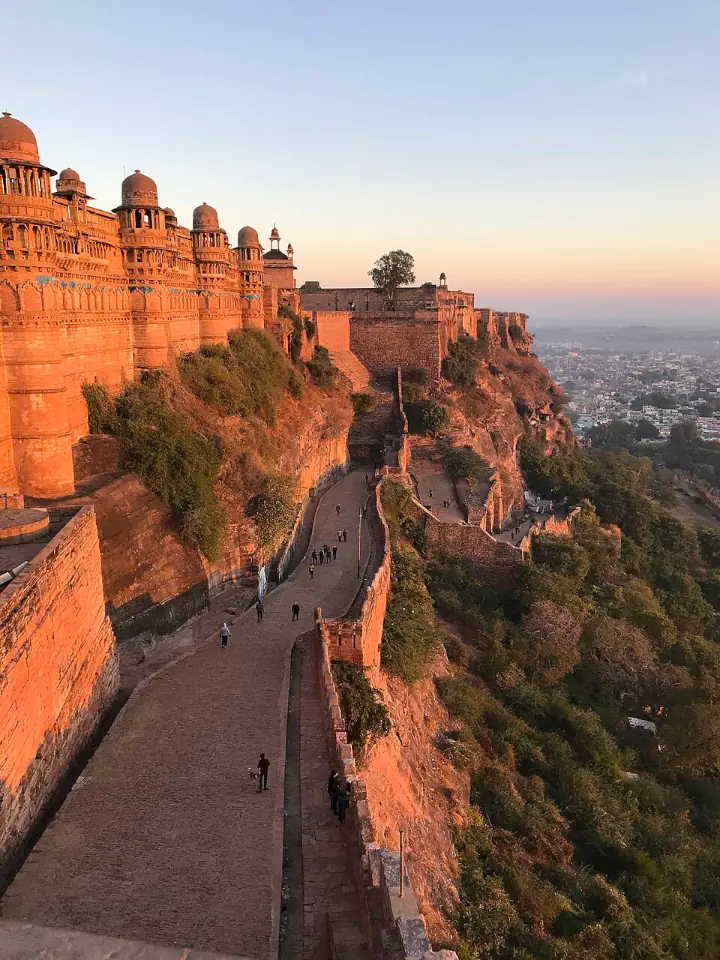
Crowned “The Gibraltar of India”, this 3 sq km fortress perched on a sheer 100m sandstone outcrop is the city’s defining landmark. Its impregnability is legendary. Access is via six imposing gates along a winding ramp: Hathiya Paur (Elephant Gate, with spiked doors to deter war elephants), Ganesh Gate, Badalgarh Gate, Lakshman Gate, Hindola Gate (Swinging Gate), and the main Alamgiri Gate (Mughal era). Within its walls lies an astonishing concentration of heritage.
➤ Man Mandir Palace (1486-1516):
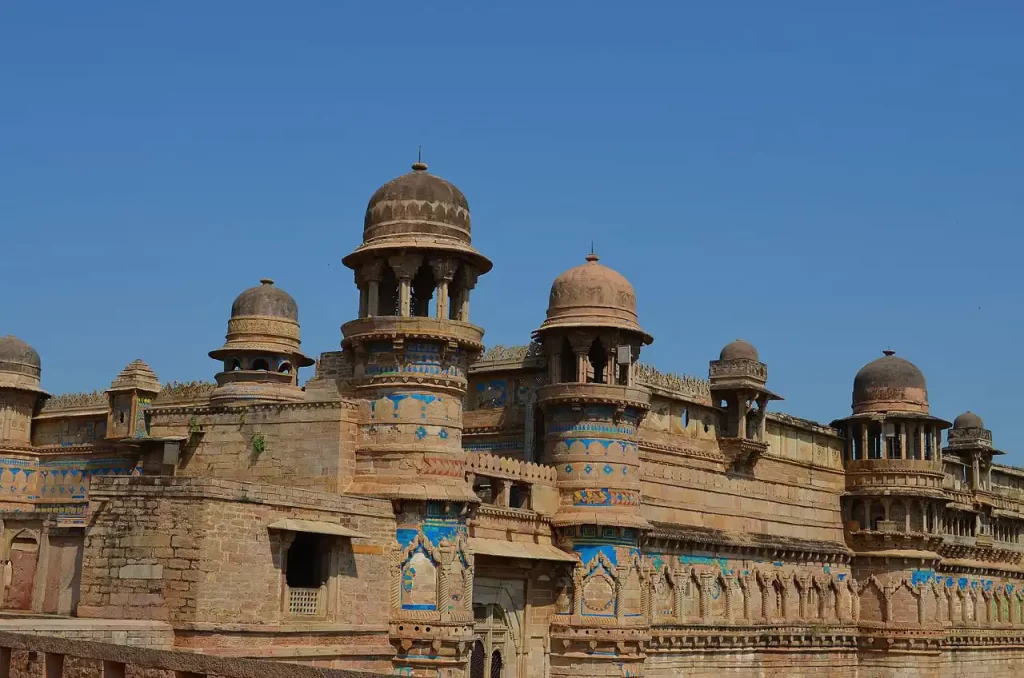
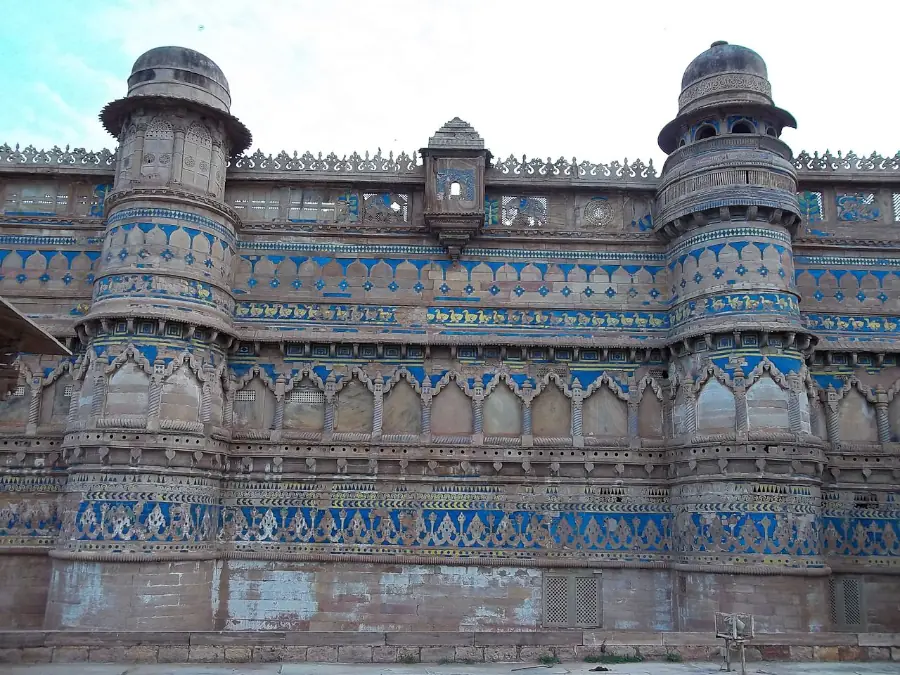
Raja Man Singh Tomar’s jewel. Externally, its facade mesmerises with Turquoise, yellow and white ceramic tile mosaics depicting Animals, Geometric Patterns and Mythical Creatures (Chinese Dragons on pillars attest to ancient trade links). Internally, it’s a labyrinth of two underground prison levels (used by Mughals, including where Guru Hargobind Sahib was held – commemorated by Gurdwara Data Bandi Chhor), Courtyards and Exquisitely Carved Rooms. The Sabha Mandap (Assembly Hall) and Vipra Mandap (Musician’s Gallery) highlight its acoustic brilliance designed for Dhrupad music.
➤ Temples of Time:
The 9th-century Teli Ka Mandir stands tall at 100ft, its unique Dravidian-style roof atop a typically North Indian base showcasing Pratihara-era fusion. The 11th-century Sas Bahu Temples (“Mother-in-Law, Daughter-in-Law”), though smaller, are masterpieces of intricate carvings covering every surface – gods, goddesses, floral motifs, and geometric designs. The Chaturbhuj Temple holds immense scientific significance – its 876 CE inscription contains the world’s second oldest recorded instance of the number ‘Zero’ as a written numeral.
➤ Jain Colossi:
The Southeastern and Southwestern cliff faces below the fort walls are adorned with awe-inspiring 15th-century Jain Tirthankara sculptures, carved in niches during the Tomar reign. The largest, a 57-foot seated figure of Adinath (or Bahubali, sources vary), is a monumental feat of rock carving.
➤ Later Additions:
Vikram Mandir (Kirti Singh Tomar), Karan Mandir (Man Singh’s son), Jahangir Mahal (Sher Shah Suri), Shah Jahan Mahal (Mughal era) add layers of subsequent Architectural styles within the fort complex.

➤ Gujari Mahal & Archaeological Museum:
Built by Man Singh for Queen Mrignayani, this 15th-century palace exemplifies robust Rajput structure with delicate embellishments. Now housing the State Archaeological Museum, its collection spans millennia – from exquisite Gupta-era sculptures (1st-5th century CE) like the famed Shalabhanjika (Tree Goddess) to Medieval artefacts, coins, and weaponry.
➤ Lashkar’s European Grandeur:
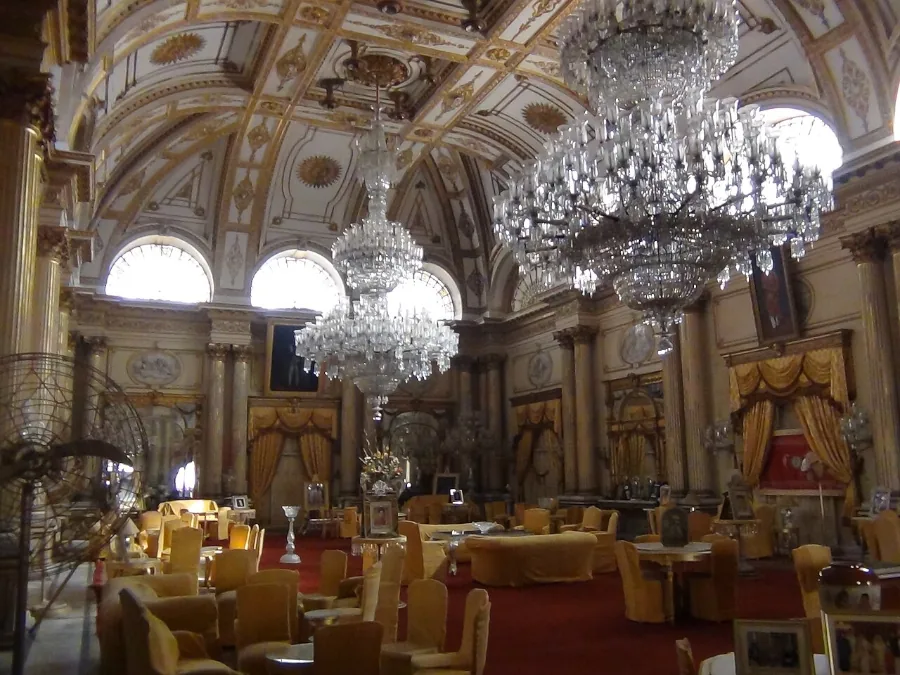
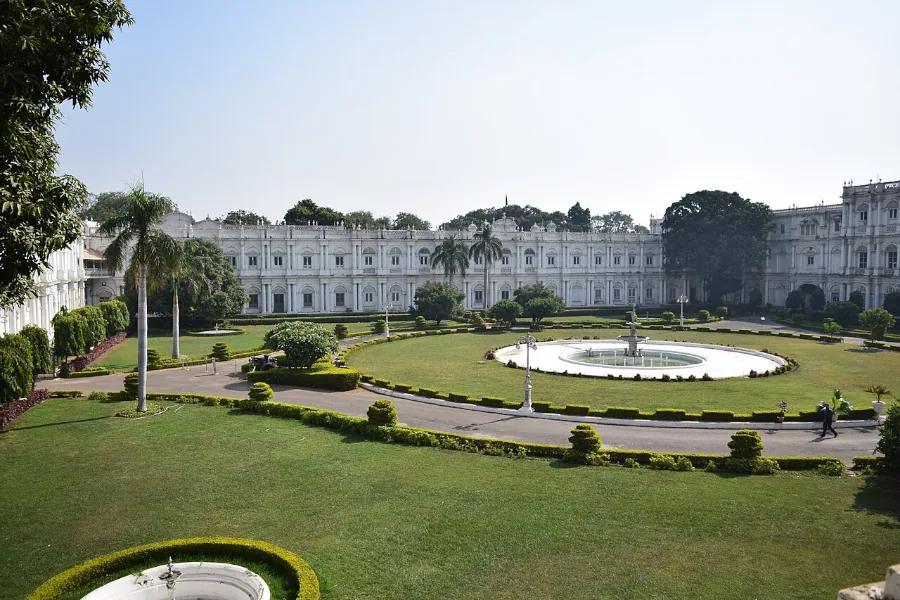
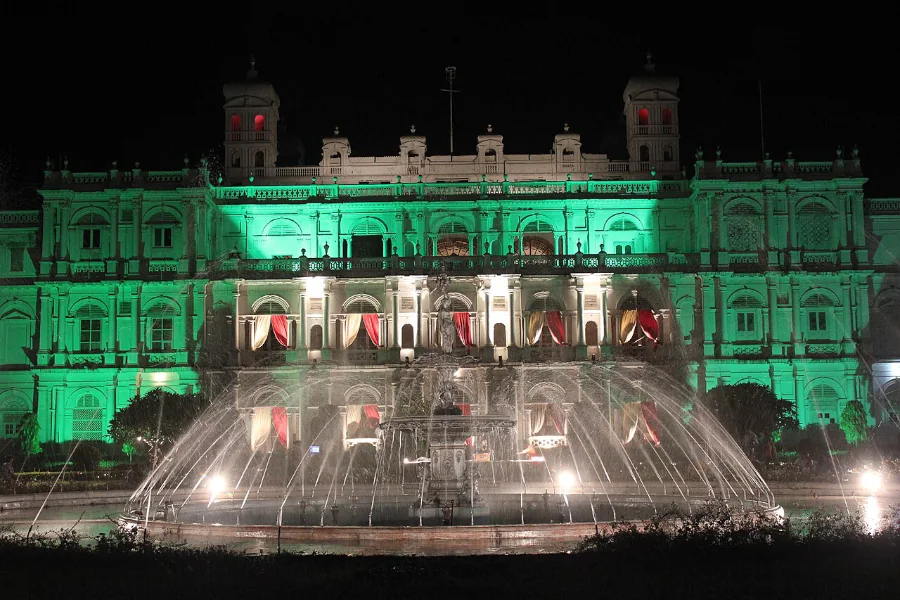
Jai Vilas Mahal (Scindia Palace): Moving to the plains of Lashkar, the Scindias showcased their wealth and connection to Europe. Built by Maharaja Jayajirao Scindia in 1874 at the staggering cost of one crore rupees, Jai Vilas Mahal is a flamboyant blend of Italianate, Tuscan and Corinthian styles. Its Durbar Hall boasts the world’s largest chandeliers (reportedly only two of many can be lit simultaneously due to weight!). The museum within displays Scindia opulence: Vintage Cars, Stuffed Trophies, Intricate Weaponry and the whimsical Silver Miniature Train that served cigars and brandy after dinner on its tracks.
➤ Sufi Serenity & Mughal Grace:
Tomb of Mohammad Ghaus: This 16th-century Mughal Architectural Gem honours the Sufi saint who aided Babur in capturing Gwalior and was Tansen’s spiritual mentor. Featuring Hexagonal Towers, Delicate Stone Jali Screens (Pierced Stonework) and a Large Central Dome set within a Charbagh-style Garden, it exudes tranquility.
Tomb of Tansen: Adjacent to Ghaus’s tomb lies the simpler yet deeply revered Mausoleum of Mian Tansen, the musical genius of Akbar’s court. Its association with music makes it a pilgrimage site for musicians, especially during the Tansen Samaroh.
Colonial & Modern Touches: Morar Cantonment retains its colonial-era bungalows and layout. The Sun Temple near Morar, a modern replica of Konark built by the Birlas, adds a contemporary religious landmark amidst landscaped gardens.
⭕ Journey to the Heartbeat: Distance to Gwalior from Major Cities
Gwalior’s central location makes it accessible from across India. Here’s a quick guide to distances by road (approximate kms):
Table: Distance from Key Indian Cities to Gwalior
| City | Distance (km) | City | Distance (km) |
| Jhansi | 97 km | Chandigarh | 558 km |
| Agra | 118 km | Nagpur | 569 km |
| Kanpur | 276 km | Ahmedabad | 858 km |
| Delhi | 321 km | Mumbai | 1086 km |
| Jaipur | 350 km | Hyderabad | 1172 km |
| Lucknow | 353 km | Kolkata | 1248 km |
| Bhopal | 423 km | Bengaluru | 1734 km |
| Indore | 486 km | Chennai | 1768 |
➨ Getting There:
➸ By Air: Rajmata Vijaya Raje Scindia Airport (GWL) has regular domestic flights connecting to Delhi, Mumbai, Bangalore, Hyderabad, Kolkata, Pune, Ahmedabad, Jaipur, Indore, Patna, and Jammu. It’s about 8 km from the city centre.
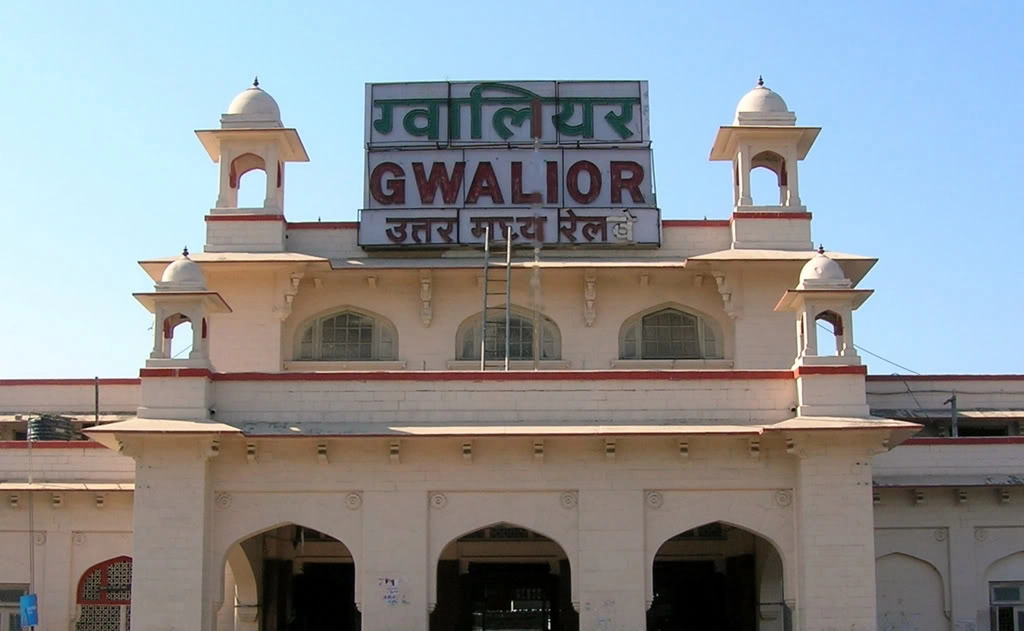
➸ By Rail: Gwalior Junction (GWL) is a major railway hub on the Delhi-Mumbai and Delhi-Chennai trunk routes. Over 180 trains stop here, offering excellent connectivity to almost all major cities in India. Key trains include Shatabdi Express, Rajdhani Express, and numerous super-fast and express services.
➸ By Road: Gwalior is well-connected via National Highways: NH-44 (Agra-Shivpuri), NH-34 (towards Jhansi), and NH-46 (towards Bhind). Proposed expressways like Gwalior-Agra and Chambal Expressway will further enhance connectivity. State-run buses (MPSRTC) and private operators offer extensive services.
⭕ Experiencing Gwalior: Beyond the Fort Walls
Best Places to Visit (Briefly Described – For detailed extended version, scroll down ↓):
➸ Gwalior Fort Complex (3-4 hours): Dedicate ample time. Start early. Enter via Urwahi Gate to see the Jain sculptures, or via the main Eastern Gate. Must-sees: Man Mandir Palace (feel the history, imagine the music), Sas Bahu Temples (Marvel at the Carvings), Teli Ka Mandir (Admire the unique blend), Chaturbhuj Temple (see the ‘Zero’ inscription), Jain Rock-Carved Statues (Photograph the scale). Don’t miss the evening Sound and Light show narrating the fort’s saga.
➸ Tomb of Tansen & Mohammad Ghaus (1 hour): Visit these serene Mughal-era tombs near Hazira. Soak in the peaceful atmosphere. Musicians often pay respects at Tansen’s tomb. Admire the intricate Jali work at Ghaus’s tomb.
➸ Jai Vilas Mahal & Scindia Museum (2 hours): Experience Scindia opulence in Lashkar. Gaze at the massive chandeliers, the Durbar Hall, the vintage collection, and the fascinating silver train. The museum offers a glimpse into royal life.
➸ Gujari Mahal Archaeological Museum (1.5 hours): Explore the sturdy palace structure. Focus on the stunning Shalabhanjika sculpture, Gupta-era artefacts, and the medieval collection. Request to see special exhibits if possible.
➸ Sarod Ghar (1 hour): The ancestral home of Sarod maestro Amjad Ali Khan, converted into a unique Museum of Music. See rare instruments (Sarod, Veena), Historical Documents, Photographs and Memorabilia Tracing the Evolution of Indian classical music. A must for music lovers.
➸ Sun Temple, Morar (45 mins): Visit this modern yet impressive replica of Konark. Enjoy the peaceful gardens surrounding it. A good spot for quiet reflection.
➸ Phool Bagh & Cenotaph of Rani Lakshmibai (30 mins): Pay homage to the Warrior Queen at the park where she fell in battle. The Cenotaph (Chhatri) depicts her valiant last stand on horseback.
➸ Gwalior Zoo (Biological Park) (2 hours): A pleasant diversion, especially for families. See white Tigers, various Birds, Mammals and Reptiles. Offers boating facilities.
Note: The above mentioned section is Briefly Described – For detailed extended version with Granular Details, scroll down(↓)
➨ Best Time to Visit & Detailed Weather:
➸ October to March (Winter/Dry Season – BEST TIME): Pleasant and ideal.
⦿ Day (Oct-Nov & Feb-Mar): 20°C – 28°C (68°F – 82°F).
⦿ Day (Dec-Jan): 10°C – 22°C (50°F – 72°F).
⦿ Nights: Can dip to 5-6°C (41°F – 43°F).
Weather: Clear skies, low humidity, sunny days, cool/cold nights. Perfect for extensive sightseeing, fort exploration, outdoor activities and attending the Tansen Samaroh (December). Pack light woollens for evenings December-February.
Monsoon Itinerary Suggestion: Avoid unless you enjoy rain. If visiting between July-September, focus on indoor museums (Scindia Museum, Sarod Ghar) and fort interiors. Carry heavy rain gear and waterproof shoes. Be prepared for humidity and potential sightseeing disruptions.
Winter Itinerary Suggestion: Pack in everything! Fort at Sunrise/Sunset, Palaces, Tombs, Markets, Tansen festival, Zoo, Day trips to Shivpuri/Orchha. Enjoy local street food comfortably.
Note: The above mentioned section is Briefly Described – For detailed extended version with Granular Details, scroll down(↓)
➨ Nearby Tourist Attractions (Day Trips):
➸ Shivpuri (112 km): Former Scindia summer capital. Visit the intricately carved Scindia Chhatris (Cenotaphs) and the Madhav National Park (Sambar, Chinkara, Leopard, Birdlife).
➸ Orchha (120 km): Stunning medieval town on the Betwa River. Explore the Orchha Fort complex (Jahangir Mahal, Raj Mahal), Ram Raja Temple and picturesque Chhatris.
➸ Pawaya (68 km): Ancient archaeological site (Gupta Period). See the ruins of the Padmavati Gupta Temple Complex and the impressive Yaksha Statue.
➸ Datia (69 km) & Sonagiri (72 km): Datia boasts the imposing 7-storey Bir Singh Deo Palace. Nearby Sonagiri hill is a major Jain pilgrimage site with over 100 White Marble Temples clustered on its slopes.
➸ Chambal Safari (Approx 100 km): Take a boat safari on the Chambal River near Dholpur/Bhind to spot Ghadiyal (Gharial), Dolphins and diverse Birdlife in a pristine environment.
➨ Places of Worship:
➸ Gurdwara Data Bandi Chhor Sahib (Fort): Commemorates Guru Hargobind Sahib’s release from Mughal imprisonment.
➸ Surya Mandir (Sun Temple, Morar): Modern Hindu temple dedicated to Surya.
➸ Koteshwar Mahadev (Old City): Ancient Shiva temple with a significant legend.
➸ St. George’s Church (Morar Cantonment): Historic Anglican church reflecting colonial heritage.
➸ Numerous Jain Temples: Reflecting the city’s strong Jain heritage, including temples in the Old City and near the fort.
➸ Jama Masjid (Old City): Historic mosque within the fort precincts.
➨ Local Market Places (Bazaars):
➸ Patankar Bazaar (Lashkar): The main commercial hub. Best for Chanderi and Maheshwari Silk Sarees, Dress Materials, Imitation Jewellery and general shopping. Bustling atmosphere.
➸ Sarafa Bazaar (Lashkar): Famous for Gwalior’s iconic Namkeen (savoury snacks) and Gajak (sesame/jaggery sweet). Also good for silver jewellery and traditional sweets. Visit Mrignayanee (Govt. Emporium) here for authentic handicrafts.
➸ Dahi Mandi (Old City): Specialises in dairy products, particularly the famous Gwalior Dahi (Yogurt).
➸ Hazira Market (Near Tombs): Offers flowers, offerings and local Handicrafts near the Sufi Tombs.
➸ Maharaj Bada (Lashkar): Area around Jiwaji Chowk, known for Textiles, Electronics and Street Food.
➨ Local Food: A Culinary Adventure:
➸ Gwalior ke Mangode: Crispy lentil fritters, a beloved street food snack. Best enjoyed hot with tangy chutney or in a curry.
➸ Gwalior Barbat: The royal Scindias’ signature dish! Mutton cooked in a rich, intensely spicy red gravy using a special Kala Masala. Traditionally prepared during Dussehra.
➸ Gwalior Bedai: Fluffy, deep-fried wheat bread served with spicy Potato Curry (Aloo Sabzi) and a Sweet & Sour Chutney. A hearty breakfast staple.
➸ Poha-Jalebi: Flattened rice flakes cooked with Spices, Onions and Potatoes, served Hot with Crispy, Syrupy Jalebis. A classic Central Indian combo.
➸ Kachori-Imarti: Spicy lentil-stuffed Kachoris paired with the intricate, syrupy swirls of Imarti (like Jalebi’s cousin).
➸ Gajak: The quintessential Gwalior winter treat. Crunchy sesame seed or peanut brittle bound with Jaggery or Sugar. Sarafa Bazaar is the place to buy it fresh.
➸ Bhutte ka Kees: Grated Corn cooked with Milk, Spices and sometimes Coconut. A monsoon/winter delicacy.
➨ Handicrafts: Take Home a Piece of Gwalior:
➸ Stone Carving & Sculpture: Gwalior Sandstone is famous. Find intricate replicas of Fort Motifs, Deities (especially Jain Tirthankaras) and decorative items. Workshops near the fort or at Mrignayanee emporium.
➸ Chanderi & Maheshwari Weaves: While the weaving hubs are elsewhere, Gwalior markets offer the best selection of these lightweight, elegant silk and cotton sarees with distinctive borders and motifs.
➸ Leatherware: Traditionally crafted footwear (Mojaris/Juttis) and bags.
➸ Metal Craft: Brass and Bronze decorative items, Utensils and Statues.
➨ Local Lifestyle:
➸ Neighbourhood Vibes: Experience contrasts – The historic, sometimes congested lanes of Old City (Ghauspura) near the fort, buzzing with small shops and temples. Lashkar’s bustling markets (Patankar, Sarafa) and grand palaces reflecting Scindia influence. Morar’s more relaxed, green cantonment feel with colonial bungalows. Thatipur’s predominantly residential character with modern colonies and local markets.
➸ Music in the Air: The legacy of the Gwalior Gharana permeates. Music schools (Sangeet Vidyalayas) exist across the city. Hearing Riyaz (Practice) sessions, especially near the Tansen tomb area, isn’t uncommon. Respectful visits to the tomb are frequent.
➸ Religious Harmony: Gwalior exhibits a long tradition of syncretism. The reverence for Sufi saints like Ghaus and Tansen by people across religions, the presence of Jain Heritage alongside Hindu Temples, Churches and Mosques, reflects this blend.
➸ Festivals: Beyond Tansen Samaroh (December), major festivals like Diwali, Holi, Dussehra, Eid, Mahavir Jayanti, and Guru Parabs are celebrated with enthusiasm. Gwalior Trade Fair is a major annual event.
➨ Best Route to Reach Key Sites:
➸ Fort Exploration: Start early via the Eastern Entrance (near Gujari Mahal/Museum). Visit the Museum first. Then ascend to the fort complex via car/auto or walk the steep path. Focus on Man Mandir, Teli Ka Mandir, Sas Bahu, Chaturbhuj. Exit via Urwahi Gate to see the Jain Sculptures on the cliff face below. Use auto-rickshaws between distant points within the vast fort.
➸ Lashkar Heritage & Shopping: Start at Jai Vilas Mahal (Scindia Museum). Then walk or take a short auto to Sarod Ghar. Afterward, explore Patankar Bazaar for textiles and Sarafa Bazaar for snacks/handicrafts. Visit the Tomb complex (Ghaus & Tansen) which is closer to the Old City side of Lashkar.
➸ Morar & Outskirts: Visit the Sun Temple in Morar. Consider a trip to Tighra Dam for boating/picnics (20km North).
➨ Things to Do:
➸ Attend the Tansen Music Festival (December): Immerse yourself in classical ragas under the stars near Tansen’s tomb. A magical experience.
➸ Take a Heritage Walk: Explore the Old City lanes around Hazira, visiting Koteshwar temple, Kashi Naresh ki Gali, and local markets.
➸ Shop for Handicrafts: Hunt for Chanderi silks, stone carvings, and leatherwork in Patankar/Sarafa Bazaars and Mrignayanee.
➸ Savour Street Food: Indulge in Bedai-Aloo, Mangode, Poha-Jalebi, and of course, Gajak!.
➸ Enjoy Boating: At Tighra Dam (Picnic spot) or on the Swarna Rekha River stretch near the Zoo.
➸ Watch the Gwalior Fort Sound & Light Show: A dramatic retelling of the Fort’s History.
➸ Visit a Music School (Riyaz Session): With prior permission or connections, observe the dedication of students learning the Gwalior tradition.
➸ Take a Day Trip: Explore Orchha’s grandeur or Shivpuri’s chhatris and wildlife.
Note: The above mentioned sections are Briefly Described – For detailed extended version with Granular Details, scroll down(↓)
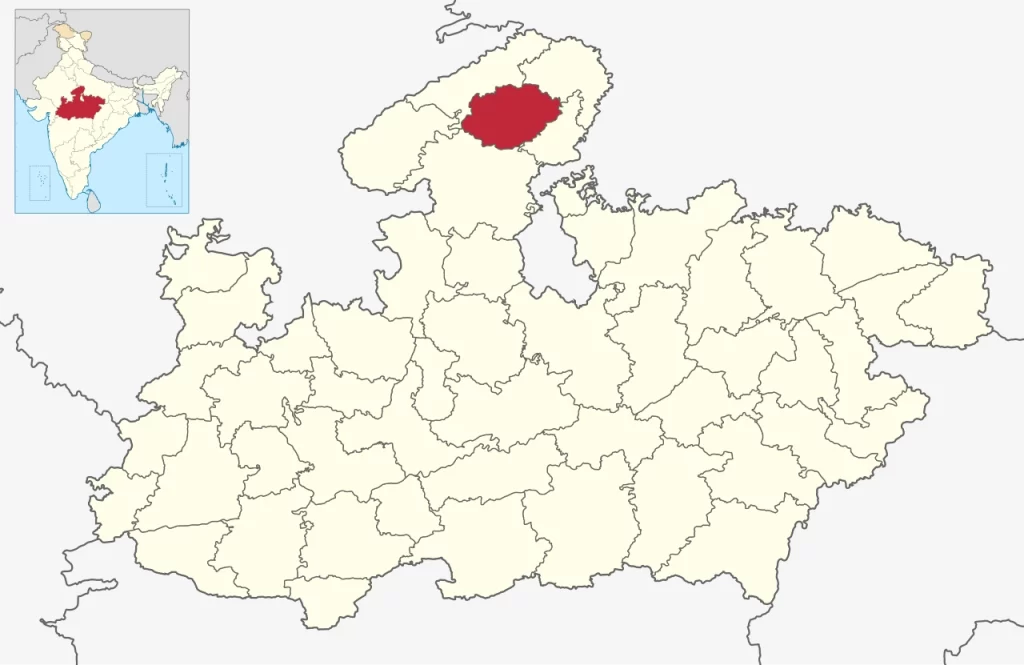
⭕ Gwalior District: The Larger Canvas
Travel Tips & Climatic Conditions: Covered in detail under “Best Time to Visit & Detailed Weather”.
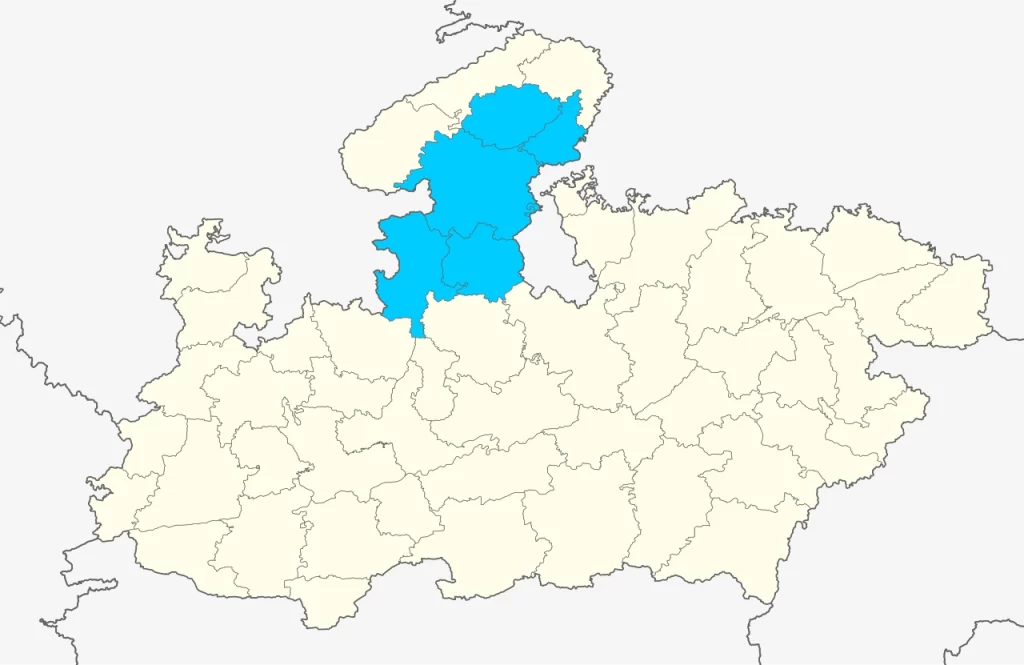
Talukas (Tehsils): Gwalior, Bhitarwar, Dabra, Chinour, Ghatigaon, Morar.
➨ Demographics (2011 Census):
⦿ Population: 2,032,036
⦿ Density: 445 persons/sq km
⦿ Urban Population: 62.69%
⦿ Sex Ratio: 862 females / 1000 males
⦿ Literacy Rate: 77.93%
⦿ Scheduled Castes: 19.34%
⦿ Scheduled Tribes: 3.55%
➨ Languages:
⦿ Official: Hindi
⦿ Predominant: Hindi (spoken by ~96% as first language)
⦿ Other: Bundeli, Marathi (each ~1-2%)
➨ Economy: Major commercial & industrial hub for N. MP. Key sectors:
➸ Industry: Footwear Manufacturing, Textiles, Matchboxes, Pottery, Biscuits, Engineering, Stone Quarrying/Sandstone Carving, Plastics, Rayon, Sugar/Oilseed Milling. Industrial zones at Malanpur (Bhind), Banmore (Morena) flank the city.
➸ Agriculture (Surrounding Region): Rich alluvial plains irrigated by Canals (Harsi, Tigra, Kaketo Dams). Wheat, Sorghum (Jowar), Rice, Pulses.
➸ Services: Education (Jiwaji Univ., Medical/Tech colleges), Healthcare (Major Hospitals), Tourism (Core Sector), Administration (District/Divisional HQ, central offices like BSF Academy, DRDE), Retail & Trade.
➸ Emerging Sectors: Startups (selected for national startup centre), IT/ITeS (growing presence), Smart City initiatives.
➨ Notable People from Gwalior:
➸ Historical/Royalty: Raja Man Singh Tomar, Mahadaji Scindia, Daulat Rao Scindia, Jivajirao Scindia, Madhavrao Scindia, Vijaya Raje Scindia, Jyotiraditya Scindia.
➸ Music: Mian Tansen, Baiju Bawra, Amjad Ali Khan, Hafiz Ali Khan, Meeta Pandit (Gwalior Gharana exponents).
➸ Literature/Poetry: Atal Bihari Vajpayee (Poet-PM), Javed Akhtar, Jan Nisar Akhtar, Nida Fazli, Piyush Mishra.
➸ Politics: Atal Bihari Vajpayee, Madhavrao Scindia, Vijaya Raje Scindia, Jyotiraditya Scindia, Narendra Singh Tomar.
➸ Sports: Roop Singh (Hockey Olympian), Shivendra Singh (Hockey).
➸ Cinema/Arts: Salman Khan (studied at Scindia School), Sharad Kelkar, Vivek Agnihotri, Kartik Aaryan (born/brought up), Piyush Mishra.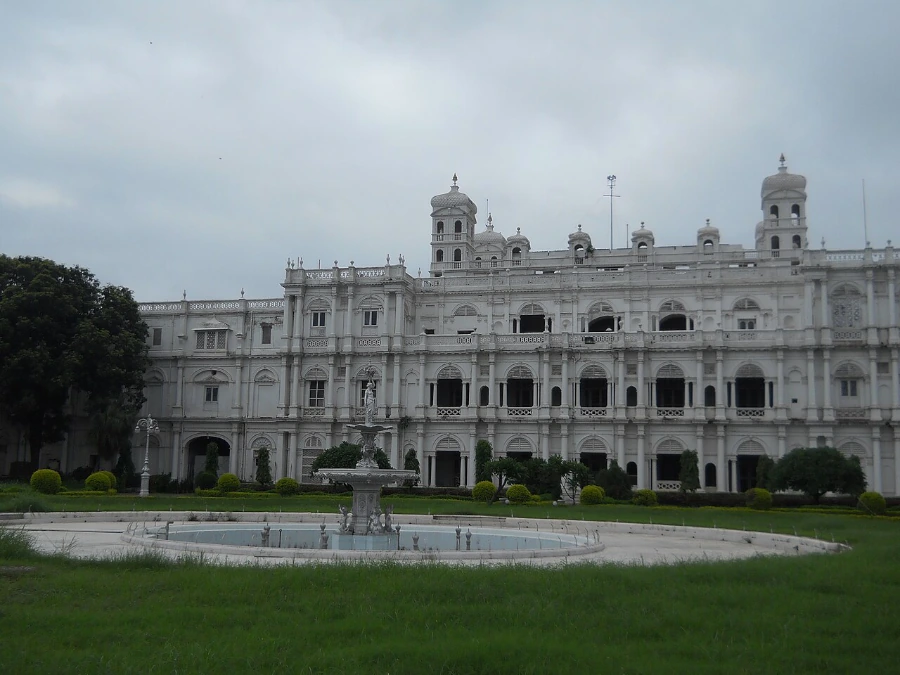
🟣 Brief Sectional Details
➤ Best Places for Refreshments with Authentic Local Food
➸ SS Kachoriwala (Nayi Sadak): Dive into Gwalior’s breakfast culture with piping-hot Kachoris (₹20/pc) stuffed with spiced lentils, served alongside tart Tamarind Chutney. Arrive by 7 AM to witness the rhythmic dough-stretching and frying in Pure Ghee — a spectacle as much as a meal.
➸ Jodhpur Mishthan Bhandar (Patankar Bazaar): Sample Paneer Jalebi (₹250/kg), where cottage cheese replaces traditional Maida, soaked in Saffron Syrup. This Sweet-and-sour innovation reflects Maratha influences on local cuisine.
➸ Aggarwal Poha Bhandar: The city’s signature Poha (Flattened Rice, ₹40/plate) gets a spicy twist here with extra Green Chilies, Turmeric and Sev (Crispy Noodles). Locals swear by its restorative powers after a fort exploration.
➸ Pancchiraj (Hazira Road): Try Petha Gilori (₹100/box)—a translucent Petha (Ash Gourd Sweet) wrapped like a Paan and filled with Rose Gulkand and Mint. This delicate sweet exemplifies Gwalior’s fusion of Mughal and Maratha Culinary Arts.
➸ Street Carts near Tansen Tomb: Evenings bring Karela Chaat (₹30/plate)—fried dough wafers topped with yogurt, mint chutney, and pomegranate. Despite the name, no bitter gourd is used!.
➤ Best Places to Visit with Beief Details
🎯 Gwalior Fort Complex (Open 8 AM – 6 PM; ₹75 Entry): Enter through the Hathiya Paur (Elephant Gate) to explore:
➸ Man Mandir Palace (1486–1516): Admire turquoise tile-work with Chinese dragon motifs and descend to subterranean prisons where Mughals held captives like Guru Hargobind (freeing 52 kings commemorated at Gurdwara Data Bandi Chhod).
➸ Sas Bahu Temples (1093 CE): Marvel at intricately carved pillars depicting Ramayana scenes in the larger "Mother" Temple and Floral patterns in the "Daughter-in-law" shrine.
➸ Teli Ka Mandir (9th Century): This 100-ft-tall fusion of Dravidian Shikhara and Nagara design once housed an oil press under British occupation.
➸ Evening Sound & Light Show (7 PM Winter / 8 PM Summer; ₹50): Narrates the fort's history with dramatic illuminations.
🎯 Jai Vilas Palace & Scindia Museum (10 AM – 5:30 PM; ₹100): In Lashkar, this 1874 Italianate palace showcases Scindia opulence:
➸ Durbar Hall: Features 12.5-ton chandeliers (world's largest) and a silver train serving brandy to guests.
➸ Personal Collections: Sword of Aurangzeb, Mughal miniature paintings, and European porcelain.
🎯 Tomb of Tansen & Ghaus Mohammed: At sunset, hear local musicians perform Raga Deepak (believed to ignite lamps) near Tansen’s tomb—a tribute to his Musical Genius.
➤ Where to Stay
Table: Accommodation Options in Gwalior
| Property | Type | Rates/Night | Check-in Time | Key Facilities | Food Options |
| Usha Kiran Palace | Luxury Heritage | ₹12,000 – ₹25,000 | 2 PM | Pool, Jiva Spa, Vintage Car Rides | Multi-cuisine Silver Spoon restaurant |
| Neemrana’s Deo Bagh | Boutique | ₹4,700 – ₹7,500 | 12 PM | Mughal Gardens, Yoga Terrace | Organic Farm-to-table Meals |
| Hotel Surbhi | Budget | ₹1,200 – ₹2,500 | 12 PM | AC Rooms, free WiFi | In-house Vegetarian Restaurant |
| Gurudwara Sahib | Dharamshala | Donation-based | Anytime | Communal Rooms (Separate for Genders) | Free Langar (Community Kitchen) |
| Yatri Niwas | Budget | ₹800 – ₹1,500 | 11 AM | Basic AC Rooms, Car Parking | On-site Canteen |
➤ Detailed Demographics of the Region (Gwalior District)
⦿ Population: 2,032,036 (2011 Census) with 62.69% urban concentration.
⦿ Literacy Rate: 77.93%—higher than national average.
⦿ Sex Ratio: 862 Females per 1,000 Males, Reflecting Regional Imbalances.
⦿ Religious Composition: Hindus (88.84%), Muslims (8.58%), Jains (1.41%).
⦿ Languages: Hindi (96%), Bundeli (indigenous dialect), Marathi (Scindia Influence).
⦿ Scheduled Castes/Tribes: 19.34% SC’s, 3.55% ST’s.
➤ Climatic Conditions
☁️ Winter (October–March): Pleasant 10°C – 22°C; ideal for sightseeing. January lows occasionally dip to 6.6°C.
☀️ Summer (April–June): Intense heat (Avg. 40.5°C); historical highs of 48°C. Sightseeing best at dawn.
🌧️ Monsoon (July–September): 750 mm annual rainfall, peaking in August (250 mm). High humidity; indoor activities recommended.
➤ Talukas (Tehsils) of Gwalior District
⦿ Gwalior
⦿ Bhitarwar
⦿ Dabra
⦿ Chinour
⦿ Ghatigaon
⦿ Morar (cantonment area)
➤ Industrial Development and Key Industries
Gwalior is a “Counter-magnet City” for Delhi-NCR, with industries clustered in:
➸ Malanpur (Bhind): 33,222-acre industrial zone housing 142+ units, including textiles and automotive suppliers.
➸ Banmore (Morena): Food processing and engineering hubs.
➸ City Centre: Retail giants like Reliance Retail (electronics, groceries) and service sectors.
Table: Major Industries and Companies
| Sector | Key Players | Notable Products/Activities |
| Manufacturing | JK Tyres | 35+ million tyres/year for Global Markets |
| Plastics | Supreme Industries | Furniture, Piping Systems |
| Food Processing | Tropilite Foods | Food Additives, R&D Labs |
| Textiles | Local Handlooms | Chanderi/Maheshwari Sarees (sold at Mrignayani Emporium) |
| IT/Education | BYJU’S | Ed-tech services |
➤ Notable People and Their Contributions
➸ Tansen (1506–1589): Mughal court vocalist; composer of Darbari Kanada. Annual Tansen Samaroh honours him.
➸ Rani Lakshmibai (1828–1858): Died battling British near Phool Bagh; memorial statue installed.
➸ Amjad Ali Khan (B. 1945): Sarod virtuoso; established Sarod Ghar Music Museum.
➸ Atal Bihari Vajpayee (1924–2018): Former PM; studied at Victoria College (now Laxmibai College).
➸ Jyotiraditya Scindia (B. 1971): Modern-day Scindia scion; MP and Union Minister.

➤ Local Voices: Cultural Insights
➸ Rajesh Tomar, 58, Stone Carver (Old City): “My family has sculpted Jain Tirthankaras since Raja Maan Singh’s era. The sandstone’s grain dictates each chisel stroke — we don’t control the stone; it guides us”.
➸ Ananya Desai, 28, Sangeet Teacher (Lashkar): “Every child here learns Raag Bhairav before school exams—it’s believed to sharpen focus. Tansen’s tomb isn’t just a site; it’s where we feel music’s divine pulse”.
➤ Historical Timeline
⦿ C. 525 CE: First fort inscription under Alchon Huns.
⦿ 1093 CE: Sas Bahu Temples built by Kachchhapaghatas.
⦿ 1516 CE: Tomars fall to Ibrahim Lodi; fort transitions to Mughals.
⦿ 1858: Rani Lakshmibai’s martyrdom during Rebellion.
⦿ 1948: Gwalior becomes capital of Madhya Bharat state.
➤ Seasonal Itinerary Suggestion
☁️ Winter Heritage & Music Trail (3 Days):
⦿ Day 1: Fort complex + Evening sound show.
⦿ Day 2: Scindia Museum → Tansen Tomb (Sunset Qawwali).
⦿ Day 3: Day trip to Padavali’s erotic temples (40 km).
🟠 Detailed Section Breakdown – with Granular Details
A long and elaborated detailed description of the “Architectural Marvels in Gwalior, Madhya Pradesh, India”, offering rich, granular insight into the city’s diverse Historical, Religious and Royal Structures that reflect over 1,000 years of Artistic Excellence.
🏰 1. Gwalior Fort – The “Gibraltar of India”
Perched on a sandstone plateau rising 300 feet above the city, the Gwalior Fort is not only the most iconic symbol of Gwalior but also one of the Most Impenetrable Forts in Indian History. Built primarily in the 8th century by Suraj Sen, the fort has been successively modified by Tomars, Mughals, Marathas, and Scindias. Architecturally, it is a fusion of Dravidian, Rajput, and Islamic styles.
The highlight is the Maan Singh Palace (1486–1516 CE), constructed by Raja Man Singh Tomar. This four-storied Sandstone Palace is adorned with Vibrant Blue Ceramic Tile Work, Ornamental Brackets, Jharokhas (Balconies), and Latticework. The fort complex also includes several Temples, Water Tanks, and Granaries, with inscriptions dating back to the 6th century.
🕌 2. Gujari Mahal – A Queen’s Love Story in Stone
Nestled at the base of the Gwalior Fort, Gujari Mahal was built by Raja Man Singh Tomar for his beloved wife Mrignayani, a Gujjar princess. While the structure now houses an Archaeological Museum, its Architecture remains a classic example of early Hindu Palace Construction with Islamic influences in arches and domes.
The palace is square in shape with High Walls, Arched Corridors, and Chhatris (Elevated Domed Pavilions) at its corners. The museum inside displays rare Hindu and Jain sculptures, dating as far back as the 1st and 2nd century BCE, along with Weapons, Inscriptions, and Royal Artefacts.
🛕 3. Sas Bahu Temples – Intricate Hindu Stone Carvings
Contrary to their name, the Sas Bahu Temples (literally “Mother-in-law and Daughter-in-law Temples”) are not dedicated to women but to Lord Vishnu. Constructed in the 11th century by King Mahipala of the Kachchhapaghata Dynasty, these twin temples represent some of the finest Nagara-style Architecture in Central India.
The larger Temple (often referred to as “Sas”) boasts elaborate carvings of Hindu Gods, Celestial Beings, and Mythical Creatures across Pillars, Ceilings, and Outer Walls. The entire structure is made of Red Sandstone, with Multi-tiered Spires and a rich decorative band encircling the sanctum. Despite damage over the centuries, the surviving details are a testament to the sculptural finesse of that era.
🕍 4. Jain Rock-Cut Statues – Colossal Monolithic Sculptures
The Jain rock-cut sculptures at Gwalior Fort are among the most unique in India. Carved between the 7th and 15th centuries, these statues are dedicated to 24 Tirthankaras and are located primarily at the Urwahi Gate and along the fort cliffs. The most striking is the 57-feet tall idol of Adinath (Rishabhdev), the first Tirthankara, seated in a meditative posture.
These monolithic sculptures are cut directly into the rock face and feature Precise Anatomical Proportions, symbolic Jain Motifs and Stone Umbrellas atop each statue. They reflect the flourishing Jain influence during the rule of the Tomars and later Mughal tolerance under Babur, despite his initial iconoclasm.
🕌 5. Teli ka Mandir – Tallest Structure in Gwalior Fort
Teli ka Mandir, standing at 100 feet, is the tallest building inside the Gwalior Fort complex. Built in the 9th century, this temple showcases an intriguing architectural fusion: a Dravidian-style Shikhara (Spire) atop a Nagara-style base — a rare combination not seen in many other parts of India.
Dedicated to Lord Vishnu or Shiva (the deity remains debated), the temple has richly carved doorways featuring Foliage Motifs, Flying Garudas, and River Goddesses Ganga and Yamuna. The outer walls are lined with Delicate Sculptures of Amorous Couples, Mythical Animals and Musicians, suggesting a cultural efflorescence during its construction period.
🕋 6. Tomb of Ghaus Mohammed – Mughal-Era Masterpiece
An exquisite example of early Mughal Architecture, the Tomb of Ghaus Mohammed was built in the 16th century. Ghaus Mohammed was a Sufi Saint and the Spiritual Mentor of Emperor Akbar. His Tomb is a stunning structure with a Square Base, Arched Entrances, and an Enormous Dome.
What sets this structure apart are the Jaali (lattice) screens, intricately carved out of Sandstone with Geometric and Floral Patterns. These screens not only provide ventilation but also create Dramatic Light and Shadow effects inside the Mausoleum. The entire complex includes lush Mughal-style Gardens and smaller Domed Pavilions, creating a serene Spiritual Atmosphere.
🎶 7. Tomb of Tansen – A Musical Pilgrimage
Located adjacent to Ghaus Mohammed’s tomb, the Tomb of Tansen, one of the ‘Navratnas’ of Akbar’s court, is a simple yet historically profound structure. While architecturally modest, the tomb is surrounded by a four-pillared open canopy, reflecting Islamic influences.
This site is significant for cultural reasons—every year, the Tansen Sangeet Samaroh, a classical music festival, is held here, attracting vocalists and instrumentalists from across India. The proximity to Ghaus Mohammed’s tomb symbolises the spiritual and musical lineage Tansen represented.
🛕 8. Sun Temple (Surya Mandir) – Inspired by Konark
Built by the Birla family in the 20th century, the Sun Temple in Gwalior is a modern marvel with Ancient Architectural Roots. Modelled after the Konark Sun Temple in Odisha, this red sandstone structure is built in the Orissan Rekha-Deul style, featuring a curvilinear spire and intricate stone carvings.
The sanctum houses an idol of the Sun God riding a chariot pulled by Seven Horses and the Temple walls are engraved with celestial motifs. Surrounded by landscaped gardens, it is both a spiritual site and a peaceful place for relaxation. Despite being modern, it seamlessly blends with Gwalior’s historical aesthetic.
🏛️ 9. Jai Vilas Palace – European Grandeur in the Heart of Gwalior
Constructed in 1874 by Maharaja Jayajirao Scindia, the Jai Vilas Palace is a magnificent example of European neoclassical, Tuscan, and Corinthian Architecture. Spread over 75 acres, it has 400 rooms, of which 40 have been converted into a museum. The palace flaunts Indo-European hybrid aesthetics with luxurious chandeliers, Belgian Mirrors, Italian Frescoes and a Gigantic Banquet Hall.
The most famous attraction is the Durbar Hall, adorned with two of the world’s largest chandeliers weighing over 3.5 tonnes each. The rail-track dining table in the Banquet Hall—designed to carry food via a toy train—is a popular curiosity for visitors. It’s a stunning contrast to Gwalior’s medieval architecture and illustrates the Scindia dynasty’s opulent lifestyle during British India.
🏛️ Final Thoughts
From the lofty fortifications of Gwalior Fort to the fine carvings of Sas Bahu Temples, and from the spiritual calm of Jain sculptures to the flamboyance of Jai Vilas Palace, Gwalior is a living Museum of Architectural Evolution. It narrates the story of Dynasties, Faiths, Styles and Cultural Shifts across Centuries. Each monument is a masterpiece reflecting the city’s composite heritage of Hindu, Jain, Islamic, and European influences, making Gwalior a must-visit destination for architecture lovers, historians, and photographers alike.
Here is a long, elaborated, and detailed guide on How to Reach Gwalior, Madhya Pradesh, India from various parts of India, including all modes of Transport — Air, Rail and Road — with granular details:
✈️ 1. Reaching Gwalior by Air (Domestic and Nearby International Connectivity)
Gwalior is served by Rajmata Vijaya Raje Scindia Airport (IATA: GWL), located approximately 10 km from the city centre. While it’s a Domestic Airport, it plays a crucial role in connecting Gwalior with major Indian cities such as Delhi, Mumbai, Bangalore, Indore, Hyderabad and Ahmedabad through direct flights. Airlines like IndiGo and SpiceJet operate regular services.
For international travellers, the nearest major international airports are:
⦿ Indira Gandhi International Airport (Delhi – ~320 km)
⦿ Chhatrapati Shivaji Maharaj International Airport (Mumbai – ~1,100 km)
From these hubs, you can take a connecting Flight, Train or Road Transport to reach Gwalior. From Delhi, it takes about 1 hour by flight or 4.5 to 6 hours by Train or Road.
🚆 2. Reaching Gwalior by Train – The Most Convenient Option
Gwalior Junction (GWL) is a major stop on the Delhi–Chennai and Delhi–Mumbai Rail Routes under the North Central Railway Zone. It is well-connected to almost every corner of India with both express and super-fast trains.
➨ Some notable trains include:
⦿ Bhopal Shatabdi Express (New Delhi – Gwalior – Bhopal)
⦿ Gatiman Express (India’s first Semi-high-speed Train between Delhi and Jhansi, halts at Gwalior)
⦿ Karnataka Express (Bengaluru – Delhi)
⦿ Kerala Express (Thiruvananthapuram – Delhi)
⦿ Pushpak Express (Lucknow – Mumbai via Gwalior)
From Delhi, trains take around 4–5 hours. From Mumbai, journey time is about 16–20 hours, while Kolkata is connected through trains like Chambal Express and takes about 18–22 hours.
🚘 3. Reaching Gwalior by Road – A Well-Paved Highway Network
Gwalior lies on National Highway 44 (NH-44) and NH-27, making it easily accessible by road from all directions. The city is well-served by Government-run buses (MPSRTC) and Private Volvo and Sleeper Coaches. Road travel offers scenic views, especially from destinations in Rajasthan, Madhya Pradesh, and Uttar Pradesh.
➨ Distances by road:
⦿ Delhi to Gwalior: ~320 km (via Agra), Approx. 6 hours Drive
⦿ Jaipur to Gwalior: ~350 km, Approx. 7 hours
⦿ Bhopal to Gwalior: ~420 km, Approx. 7–8 hours
⦿ Indore to Gwalior: ~500 km, Approx. 8–9 hours
⦿ Agra to Gwalior: Just 120 km, around 2.5 hours
The Yamuna Expressway and Agra-Gwalior highway (NH-44) provide smooth travel from Delhi and Agra. Taxis, rental cars, and ride-share options (Ola, Uber intercity) are also available.
🚉 4. From Northern India – Delhi, Chandigarh, and Lucknow
From Delhi, Gwalior is extremely well-connected. Trains like Shatabdi, Gatiman and Taj Express run daily. You can also choose Volvo buses or a road trip via Agra–Gwalior highway, which is part of the Golden Quadrilateral.
From Lucknow, trains like Pushpak Express, Gwalior Barauni Express and Bundelkhand Express offer direct connectivity. Road distance is around 370 km, taking about 7–8 hours via Kanpur–Jhansi route.
From Chandigarh, travellers usually take a train or flight to Delhi, then transfer by train/road to Gwalior.

🚄 5. From Western India – Mumbai, Ahmedabad, and Rajasthan
From Mumbai, you can board long-distance trains like Punjab Mail, Kushinagar Express or Mumbai-Gwalior Express. The journey takes around 16–20 hours. Flights are also available with a short stopover in Delhi.
From Ahmedabad, Gwalior is around 850 kms. Trains like Sabarmati Express or Delhi-bound trains provide access. Road travel via Udaipur-Kota-Guna-Gwalior is scenic but long (~14–16 hours).
From Jaipur and other parts of Rajasthan, Gwalior can be reached by direct train or road. The Jaipur–Dholpur–Gwalior highway is well-maintained and takes about 7 hours.
🛤️ 6. From Southern India – Bengaluru, Hyderabad, and Chennai
From Bengaluru, the best route is via Karnataka Express or Conglomerated options via Delhi, depending on urgency. The train journey takes 30–35 hours.
From Hyderabad, direct trains like Dakshin Express and AP Express connect the cities – Time taken 20–24 hours. You can also fly to Delhi or Bhopal and take a train or bus onward.
From Chennai, the Grand Trunk Express and Tamil Nadu Express connect to Gwalior in about 26–30 hours. Air travel to Delhi followed by train/bus is quicker.
🛺 7. Local Transportation within Gwalior
Once you reach Gwalior, Local Transport is convenient and economical. Auto-rickshaws, e-rickshaws, and app-based cabs (Ola/Uber) are widely available. The city has a Smart City Public Bus System that connects major Tourist Attractions, Residential Colonies and Railway/Bus stations.
➨ Key transit points:
⦿ Gwalior Junction Railway Station (Heart of the City)
⦿ Maharaj Bada (Main City Centre and Market Hub)
⦿ Gwalior Bus Stand (near Fort Gate and City Centre)
⦿ Airport (10 km from City Centre, connected via cab/auto)
🗺️ 8. Suggested Multi-Modal Itineraries
✦ Option A (From Delhi): Flight to Gwalior (1 hour) or train (4.5 hours via Shatabdi) → Auto/Cab to hotel → Local transport for sightseeing.
✦ Option B (From Mumbai): Overnight train (Punjab Mail), or flight to Delhi + Gatiman Express (1.5 hours from Delhi to Gwalior).
✦ Option C (From Bengaluru/Chennai): Fly to Delhi or Bhopal → train or bus to Gwalior → auto or taxi to hotel.
For rural excursions and nearby forts (like Datia, Sonagir or Padavali–Bateshwar), hiring a private taxi or tourist vehicle is recommended for comfort and timing flexibility.
📌 Final Tips
➸ Rail remains the most cost-effective and widely used mode for reaching Gwalior from most parts of India.
➸ Book trains at least 1–2 weeks in advance, especially during festive or tourist seasons (October–March).
➸ Avoid Monsoon Travel by road from certain areas (July–September), especially if traveling via interior MP.
➸ Local SIM cards and internet connectivity are reliable for real-time navigation and cab booking.
With this comprehensive guide, travellers from any region—north, south, east, or west—can plan a smooth, efficient, and enjoyable journey to the historically and culturally rich city of Gwalior
Best places to visit in Gwalior, Madhya Pradesh, with Rich, Granular detail
🏰 1. Gwalior Fort (The Pearl of Fortresses)
Dominating the city from its rocky hill at ~78 m elevation, Gwalior Fort was lauded as “The Pearl among Fortresses in India”. Expansive—about 3 km in circuit with ramparts towering up to ~35 m—it encompasses entire mini‑township elements: Roads, Reservoirs, Temples and Schools. Built originally by the Kachchhapaghatas (6th century) and later embellished by Tomars, Mughals, Marathas and Scindias, the fort is a living Mosaic of Architectural Layers.
🏛️ 2. Man Mandir (Man Singh Palace)
Constructed between 1486–1516 by Raja Man Singh Tomar, the Man Mandir Palace is often dubbed “Painted Palace” due to its richly glazed Turquoise, Green and Yellow tiles—sourced from Persia and Central Asia. With two storeys above and below ground, it features Ornate Ceilings, Courtyards and Iron Rings for hanging canopies—an early example of integrated comfort and grandeur.
🕉️ 3. Saas‑Bahu and Teli Ka Mandir Temples
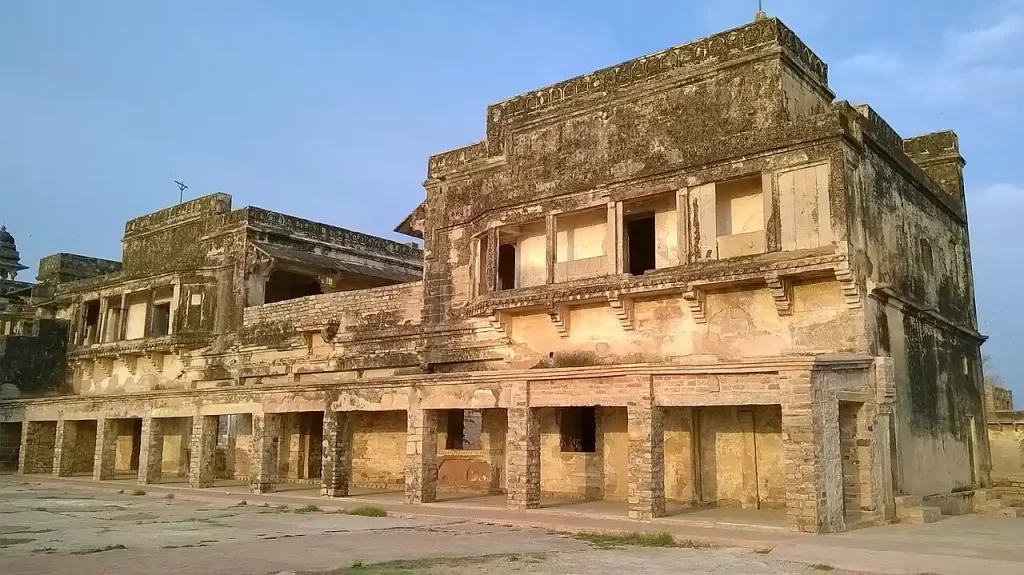
Nearby lie the twin Saas‑Bahu Temples, from the 9th–10th century, dedicated to Vishnu, known for their intricate carvings and Vishnu idols. Across the way stands Teli Ka Mandir, the tallest structure within the fort (~100 ft), blending Dravidian and Nagara styles, originally dedicated to Shiva but later repurposed.
🧘♂️ 4. Chaturbhuj Temple and the Zero Inscription
Carved directly into rock on Gopachal Hill, the Chaturbhuj Temple contains one of the earliest known circular “0” zero symbols in Indian inscriptions—marking an important Milestone in Numeral History. The temple’s façade and interiors reflect elegant simplicity, underscored by the intelligence it represents.
🎨 5. Gopachal Parvat and Jain Sculptures
On Gopachal Hill, intricate Rock‑cut Jain Sculptures ranging from the 7th to 15th centuries depict Tirthankaras in meditative or standing postures. They form a Spiritual Panorama, Representing a centuries‑old tradition. Ideal for a contemplative hour, they offer both Serenity and Historical Depth.
🏛️ 6. Gujari Mahal Museum
Once a royal palace built by Man Singh Tomar for Queen Mrignayani, Gujari Mahal now holds an Archaeological Museum replete with Medieval Armour, Sculptures, Coins, Pottery and the Famed “Shalabhanjika” — Gwalior’s own Mona Lisa. Positioned at the fort’s entrance, it serves as a cultural primer before ascending the hill.
🏯 7. Jai Vilas Palace & Scindia Museum
Built in 1874 by Maharaja Jayajirao Scindia, Jai Vilas Palace blends European and Indian Architectural styles. Partially converted into the Scindia Museum since 1964, it houses 35 rooms of Royal Memorabilia—furniture, Sculptures, Paintings, including Gwalior’s famed 12‑year‑woven carpet.
🎶 8. Tomb of Tansen & Tansen Festival
The mausoleum of Tansen, the legendary musician from Akbar’s court, rests near the fort. The Tansen Music Festival, held annually at this site in December, features classical performances against a heritage backdrop, offering a rich sensory feast.
🌞 9. Sun Temple, Phool Bagh & Zoo
The Sun Temple — built in 1988 and inspired by Konark — is a marble/sandstone structure set amid verdant lawns, perfect for early‑morning or sunset visits. Close by, Phool Bagh and the Gwalior Zoo (Gandhi Prani Udhyan) provide family‑friendly relaxation amid greenery and wildlife.
🌅 10. Sound & Light Show; Trade Fair & Markets
As dusk falls over the Fort, the Sound & Light Show brings its thousand‑year‑old past to life in vivid colour and storytelling, lasting about 45 minutes in an Amphitheater Setting. For vibrant local flavour, explore the Annual Trade Fair (Since 1905) or shop for Chanderi silks, Maheshwar sarees, silver boxes (featuring palace tile designs) at Patankar Bazaar, Maharaj Bada, Arihant Emporium, and modern City Mall.
⏱️ Visiting Tips & Suggested Itineraries
| Time of Year | Tip |
| October–March | Ideal weather for exploring Fort Climbs, Temples and Gardens |
| By 10 AM | Start at Gujari Mahal → Ascend via Urwai Gate to Fort Monuments → End with Sound & Light at dusk. |
| 2‑3 Days | Add Padavali‑Bateshwar (40 km), Madhav National Park, Tighra Dam Boat trip for a Rural Immersion. |
Gwalior’s rich tapestry—from Fort Architecture, Temples and Palaces, to Musical Heritage and Local Markets — offers an immersive traversal through Indian History and Culture. Each site complements the next with layered stories, making a visit here feel like walking through a living, breathing heritage chronicle.
Where to Stay in and near Gwalior, Madhya Pradesh: A Granular Neighbourhood Guide
🔘 Lashkar: The Vibrant City Centre (Best for First-Time Visitors & Shoppers)
The Scindia-founded Lashkar serves as Gwalior’s commercial and cultural nucleus. Stay here to be steps from Jai Vilas Palace, Patankar Bazaar (Textiles) and Sarafa Bazaar (Street Food). Budget hotels cluster near Gwalior Junction Railway Station (Platform 1):
➸ Hotel Grace (₹1,300/night): Offers free Railway Transfers, 24/7 Room Service and Spotless AC rooms. Ideal for early Train Departures.
➸ Radisson Gwalior (₹5,900/night): Features an Alfresco Pool, gym, and multi-cuisine restaurants. A 5-min drive to Gwalior Fort.
➸ Hotel City Grand (₹1,500/night): Budget pick opposite Giriraj Mandir temple, famed for local cuisine like Bedai-Aloo.
🔘 Morar Cantonment: Colonial Charm & Greenery (Best for Families & Peace Seekers)
East of the fort, Morar blends British-era bungalows with wide, tree-lined avenues. Attractions include the Sun Temple and Italian Garden.
➸ The Narayanam (₹2,700/night): River-view rooms near Kalpi Bridge, with Jacuzzi access and Rani Lakshmibai memorial views.
➸ Clarks Inn Suites (₹3,000/night): Phool Bagh location with Pool, Golf Simulations and kids’ play zones.
🔘 Thatipur: Strategic Connectivity Hub (Best for Business Travellers)
West of Lashkar, Thatipur links the fort, university, and industrial zones. Key roads (Jhansi Road, Link Road) ensure 15-min access to all city sectors.
➸ Hotel Gwalior Regency (₹2,600/night): Directly at Gwalior Bus Stand, with couple spa discounts and airport shuttles.
➸ Dessert Palm (₹1,700/night): Boutique property in Darpan Colony offering spa therapies and university-road quietude.
🔘 Kampoo: Transport & Budget Stays (Best for Backpackers)
Adjacent to the railway station, Kampoo is dominated by 24-hour snack stalls and transit-friendly hotels.
➸ Park Inn by Radisson (₹3,500/night): 4-min walk to the bus stand, with fitness centres and soundproofed rooms.
➸ Hotel Ambience (₹1,800/night): Inside railway campus, featuring buffet breakfasts and porters for luggage.
🔘 Fort-Adjacent Heritage Zone (Best for History Enthusiasts)
Lodgings near Gwalior Fort immerse guests in the 9th-century citadel’s aura. Hazira Road offers Sufi tomb access.
➸ Usha Kiran Palace (₹12,000 – 25,000/night): A Taj Heritage property in 9-acre gardens. Book the “Tansen Suite” for fort views. Includes vintage car rides and Jiva Spa.
➸ Hotel Solitaire Inn (₹1,000/night): Budget rooms in Sarafa Bazar, steps from Teli Ka Mandir. Lacks elevators but brims with character.

🔘 Countryside Resorts (Best for Luxury Escapes)
For serenity, retreat to resorts on Agra-Mumbai Highway:
➸ Imperial Golf Resort (₹5,400/night): 8 km from downtown, with 18-hole golf, wedding lawns, and cottage-style rooms.
➸ Neemrana’s Deo Bagh (₹4,000 – 7,500/night): 17th-century Mughal gardens, organic meals, and yoga pavilions. Ideal for artists’ retreats.
🔘 Budget Insights & Seasonal Price Shifts
➸ Budget (₹500 – ₹1,500/night): Hotel Mahima (Padav) or Tourist Hotel (Pure Veg) offer basic AC rooms. Summer (Apr–Jun) dips rates 30%.
➸ Mid-Range (₹1,500 – ₹5,000/night): Park Inn or Clarks Inn include pools. Winter (December–January) peaks at +40% rates.
➸ Luxury (₹5,000 – ₹25,000/night): Usha Kiran’s monsoon packages include Ayurveda Therapies.
🔘 Specialised Stays
➸ Pilgrims: Gurudwara Data Bandi Chhod (fort) offers donation-based dorms and Langar.
➸ Airport Travellers: Hotel Gwalior Regency (8.5 km; shuttle in 20 mins).
➸ Music Festival Attendees: Book Usha Kiran 6 months early for Tansen Samaroh (December).
🔘 Accommodation Comparison Table
| Area | Property | Price Range (₹) | Key Perks | Ideal For |
| Lashkar | Radisson Gwalior | 5,900 – 7,100 | Pool, City Views | Luxury Shoppers |
| Morar | The Narayanam | 2,700 – 3,200 | Riverfront, Kalpi Bridge access | Families, History Buffs |
| Fort Zone | Usha Kiran Palace | 12,000 – 25,000 | Heritage Spa, Fort views | Luxury/Heritage Seekers |
| Countryside | Imperial Golf Resort | 5,400 – 6,500 | Golf Course, Wedding Venues | Events, Relaxation |
| Budget/Near Station | Hotel Grace | 1,300 – 1,800 | Free Train Transfers | Backpackers, Transit users |
👉 Pro Tip: August offers lowest rates (₹1,000/night Avg.) but temperatures are 35°C and above. Winter demands 3-month advance bookings.
Here is a long and elaborated description of the “Best Places for Refreshments with Authentic Local Food in Gwalior, Madhya Pradesh, India”, with rich granular detail. This guide highlights where to taste true Gwaliori flavours—across local eateries, heritage sweet shops, modern cafes, and iconic street food joints.
🍛 1. SS Kachoriwala – The Morning Pulse of Gwalior
Located near Naya Bazaar, SS Kachoriwala is one of the most iconic breakfast joints in Gwalior. Locals flock here early in the morning for their signature “Bedai & Kachori”, served with a fiery Aloo-sabzi and green chutney. Bedai is a spicy, deep-fried puri filled with lentils, while kachoris are stuffed with spiced urad dal. The crispiness of the kachori paired with piping hot sabzi is the quintessential Gwalior breakfast experience. SS Kachoriwala opens as early as 6:30 AM and by 9:00 AM, most of the stock is already sold out—so come early!
🧁 2. Bahadura Sweets – A Legacy of Authentic Gwaliori Sweets
Over a Century old, Bahadura Sweets, located in Naya Bazaar, is considered a heritage landmark for traditional Gwalior sweets. Their “Mawa Bati”, a rich, ghee-laden sweet stuffed with dry fruits and Mawa (thickened milk solids), is a local delicacy. Another must-try is “Gajak”, a winter-special made from sesame seeds and jaggery, known for its unique brittle texture. Bahadura also serves Rabdi-Jalebi, a classic North Indian dessert combination. Tourists often buy packed Gajak here as souvenirs, especially during December and January.
🍲 3. Chhappan Bhog – Multicuisine with a Gwaliori Twist
Chhappan Bhog, located near DB Mall in City Centre, offers both dine-in and takeaway options and is a great place to try a Full Gwaliori Thali — a platter loaded with Dal, Baati, Churma, Baingan Bharta, Kadhi and Phulkas. The restaurant blends traditional recipes with hygienic, family-style seating. Their Chaat Section is also popular, especially Aloo Tikki Chaat and Dahi Puri, which are prepared using local-style masalas. For travellers looking for a sit-down meal with authentic flavours, this is one of the top picks.
🌮 4. Hemu’s Chat – The Street Food Star of Gwalior
No visit to Gwalior is complete without tasting Hemu’s Chat, located in the heart of Phoolbagh near Maharaj Bada. It’s a buzzing hotspot for evening snacking. Their “Karela Chaat”, a unique sweet-spicy crisp snack made from grated deep-fried bitter gourd, is an absolute specialty. Other favorites include Palak Patta Chaat, Chole Tikki and Pani Puri with flavoured waters. Prices are affordable, and the crowd is lively—reflecting the youthful pulse of Gwalior.
🫓 5. Indian Coffee House – Old-World Charm with Comfort Food
Tucked inside the Gwalior Railway Station compound, the Indian Coffee House is a throwback to the colonial era with its old-school menu, uniformed waiters, and simple wooden seating. Here, locals and travellers alike enjoy classic South Indian snacks, Masala Dosa, Cutlet and strong Filter Coffee. Though not specific to Gwalior, this is a nostalgic spot for travellers who enjoy quiet conversations over a budget-friendly, satisfying meal in a heritage ambiance.
🥘 6. Param Food Complex – Variety, Hygiene, and Value
Located at Thatipur and also in City Centre, Param Food Complex is known for offering a blend of local, Indian, and Chinese cuisine. Their specialty remains Rajma Chawal, Poha, and the popular Gwaliori Thaali, which includes Dal-bafla, a softer version of the Rajasthani Baati. The food is served in Stainless-steel Thalis in a clean, self-service setup, making it ideal for families, students, and budget-conscious travellers. Their sweets section is equally popular, especially during festive seasons like Holi and Diwali.
🧋 7. Swad Restaurant – For Poha, Jalebi, and Tea
Near Gandhi Road, Swad Restaurant is a humble eatery that locals recommend for a traditional Madhya Pradesh-style breakfast. Their “Poha–Jalebi” combo is an early-morning ritual for many residents. The poha is light and seasoned with Mustard Seeds, Curry Leaves and a Sprinkle of Sev, while the Jalebi is fried crisp and dipped in Saffron syrup. Paired with a hot glass of Kadak Chai, it’s a simple but unforgettable experience. The restaurant operates from 6:00 AM to 10:00 PM and is always bustling during breakfast and evening tea time.
🥪 8. Café Unplugged and Blue Fox – Modern Cafés with Local Fusions
For those looking to relax in a contemporary setting with a fusion menu, Café Unplugged (near Kampoo) and Blue Fox Café (in Thatipur) are excellent choices. While these cafes serve pizza, pasta, and shakes, they also incorporate Regional Flavours into their offerings—for example, Spicy Tandoori Sandwiches, Chai with Gajak and Desi Masala Nachos. With aesthetic interiors, live music on weekends, and Wi-Fi, these spots are ideal for youth, remote workers, and tourists seeking a mix of global café vibes with local touches.
🍢 9. Tansen Residency Restaurant – Government-Run with Authentic Cuisine
Operated by MP Tourism, the restaurant inside Tansen Residency (MPTDC Hotel) in Gwalior offers an excellent introduction to Malwa and Bundelkhand cuisines. Try their Dal-Bafla Thali, Mutton Rogan Josh and Khopra Pak (Coconut Sweet). The quality is standardised, service is good, and the setting is comfortable. Since it’s a government-run property, it’s safe, hygienic, and recommended for foreign tourists looking to try traditional food without hygiene worries.
🧭 10. Maharaj Bada & Patankar Bazaar – Street Food Explorers’ Paradise
Maharaj Bada, the main market square, and Patankar Bazaar, nearby, are bustling with roadside stalls offering everything from Samosa-Chole, Churma Laddoo, and Chana Zor Garam, to unique items like Khoya Samosa and Ghewar. These areas come alive post 5:00 PM, turning into an open-air food fest. Try local favourites like Dahi Bhalla, Kachori with Dahi and Imli chutney, or Hot Milk with Saffron, often served in traditional earthen Kulhads.
In conclusion, Gwalior’s food scene is a rich mosaic of Heritage Sweets, Spicy Chaats, Homely Thalis and innovative Café blends. Whether you’re grabbing a hot Kachori at sunrise, savouring Gajak in winter, or enjoying Poha-Jalebi in a quiet corner, Gwalior delivers an unforgettable culinary experience wrapped in local charm, tradition, and flavour.
Here is a long and elaborated description of the Climatic Conditions in Gwalior, Madhya Pradesh, India, covering Granular Seasonal Patterns, Temperature Fluctuations, Humidity, Rainfall and Travel-related implications:
☀️ 1. General Overview – Semi-Arid Climate
Gwalior experiences a semi-arid climate (Köppen classification: BSh), which lies between arid desert conditions and a tropical climate. It is characterised by extreme temperature variations, low to moderate rainfall and distinct seasonal changes. Situated in the Northern part of Madhya Pradesh, Gwalior’s geographical location, with its proximity to the Thar desert region and the Vindhya ranges, makes it prone to Hot Summers, Short but Intense Monsoons and Cool Winters.
🔥 2. Summer (March to June) – Scorching and Prolonged
Summer in Gwalior begins by early March and continues until mid-to-late June, marked by high temperatures, dry air and intense heatwaves. Daytime temperatures frequently soar above 42°C (108°F) and may even exceed 45°C (113°F) during peak May and early June. The air remains dry and dusty, and hot winds locally called ‘loo’ sweep through the region, especially in April and May.
Humidity levels remain low (15–25%), making dehydration and sun exposure dangerous during the daytime. Evenings bring minimal relief, with temperatures hovering between 30°C to 35°C. Light cotton clothing, sun protection, and hydration are essential for anyone visiting or residing in Gwalior during this period.
🌧️ 3. Monsoon (Late June to September) – Short but Impactful
The monsoon season in Gwalior typically sets in by the last week of June or early July, brought in by the Southwest Monsoon winds. Unlike coastal or hill stations, the rainfall here is moderate but erratic, with Gwalior receiving an average annual rainfall of 850–950 mm, most of which falls between July and September.
The climate becomes significantly more humid, with relative humidity levels climbing to 60–80%, especially in August. Rainfall, though beneficial for local agriculture, can often be accompanied by sudden downpours, thunder and occasional localised flooding, particularly in low-lying areas. Cloudy skies become common, and daytime temperatures drop to a range of 30°C to 34°C, providing a temporary respite from the summer heat.
❄️ 4. Winter (November to February) – Cold, Crisp, and Pleasant
Winter is the most pleasant and tourist-friendly season in Gwalior, lasting from late November to early February. During this period, temperatures range between 5°C (41°F) to 22°C (72°F). The coldest months are December and January, when early morning fog, cold winds and clear skies dominate the weather.
In extreme cases, minimum temperatures can drop to 1–2°C, especially in late December and early January. The city witnesses low humidity (25–40%), which enhances the crispness of the winter air. This season is ideal for sightseeing, cultural festivals like the Tansen Music Festival, and food tourism. Light woollens are sufficient during the day, but nights and early mornings often demand heavier winter-wear.
🌡️ 5. Temperature Profile – Year-Round Fluctuations
Gwalior’s Temperature range across the year is one of the widest in central India. Here’s a granular monthly breakdown:
⦿ January: 6°C to 22°C (Coldest Month)
⦿ April: 25°C to 42°C (Transition to Peak Summer)
⦿ July: 26°C to 34°C (Monsoon Peak with High Humidity)
⦿ October: 20°C to 33°C (Mild and Dry Post-monsoon)
⦿ December: 7°C to 24°C (Cool and Dry)
These fluctuations make it essential for travellers to pack according to the season, as conditions vary drastically not just by month but even between Day and Night.
💨 6. Wind, Humidity, and Visibility Patterns
During summers, Dry, Gusty Winds often lead to reduced visibility due to airborne dust. In contrast, Post-monsoon and Winter months bring stable atmospheric conditions and clear skies. Fog is common in late December and January, sometimes leading to Early Morning transportation delays, especially for trains and flights. Humidity levels are highest during August–September and lowest during April–May, influencing how hot or sticky the weather feels even at similar temperatures.
🌿 7. Climatic Impact on Tourism and Daily Life
Due to the Harshness of Summers, tourist footfall reduces drastically between April and mid-June. Conversely, the October to March window is considered the Peak Travel Season, when most sightseeing, local festivals, food events, and cultural exhibitions occur. Locals plan Weddings, Fairs and Major Functions during the Winter and post-monsoon period due to the more hospitable weather.
Monsoon, though refreshing, is not ideal for exploring open-air Forts or Temples, as slippery surfaces and sudden downpours can interrupt plans. However, the greenery and rejuvenated landscape during this time offer a photogenic contrast to Gwalior’s otherwise dry surroundings.
🧭 8. Ideal Time to Visit Gwalior
The Best Time to visit Gwalior is from late October to early March. This season offers:
⦿ Pleasant temperatures ideal for long explorations.
⦿ Clear skies for photography and sightseeing.
⦿ Major events like Tansen Music Festival (held in December).
⦿ Comfortable walking weather for visiting Gwalior Fort, Temples, Palaces and Bazaar Areas.
Travellers can comfortably explore the historical richness and cultural vibrancy of the city without being affected by heat exhaustion or rain interruptions.
🌍 9. Climatic Comparison with Neighbouring Cities
Compared to nearby cities like Agra, Jhansi or Bhopal, Gwalior tends to be Hotter in Summers and Cooler in Winters, owing to its plateau-like elevation and relative aridity. It receives less rainfall than Bhopal, making it drier but also prone to quicker cooling post-monsoon. These conditions have historically made Gwalior a Strategic Military Zone, offering visibility and defence benefits due to clear weather for much of the year.
✅ Final Tips
Gwalior’s climate is marked by Extremes and Transitions, moving from blazing summers to lush monsoons and serene winters. This dynamic weather cycle has not only shaped local architecture—such as the thick sandstone walls of forts, open courtyards, and water tanks—but also influences the cultural rhythm of Festivals, Food Habits and Tourism. Understanding these granular climatic details is key for any Traveler, Historian or Cultural Enthusiast hoping to make the most of their visit to this Historic Gem of Madhya Pradesh.

Here’s a complete and elaborated list of notable people from Gwalior, Madhya Pradesh, along with Granular Details of their contributions and significance across various fields such as Music, Politics, Cinema, Sports and Spirituality.
🎶 1. Tansen (Ramtanu Pandey) – Legendary Hindustani Classical Musician
➸ Born: 1500s, near Gwalior.
➸ Field: Music (Dhrupad Tradition, Hindustani Classical).
➸ Contribution: Tansen is one of the Navratnas (Nine Gems) of Emperor Akbar’s Court and is regarded as one of the greatest musicians in Indian History. He was a Pioneer of Dhrupad, a foundational genre of Hindustani classical music. Legends speak of his ability to summon rain by singing Megh Malhar and light lamps with Raga Deepak.
➸ Legacy: His tomb in Gwalior is a site of annual tribute through the Tansen Music Festival, attracting classical musicians from all over India.
🎶 2. Ustad Amjad Ali Khan – Sarod Maestro
➸ Born: October 9, 1945, Gwalior.
➸ Field: Hindustani Classical Music (Sarod).
➸ Contribution: A globally celebrated sarod player, Amjad Ali Khan belongs to the fifth generation of the Gwalior Gharana’s musical lineage. His style blends tradition with innovation, and he is credited with popularising the sarod on international stages.
➸ Awards: Padma Vibhushan, Padma Bhushan, Padma Shri, UNESCO Award.
➸ Legacy: His sons Amaan and Ayaan Ali Bangash continue the family tradition, often performing in Gwalior and globally.
🏛️ 3. Madhavrao Scindia – Politician & Royal Scion
➸ Born: March 10, 1945, Bombay; belonged to Gwalior’s Scindia family.
➸ Field: Politics.
➸ Contribution: A descendant of the Scindia Dynasty, Madhavrao Scindia was a dynamic politician and served as a Union Cabinet Minister in several portfolios including Civil Aviation and Railways. He was known for modernising the Indian Railways and encouraging transparency in civil aviation.
➸ Political Affiliation: Initially Jan Sangh, later Indian National Congress
➸ Legacy: His son Jyotiraditya Scindia continues the family’s political legacy and is currently a Union Minister.
🏛️ 4. Jyotiraditya Scindia – Current Union Minister
➸ Born: January 1, 1971, Mumbai (Gwalior Royal Lineage).
➸ Field: Politics.
➸ Contribution: Currently serving as the Union Minister of Civil Aviation and Steel in the Government of India. Known for his administrative acumen and political outreach, Jyotiraditya Scindia represents the new generation of Gwalior’s royal-political heritage.
➸ Political Affiliation: Switched from Indian National Congress to Bharatiya Janata Party (BJP) in 2020.
🎭 5. Jaya Bachchan (née Bhaduri) – Veteran Actress and Politician
➸ Born: April 9, 1948, Jabalpur, grew up in Gwalior.
➸ Field: Indian Cinema and Politics.
➸ Contribution: One of the most respected actresses of Indian cinema, Jaya Bachchan is known for films like Guddi, Abhimaan, Mili and Sholay. A Padma Shri awardee, she also served multiple terms as a Rajya Sabha MP from the Samajwadi Party.
➸ Legacy: Recognised for portraying strong female characters and being a voice for women’s rights in politics.
🧘♂️ 6. Mahesh Yogi (Maharishi Mahesh Yogi) – Spiritual Leader and Founder of Transcendental Meditation
➸ Born: January 12, 1918, near Jabalpur; spiritually associated with Gwalior region.
➸ Field: Spirituality, Meditation, Global Peace Movement.
➸ Contribution: Founder of the Transcendental Meditation (TM) movement, Maharishi Mahesh Yogi introduced TM to the world in the 1950s and gained global recognition when The Beatles became his followers. His teachings emphasised inner peace and stress-free living.
➸ Legacy: Established ashrams across India and the West; left a lasting impact on global spirituality and mental wellness.
🎥 7. Shivraj Singh Chouhan – Prominent Politician (Honorable Mention)
➸ Note: Though primarily associated with Sehore, he has strong political ties and influence in the Chambal-Gwalior belt. His government has prioritised the development of tourism and infrastructure in Gwalior.
🎭 8. Makrand Deshpande – Actor, Director, and Playwright
➸ Born: March 6, 1966; has family roots in Gwalior.
➸ Field: Theatre and Films.
➸ Contribution: Known for his Intense and Experimental Theatre Productions, Makrand Deshpande has been a part of films like Satya, Makdee, Swades and Sarfarosh. He is a celebrated figure in Indian parallel cinema and stage theatre.
➸ Legacy: Continues to write, direct, and act in thought-provoking works across languages.
🎵 9. Nida Fazli – Celebrated Urdu Poet and Lyricist
➸ Born: October 12, 1938, Gwalior.
➸ Field: Literature (Poetry and Lyrics).
➸ Contribution: Nida Fazli was known for blending traditional Urdu poetic forms with modern expressions. His ghazals and lyrics have been used in Bollywood movies such as Sarfarosh, Ahista Ahista and Razia Sultan.
➸ Notable Lines: “Duniya jise kehte hain jaadoo ka khilona hai…”.
➸ Awards: Sahitya Akademi Award, Padma Shri.
🏏 10. Naman Ojha – Cricketer (Wicket-keeper Batsman)
➸ Born: July 20, 1983, Ujjain (Trained and played for Gwalior division teams).
➸ Field: Cricket.
➸ Contribution: Represented India in all formats including Tests, ODIs, and T20s. A consistent IPL performer for Sunrisers Hyderabad and Delhi Daredevils, he was trained under the MPCA and played domestic cricket for Gwalior.
➸ Legacy: Encouraged budding cricketers from central India through local academies.
🧕 11. Shubhangi Atre – Television Actress
➸ Born: April 11, 1981, Pachmarhi; Educated in Gwalior.
➸ Field: Television & Entertainment.
➸ Contribution: Widely known for her role as Angoori Bhabhi in the comedy serial Bhabiji Ghar Par Hai!. Shubhangi Atre has become a household name for her comic timing and strong female roles in Hindi TV serials.
➸ Legacy: One of the few actresses from the region to gain national television fame.
📜 Conclusion: The Enduring Allure of Gwalior
Gwalior has produced and nurtured extraordinary talent across generations, influencing India’s Cultural, Spiritual, Political, Musical and Literary landscapes. From the Melodic legacy of Tansen and the Musical lineage of Amjad Ali Khan, to the Political Acumen of the Scindia family and the Artistic contributions of Jaya Bachchan and Nida Fazli, the city continues to be a Nucleus of Excellence. The region’s Deep-rooted heritage and commitment to education and the arts ensure that many more names will emerge from this historic city in the years to come.
Gwalior is not merely a destination; it’s a profound sensory and intellectual experience. It’s where the weight of history presses down from colossal fort walls that have witnessed millennia of empire and upheaval. It’s where the air itself seems to vibrate with the echoes of Dhrupad compositions perfected within palace halls centuries ago, a legacy enshrined in its UNESCO Creative City status. From the mathematical genius etched in the Chaturbhuj Temple’s zero to the Artistic mastery of the Sas Bahu carvings, from the martial valour of Rani Lakshmibai’s last stand to the Opulent fantasy of Jai Vilas Mahal, Gwalior presents a breathtaking tapestry of human achievement.
Its soul lies in this beautiful contradiction – the unassailable strength of the Gibraltar of India harmonising perfectly with the Ethereal Beauty of its Musical Heritage. Whether you wander the labyrinthine Man Mandir Palace, lose yourself in the devotional strains of the Tansen Samaroh, haggle for Chanderi silks in Patankar Bazaar, savour the spicy crunch of Gwalior ke Mangode, or simply stand awestruck before the Colossal Jain Tirthankaras, Gwalior leaves an indelible mark. It’s a city that demands exploration beyond the obvious, inviting you to listen closely to the stories whispered by its stones and the melodies carried on its breeze. Come discover why Gwalior remains, as Babur declared, the “Pearl among the Fortresses of Hind,” now brilliantly polished by the enduring light of its musical genius.
➤ FAQs (Frequently Asked Questions)
Why is Gwalior famous?
Gwalior is primarily famous for two things: Its massive and historic Gwalior Fort, one of India’s most impregnable, often called the “Gibraltar of India”, and as the “Music City of India” – the birthplace of the oldest Hindustani classical music tradition (Gwalior Gharana) and home to legendary musicians like Tansen. It was also recently designated a UNESCO Creative City for Music.
What is the Best Time to Visit Gwalior?
The absolute best time is October to March. The weather is pleasant and cool (especially December-January during nights), ideal for extensive sightseeing and outdoor activities. This period also includes the famous Tansen Music Festival (December). Avoid the scorching heat of April-June and the heavy, humid rains of July-September if possible.
How many days are enough for Gwalior?
A Minimum of 2 full days is recommended:
Day 1: Deep exploration of Gwalior Fort complex (Man Mandir, Temples, Jain Sculptures), Gujari Mahal Museum. Evening sound & light show.
Day 2: Jai Vilas Mahal (Scindia Museum), Sarod Ghar, Tombs of Tansen & Ghaus, Phool Bagh (Rani Laxmibai Cenotaph), and shopping in Patankar/Sarafa Bazaars.
Add an extra day for day trips (Orchha, Shivpuri) or attending the Tansen Samaroh.
How far is Gwalior from Agra and the Taj Mahal?
Gwalior is very close to Agra. The distance is approximately 118 kilometres (73 miles), making it a 3-4 hour drive depending on traffic. It’s a popular combination trip.
What food is Gwalior famous for?
Must-try local specialties include:
Gwalior ke Mangode: Crispy lentil fritters.
Gwalior Barbat: Royal spicy Mutton curry (especially during Dussehra).
Gwalior Bedai: Fried bread with Potato curry & chutney (Breakfast).
Poha-Jalebi & Kachori-Imarti: Classic savoury-sweet combos.
Gajak: Sesame/peanut brittle (winter specialty). Find these in Sarafa Bazaar and local eateries.
What are the main shopping items in Gwalior?
Look for:
Chanderi & Maheshwari Silk Sarees: Available in Patankar Bazaar and Mrignayanee emporium.
Stone Carvings & Sculptures: Replicas of fort motifs/Jain figures.
Gajak & Namkeen: Sarafa Bazaar is the hub.
Leather Footwear (Mojaris/Juttis).
Brass/Bronze Handicrafts.
How do I reach Gwalior?
By Air: Rajmata Vijaya Raje Scindia Airport (GWL) has Domestic Flights (Delhi, Mumbai, Bangalore, Hyderabad, etc.).
By Train: Gwalior Junction (GWL) is a major railway hub with excellent connectivity across India (Shatabdi, Rajdhani, many express trains).
By Road: Well-connected via NH-44 (Agra-Shivpuri), NH-34 (Jhansi), NH-46 (Bhind). Frequent state (MPSRTC) and private buses.
Is Gwalior Fort worth visiting?
Absolutely! It’s the heart and soul of the city. Its scale, history, stunning architecture (Man Mandir Palace, Sas Bahu Temples, Teli Ka Mandir), Jain sculptures, and panoramic views make it unmissable. The sound & light show adds drama. Allocate at least 3-4 hours.
➤ Sources:
➙ Wikipedia – Gwalior (Providing Comprehensive History, Demographics, Culture)
➙ Wikipedia – Gwalior District (Geography, Administration, Demographics)
➙ Encyclopædia Britannica: Gwalior – History, Culture & Tourist Attractions
➙ Maps of India: Distance from Gwalior
➙ Incredible India: Gwalior Travel Guide (Attractions, Museums, Shopping)
➙ UNESCO World Heritage Centre: Gwalior Fort Tentative List Submission (Detailed Architecture, History, OUV Justification)
➙ Travelmath: Cities near Gwalior
➙ District Gwalior Official Website (Administrative info, Helplines)
➙ Tours Operator India: Gwalior – Historical & Architectural Significance (Detailed Descriptions, Local Insights, Nearby Places)
➙ Niceus: Gwalior Nearest City Distances
➨ Other Sources: Encyclopædia Britannica , MP Chamber of Commerce , District Administration Records , Tourism Board Surveys.
Image Credit
➙ Wikimedia Commons – 240 Gwalior
➙ Wikimedia Commons – Jai Vilas Mahal
➙ Wikimedia Commons – Gwalior Fort front
➙ Wikimedia Commons – Gwalior fort swarna
➙ Wikimedia Commons – Gwalior Fort (sunset)
➙ Wikimedia Commons – Gorgeous Gwalior Fort
➙ Wikimedia Commons – Gwalior Fort Front View
➙ Wikimedia Commons – MP Gwailor district map
➙ Wikimedia Commons – Mesmerising Gwalior Fort
➙ Wikimedia Commons – Gwalior Fort Morning View
➙ Wikimedia Commons – City View from Gwalior Fort
➙ Wikimedia Commons – The Jai Vilas Palace (Gwalior)
➙ Wikimedia Commons – DUrbar hall at jai vilas palace
➙ Wikimedia Commons – Jai Vilas Palace (Scindia Palace)
➙ Wikimedia Commons – Karan Mahal, Gwalior fort, Gwalior
➙ Wikimedia Commons – Gwalior Railway station – panoramio
➙ Wikimedia Commons – View of Gwalior City from Gwalior Fort
➙ Wikimedia Commons – Entrance Gate of Gwalior Fort, Gwalior
➙ Wikimedia Commons – Gwalior Fort at Gwalior, Madhya Pradesh
➙ Wikimedia Commons – Jai Vilas Palace Night at the Museum (3)
➙ Wikimedia Commons – Gwalior Fort-Gwalior-Madhya Pradesh-DSC001
➙ Wikimedia Commons – Gwalior division Madhya Pradesh locator map
➙ Wikimedia Commons – Madhya Pradesh district location map Gwalior
For more information, you can visit our website: ExploreXP
Note: Distance is approximate and travel time may vary. Please check with google maps or local authorities before travelling.
Note: Hotel rates are subject to change and may vary based on factors like seasonality, availability, and promotions. Taxes, service charges, and other applicable fees are not always included in displayed rates.