Ganga Aarti: Where Flames Dance and Souls Awaken in Varanasi’s Eternal Embrace
➤ Introduction: The Eternal Flame of Varanasi
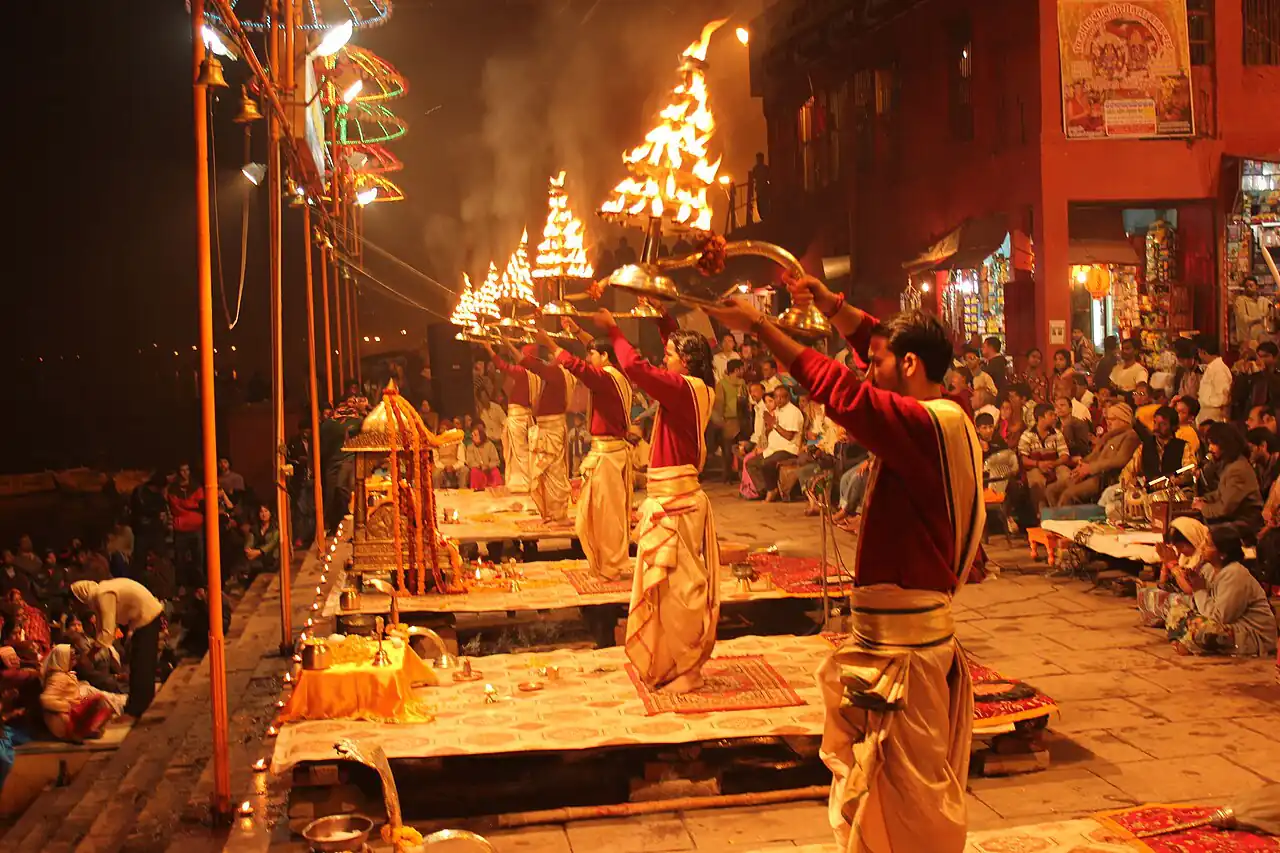
Varanasi, the world’s oldest living city, pulses with a rhythm older than time itself. At its heart lies the Ganga Aarti—a daily spectacle of fire, faith, and folklore that transforms the banks of the Ganges into a celestial theatre. Every dusk, as the sun dips below the horizon, the ghats of Varanasi come alive with the hypnotic chants of priests, the glow of brass lamps, and the collective breath of thousands seeking solace. But this ritual is more than a tourist attraction; it’s a living testament to a 3,000-year-old bond between a river and her people.
In this guide, we’ll unravel the layers of the Ganga Aarti—its history etched in myth and monarchy, the architecture of devotion at Dashashwamedh Ghat, and the cultural tapestry that makes Varanasi a microcosm of India’s spiritual soul. From granular details like taluka demographics to monsoon travel itineraries, we’ve crafted a mosaic of insights, interviews, and local secrets to help you experience Varanasi like never before.
➤ Detailed Introduction: Ganga Aarti in Varanasi – The Soul of India Ignites at Dusk
→ The Dance of Light and Devotion
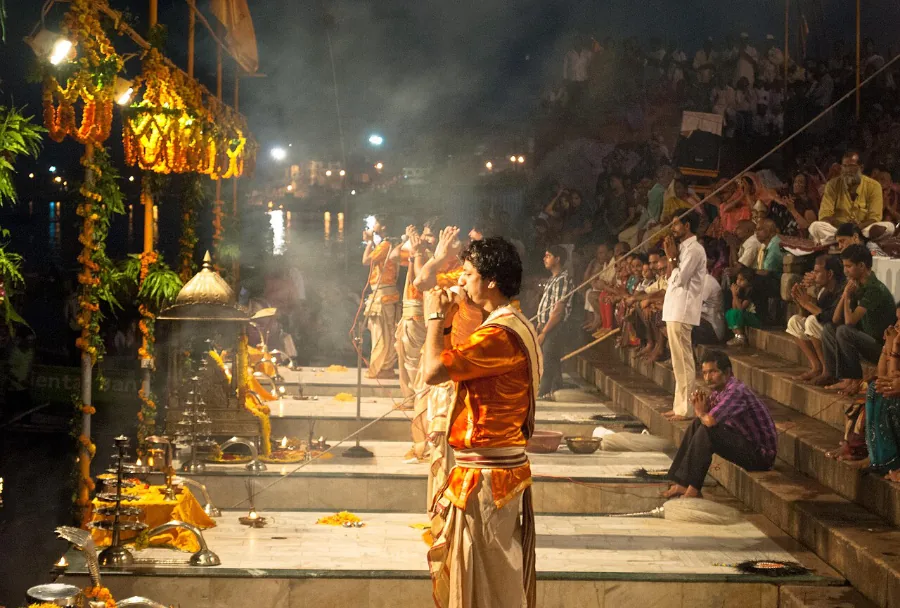
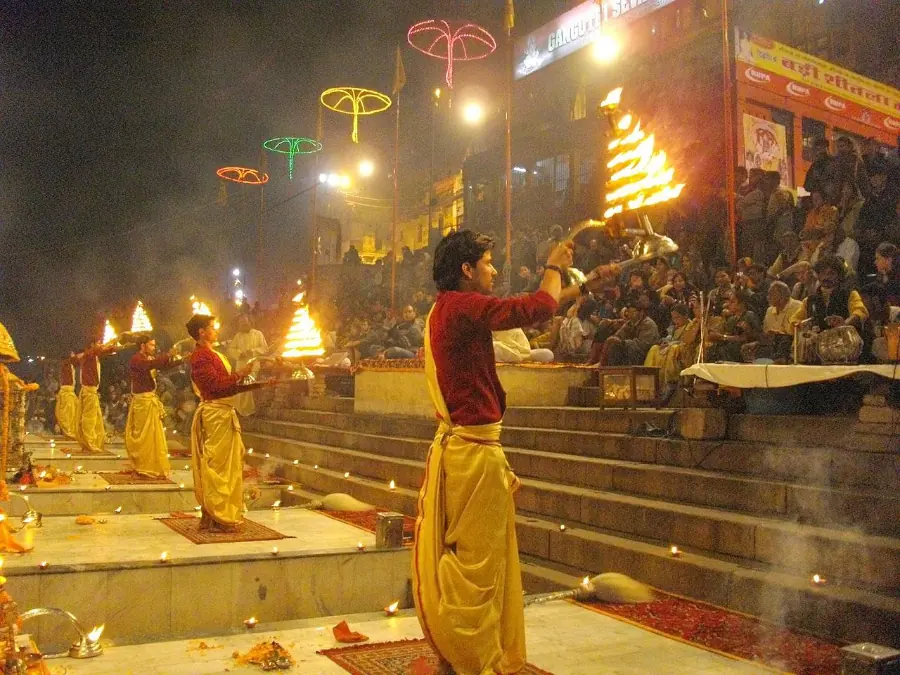
As the sun dips below the horizon, Varanasi’s Dashashwamedh Ghat transforms into a celestial amphitheater. The air thrums with conch shells, temple bells, and the synchronised chants of saffron-robed priests. Giant brass lamps swirl in circular motions, their flames casting golden reflections on the Ganges, while hundreds of devotees clasp their hands in prayer.
This is the Ganga Aarti—a 3,000-year-old ritual where fire, water, and human spirit merge into a hypnotic spectacle. For visitors, it’s a visual marvel; for locals, it’s a daily reaffirmation of life’s sacred connection to the river they call Maa Ganga (Mother Ganges).
→ A River That Breathes History
Varanasi, or Kashi, isn’t just India’s spiritual capital—it’s a living museum of civilisation. The Ganga Aarti’s roots stretch back to ancient Vedic fire rituals (Yajnas), but its modern form took shape under the patronage of Maratha queen Ahilyabai Holkar in the 18th century.
Legend claims Lord Brahma himself lit the first lamp here to honour Goddess Ganga’s descent from heaven. Today, the ritual is a bridge between eras: millennials livestream the ceremony, while third-generation priests recite Sanskrit verses unchanged for millennia.
→ Architecture: Where Stone Meets the Sacred
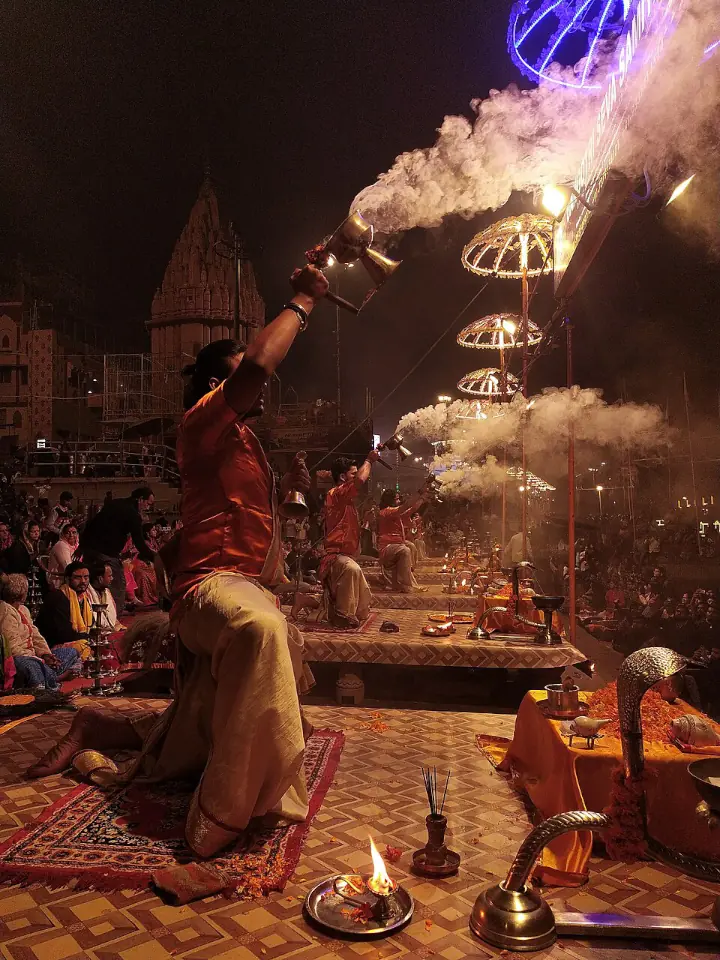
Dashashwamedh Ghat, the epicentre of the Aarti, is a marvel of symbolism and utility. Built from Chunar sandstone, its tiered steps (Ghats) accommodate thousands, while the central platform—adorned with intricate carvings of deities—serves as the priests’ stage.
The ghat’s design ensures every attendee, whether on a boat or the steps, witnesses the symmetrical choreography of lamps. As Pandit Arun Tiwari, a veteran priest, explains, “The ghat’s layout mirrors the cosmos: the river is the universe, the fire is life, and the lamps are stars guiding souls”.
→ A Cultural Tapestry Woven by Millions
Varanasi’s identity is inseparable from the Ganges. Over 3 million pilgrims visit annually, but the Aarti also draws scholars, artists, and wanderers. The ritual transcends religion—it’s a cultural unifier. “You’ll see Japanese tourists meditating next to Tamil grandmothers”, says Rahul Joshi, a local tour guide. “The river doesn’t discriminate”. This inclusivity is echoed in the city’s demographics: 65% Hindus, 30% Muslims, and a vibrant community of weavers, scholars, and poets.
Also Read
Bodwad, Jalgaon District – Maharashtra’s Hidden Cultural & Agricultural Hub
→ The Science of Spirituality
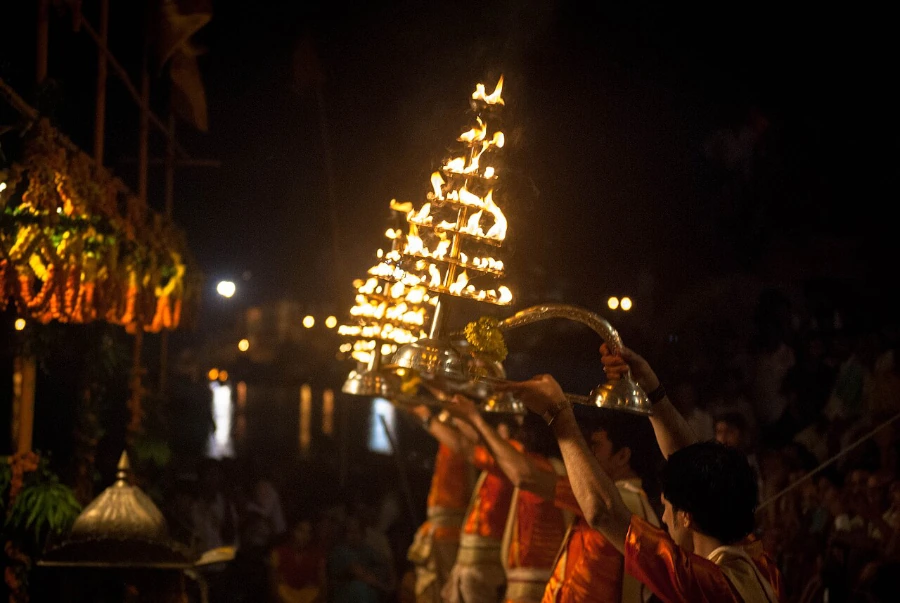
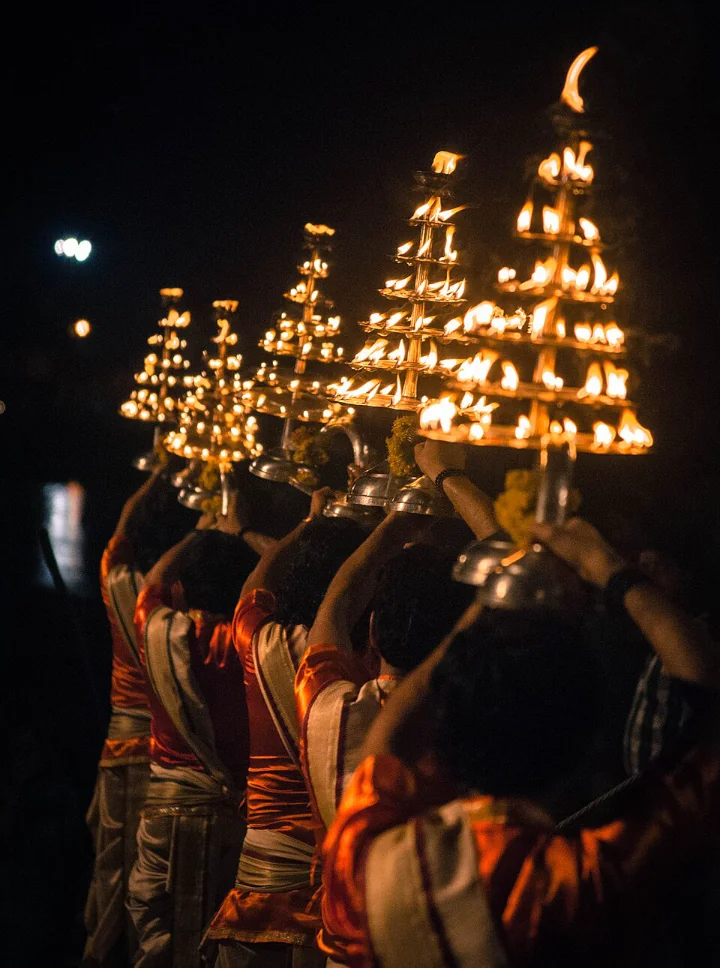
Behind the spectacle lies precision. Each priest’s lamp weighs 15 kg and holds 365 wicks—one for each day of the year. The choreography follows a strict sequence: offering flowers, circling the lamp in clockwise spirals (mimicking the solar system), and concluding with a chorus of “Har Har Mahadev!”.
The scent of sandalwood incense, the sound of cymbals, and the sight of floating diyas (lamps) engage all five senses, creating a trance-like state. “It’s not just prayer; it’s performance art perfected over centuries”, notes Dr. Anjali Mishra, a cultural historian.
→ Monsoons, Winters, and Summer Heat: Timing Your Visit
The Aarti’s mood shifts with the seasons. In winter (October–March), fog blankets the river, and the lamps glow like fireflies. Monsoon (July–September) sees fewer crowds, but the rain-soaked ghats and thunderous skies add drama. Summers (Apr–Jun) are harsh (45°C), yet dawn Aartis at Assi Ghat offer solace. “Monsoon is my favourite”, confesses Meena Devi, a boat-woman. “The river swells, and the Aarti feels like a conversation with the storm”.
→ Beyond the Aarti: A City That Never Sleeps
Varanasi’s magic lingers long after the lamps dim. Narrow alleys lead to hidden temples like Kalbhairav, the “God of Time” where whiskey is offered as Prasad. The silk weavers of Madanpura craft Banarasi saris with Gold Zari, while the Thatheri Bazaar clangs with copper artisans. At Blue Lassi Shop, tourists savour yogurt sprinkled with cannabis seeds, a nod to the city’s ancient Ayurvedic roots.
→ Voices from the Ghats: Stories of Survival and Surrender
For locals, the Ganga is life. Ramesh Kumar, a fourth-generation boatman, recalls rescuing drowning devotees during Kumbh Mela. Fatima Begum, a Muslim flower seller, has supplied marigolds for the Aarti for 30 years: “The Ganga feeds my family; her blessings don’t see religion”. Even the city’s famed Bhang lassi vendors share tales of enlightenment—like the French backpacker who stayed for six months to “find clarity by the river”.
→ The Ganga Aarti in Modern Times: Challenges and Change
Urbanisation and pollution threaten the Ganges, but grassroots efforts thrive. NGOs like Ganga Action Parivar train priests to use eco-friendly offerings (flowers over plastic), while drones monitor ghat cleanliness. Yet, tradition persists. “We’ve used brass lamps since my ancestors time”, says priest Vishnu Pandey. “The Ganga cleanses herself; our duty is faith”.
→ Your Invitation to Eternity
To witness the Ganga Aarti is to step into a timeless loop of devotion. Whether you’re a skeptic or a seeker, the ritual’s raw energy is undeniable. As Nobel laureate Rabindranath Tagore wrote, “Varanasi does not answer questions; it silences them”. Come dusk, as lamps flicker and chants rise, you’ll find yourself part of a story that began millennia ago—and one that will outlive us all.
Ganga Aarti in Varanasi: A Symphony of Fire, Faith, and Timeless Tradition
➤ Section Breakdown:
👉 History & Mythology: From Ancient Rites to Modern Devotion
👉 Architectural Grandeur: The Design of Dashashwamedh Ghat
👉 How to Reach: Distances from Major Cities & Travel Routes
👉 Best Time to Visit: Weather, Festivals & Seasonal Tips
👉 Cultural Deep Dive: Interviews with Priests & Locals
👉 Things to Do: Beyond the Aarti – Temples, Markets & Cuisine
👉 FAQs: Your Burning Questions Answered
👉 Conclusion & Sources
“Ready to witness the soul-stirring Ganga Aarti? Book your Varanasi trip now and immerse yourself in India’s timeless spiritual legacy!”
🔘 History & Mythology: When Gods Walked the Ghats
The Ganga Aarti’s origins are shrouded in legends. According to the Skanda Purana, Lord Brahma himself performed the first aarti at Dashashwamedh Ghat to welcome Goddess Ganga to Earth. Historians trace its roots to the 5th-century CE, when Varanasi emerged as a hub for Vedic rituals. The Mahabharata even references the Pandavas conducting a grand yagna here to atone for sins post-war.
→ Key Timeline
⦿ 2000 BCE: Early Vedic fire rituals on the Ganges.
⦿ 1780 CE: Maratha queen Ahilyabai Holkar rebuilt Dashashwamedh Ghat.
⦿ 1990s: Modern aarti format popularized for tourism and spiritual unity.
→ Local Insight:
“My grandfather said the aarti survived invasions because the Ganges is our mother. Mughals tried to silence us, but we kept the lamps burning in secret,” shares Pandit Rajesh Mishra, a 7th-generation priest.
🔘 Architectural Grandeur: The Stage of the Divine
Dashashwamedh Ghat, the epicentre of the Ganga Aarti, is a masterpiece of North Indian temple architecture. Its broad stone steps (Ghats) descend into the river, flanked by ornate pillars and shrines. The tiered platform where priests perform is designed for visibility, with space for 15-20 priests to synchronise their brass lamps (each weighing 15 kg!).
→ Design Highlights
⦿ Symmetry: Aligned with the rising sun and moon.
⦿ Materials: Red sandstone from Chunar, brass lamps from local artisans.
⦿ Symbolism: The five-tiered lamps represent the Panchatattva (earth, water, fire, air, ether).
🔘 How to Reach: Distances from Major Cities
| City | Distance (km) – Approximately | Best Route |
| Kolkata | 680 km | Train: Howrah-Varanasi Express |
| Delhi | 800 km | NH19 (12-hour drive) |
| Mumbai | 1,500 km | Flight (2 hrs) + Auto to Ghat |
| Bengaluru | 1,900 km | Flight + Overnight Train |
→ Pro Tip: Arrive by 5 PM for boat seating. Pre-book boats via VDavns Tourism (₹500-1,000 per person – Prices may vary [check the prices before booking]).
🔘 Best Time to Visit: Seasons & Spiritual Calendar
⦿ October–March: Cool weather (12–25°C), ideal for rituals.
⦿ July–August: Monsoon magic; fewer crowds but slippery ghats.
⦿ Avoid April–June: Scorching heat (up to 45°C).
→ Festive Peaks:
⦿ Dev Deepawali (November): 1 million lamps float on the Ganges.
⦿ Maha Shivratri (February): All-night Aartis and chanting.
🔘 Cultural Deep Dive: Voices from the Ghats
→ Interview with Shanti Devi, Flower Seller:
“I’ve sold Marigolds here for 40 years. Tourists ask why we offer flowers—I say, ‘Wouldn’t you bring gifts for your mother?'”
→ Cultural Analysis: The aarti mirrors Varanasi’s Egalitarian Ethos. Billionaires and beggars sit side-by-side; the Ganges accepts all.
🔘 Things to Do: Beyond the Aarti
⦿ Kashi Vishwanath Temple: Golden spire with 800 kg of gold.
⦿ Vishwanath Gali: Hunt for Blue lassi and Banarasi paan.
⦿ Sarnath: Where Buddha gave his first sermon (10 km away).
→ Local Cuisine Must-Trys:
⦿ Kachori-Sabzi: at Ram Bhandar.
⦿ Chandan-Temple Prasad: Sandalwood-infused sweets.
🔘 FAQs
Can I participate in the Aarti?
Only priests perform, but you can light a lamp at smaller ghats.
Is photography allowed?
Yes, but avoid flash during rituals.
“Come, let the Ganga’s flames ignite your spirit. Varanasi waits.” 🌅
🔘 Conclusion & Sources
The Ganga Aarti isn’t just a ritual—it’s a dialogue between humanity and the divine. Whether you’re a seeker, a historian, or a wanderer, Varanasi will etch itself into your soul.
Sources:
Image Credit
Wikimedia Commons – Evening Ganga Aarti, at Dashashwamedh ghat, Varanasi
Wikimedia Commons – Ganga aarti with lamp vase at Dasaswamedh Ghat, Varanasi 05
Wikimedia Commons – Ganga Aarti in evening at Dashashwamedh ghat, Varanasi 03
Wikimedia Commons – Evening Ganga Aarti at Dashashwamedh Ghat
Wikimedia Commons – Ganga aarti with conch shell at Dasaswamedh Ghat, Varanasi
Wikimedia Commons – GANGA AARTI AT VARANASI
For more information, you can visit our website: ExploreXP
Next in This Guide: Dive deeper into the Aarti’s historical milestones, explore hidden ghats, and uncover local secrets—from monsoon itineraries to the best kachori stalls. Whether you’re planning a pilgrimage or a photographic journey, Varanasi awaits with open arms and endless stories.
“Ready to lose yourself in Varanasi’s eternal rhythm? Click here to book your spiritual journey and secure a front-row seat to the Ganga Aarti!”
Latest Posts
- Jade Laroche: From Spotlight to Soundwaves — The Reinvention of a French Icon

- Milind Shinde – The Relentless Craftsman of Marathi Cinema Who Turned Every Frame into Fire

- Subodh Bhave: The Timeless Torchbearer of Marathi Cinema Who Redefined Biographical Storytelling

- Svetlana Khodchenkova: The Enigmatic Russian Beauty Who Conquered Hollywood Without Losing Her Soul

- Rashmi Gautam: The Fearless Voice of Telugu Television Who Turned Stardom into Substance

- Simone Holtznagel: From Wollongong’s Coastal Dreams to Global Runways — A Blonde Force Who Turned Reality TV into a Fashion Empire