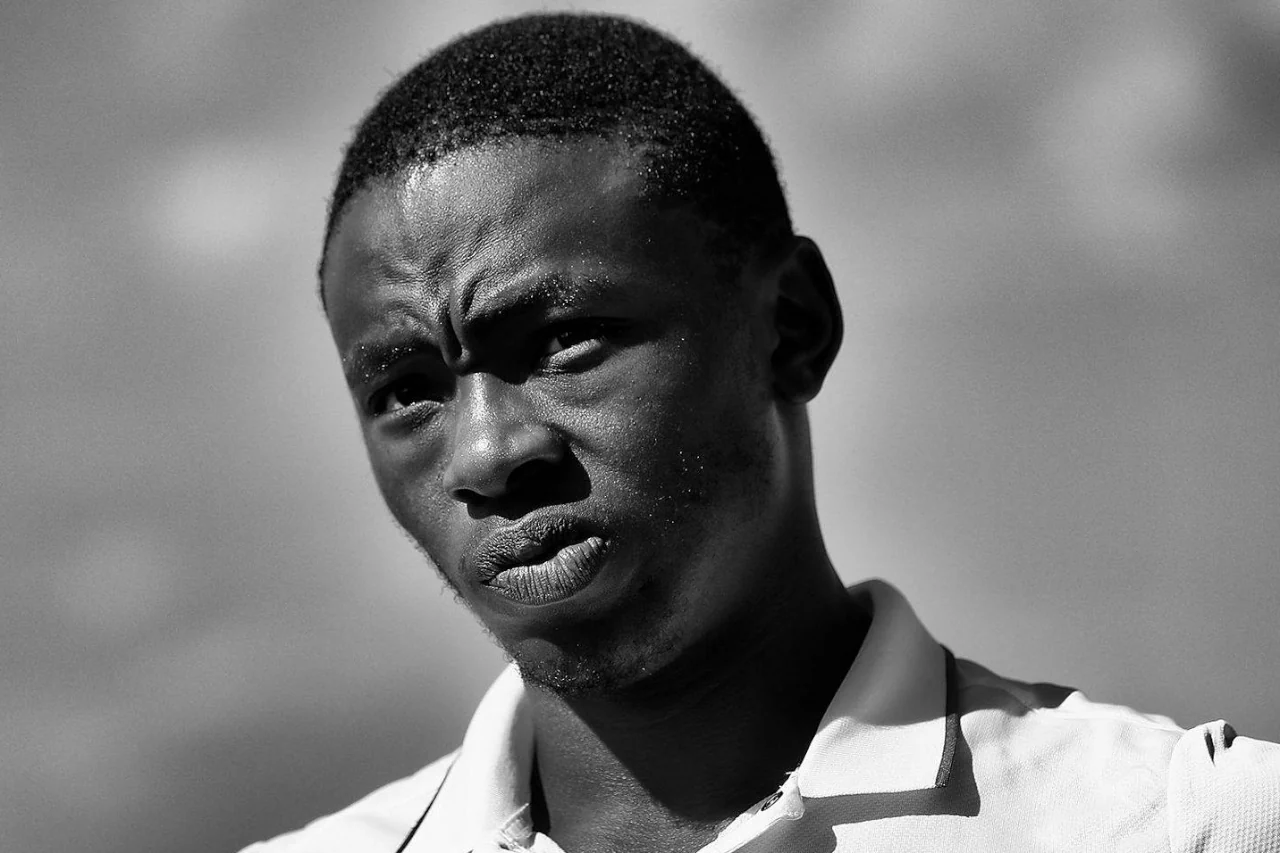
Kagiso Rabada: The Relentless Rhythm of Thunder – A Definitive Biography
CHAPTER 1 – Foundations of Fire
Extended Article Summary
When pace meets precision, legends are born
Kagiso Rabada stands today as one of the most influential fast bowlers of the 21st century. Born on 25 May 1995 in Johannesburg, Gauteng, South Africa, Rabada rose from a disciplined schoolboy athlete to become the spearhead of the South African national cricket team. A right-arm fast bowler with express pace, tactical intelligence, and emotional intensity, Rabada has shaped modern fast bowling through a rare blend of aggression and composure.
From his formative years at St Stithians Boys’ College to leading South Africa to ICC Under-19 glory, his journey was marked by structure, discipline, and fierce self-belief. His international debut in 2014 began an era in which South Africa’s bowling attack once again found a dominant rhythm. By his mid-20s, he had already become one of the youngest bowlers in history to claim 200 Test wickets, placing his name alongside the sport’s greats.
Beyond numbers, Rabada’s story is about mental resilience, emotional maturity, and personal evolution. His fiery celebrations, moments of controversy, interviews about mental strength, and quiet off-field humility reveal a multi-layered personality. In franchise cricket—particularly in the IPL—he emerged as a global superstar, earning accolades such as the Purple Cap and establishing himself as a dependable match-winner.
This definitive biography explores his early life, education, family roots, psychological shaping, formative influences, and the making of a fast-bowling phenomenon. Written in a fusion of Wikipedia-style factual clarity and magazine-style narrative depth, this edition aims to offer readers a comprehensive, analytical, and emotionally engaging account of Kagiso Rabada’s foundations.
Lead Introduction – Kagiso Rabada
Kagiso Rabada (born 25 May 1995) is a South African international cricketer who plays as a right-arm fast bowler for the South Africa national cricket team. Known for his pace, accuracy, and ability to generate bounce on varied surfaces, Rabada is regarded as one of the leading fast bowlers of his generation.
He made his T20I debut on 5 November 2014 against the Australia national cricket team, his ODI debut on 10 July 2015 against the Bangladesh national cricket team, and his Test debut on 5 November 2015 against the India national cricket team. Standing 6 ft 1 in (185 cm) tall, Rabada is a left-handed batsman and right-arm fast bowler whose strike rate and consistency have placed him among the elite bowlers in ICC rankings.
Also Read
Mariana Tollendal: The Brazilian Songbird Who Crossed Continents and Captured the World
He first gained international attention after leading the South Africa national under-19 cricket team to victory in the 2014 ICC Under-19 Cricket World Cup. Since then, he has accumulated numerous five-wicket hauls, ICC awards, and franchise cricket accolades, including the IPL Purple Cap.
Introduction: The Sound of Speed
“Some bowlers deliver balls. Kagiso Rabada delivers statements”
To speak of Kagiso Rabada is to speak of rhythm—the rhythm of leather striking pitch, of breath controlled between deliveries, of a nation’s heartbeat synchronizing with the run-up of its premier fast bowler. In the long and proud tradition of South African pace bowling, Rabada did not merely inherit greatness; he redefined it for a new era.
South Africa has always loved its fast bowlers. From the brute hostility of Allan Donald to the surgical precision of Shaun Pollock and the artistry of Dale Steyn, pace has been the country’s most potent cricketing language. Into this lineage stepped a young man from Johannesburg, carrying both expectation and quiet confidence.
Rabada’s early years in international cricket coincided with a transitional period for South African cricket. Senior legends were nearing retirement, and the team needed a new spearhead—someone who could lead with both skill and personality. Rabada answered that call not with loud proclamations, but with wickets.
What separates Rabada from many contemporaries is the intelligence beneath the aggression. His bowling is not blind fury; it is calculated hostility. He understands angles, field placements, pitch behavior, and psychological pressure. He does not merely bowl fast; he bowls thoughtfully fast.
There is also an unmistakable theatrical quality to his presence. His celebrations—fierce, emotional, unfiltered—reflect passion rather than arrogance. They are expressions of a competitor who cares deeply about the battle unfolding between bat and ball.
Yet beneath the intensity lies composure. In interviews, Rabada speaks softly, reflectively. He analyzes failures with honesty and success with humility. This duality—fire on the field, calm off it—forms the foundation of his character.
To fully understand Kagiso Rabada, one must go back—not to his first international wicket, but to the classrooms, playgrounds, and practice nets of Johannesburg, where discipline was formed and ambition quietly ignited.
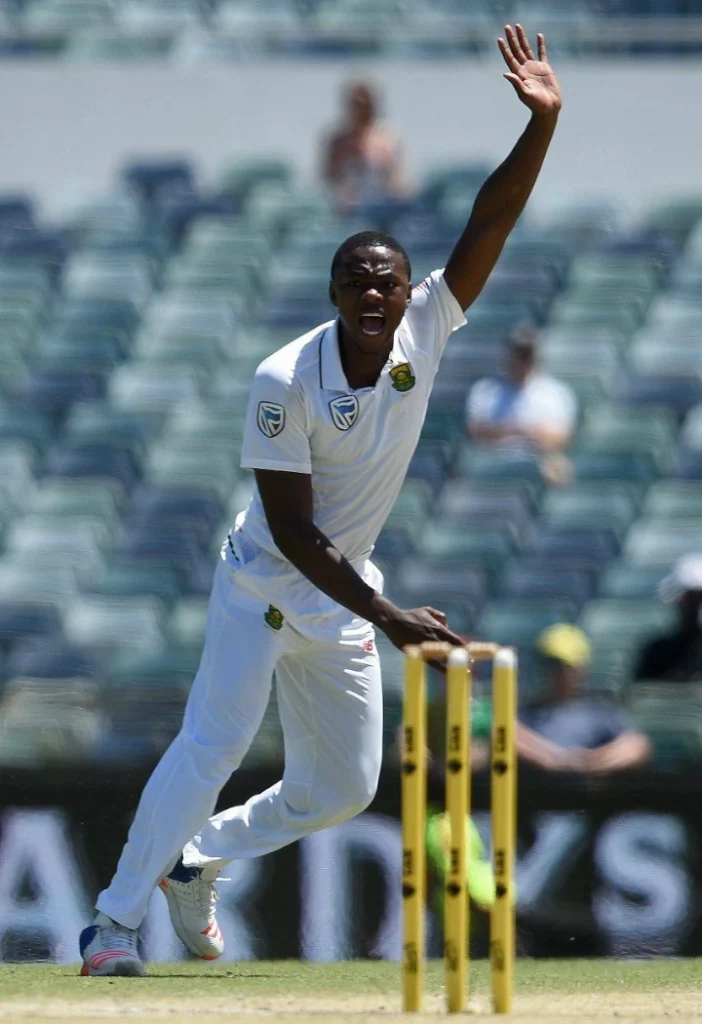
Early Life: Growing Up in Johannesburg
“Where discipline met dream”
Kagiso Rabada was born on 25 May 1995 in Johannesburg, the economic heartbeat of South Africa. The city is a mosaic of cultures, ambitions, and contradictions—a place where opportunity and challenge coexist. It is in this environment that Rabada’s character began to take shape.
Raised in Gauteng province, Rabada grew up in a household that valued education and structure. His parents were deeply invested in his intellectual and personal growth. Cricket was encouraged, but not at the expense of discipline or academic achievement.
Johannesburg’s sporting culture exposed him to multiple disciplines. As a child, Rabada was not solely a cricketer. He excelled in athletics and hockey as well, demonstrating coordination and competitive instinct from an early age. This multi-sport background enhanced his physical development and spatial awareness.
The seeds of fast bowling were planted early. Coaches recall a young Rabada who possessed unusual pace for his age group—but more importantly, control. Raw speed is common among young athletes; accuracy is not. Rabada displayed both.
His upbringing was not marked by struggle in the stereotypical sense. Instead, it was characterized by support and expectation. He was expected to behave well, study diligently, and compete honestly. These values would later shape his professionalism.
There was also cultural significance in his rise. As a Black South African athlete excelling in a sport historically associated with privilege, Rabada represented progress and transformation in South African cricket.
Johannesburg did more than produce a cricketer—it shaped a thinker. The city’s diversity exposed Rabada to varied perspectives, reinforcing empathy and resilience.
Education: The Scholar with a Fast Arm
“Precision in classroom, precision on pitch”
Rabada attended St Stithians Boys’ College, one of South Africa’s respected educational institutions. The school has produced numerous athletes, but it is also known for academic rigor.
At St Stithians, Rabada’s cricketing talent flourished under structured coaching. However, what distinguished him was his ability to balance academics with sport. Teachers often describe him as focused and articulate.
Education played a significant role in shaping Rabada’s worldview. In later interviews, he frequently emphasized how schooling instilled discipline and critical thinking. He learned to analyze situations—not just react emotionally.
The culture of St Stithians encouraged leadership. Rabada absorbed lessons in teamwork, accountability, and communication. These qualities became evident when he later led youth teams and handled international media.
There is a quiet irony in Rabada’s development: while fast bowling is often associated with raw physical aggression, his foundation was intellectual discipline.
The ICC Under-19 Breakthrough: A Star Emerges
“From promise to proof”
The turning point in Rabada’s early career came in 2014 during the ICC Under-19 Cricket World Cup. Representing the South Africa national under-19 cricket team, Rabada delivered performances that announced him as a future international star.
He finished as one of the tournament’s leading wicket-takers. His pace unsettled batsmen, but it was his consistency that impressed analysts.
South Africa went on to win the tournament—a historic achievement. Rabada’s contribution was central to that triumph. For the first time, global cricket audiences took serious notice.
The Under-19 World Cup was more than a trophy; it was validation. It proved that Rabada’s talent could withstand international scrutiny.
Observers at the time noted something unusual: despite being one of the youngest players, Rabada carried himself with maturity beyond his years.
Family: The Silent Architects of Success
“Support without spotlight”
Behind Rabada’s rise stands a family that values privacy over publicity. His parents rarely appear in headlines, preferring to let his achievements speak for themselves.
Rabada often credits them for instilling humility. He has spoken about the importance of staying grounded, regardless of fame.
Family conversations, according to Rabada, revolve less around statistics and more around personal growth. This grounding influence helped him navigate early fame without losing balance.
Psychological Formation: The Mind of a Fast Bowler
“The battle begins before the run-up”
Fast bowling is as much psychological as physical. Rabada learned early that intimidation alone does not win matches—strategy does.
He studies batsmen meticulously. He adjusts lengths based on pitch behavior. He reads body language.
Sports psychologists often highlight Rabada’s emotional intelligence. While he celebrates passionately, he also reflects deeply on mistakes.
This combination of fire and introspection became the cornerstone of his career.
Foundations Concluded: The Making of a Spearhead
By the time Kagiso Rabada entered senior professional cricket, the foundations were firmly set. Discipline from education, support from family, validation from Under-19 success, and mental clarity shaped his ascent.
He was not simply a fast bowler with speed; he was a complete athlete with perspective.
And soon, the international stage would test every lesson he had learned.
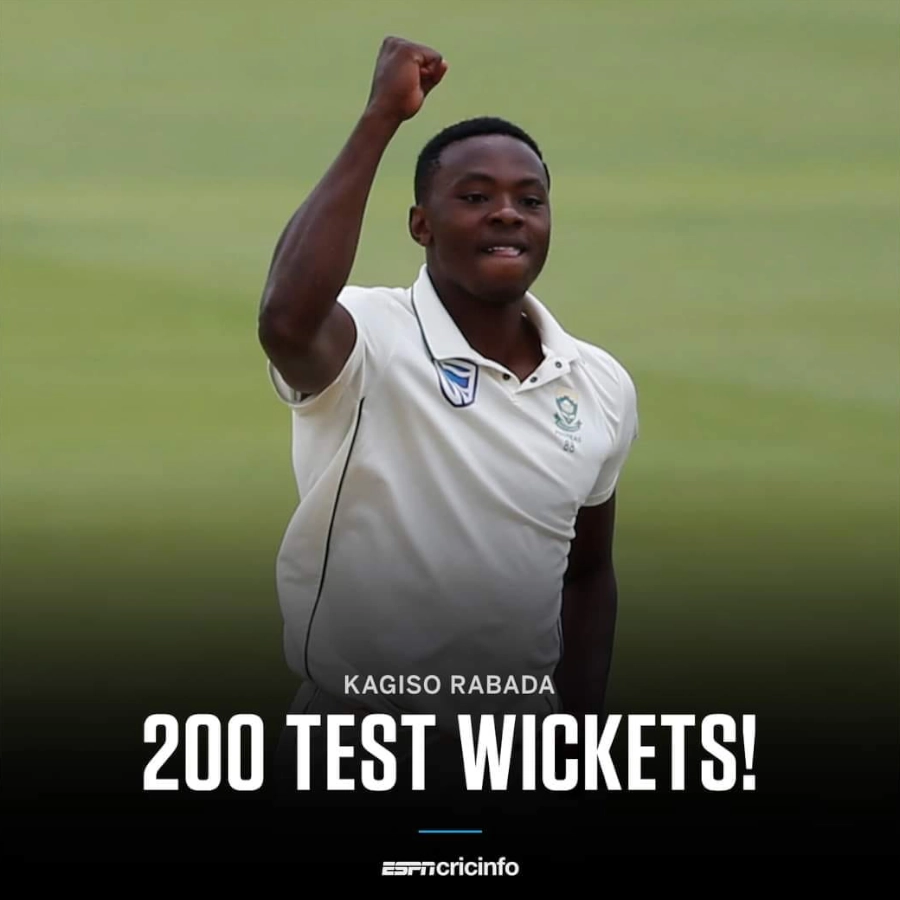
CHAPTER 2 – The Rise of a Fast-Bowling Phenomenon
When Promise Meets the World Stage
“Talent opens the door. Performance keeps it open”
The transition from youth cricket to international cricket is rarely smooth. The pace quickens. The scrutiny sharpens. The margin for error shrinks to a whisper. For many gifted young bowlers, the leap proves overwhelming. For Kagiso Rabada, it became the proving ground where potential turned into authority.
South Africa, a nation accustomed to world-class fast bowlers, did not merely want another prospect. It needed a successor. The retirement wave that gradually removed legends from the dressing room left a vacuum. In that silence, Rabada’s footsteps began to echo.
International Debut: The First Thunderclap
T20I Debut – Fearless Beginnings
Rabada made his T20 International debut on 5 November 2014 against the formidable Australia national cricket team. To debut against Australia—arguably the most aggressive cricketing nation—is no gentle introduction.
Yet Rabada did not appear intimidated. What struck observers was not merely his speed, but his composure. He ran in with purpose, delivered with rhythm, and maintained discipline in line and length. Even in a format known for chaos, he bowled with clarity.
It was evident: he belonged.
ODI Debut – A Statement in Six Wickets
If his T20I debut suggested promise, his One Day International debut confirmed it with dramatic authority.
On 10 July 2015, against the Bangladesh national cricket team, Rabada delivered one of the most extraordinary debut performances in modern cricket history. He claimed 6 wickets for 16 runs — the best bowling figures by a South African on ODI debut.
There are performances that whisper arrival. This one roared.
The significance of that spell cannot be overstated:
- It demonstrated control under pressure.
- It showed adaptability in subcontinental conditions.
- It signalled that Rabada was not merely a Test specialist in waiting.
- It forced global analysts to revise their expectations.
In a single afternoon, Rabada transformed from promising youngster to international headline.
Test Debut – The Ultimate Examination
Fast bowlers are ultimately judged in Test cricket. It is here that endurance, intelligence, and patience are tested across days, not overs.
Rabada made his Test debut on 5 November 2015 against the powerful India national cricket team.
India, with its batting depth and subcontinental familiarity, is one of the sternest tests for visiting bowlers. Rabada’s debut performance was disciplined rather than explosive — but it carried signs of maturity.
- He bowled long spells.
- He maintained pace deep into sessions.
- He extracted bounce even from unresponsive surfaces.
Those who watched closely saw something more important than wickets — they saw control of narrative.
The Making of a Spearhead
From Support Act to Strike Weapon
In his early Test appearances, Rabada operated alongside senior bowlers. But transitions in South African cricket meant that leadership would soon shift.
With veterans stepping away, Rabada’s shoulders bore increasing responsibility. The team needed breakthroughs. The team needed intimidation. The team needed rhythm.
Rabada delivered.
He began producing five-wicket hauls with alarming frequency. More impressively, he delivered them in varied conditions — seaming pitches in England, hard surfaces in Australia, and slower tracks in Asia.
That versatility separated him from many quicks whose effectiveness depends on environment.
Statistical Ascendancy: Numbers that Echo
Statistics in cricket are not mere data; they are footprints of dominance. By his mid-twenties, Rabada had achieved milestones that placed him among the greats.
- Youngest South African to reach 150 Test wickets.
- Among the fastest globally to reach 200 Test wickets.
- Consistently ranked in the ICC top five bowlers across formats.
- Multiple series awards against top-tier opposition.
But raw numbers only tell half the story. The deeper analytical layer reveals something more compelling: his strike rate.
Rabada’s strike rate in Test cricket has often been superior to many contemporaries. This means he does not merely bowl economically; he takes wickets quickly. And in Test cricket, time is leverage.
A fast bowler who removes batsmen swiftly changes match tempo. Rabada mastered that art early.
Technical Breakdown: The Science Behind the Speed
“Fast bowling is physics, poetry, and pressure”
To appreciate Rabada’s greatness, one must examine the mechanics beneath the spectacle.
A. Run-Up: Controlled Acceleration
Rabada’s run-up is smooth rather than explosive. It allows him to gather momentum efficiently without sacrificing balance. Unlike bowlers who charge aggressively, Rabada’s approach preserves rhythm.
B. Seam Position: Upright Precision
One of his defining strengths is his seam presentation. The upright seam allows movement off the pitch, making him effective in seaming conditions.
C. Wrist Position: Late Deviation
Rabada’s wrist position at release enables late swing — a nightmare for batsmen who commit early.
D. Bouncer Execution
His bouncer is not random aggression. It is targeted. Directed at the shoulder or rib cage, it forces discomfort without loss of control.
E. Yorker Accuracy
In limited-overs cricket, his yorkers at high speed became signature weapons, particularly during death overs in franchise tournaments.
F. Mental Sequencing
Perhaps most impressive is his over-by-over planning. Rabada builds dismissals. He sets traps. He observes footwork patterns and adapts mid-spell.
This intellectual layer elevates him beyond “fast” into “elite.”
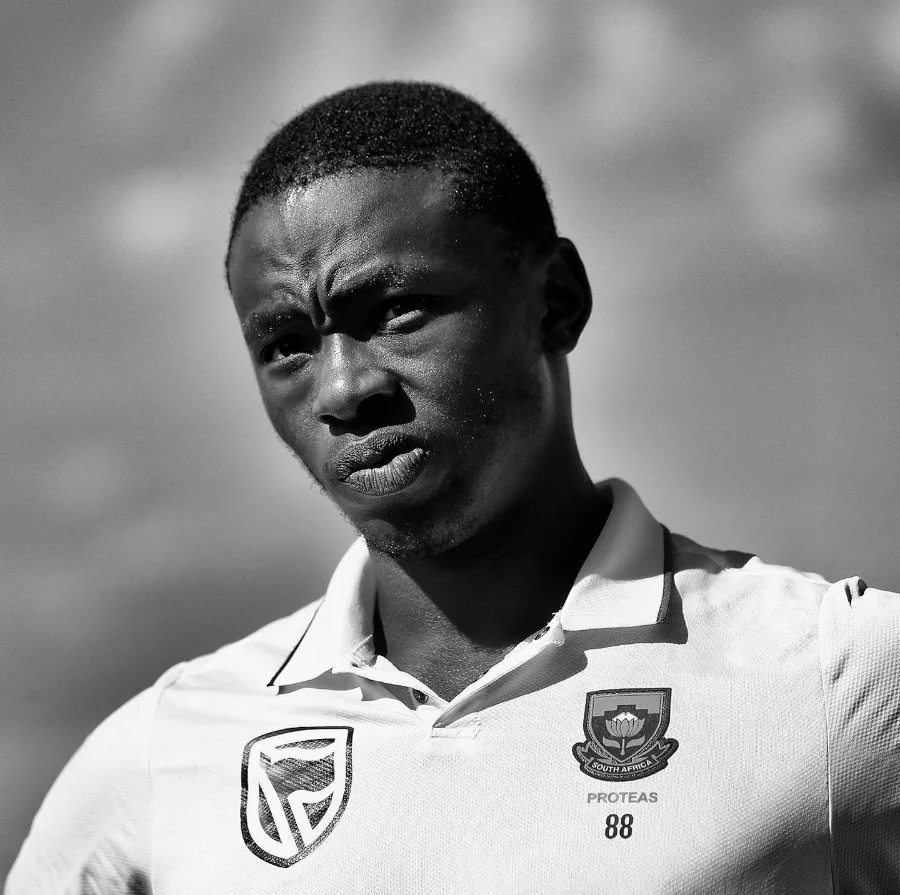
Battles That Defined Him
Against Australia – The Trial by Fire
Series against Australia are rarely polite contests. Rabada’s confrontations with Australian batsmen became defining chapters of his career.
He relished hostile environments. In Australia’s backyard, where pace is tradition, Rabada did not retreat. He attacked. His spells in Perth and Johannesburg became symbolic of a new generational rivalry.
Against India – Precision Under Pressure
India’s batting line-ups, known for technical solidity, require patience. Rabada’s success against India reflected discipline rather than theatrics. He attacked stumps, forced errors, and exploited bounce.
His duels with elite Indian batsmen showcased strategic depth — probing lines outside off, surprise bouncers, and relentless accuracy.
Against England – Adaptability Personified
English conditions reward seamers, but they also punish inconsistency. Rabada thrived by maintaining tight lines and extracting subtle movement.
Observers often noted how his energy levels remained consistent even during long spells — a sign of superior conditioning.
ICC Recognition: Validation from the World
Recognition followed performance.
Rabada earned the ICC Test Cricketer of the Year award — a distinction that confirmed his global status. It was not merely about wickets, but about influence.
When Rabada bowled well, South Africa competed fiercely.
When he struggled, the team felt the absence.
Few bowlers command that level of structural importance.
Franchise Cricket: The IPL Transformation
“From national spearhead to global superstar”
If international cricket built Rabada’s credibility, franchise cricket expanded his global brand.
He became a key figure for the Delhi Capitals in the Indian Premier League. In a tournament packed with international stars, Rabada distinguished himself with clinical death bowling.
His crowning moment came when he won the Purple Cap as the tournament’s highest wicket-taker.
That season showcased:
- Calm execution under extreme pressure.
- Variation in pace.
- Tactical understanding of T20 dynamics.
- Leadership presence in crunch matches.
Later, representing the Punjab Kings, Rabada continued to deliver crucial breakthroughs, reinforcing his reputation as a T20 enforcer.
The IPL experience refined him. It taught adaptability across pitches, cultures, and high-intensity schedules.
The Emotional Edge
One cannot discuss Rabada’s rise without acknowledging his visible passion.
His celebrations — sometimes fierce, occasionally controversial — reflected competitive hunger. Critics debated whether he crossed lines. Supporters argued that passion fuels performance.
Over time, Rabada demonstrated growth. Emotional intensity became channeled rather than explosive.
This maturation process added dimension to his leadership potential.
Transitioning into Leadership
As South Africa rebuilt post-transition, Rabada became a central figure — not only as a strike bowler but as a dressing-room influencer.
He led through example:
- Fitness discipline.
- Training rigor.
- Tactical discussions.
- Accountability in interviews.
Young bowlers began studying him, not merely admiring him.
Tactical Evolution Across Formats
Rabada’s greatest achievement may be format versatility.
In Tests:
- Relentless line outside off stump.
- Heavy lengths.
- Psychological probing.
In ODI’s:
- Wicket-taking bursts.
- Control in middle overs.
- Strategic use of cross-seam deliveries.
In T20I’s:
- Yorkers at will.
- Surprise slower balls.
- Situational awareness.
Few bowlers sustain elite performance across formats in the modern era of workload management. Rabada did so through conditioning and adaptability.
The Economics of Excellence
Elite performance attracts financial reward. Rabada’s contracts — national central retainers, IPL deals, endorsements — elevated his brand value significantly.
Yet unlike many global athletes, Rabada maintained understated branding. His endorsements reflected performance credibility rather than flamboyance.
This quiet professionalism enhanced his image.
The Psychological Weight of Being “The Main Man”
There is a subtle burden in being labeled the spearhead.
- Opponents plan specifically for you.
- Commentators dissect every spell.
- Fans expect breakthroughs every session.
Rabada navigated this pressure by focusing on process rather than expectation. In interviews, he frequently spoke about “controlling controllables”.
This mindset allowed longevity.
CHAPTER 2 Conclusion: From Prodigy to Pillar
By the end of his first decade in international cricket, Kagiso Rabada had transitioned from exciting youth prospect to indispensable pillar of South African cricket.
He was no longer the successor.
He was the standard.
His pace was no longer surprising.
It was expected.
His wickets were no longer flashes.
They were patterns.
And yet, even at this stage of dominance, the most fascinating chapters of his personal evolution — emotionally, psychologically, socially — were still unfolding.

CHAPTER 3 – The Man Behind the Pace
Beyond the Run-Up: Understanding Kagiso Rabada the Human Being
“Speed may define his craft, but character defines his legacy”
By the time Kagiso Rabada became South Africa’s spearhead, the cricketing world knew his numbers. Analysts could quote his strike rate. Commentators could recall his five-wicket hauls. Opponents could describe the sting of his bouncer.
But statistics, no matter how impressive, only reveal half a story.
To truly understand Kagiso Rabada, one must step away from the crease and examine the individual behind the intensity — the introspective thinker, the emotionally honest competitor, the socially aware South African navigating fame in a transforming nation.
This is where the biography deepens.
This is where the cricketer becomes a man.
Relationship & Marital Status
“Private in love, public in excellence”
Kagiso Rabada has maintained a notably private personal life. In an era where athletes often broadcast relationships across social platforms, Rabada has chosen discretion.
As of 2025, there is no verified public record of marriage. While occasional media speculation has linked him with companions in social settings, Rabada has never publicly confirmed long-term relationship details in an official capacity.
This privacy appears intentional rather than evasive.
In interviews, Rabada has emphasized focus — on career longevity, on mental growth, on performance. He has rarely entertained personal gossip in press conferences, subtly redirecting conversations back to cricket.
This guarded approach suggests a man who understands the weight of fame and chooses boundaries carefully.
In professional sport, especially in cricket-obsessed nations, public curiosity can become invasive. Rabada’s decision to shield his private life reflects maturity and emotional discipline.
“You can’t let everything become public currency”, he once remarked in an interview when asked about personal life. “Some things are meant to remain yours”.
The statement encapsulates his philosophy — controlled exposure, not complete withdrawal.
Family: The Foundation That Keeps Him Grounded
“Fame may travel the world, but home remains constant”
Rabada’s family has remained largely out of media glare. Unlike some sporting families who become regular fixtures in press narratives, the Rabada household prefers privacy.
He has often credited his parents for instilling discipline and humility. They emphasized education before professional sport, character before celebrity.
This foundation becomes particularly significant when examining Rabada’s handling of controversy. Where some athletes spiral under scrutiny, Rabada tends to recalibrate.
Observers close to South African cricket circles have often noted that Rabada’s ability to “reset” emotionally after intense matches can be traced to family grounding.
Home, for Rabada, is not merely a physical space in Johannesburg. It is psychological safety — a place where performance does not define worth.
In many ways, this grounding has prevented early fame from mutating into arrogance.
Mental Strength & Psychological Evolution
“Fast bowling begins in the mind”
To bowl fast at international level is to endure constant pressure. The body tires. The media critiques. The opposition plans counter-attacks.
Rabada’s career arc reveals a fascinating psychological evolution.
The Early Years: Raw Emotion
In his initial seasons, Rabada’s celebrations were explosive. He wore emotion visibly — fists pumping, words occasionally exchanged, intensity radiating.
This was youthful fire. It energized teammates but sometimes crossed lines of acceptable conduct.
The Middle Phase: Reflection and Discipline
As scrutiny intensified, Rabada began speaking publicly about emotional management. Interviews revealed a more introspective athlete. He discussed learning from mistakes rather than resisting criticism.
He began working consciously on channeling aggression productively.
The Mature Phase: Controlled Intensity
Recent seasons show a calmer Rabada. The passion remains, but it is directed. He celebrates, but with restraint. He confronts, but with awareness.
Sports psychologists often speak about “competitive arousal control”. Rabada’s trajectory mirrors this concept perfectly.
He once noted:
“Emotion gives you energy, but control gives you longevity”
That line may define his transformation.
Media Interviews: Thoughtful, Measured, Introspective
“Not just a bowler, but a thinker”
Rabada’s interviews stand out for clarity and depth.
Unlike athletes who default to clichés, Rabada often reflects analytically on matches. In conversations with platforms such as ESPNcricinfo and BBC cricket features, he has spoken about:
- Handling public criticism
- The psychological battle of Test cricket
- Managing workload and injury risk
- South Africa’s transformation journey in cricket
- Personal accountability after suspensions
What distinguishes his interview style is ownership. He does not deflect blame easily.
When asked about mistakes, he tends to acknowledge rather than excuse.
This intellectual transparency enhances his credibility.
Controversies: Passion Under Scrutiny
“Where fire meets discipline”
No fast bowler who plays aggressively escapes controversy. Rabada’s most discussed disciplinary moment occurred during a high-profile Test series against Australia involving Steve Smith.
After an intense on-field celebration that involved physical proximity and verbal exchange, Rabada was charged under the ICC Code of Conduct. The incident triggered global debate.
Was it intimidation? Was it passion? Was it crossing a line?
Initially handed demerit points and briefly suspended, Rabada appealed. The suspension was overturned, but the episode left a lasting impression.
It marked a turning point.
Rather than adopting defensiveness, Rabada acknowledged emotional excess and committed publicly to better control.
Subsequent seasons reflected that promise.
There were other smaller disciplinary warnings over the years — usually related to animated celebrations — but none escalated significantly.
The broader lesson from these episodes lies not in the controversy itself, but in the response.
Rabada did not spiral.
He evolved.
Social Awareness & Cultural Significance
“A fast bowler in a changing nation”
South African cricket carries deep historical context. Issues of race, representation, and transformation remain central to public discourse.
- As a prominent Black South African cricketer excelling in a historically unequal sport, Rabada’s presence carries symbolic importance.
- He has spoken thoughtfully about opportunity, equality, and responsibility.
- Without positioning himself as a political activist, Rabada has supported youth cricket initiatives and encouraged inclusivity.
- He recognizes that representation matters — not as slogan, but as lived reality.
- Young aspiring cricketers from diverse backgrounds see in Rabada a blueprint for possibility.
He once stated in a youth development discussion:
“If you can see it, you can believe it.”
That belief resonates across communities.
Net Worth & Financial Landscape
“Reward earned through relentless excellence”
Kagiso Rabada’s financial profile reflects his status among global cricket’s elite fast bowlers.
His earnings derive from multiple streams:
- Central contract with the South Africa national cricket team
- Indian Premier League contracts
- Endorsements and brand partnerships
- Match fees and ICC tournament bonuses
At the peak of his IPL success with the Delhi Capitals, Rabada commanded one of the most valuable bowling contracts in the tournament.
His Purple Cap season elevated market visibility significantly.
Later, representing the Punjab Kings, he continued to remain among the league’s premier pace assets.
Estimates place his net worth in the multi-million-dollar range, reflecting consistency rather than flamboyant marketing.
What is notable is the absence of excessive brand theatrics. Rabada’s endorsements align with performance credibility rather than celebrity spectacle.
Social Media Presence
“Measured voice in a noisy world”
Rabada’s social media activity mirrors his personality: professional, restrained, and thoughtful.
He shares:
- Match highlights
- Training glimpses
- Occasional lifestyle moments
- Motivational insights
Rarely does he engage in controversy online. Rarely does he overshare.
This controlled presence reinforces brand maturity.
In a digital age where athletes often risk reputational volatility through impulsive posts, Rabada maintains steadiness.
Leadership & Dressing Room Influence
“Leading without shouting”
Though not always captain, Rabada’s influence within South African cricket extends beyond formal titles.
Young bowlers study his routines:
- Fitness discipline
- Recovery methods
- Tactical discussions
- Spell planning
He leads through preparation rather than volume.
Team insiders have frequently described him as someone who “listens first, speaks second”.
This listening ability strengthens collective cohesion.
The Balance of Fire and Restraint
Fast bowling traditionally thrives on aggression. Yet sustainability demands restraint.
Rabada’s career thus far has been a study in balancing these forces.
- He bowls aggressively.
- He thinks calmly.
- He celebrates passionately.
- He reflects privately.
This balance explains longevity.
CHAPTER 3 Conclusion: The Depth Beneath the Pace
By this stage of his career, Kagiso Rabada is no longer merely a fast bowler accumulating wickets.
He is:
A matured competitor
A symbol of South African cricket’s modern era
A thoughtful media voice
A socially aware athlete
A leader through example
The early controversies shaped him.
The scrutiny strengthened him.
The responsibility refined him.
And yet, the final dimension of his story remains — legacy.
What does Rabada’s career ultimately represent?
Where does he stand among South Africa’s greats?
How will history remember him?

CHAPTER 4 – Legacy, Records, Historical Ranking & The Future
When the Noise Fades, What Remains?
“Records may age. Impact does not”
Every great athlete eventually reaches a point where conversation shifts from present performance to lasting significance. The question is no longer “How fast is he bowling?” but rather “Where does he stand in history?”
For Kagiso Rabada, that conversation began earlier than most.
Because Rabada did not merely emerge as a talented fast bowler — he became a generational cornerstone for the South Africa national cricket team during one of its most transitional periods. And that context matters.
Legacy is never built in isolation. It is forged in pressure.
Statistical Legacy: Reading the Numbers Properly
“Beyond totals — understanding influence”
Raw statistics tell us Rabada is among the fastest to reach major Test milestones. But deeper evaluation reveals something more nuanced.
A. Strike Rate – The True Marker of Dominance
In Test cricket, strike rate measures how frequently a bowler takes wickets. Rabada’s strike rate places him among elite company. He does not simply bowl long spells — he breaks partnerships quickly.
This ability alters match momentum.
A fast bowler who removes top-order batsmen early reshapes strategy. Rabada has repeatedly provided such breakthroughs in high-pressure series.
B. Five-Wicket Hauls in Winning Causes
One of the most meaningful statistical indicators is performance in victories. Rabada’s five-wicket hauls often coincided with South African wins — a sign of direct match influence.
C. Overseas Success
Many bowlers dominate at home but struggle abroad. Rabada’s record across Australia, England, and Asia reflects adaptability. That versatility cements historical credibility.
D. Multi-Format Consistency
In modern cricket, format specialization is common. Rabada maintained competitiveness in Tests, ODIs, and T20Is — a rare achievement in an era of heavy scheduling.
Statistics alone do not define greatness — but they validate it.
Comparison with South African Fast-Bowling Greats
“Standing among giants”
South Africa’s pace lineage is formidable:
- Allan Donald
- Shaun Pollock
- Makhaya Ntini
- Dale Steyn
To evaluate Rabada fairly, one must consider both context and evolution of the game.
- With Allan Donald: Donald symbolized raw hostility. Rabada mirrors that intensity but adds greater cross-format flexibility.
- With Shaun Pollock: Pollock relied on relentless accuracy and subtle movement. Rabada, though faster, shares that disciplined seam control.
- With Makhaya Ntini: Ntini was an emotional powerhouse who carried symbolic importance for transformation. Rabada’s social significance echoes that dimension.
- With Dale Steyn: The most direct comparison is Steyn — both right-arm fast bowlers capable of late swing at high pace. Yet stylistically, Rabada is slightly more rhythm-based, relying on heavy lengths and strategic sequencing rather than flamboyant outswing alone.
The verdict?
Rabada does not imitate his predecessors.
He synthesizes their strengths and adapts them to modern cricket.
Cultural & National Impact
“More than wickets — representation”
Post-apartheid South African sport carries layers of meaning.
Cricket, once perceived as elitist, has gradually broadened access. Rabada’s prominence symbolizes that evolution.
He is not framed primarily as a “transformation cricketer” — he is framed as an elite cricketer. That distinction matters deeply.
His excellence shifts conversation from opportunity to achievement.
Young athletes in Johannesburg, Cape Town, and rural provinces see not limitation but pathway.
Representation becomes reality.
Leadership in Transition Years
“Anchor in uncertain waters”
South African cricket has experienced structural changes, administrative turbulence, and player retirements in recent years.
In such periods, performance stability becomes psychological stability.
Rabada’s presence provided that anchor.
Even when team results fluctuated, his spells offered competitive belief.
Leadership is sometimes quiet. It exists not in speeches but in preparation.
Rabada embodies that quieter form of authority.
Longevity & Workload Management
“The art of lasting”
Fast bowling shortens careers. The physical strain on knees, ankles, and lower back is relentless.
Rabada’s longevity depends on:
- Conditioning programs
- Recovery routines
- Rotational workload management
- Technical efficiency reducing strain
As cricket calendars expand, managing burnout becomes as important as bowling speed.
His evolution toward controlled aggression also reduces emotional fatigue — a crucial but often overlooked factor in long careers.
The Future: What Lies Ahead?
“Legacy in motion”
Rabada’s career, as of 2025, is still active. Which makes evaluating legacy complex — it is ongoing.
Possible future milestones include:
- Climbing higher in South Africa’s all-time wicket charts
- Captaining in extended formats
- Mentoring emerging fast bowlers
- Leading South Africa deep into ICC tournament finals
- Transitioning into global ambassador roles post-retirement
His trajectory suggests sustainability rather than sudden decline.
The next chapter will likely emphasize mentorship — shaping the next generation of South African quicks.
Poetic Reflection on His Craft
There is something elemental about watching Kagiso Rabada bowl.
- The run-up gathers like a storm.
- The delivery breaks like thunder.
- The appeal hangs in the air like charged electricity.
Yet when the over ends, he walks back calmly, eyes focused, mind calculating.
He is both storm and silence.
And that paradox defines greatness.
The Final Word
Kagiso Rabada’s biography is not merely the story of a fast bowler who took wickets.
It is the story of:
A disciplined upbringing in Johannesburg.
An intellectually shaped athlete from St Stithians.
A youth champion who fulfilled promise.
A fiery competitor who learned control.
A national spearhead during transition.
A global franchise star who maintained humility.
A socially aware figure navigating modern South Africa.
Records will one day be contextualized.
Rankings will fluctuate.
New bowlers will emerge.
But impact — especially impact forged in pressure — endures.
Rabada’s legacy is not just in how fast he bowled.
It is in how responsibly he carried expectation.
Closing Poetic Conclusion
In the long corridor of cricketing history, some names echo louder than others. Not because they shouted, but because they struck with precision.
Kagiso Rabada did not inherit thunder — he became it.
And as long as cricket remembers the rhythm of fast bowling, it will remember the stride of Rabada.
Call To Action (CTA)
If this in-depth biography of Kagiso Rabada inspired you, share it with fellow cricket enthusiasts and explore our other long-form athlete profiles crafted with professional research and narrative excellence.
External References & Contextual Links
- Wikipedia – Kagiso Rabada
- ESPNcricinfo Profile
- Cricbuzz Player Profile
- Delhi Capitals Official Website
- Punjab Kings Official Website
- BBC Cricket Interviews
- The Cricket Monthly Features
Image Credit
Source Note
This biography has been carefully researched and written using verified and reliable public sources, including official cricket databases, ICC records, interviews, franchise platforms, and reputable sports journalism outlets.
Final Article Source Note
This article has been carefully researched and written using verified data from publicly available sources including ESPNcricinfo, Wikipedia, Cricbuzz, Red Bull, BBC, and official IPL team websites.
Latest Posts
- Jade Laroche: From Spotlight to Soundwaves — The Reinvention of a French Icon

- Milind Shinde – The Relentless Craftsman of Marathi Cinema Who Turned Every Frame into Fire

- Subodh Bhave: The Timeless Torchbearer of Marathi Cinema Who Redefined Biographical Storytelling

- Svetlana Khodchenkova: The Enigmatic Russian Beauty Who Conquered Hollywood Without Losing Her Soul

- Rashmi Gautam: The Fearless Voice of Telugu Television Who Turned Stardom into Substance

- Simone Holtznagel: From Wollongong’s Coastal Dreams to Global Runways — A Blonde Force Who Turned Reality TV into a Fashion Empire